
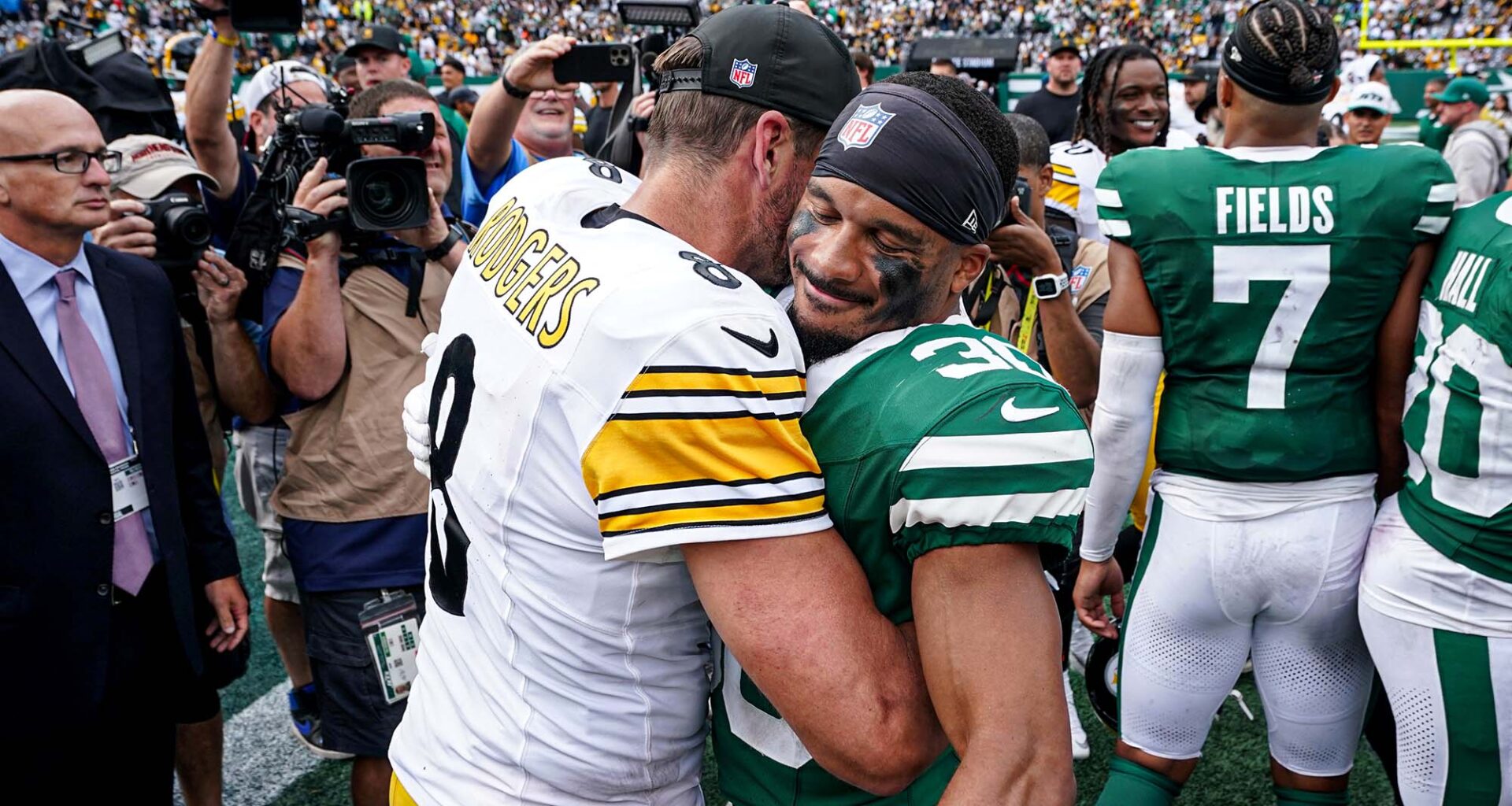
Former New York Jets cornerback Michael Carter II will always be considered a success story for the organization. A 2021 fifth-round pick out of Duke, Carter overcame questions about his size to become one of the best slot cornerbacks in the NFL.
But injuries and ineffective play in 2025 called his value to the Jets into question.
A new regime and defensive scheme made Carter’s impact less pronounced. After eight weeks and an early-season trade, the 26-year-old’s time with the team is over.
New York traded Carter to the Philadelphia Eagles on Wednesday afternoon for wide receiver John Metchie III and a 2027 late-round pick swap.
Carter’s tenure with the Jets will always be seen as a success despite some struggles in recent years. But his departure sends a clear message to Gang Green’s roster, signaling an obvious shift in how they do business.
Michael Carter II trade breakdown
Time was running out on Carter the moment the Jets traded for Jarvis Brownlee on Sept. 23. Like the former Jets slot corner, Brownlee was a late-round selection who turned heads with his competitiveness and coverage ability.
Since Brownlee took the field in Week 6 against the Denver Broncos, it became clear Carter was no longer part of the Jets’ long-term plans. Brownlee quickly forced the team’s first turnover of the season and offered the type of physicality that was missing in New York’s defense.
It was more a matter of when the Jets would move on from the veteran rather than if.
There’s also a question of whether Carter was ever in the organization’s long-term plans once Aaron Glenn became head coach. Glenn, a defensive coordinator who favors man-to-man coverage schemes, may not have preferred Carter’s background in Robert Saleh’s zone-heavy scheme.
It’s not as if Carter is old, either. He’s still just 26 and is in his fifth season.
But in a league where scheme fit is everything, New York’s current system made Carter’s skill set expendable — one that a zone-heavy team like Philadelphia can better utilize.
His departure, however, sends a clear message to the rest of the roster. As talented as the Jets’ roster may be, the ongoing organizational shift can affect anyone.
Jets’ organizational shift
The best teams in the NFL today are built around scheme. Quarterbacks who may be deficient in some areas can still find success because of offensive systems tailored to their strengths.
The same now applies to defenses.
General manager Darren Mougey has done a good job acquiring talent that fits the exact scheme the team wants to run. Defensive tackles Jowon Briggs and Harrison Phillips, cornerback Brandon Stephens, and Brownlee are examples of that.
Each player brought in has meshed well with the current coaching staff’s scheme and their teammates.
Carter represents the old way of thinking in New York — a philosophy built entirely on defensive line play and repetitive coverages. Robert Saleh called a simplistic defense, allowing many players to flourish.
However, one of the previous regime’s major failings was its inability to adapt. When players struggled, the scheme never changed. In some ways, that consistency allowed young players like Carter, linebacker Jamien Sherwood, and cornerback D.J. Reed to thrive.
But the lack of flexibility also meant stagnation.
The new regime has brought a different mindset. To them, scheme matters more than personnel — even if the difference between zone and man coverage isn’t drastically different from years past.
According to Sharp Football Analysis, the Jets are running man coverage close to 30 percent of the time, eighth most in the league. While those numbers are similar to previous years, the team is throwing in new looks on a weekly basis.
That means the players on the field must fit the mold Glenn and defensive coordinator Steve Wilks want to see.
That’s the underlying factor behind the decision to move on from Carter.
Despite being roughly the same height, Brownlee is 10 pounds heavier than Carter and plays a more physical brand of football. That’s the standard this organization now expects, and it’s what ultimately left Carter on the chopping block.