
Similar to the Seahawks, the Detroit Lions are a dual-threat offense. Quarterback Jared Goff has weapons through the air in wide receiver Amon-Ra St. Brown and Jameson Williams (four catches for 64 yards and a touchdown in Week 9), as well as on the ground with running backs David Montgomery and Jahmyr Gibbs. Tight end Sam LaPorta is also a receiving and blocking force. In the Lions’ 27-24 loss to the Minnesota Vikings Sunday, LaPorta was Detroit’s leading receiver with six receptions for 97 yards and a touchdown.
In order to stop the Lions’ offense, the Commanders will have to put pressure on Goff. They had trouble doing so against Darnold in Week 9, marking the third time this season the Seahawks’ offensive line did not allow a sack. The Commanders’ defense pressured Darnold on just three of 24 dropbacks which is a career-low pressure rate for him, according to NextGen Stats. This pales in comparison to the pressure Daniels endured by the Seahawks’ defense, who was pressured on 50% of his dropbacks for the highest rate in his career. Seattle also forced Daniels to scramble on 38.2% of his dropbacks, although he was able to gain yardage with his legs for 47 yards on eight carries.
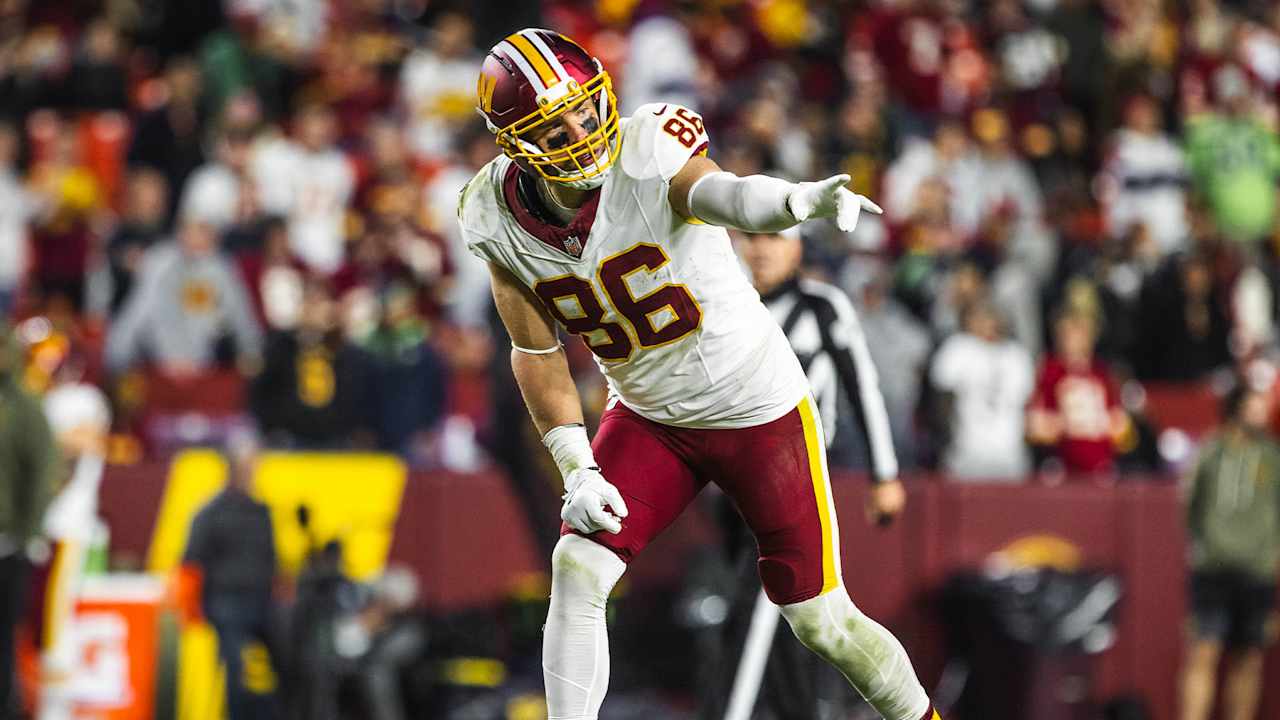
As has been the theme throughout the season, the Commanders started slow and put themselves in a 7-0 hole in the first quarter. They scored their first touchdown in the second quarter, although it was already 24-7 at the half. With quarterback Marcus Mariota at the helm, his top options in the pass game are likely to be wide receivers Deebo Samuel Sr. and Jaylin Lane, as well as tight end Zach Ertz.
The Lions are ranked No. 8 on defense, allowing an average of 294.8 yards per game. Against Minnesota, Detroit gave up 258 all-purpose yards. The Lions had a tougher time on the ground against the Vikings, allowing running back Aaron Jones and Jordan Mason a combined 19 carries for 114 yards. This could mean success for the Commanders’ running back trio of Jacory “Bill” Croskey-Merritt, Chris Rodriguez Jr. and Jeremy McNichols, who combined for 103 yards on 24 carries. It will come down to whether Washington’s No. 11 (72% in efficiency) run blocking offensive line can withstand Detroit’s No. 32 (29% efficientcy rating) pass rush.
Let’s look at how the rest of the division is faring.