
A guideline has been published by WSL Football, the body that oversees the top two tiers of the professional women’s game in England, on how to build or upgrade stadia for women’s teams.
According to WSL Football, it is the world’s first framework supporting clubs, local authorities and architects to better meet the “specific needs” of female athletes and supporters so that grounds used in the women’s game can “become spaces that serve everyone, regardless of their gender”.
The document arrives as more clubs consider moving their women’s teams into new homes.
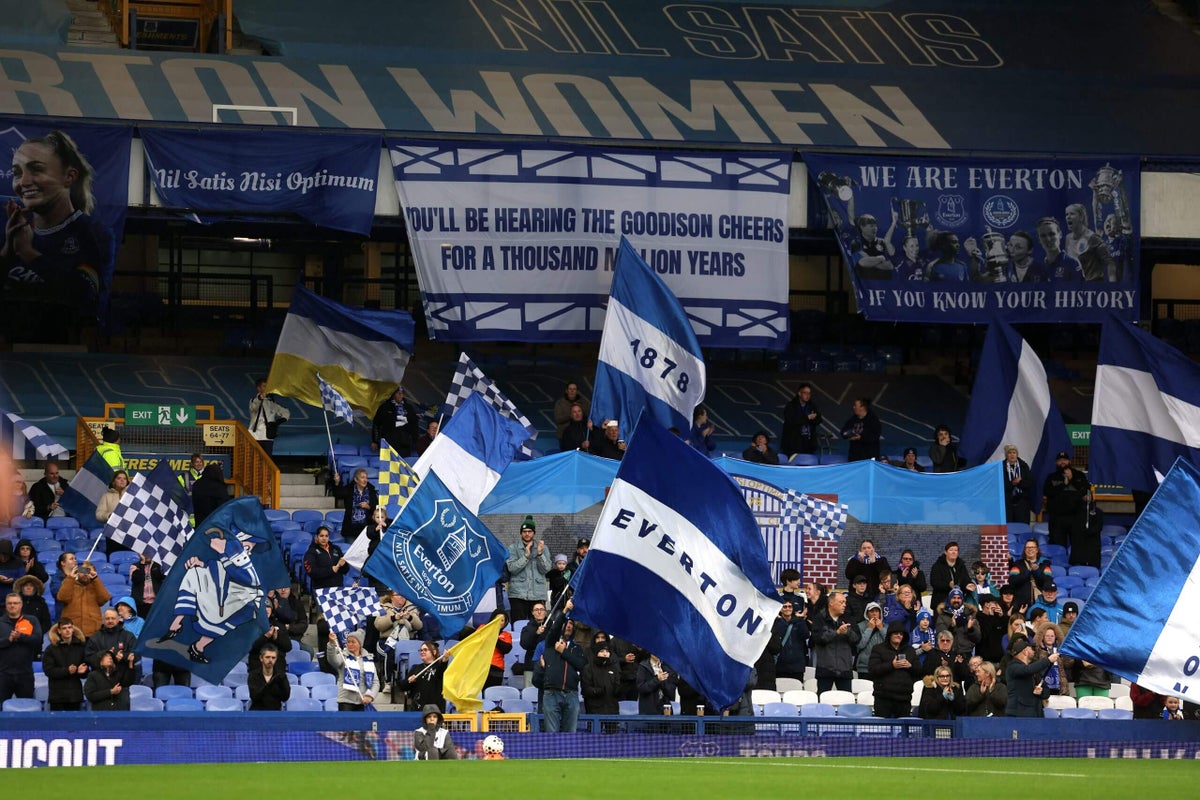
Everton Women recently took over historic Goodison Park following the men’s move to the new Hill Dickinson Stadium, while their Arsenal counterparts now play all of their home matches at the Emirates Stadium. Brighton & Hove Albion hope to build a new purpose-built stadium for their women’s team by the 2027-28 season, with the local council having approved proposals in October 2023.
The document, titled Design Guidelines for the Delivery of Elite Women’s Stadiums in England, aims to provide clubs and stakeholders who are either looking to move into new venues or renovating men’s ones with a detailed design briefing.
The Athletic spoke with Hannah Buckley, head of safety, sustainability and infrastructure for WSL Football, who led the project, to discuss the key talking points.
What’s included in the document?
A better question is, what’s not? According to Buckley, it is the result of three years of consultation with supporters, clubs, current and former players, managers, matchday technical staff —including medical professionals — and match officials, media, broadcasters, governing bodies, engineers, sports architects and sustainability experts.
The document runs to over 200 pages and attempts to address everything from female-friendly changing rooms, toilet facilities, parent/guardian-orientated spaces — including family toilets and breastfeeding areas — and accessibility for those with disabilities to future-proofing for environmental change, as well as media and broadcast facilities and safety concerns around travelling to and from stadiums.
Recommended highlights include:
A 45/45 per cent male/female toilet split, with the remaining 10 per cent gender neutral, moving away from the traditional 80/20 male/female split
Inclusion of baby-changing facilities and family toilets for parents with children of the opposite gender
Specific rooms for players, staff, media and broadcast talent to breastfeed/care for their child, as well as multi-faith spaces
Better accessibility provisions for disabled supporters, including changing places, audio-descriptive commentary and sensory rooms
Appropriate changing facilities for the growing squad sizes in women’s football, as well as separate changing areas for under-18s and female and male managers/backroom staff
Menstruation provision in squad changing areas
Reconsidering seat sizes for fans, including larger seats for parents with young children
Providing safe, clearly marked and well-lit access travel routes to grounds
Putting accessibility, transport connectivity and minimal environmental impact at the heart of site selection
Water stations and shade provisions.
Why is this a big deal?
After attending the 2022 Stadium Design and Business Summit in Manchester, Buckley noticed that many in the sector were interested in how stadiums across England dealt with hosting duties for that year’s Women’s European Championship.
There was a general agreement that simply playing women’s sport in stadiums historically designed for the men’s version led to problems. Yet, there was a “blind spot” in what exactly a “good” women’s sport-specific stadium should look like. “We agreed the best way forward was to pull together a document to assess what existed in the marketplace currently and what needed to change,” she says.
According to Buckley, while the fundamentals of women’s and men’s football are the same, the big difference is looking at the “demographic of those user groups”.
Changes in maternity policy mean more players in the women’s game are now mothers, she says, meaning many return to action while still breastfeeding. Yet stadiums designed for men’s teams don’t have the provisions to accommodate this. “We had the same with Ellen White when she retired from playing football and became a broadcaster,” Buckley says. “She had a young child with her. We needed to think about how she could do her day job while also being a mom.”
Coaching staff, match officials and fans in women’s football also tend to be more women than men, meaning the needs of those individuals before, during and after matches will differ.
Buckley points to the recommendations of safety as an example.
While WSL kick-off times have predominantly been early in the day this season (many at 12 noon), matches beginning later will end after sunset, especially during the shorter daylight hours of winter, and some stadiums lack clear signage and well-lit walkways for people returning to car parks or public transport links. Additionally, some venues have no designated parking areas, meaning fans are leaving their cars sometimes a mile or more away. Others lack appropriate public transport connections.
Leigh in Greater Manchester, home of Manchester United Women’s Progress With Unity Stadium, is the biggest town in England (population: 46,803, according to the 2022 census) without a train station, according to Buckley, who adds that WSL Football has written to the UK government’s Department of Transport to emphasise the need for better infrastructure as the women’s game grows.
Are clubs obligated to heed any of this?
Short answer? No.
The document is a recommendation for use, not a mandate. Clubs will not be penalised for not incorporating a certain number of the points listed above.
Buckley hopes, however, that it becomes a talking point, and a place to start for clubs and stakeholders not only in women’s football but across broader women’s sport.
“For those clubs talking about building stadiums, this gives them the structures and thought processes to think about what questions they need to ask at the outset; what kind of design brief to present to the architect, so they aren’t following a blueprint of a men’s stadium,” she says.
“I hope this document gets people to stop and think, not make knee-jerk reaction decisions, because this isn’t just about toilets. This is about everything. From the customer journey to who your fans are. What do they eat and drink? How close do they want to be to the pitch? Do we have a fan zone? There’s so many facets, and I think that’s the secret to me with this document.”
What does WSL Football believe ‘success’ looks like?
The biggest takeaway Buckley hopes clubs get from the document is the importance of primacy.
Women’s teams who share or rent facilities as third-parties, such as Tottenham Hotspur at third-tier men’s team Leyton Orient’s BetWright Stadium/Brisbane Road, are subject to the schedules of the first- and second-party holders. “We make it work, but it would be even better if we could have primacy, which means we’re first pick in terms of when we play and how we play?” says Buckley.
It is why Buckley hopes that, in the next five to 10 years, there will be new stadiums dedicated specifically to the women’s game and its wider pyramid.

Arsenal fans during the WSL match against Chelsea at the Emirates Stadium last weekend (Naomi Baker/Getty Images)
Buckley refrains from insisting that clubs must outright own their grounds. She points to the advantage of neutral sites such as Leigh Sport Village, which includes the Progress With Unity Stadium and is a “venue operations” business, or the possibility of clubs following in the footsteps of Everton in renovating or enhancing pre-existing stadiums.
“We want them thinking about their two first teams right now (the men’s and women’s sides),” she says. “If you take Manchester United and Chelsea, there’s lots of noise around Old Trafford and the future of Stamford Bridge. Everton have obviously made the leap of faith with Goodison Park, but depending upon what those clubs choose to do in terms of their long-term strategies, wouldn’t it be great if they have the women at the forefront of their thinking now?”
Buckley points to how Arsenal incorporated a “phased opening” approach in moving their women’s team to the Emirates, opening up only the lower bowl of that 60,000-seater arena on certain occasions so the match didn’t technically count as a “use”, as many stadiums have a restriction on the number of games that can be played there.
“Also, if a club do design a new stadium, we can think about how it’s opened or configured, then we can work really smartly in terms of maximising that utilisation. Because we do live on an island (in the UK). We haven’t got loads of land to build lots of new stadiums is the reality,” Buckley says.
“But we have to be careful that we don’t rest on our laurels and we’re supporting all clubs, and particularly our independent clubs and those clubs who are not at the dizzy heights at the top of the men’s Premier League. It’s about knowing how this design brief can be used best for your club and supporters.”