
The New York Jets missed an opportunity to make a statement when they fell 27-14 to the New England Patriots on Thursday Night Football.
One of the Jets’ most significant issues in the defeat was their pass defense, which allowed Patriots quarterback Drake Maye to move the ball effortlessly through the air. Maye completed his first 11 pass attempts, finishing 25-of-34 (74%) for 281 yards and a touchdown.
New York’s defense opened the season on a historically sour note. In recent weeks, they had shown signs of life, tightening up and cutting down their points allowed per game.
On Thursday night, though, the defense was exposed against stronger competition. While the unit has been able to hold up against quarterbacks like Bryce Young and Dillon Gabriel, it had no answer for Maye and New England’s fast-paced offense, which picked them apart with ease.
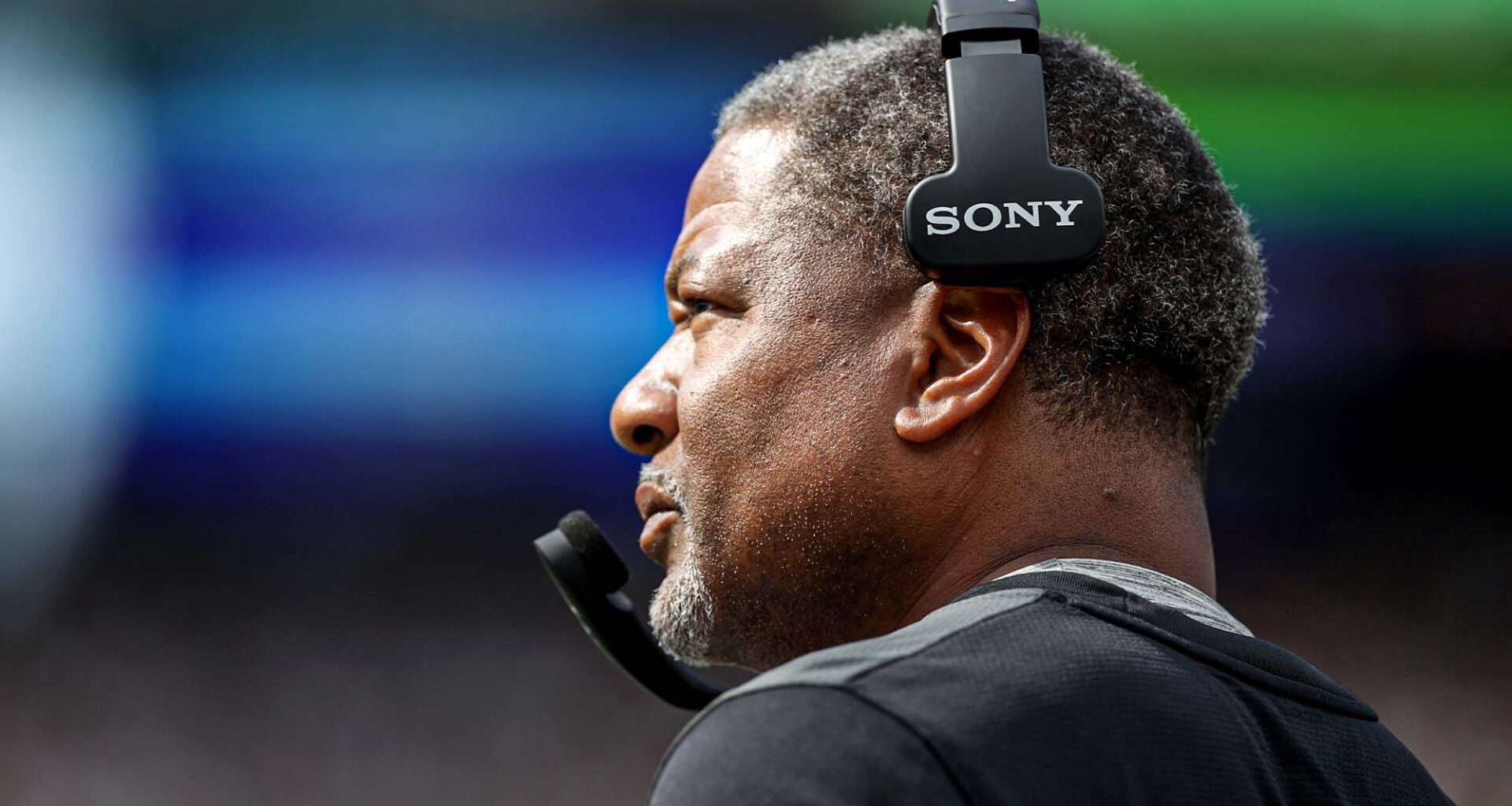
Fans have been quick to blame defensive coordinator Steve Wilks for Thursday night’s loss. While the veteran coach certainly owns part of the responsibility, he’s far from the only reason for Thursday’s collapse.
The Jets’ personnel is razor-thin
Simply put, the Jets aren’t talented enough to hang with teams like New England. Following the trades of Sauce Gardner and Quinnen Williams, New York is down to a paper-thin defensive lineup.
Injuries have put the Jets in an even more vulnerable position. Cornerback Azareye’h Thomas missed the game with a concussion, and his replacement, Qwan’tez Stiggers, briefly left the game with a hamstring injury before returning.
Without Gardner or Thomas, the Jets didn’t have the reinforcements to hang with New England’s wideouts.
Jarvis Brownlee Jr., who was dominant early in his Jets tenure after being acquired before Week 4, has cooled off in recent weeks. Thursday was his roughest outing yet. He committed three penalties and allowed all five of his targets in coverage to be completed for 77 yards, earning a brutal 31.7 coverage grade from Pro Football Focus.
The Jets have also been forced to start safety Tony Adams, whom they benched earlier in the year, due to Andre Cisco’s season-ending injury. On Thursday, the Patriots picked on Adams, completing all four passes his way for 47 yards.
The talent issues extend to the defensive front.
Jermaine Johnson continues to bring energy, racking up six pressures and a sack against New England, but the help around him and Will McDonald just isn’t there. Besides Jowon Briggs, who has been a standout since the Williams trade, the Jets are forced to rely on players like Micheal Clemons, Tyler Baron, Mazi Smith, and Jay Tufele in their four-man rush packages.
Wilks deserves some criticism for Thursday’s defensive issues. Still, there’s only so much a coordinator can do when his pass rush can’t generate consistent pressure and his depleted secondary allows completions on every throw in their direction.
New York isn’t built to compete with this level of competition
On top of dealing with a depleted lineup, the Jets’ defense faced one of its toughest challenges yet, going up against MVP frontrunner Drake Maye and Josh McDaniels’ explosive New England offense.
Maye has been consistently dominant against every level of competition this season, including a 280-yard, three-touchdown performance against a Cleveland Browns defense that has allowed the second-fewest total yards per game this season.
There’s no sugarcoating it: Maye is a special quarterback. He’s the kind of player who can make even the best defenses look ordinary, and on Thursday night, the Jets learned that firsthand.
No matter what the Jets threw at Maye—pressure, disguised coverages, different fronts—he had an answer. He made every throw you could ask for, from tight-window lasers over the middle to perfectly placed deep balls down the sideline.
Even when New York’s coverage was solid, Maye’s accuracy was better. He kept threading the needle and hitting his receivers in stride like it was nothing.
To make life difficult for that type of quarterback, you need special playmakers all over the field. The Jets don’t have enough of them after their deadline moves, and they must deal with that reality until they get a chance to strengthen their roster.
Where Wilks can improve
Despite the challenges presented to him, Wilks certainly isn’t free of blame.
The area where Wilks needs to improve most? His schematic stubbornness.
New York is running man coverage on 45.1% of defensive snaps, the third-highest rate in the NFL, but the Jets have actually been far more effective when they sit back in zone—especially on third down.
The Jets play man 54.5% of the time on third down, giving up 5.5 yards per dropback. When they switch to zone on third down, they allow just 4.1 yards per dropback, ranked eighth-best in the NFL.
New England exploited these tendencies on Thursday night. In third-down situations, the Patriots frequently drew up easy answers for Maye against the Jets’ man coverage. While the players could have covered better, Wilks’ predictable man-coverage tendencies made their jobs tougher, as New England consistently drew up favorable concepts.
Patriots exposing the Jets heavy 3rd/4th down man tendencies
Motion in the outside WR, fake it like hes running under the traffic of the #2/3 and then break back outside for an easy first down pic.twitter.com/luNg4gmT6D
— Joe Blewett (@Joerb31) November 15, 2025
Jets running man again on 3rd and 3 here
Brownlee (bottom slot) gives the WR too much room, needs to play tighter to the sticks
Jets are beat up top as well, #3 runs a rub, #2 cuts under.
No banjo call, nothing, a nearly impossible spot to win as a defender pic.twitter.com/U1pmwNXuVw
— Joe Blewett (@Joerb31) November 15, 2025
The numbers don’t lie: This defense has become painfully predictable.
At some point, Wilks has to adjust. Great coordinators adapt to what their team is best at.
The Jets can’t keep dying on the same hill every week.