
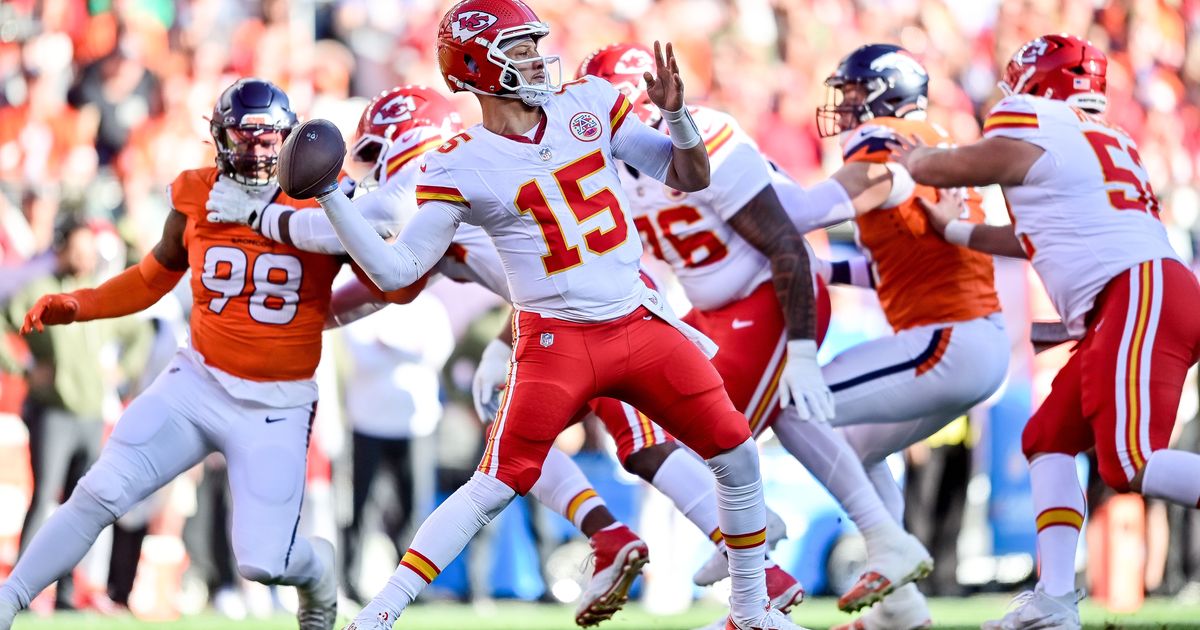
Photo: Dustin Bradford/Icon Sportswire/Getty Images
You’re never going to believe me when I say this, but I swear it is true: There was a time that Tom Brady, Bill Belichick and the New England Patriots were America’s Team, true underdogs that everybody I knew was cheering for. Forgive us: We were young, and we did not know.
There were multiple reasons we were all rooting for the Patriots in the 2002 Super Bowl — a desire for an upset, the U2 halftime show, that we didn’t really know Brady or Belichick yet, just general immediate post-9/11 brain fog — but the primary one was that we thought they were taking down a dynasty. The Greatest Show on Turf St. Louis Rams had won the Super Bowl two years before and were heavily favored to do so again, looking for all the world like an unstoppable team that would win titles for years to come; they looked like the dynasty in waiting. And after a succession of the Steelers, 49ers, Cowboys, and Broncos, we were very sick of those. The Patriots felt like they were standing athwart history, like the little guys taking down the empire.
This is, of course, the opposite of what they were. That Super Bowl would end up being the first of six titles Brady and Belichick would win together with the Patriots, teaming up to become the most storied and hated franchise in NFL history. The duo would eventually break up — Brady to win one more title with the Buccaneers, Belichick to do whatever the heck he’s doing in Chapel Hill right now — but they remain as avatars of what sports fans claim to dislike more than anything else: a dynasty. Sports fans love the toppling of a dynasty, too, which is why their breakup was so satisfying: It brings them back to earth, reminds us that they are human, lets us pretend they are zhlubs like the rest of us.
But the circle forever comes back around, which brings us to today and, potentially, the end of the Patriots’ replacement dynasty. The year after the Patriots’ final title, 2020, was the first championship won by the Kansas City Chiefs, a young, plucky upstart team with an endlessly inventive and excited 24-year-old quarterback named Patrick Mahomes; his perpetual-bridesmaid coach, Andy Reid (who coached the Eagles for 14 years without ever winning a title); and an All-Pro tight end named Travis Kelce, who was known more for his yards-after-catch ability and that he’d been suspended from his college team for smoking weed than he was for having once starred on his own reality dating show. They were fresh and new and fun, mostly because we didn’t know they’d win two more Super Bowls in the next four years and we’d all get sick of them too.
This is all to say: The Chiefs’ dynasty is in serious danger and … everyone seems fine with it?
Kansas City lost a brutal game Sunday to the Denver Broncos, a team that has passed them for first place in the AFC West, dropping the Chiefs to 5-5 on the season, the latest they have been .500 in a decade. The Chiefs have won nine straight division titles, but they now face the very real possibility of missing the playoffs entirely. January games in Kansas City have been the signature feature of the NFL postseason for a decade now. But you won’t see Taylor Swift in an Arrowhead Stadium luxury box this year.
There are a variety of reasons for this. ESPN’s excellent Bill Barnwell has an exhaustive rundown of the Chiefs’ problems, but all told, he makes a good case that the major difference between last year’s Super Bowl–losing team and this year’s 5-5 one is simply bad luck. It’s telling that the Chiefs missing the playoffs and potentially even dismantling when the season is over … doesn’t seem like that big of a deal? It is possible this is the end of the Chiefs as we know them, after all. Reid is the second-oldest coach in the NFL and has toyed with retiring for years, and while Kelce may seem youngish in a pop-culture sense, he’s one of the oldest players in the NFL, and his body has 14 years of tight-end mileage on it. (His numbers this year are also far below his Hall of Fame career averages, though they are an improvement on last year’s.) It is widely thought that Kelce will retire at the end of the season; he does, after all, have a lot of other stuff going on. Mahomes isn’t going anywhere — he’s still only 30 — but his numbers are also far below his career peak, and he has arguably been passed among quarterbacks by the Bills’ Josh Allen, the Ravens’ Lamar Jackson, the Rams’ Matthew Stafford, and even (gasp) the Patriots’ Drake Maye, their 23-year-old phenom who has taken the league by storm this year. (In further proof that we cannot remember our own history, there are even people who consider him, the Patriots quarterback, a plucky and likable underdog himself.) The Chiefs, as we have known them, are this close to ending.
But there is not the Sturm und Drang of the end of the Patriots dynasty, none of the Belichick drama, no Brady storming off to win his own championship in Tampa Bay. It just feels … well, normal? Can it feel like no big deal? For all the dislike of the Patriots there was at the end, they remained incredibly popular and watchable, a reliable ratings juggernaut: People would tune in even if they hated them — especially if they hated them — just to root for them to lose. (Dynasties have proved quite valuable in this way.) This led to a legitimate concern that when that dynasty ended, the NFL would struggle to replace Brady, Belichick, and the Patriots as main characters. But the fall of the Chiefs is causing no such worry. The league is booming in popularity — growing, again, somehow, every year — and seems to mint new boldfaced names every week; it was just six weeks ago that the best-selling jersey in the sport belonged to Giants rookie Jaxson Dart. The league has always prided itself on being bigger than any individual player, but now it doesn’t even seem to need ongoing year-to-year story lines: The best teams this year are out-of-nowhere insurgents like the Colts, the Broncos, and the Bears, and the league hasn’t missed a beat. That desire to knock off the Patriots (or, previously, the Rams) drove the league’s narratives for two decades, and it continues into the Chiefs’ era. But now none of that is necessary. There is always a new star because there aren’t really new stars: The only star is the NFL itself.
It’s also possible the answer to “Why aren’t people rejoicing at the end of the Chiefs?” is simple: People do not hate Patrick Mahomes, Andy Reid, and Travis Kelce nearly as much as they hated Tom Brady and Bill Belichick. But it turns out that the NFL doesn’t need dynasties any longer. Or, more accurately: The only dynasty that matters is the NFL itself.
Sign Up for the Intelligencer Newsletter
Daily news about the politics, business, and technology shaping our world.
Vox Media, LLC Terms and Privacy Notice