
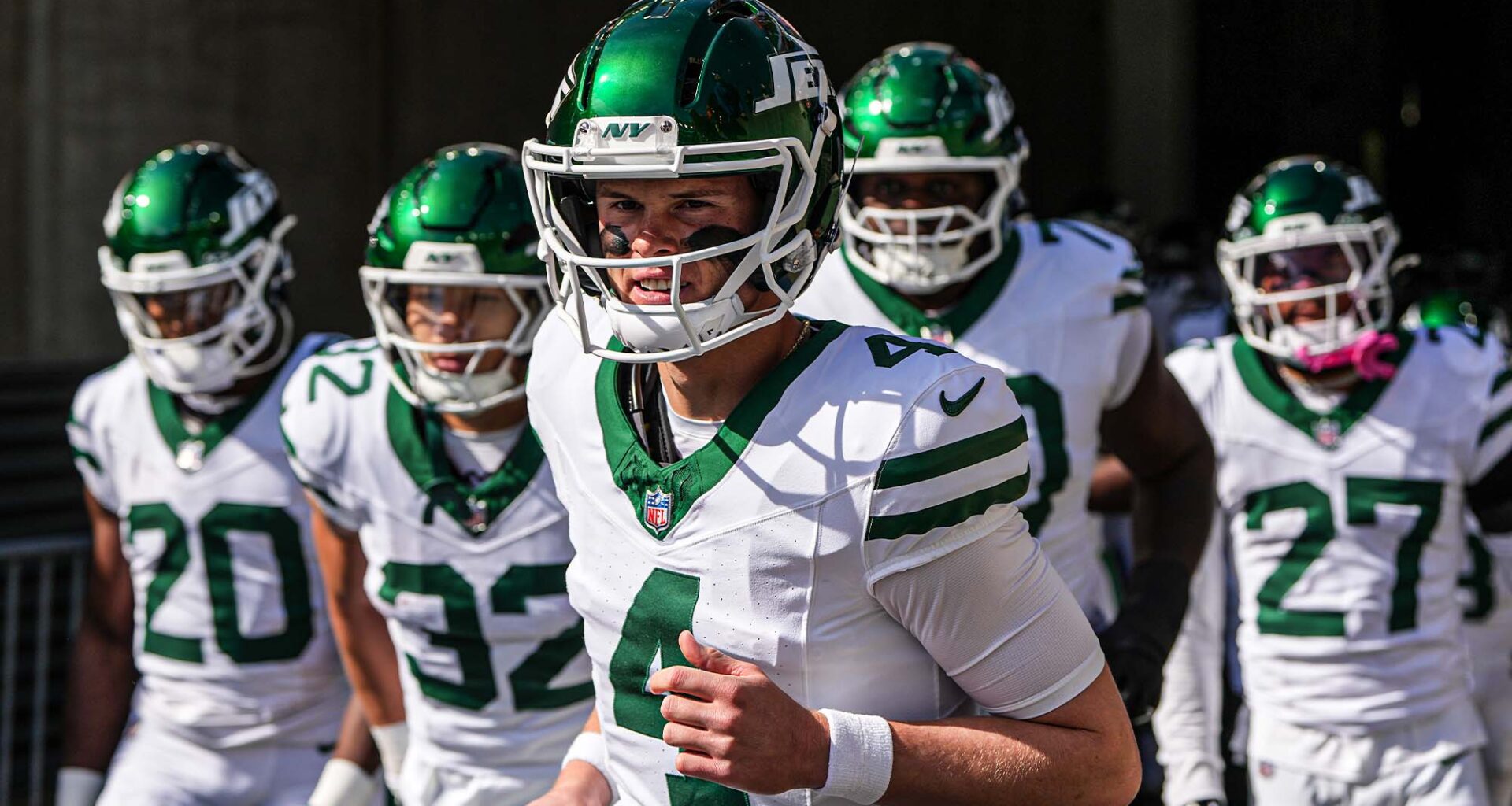
It finally happened. After watching the passing offense fail to record over 150 yards in four of the last five games, the New York Jets have made a change at quarterback.
Dianna Russini of The Athletic reported Monday morning that the Jets are benching Justin Fields for veteran signal-caller Tyrod Taylor going into their Week 12 showdown with the Baltimore Ravens.
The move doesn’t come as a surprise. New York’s passing offense ranks dead last in most categories. While injuries to the receiving corps have certainly hurt, the struggles at quarterback are the main reason why the Jets are 2-8.
While the decision makes sense, there is still another quarterback switch that must be made.
It involves their rookie signal-caller on the practice squad.
Jets’ QB changes
The Jets were already prepared to bench Fields once this season. After a dismal showing in the first half of their Week 7 game against the Carolina Panthers, New York turned to Taylor after halftime in an eventual 13-6 loss.
Taylor was expected to be the starting quarterback the following week, but a knee injury kept him out. When Fields led the Jets to their first win in an impressive performance, it didn’t make sense for head coach Aaron Glenn to switch quarterbacks.
New York’s 27-14 loss to the New England Patriots, though, forced the organization’s hand.
NY Jets film breakdown: Young silver linings emerge in Pats loss
Fields’ time with the Jets has not featured any improvement from the struggles that plagued him as a former first-round pick out of Ohio State. With the Chicago Bears and Pittsburgh Steelers, Fields’ issues stemmed from his inability to process and read defenses.
Those same weaknesses have continued to plague him in 2025.
The numbers — a near 63% completion percentage and seven touchdowns to just one interception — don’t tell the full story. His inability to keep New York’s offense afloat is why he’s no longer starting.
But what happens next? Will the Jets make Fields the immediate backup to Taylor?
It doesn’t make much sense for New York to keep Fields in a position where he could return to the field. Taylor is 36 years old, and the likelihood of him getting hurt over the final seven games is relatively high.
Neither Taylor nor Fields is expected to be the long-term future of the Jets’ offense. There’s little the organization needs to see on film anymore to be proven otherwise.
The organization is now in evaluation mode. They need to look at some of the younger players on the roster and assess their standing for the years to come.
That’s why it makes more sense for the Jets to call up Brady Cook from the practice squad and make him the immediate backup to Taylor, instead of potentially turning back to Fields in what is already a lost year.
Brady Cook profile
If you asked reporters during rookie minicamp and OTAs whether Cook could ever be a viable approximation of an NFL quarterback, most would simply say no. The Missouri product struggled mightily during offseason workouts as he adjusted to the speed and skill of the pro level.
But during training camp, something clicked for the 24-year-old.
Cook continuously improved his game throughout the preseason. As a UDFA, he has been stashed away on the practice squad, but his preseason effort was encouraging enough to keep him over the likes of second-year man Adrian Martinez.
There is no guarantee that Cook is going to be the future of the organization. It is highly unlikely that he will even see the field after this year.
But there’s nothing the Jets can do to save their 2025 season. They should be focused on reviewing all young players and finding out which ones are worth keeping around in the future.
Fields and Taylor won’t be back in 2026. It’s fair to give Cook a chance to prove that he doesn’t deserve the same fate.