
Editor’s note: This story is part of Peak, The Athletic’s desk covering leadership, personal development and performance through the lens of sports. Follow Peak here.
Ndamukong Suh played 13 years in the NFL and won a Super Bowl with the Tampa Bay Buccaneers. Follow his show, “No Free Lunch,” here.
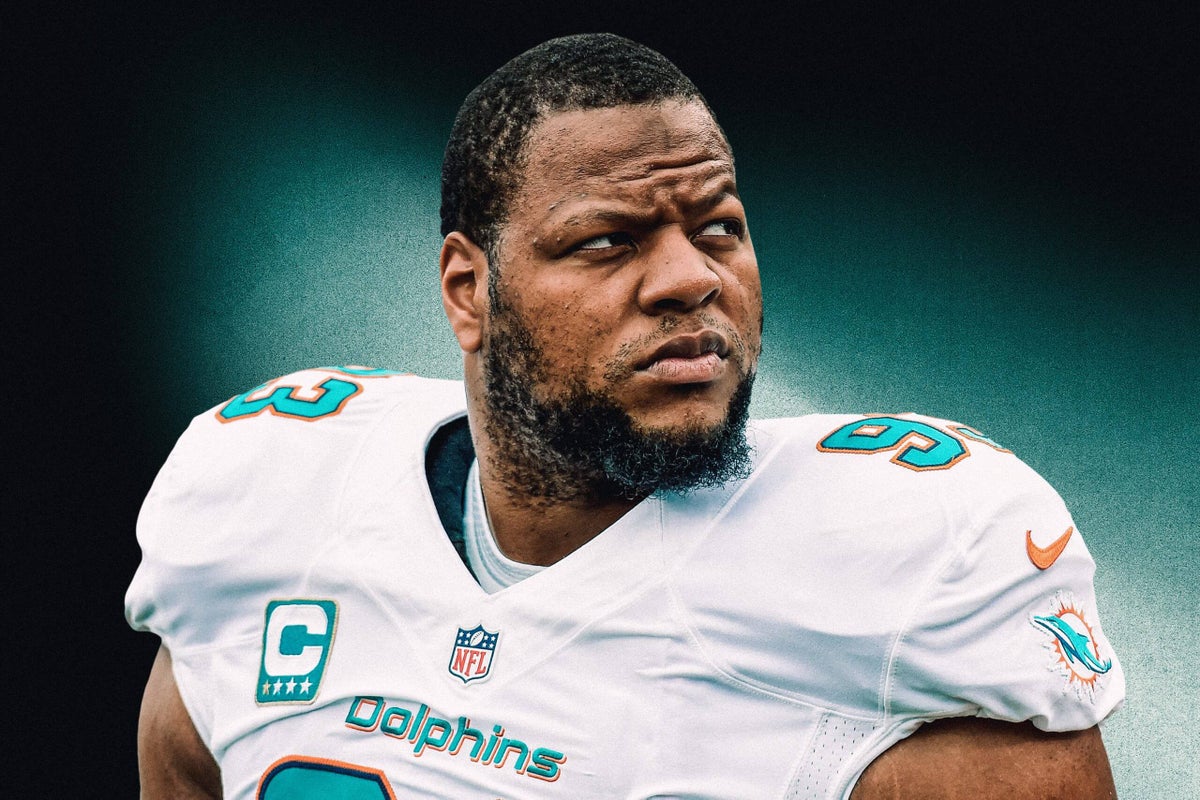
During my first year with the Miami Dolphins, I spoke up in a players-only meeting. I remember it vividly.
Our head coach, Joe Philbin, was fired four games into the 2015 season. Dan Campbell, now the head coach of the Detroit Lions, became our interim coach. For Campbell’s first couple of games, everyone was bought in and playing hard. But that started to fizzle. Especially on the defensive side of the ball.
I could tell that guys were mailing it in and there just to collect a check. I didn’t find that acceptable. You should still play hard. You should still play for pride. I had just signed a big contract with the Dolphins that offseason, and I wanted to be a cornerstone of the franchise. So I spoke in the players-only meeting of defensive players.
I basically said: “I’m going to be here. Not only because of my contract, but because I’m going to continue to play at a high level. The question is if you’re going to be here next year.”
I was too hostile, too direct. After that meeting, a lot of teammates gave me feedback. I caught a lot of flak. Kaleb Thornhill, our director of player engagement, pulled me into his office. He told me: I get what you were trying to get across there, but half that room couldn’t comprehend what you were saying, let alone digest it because of the way you went about it.
What he taught me that day is a lesson I still utilize today: The importance of emotional intelligence.
Kaleb taught me that your delivery and how you approach people are key. Usually, when you turn somebody off, they don’t even listen to the words you want them to hear because you’ve turned them off. That’s what I did in that meeting. I think what I said needed to be said — but my delivery was incorrect. I needed to say it in the right way.
For example, I could come to you and say, “Hey, you’re absolutely terrible. You did not do X, Y, Z. And if you do this again, you’re going to be fired.” Or I could come to you and say, “Hey, I see you had the right idea, but I would have probably done it this way. If you need help, I’m here to help you, but we need to take this a step further. And if we don’t, we’re going to cross a bridge where we can’t return.”
I said the same thing in both examples, but I delivered it in two different ways. One that you could engage with, and one where I would make you shut down.
As a leader, you have to get to know people before you can really approach them: the trials and tribulations they’ve gone through, how they grew up, all those things. If you don’t, you’ll have a hard time getting your message across.
I’ll give you an example. In 2019, I went to play for the Tampa Bay Bucs. Vita Vea, another defensive lineman, was about to start his second season. Vita and I have talked about this: I know he thought I was an ass when I got there. He wasn’t excited about having to deal with me.
Fast forward. Vita and I started to hang out a little bit. One thing I was forceful about with Vita (and all the defensive linemen) was that when we were on the road, he had to come to dinner with me and the rest of the defensive line. We started to build a bond.
I also tried to get him to come work out with me, to join me in the offseason and train with me. He told me in his own way that he wasn’t ready yet. Old me would have been done with him. During my second year in Miami, I made the same offer to a young teammate who flew out to Portland, but then blew off the workouts. I felt disrespected, so I wrote him off. I didn’t leave room for our relationship to grow and change.
This time, I told Vita: “You will come around when you’re ready. And when you’re ready, I will be still there. Hopefully, we’re still playing together. But even if we’re not, I will still be ready to support you.”
Emotional intelligence taught me to be invested in somebody and learn about who and how they are. So I learned about Vita’s culture, I learned about his now-wife, I learned all these different things about him. Eventually, he did come around and he did come work out with me in Portland, and I think it helped him get better. We’re still thick as thieves to this day.
My focus on emotional intelligence has been an ongoing evolution that continues to serve me well. I make a conscious effort to integrate its principles into every facet of my life: in the business world, in my media work like podcasting, and most importantly, at home with my marriage and children.
Ultimately, I believe it’s the core competency for building strong, lasting relationships and a truly successful life.
— As told to Jayson Jenks