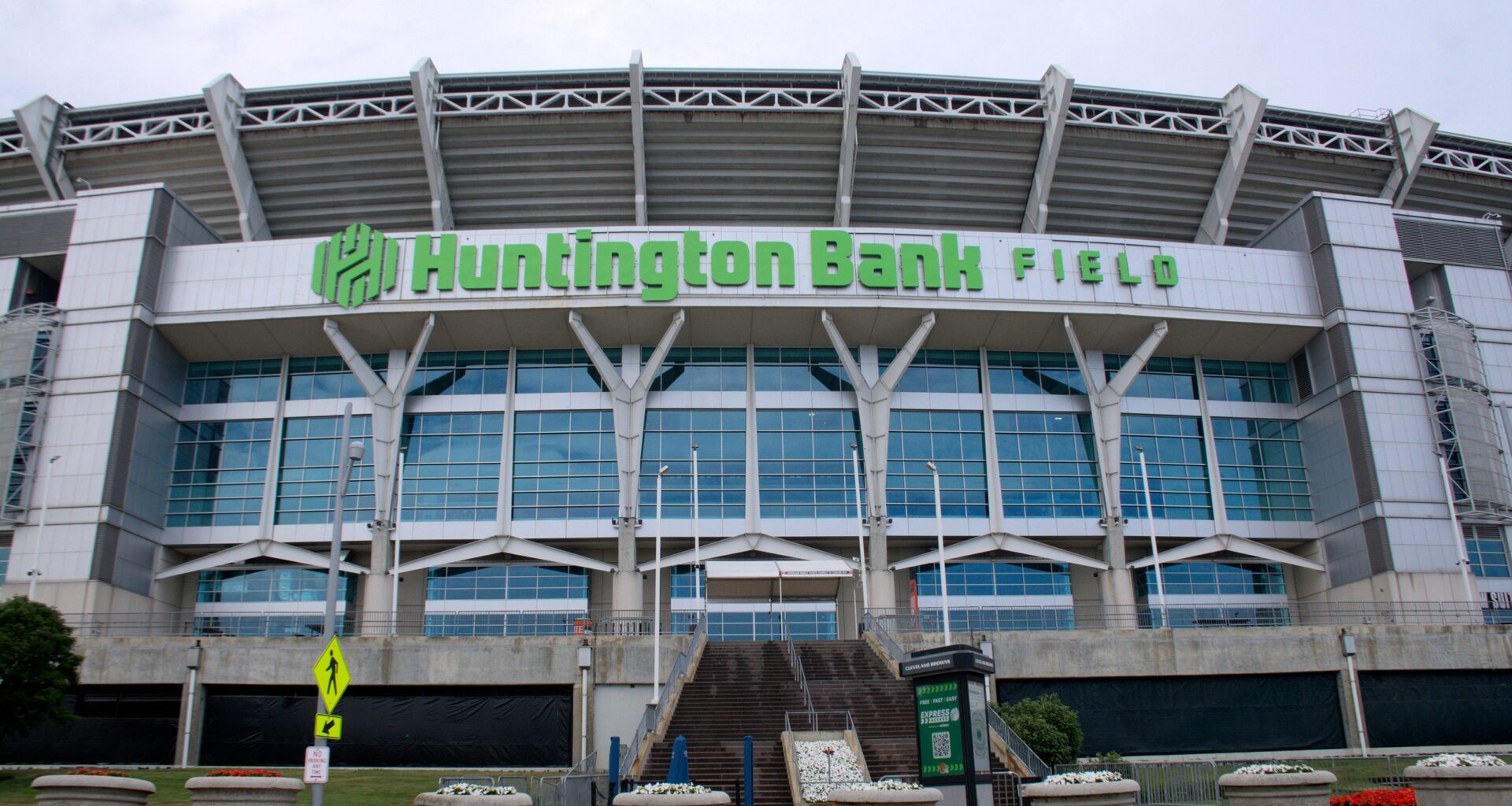
It took a contentious court fight, but don’t call it a divorce.
Although Cleveland’s $100 million deal with the Browns blesses the team’s move to Brook Park, it doesn’t end City Hall’s relationship with team owners Dee and Jimmy Haslam. In fact, it will tie them together for years after the dust settles from the demolition of the lakefront stadium.
When the Browns spend money on community benefit projects under the deal, Cleveland must publicly give the team and the Haslams credit for their donation, according to the settlement terms. The projects would be mutually agreed upon by the city and the team, an administration summary of the deal said.
Cleveland is also drawing on the Haslams’ Republican connections in Columbus and President Donald Trump’s administration as the city tries to close Burke Lakefront Airport.
“One of the benefits of this new relationship with [the Haslam Sports Group] that’s a little less litigious is that we can work hand-in-hand on some of our shared priorities,” Jessica Trivisonno, a senior advisor to Mayor Justin Bibb, told City Council in mid-November.
Meanwhile, the city pledged help with infrastructure near Cleveland-Hopkins International Airport and the new Brook Park stadium site. (But that doesn’t mean City Hall is paying to help the Browns move, Bibb officials have said.)
Bibb calls it a pragmatic deal. Two Cleveland City Council members recently likened it to a deadly encounter in an alley. Wherever you fall, here’s what to know about the agreement.
Under the deal, City Hall would drop its legal objections to the Browns’ move to the suburbs. The court fights have cost Cleveland taxpayers $1 million in legal bills so far.
In return, the team would pay to demolish the downtown stadium, work estimated to cost $30 million. The Browns would give Cleveland $50 million for lakefront development and $20 million for other community benefit projects.
You can read the settlement terms here. The Bibb administration also provided answers to 54 questions from City Council about the deal.
Read on for a closer look at the settlement.
$100 million, but not all at once
The Browns are spreading their payments out over the next decade and a half.
Cleveland will receive $25 million for the lakefront once the city and team sign off on the settlement. The second $25 million will come in $5 million increments each year between 2029 and 2033.
The team will pay out the $20 million portion of the settlement in $2 million installments over 10 years. That 10-year clock begins when the lease with Cleveland expires. Currently the expiration date is 2029, but the Browns can extend the lease by up to two years.
Rising prices will take a toll on the value of the settlement over the years. In other words, Cleveland can buy more with $5 million today than it will be able to buy with $5 million in 2033.
Taking inflation into account, City Hall estimates that the full settlement is worth $87 million in 2025 dollars.
What if the lakefront stadium demolition costs more than $30 million?
The Browns will knock down the stadium “at no cost to Cleveland taxpayers,” according to the Bibb administration’s answers to council questions. Team ownership will cover the demolition costs even if they go above $30 million, the city said.
After demolition, the team will take the land back to a “pad ready” state. Trivisonno said the city and the Browns have been working out exactly what that means — but the gist is that the land must be ready to be built on again.
How will Cleveland spend its $50 million in lakefront money?
The city will spend that money planning, engineering, design, roads, streetscapes and park space, the administration said. City Hall will also use the money for “short-term” projects, such as the pop-up North Coast Yard, meant to make the lakefront more attractive, Trivisonno told council.
Scott Skinner, the director of the North Coast Waterfront Development Corp., described lakefront parks as “something that we can start right away that entices potential development partners.” Skinner’s organization is a nonprofit that the city helped launch in 2023 to assist with lakefront development.
He continued, “When you look around the city of Cleveland, really quality public space attracts additional private investment.”
How will Cleveland spend the other $20 million in cash from the Browns settlement?
At council hearings, city officials gave more detail on how Cleveland and the team would spend the community benefit portion of the settlement.
Each year, the administration and City Council would draw up projects to propose to the Haslam Sports Group.
Those projects could be capital improvements to city facilities, the construction of new city buildings, educational programs and recreational programs. Trivisonno described the categories as “purposefully very broad and inclusive.”
“Important to note that those will happen throughout the city, not simply on the lakefront,” Bradford Davy, Bibb’s chief of staff, told council.
According to the settlement terms, the team’s spending “will be publicly acknowledged by the City as donations by the Browns organization and the Haslam/Johnson families.”
Some council members bristled at the idea of bringing projects for the Haslams’ approval. Charles Slife said he was concerned about “an ability to essentially have priorities of this community vetoed.”
Brian Kazy, one of City Council’s opponents of the Browns deal, said he didn’t believe the city should let the Haslams keep “their fingers in the cookie jar.”
What influence will the Browns have on the lakefront and at Burke airport?
The settlement terms say that the Browns will help Cleveland with its lakefront and Burke development plans. That doesn’t mean the team has development rights at the lakefront, city officials told council.
But the city would “leverage” the Haslam Sports Group’s relationships in Washington, D.C., and Columbus on such issues as closing Burke, Trivisonno said.
Dee and Jimmy Haslam are prominent political donors. Bill Haslam, Jimmy’s brother, was the Republican governor of Tennessee.
Asked about Burke in October, Bibb told reporters that Jimmy Haslam had already helped with U.S. Transportation Secretary Sean Duffy and Ohio’s U.S. Sens. Bernie Moreno and Jon Husted.
“They’ve been helpful thus far,” Bibb said of the Haslams. “Jimmy called Secretary Duffy and he’s been helpful with Bernie and Jon Husted, and I’ll take any help I can get with the other side of the aisle to advance one of my priorities as mayor.”
Those same leaders are hearing from the other side of the argument, too. A group that includes airplane owners and pilots is lobbying to keep Burke open.
What will Cleveland do to help the Browns’ $2.4 billion Brook Park stadium?
Cleveland is not helping to finance the new suburban stadium, which is just outside the city limits next to Cleveland-Hopkins International Airport.
But by dropping its lawsuits over the move, City Hall is removing a stumbling block to the project. Under the settlement, Cleveland would also use its “best efforts” to help the Browns with infrastructure plans surrounding the new stadium.
One witness at City Council’s hearings flagged that language as a potential pitfall for the city. Ken Silliman, who was Mayor Frank Jackson’s chief of staff, warned that the city could be stuck supporting road work near the stadium at the expense of other projects.
He recommended changing the phrase “best efforts” to saying the city would “reasonably cooperate” on infrastructure. Trivisonno and Law Director Mark Griffin said that they would take a closer look at that language.
“The intention was not to prioritize Brook Park projects over the city’s projects,” Trivisonno said. “And I will also say that we’ve clarified that none of these obligations require the city to make any sort of financial commitment to the project in Brook Park.”
The lakefront stadium could come down in 2029. In the meantime, is Cleveland still paying for it?
Yes.
Cleveland still owes about $32 million on the debt that it took out to finance the lakefront stadium in the 1990s. The city will pay off that debt by the end of 2028, the administration said.
In 2013, the city agreed to pay the Browns $2 million a year for 15 years to support renovations at the stadium. Cleveland has $6 million left to pay on that deal.
Cleveland also pays for capital repairs at the city-owned stadium. The administration expects to spend $4 million a year on those repairs through the end of the lease. That’s about what Cleveland receives from the Cuyahoga County sin tax on alcohol and cigarettes.
County voters renewed that tax in 2014 to pay for repairs at the city’s three professional stadiums. By the time the tax expires in 2034, one of those stadiums could be gone.