
To the conspiracy theorists, adamant that the NFL operates according to a commissioner-ordained script; to the haters, fatigued by excellence and praying on the downfall of this generation’s dynasty; to the underdog lovers, fervently offering supplications for the Davids in a league of Goliaths … this year’s for you. Or, so it seems.
The football gods apparently have heard from on high and have blessed us with a pro football season from Bizarro World, where down is up and up is down, where upstarts experience meteoric rises and the usual standard-bearers find themselves in danger of uncharacteristic doom.
If the postseason began today, in early December, preseason Super Bowl favorites like the Kansas City Chiefs, Detroit Lions, Cincinnati Bengals and Buffalo Bills would either miss the playoff cut or have to settle for a wild-card berth and unfavorable seeding. Meanwhile, preseason longshots like the New England Patriots, Denver Broncos and Chicago Bears rank among the hottest teams in the league. Perennial contenders like the Baltimore Ravens and defending Super Bowl champion Philadelphia Eagles wobble and underachieve. Injury-riddled squads like the San Francisco 49ers and Tampa Bay Buccaneers have defied odds and remain in the mix. And slow-starters like the Houston Texans, Carolina Panthers and Dallas Cowboys appear threatening.
No mere mortal could have orchestrated such a compelling plot.
The field truly remains wide open for a variety of reasons.
Warts exhibited by the traditional front-runners have caused them to come back to — and in some cases, fall behind — the pack. For the better part of a decade, regardless of what else took place in the league, football fans could count on Patrick Mahomes, Lamar Jackson and Josh Allen to lead their teams on championship chases. But this season, subpar supporting casts could betray all three generational talents.
For Mahomes, a rebuilding offensive line, a pass-catching unit full of secondary receivers, an aging Travis Kelce, no true game-changing No. 1 target and regression on defense have caused the Chiefs — traditionally, the most clutch team on the planet who entered the season with 17 straight victories in one-score games — to lose their mojo and drop seven of eight games decided by 8 points or fewer.
A season of mortality from the Chiefs would seemingly have opened the door for Mahomes’ rivals Jackson or Allen to at last get their Lombardi Trophy. However, they too have stumbling blocks all around them.
Defensive growing pains and an early-season injury to Jackson placed Baltimore in a 1-5 hole. A five-game mid-slate winning streak has restored hope. However, an inconsistent line and a lack of a top-flight receiver continue to rank among the Ravens’ problems.
For all of the wizardry delivered by reigning MVP Allen, Buffalo is on the verge of seeing its six-season dominance of the AFC East come to an end thanks to a feeble defense, inconsistent usage of the run game and a streaky pass-catching unit lowlighted by the apparent big swing-and-miss on 2024 second-rounder Keon Coleman.
In the NFC, overnight, the Eagles have gone from juggernaut to sputtering unit plagued by offensive ineptitude, and the Lions continue to struggle to overcome the offseason departures of offensive coordinator Ben Johnson and defensive coordinator Aaron Glenn. Dan Campbell’s squad currently finds itself on the outside looking in.
Meanwhile, the floor of the league has risen. Sure, this season features the typical wheel-spinning franchises like the Tennessee Titans, Las Vegas Raiders, Cleveland Browns and Arizona Cardinals, among others. Teams like the Green Bay Packers and Los Angeles Rams continue to thrive. The accumulation of smart drafts, shrewd free-agent signings and coaching changes has elevated not only Denver, Chicago and New England, but also the Indianapolis Colts, Jacksonville Jaguars, Seattle Seahawks, Carolina Panthers and Los Angeles Chargers.
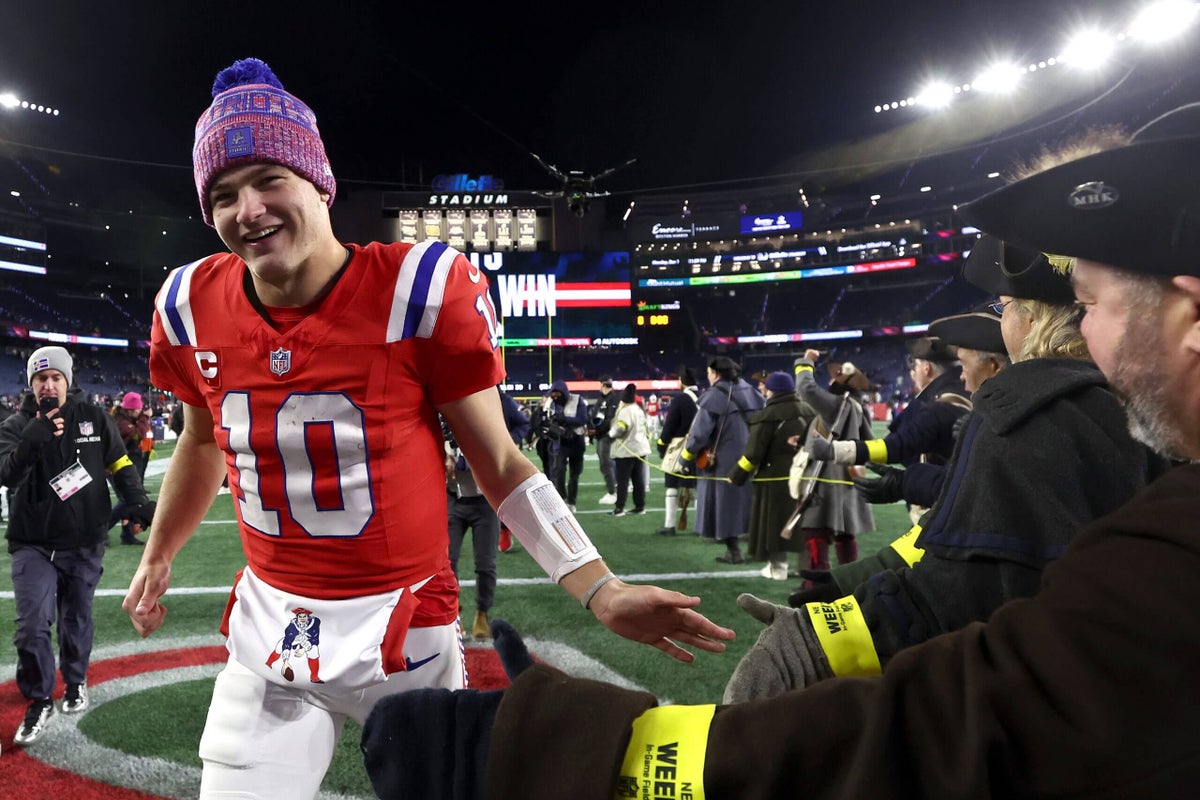
No franchise has experienced a rapid turnaround comparable to that of the Patriots, who, two seasons after the Bill Belichick era fizzled out, hired former New England linebacker-turned-head coach Mike Vrabel after six seasons in Tennessee and a year spent as a consultant in Cleveland. Entering the season, the Patriots were viewed as a team with a roster that possessed many deficiencies around second-year quarterback Drake Maye. And even after offseason moves to improve the offensive and defensive lines, as well as give Maye a veteran receiver in Stefon Diggs, it was believed that New England would still need another year or two before contending. A season-opening loss to the Raiders seemed to confirm this, but the Patriots have since made steady progress and have won 11 of their next 12 games — including 10 straight — to take the top spot in the AFC.
Vrabel’s Patriots also seemingly embody the brand of football that has translated into success this season. There’s nothing prolific or particularly electrifying about New England. The 23-year-old Maye is an MVP candidate in his second pro season, and Maye leads the NFL with 3,412 passing yards. But he doesn’t have a single 300-yard passing game this season. He is, however, efficient, averaging 262.5 per contest, and he takes care of the football, throwing just six interceptions as opposed to 23 touchdown passes. New England is balanced, ranking seventh in the league in total offense and total defense. The Patriots also rank sixth in defensive total EPA and eighth in offensive total EPA, making them one of only two teams in the top 10 in both categories (the Rams being the other). New England also boasts an impactful special teams unit and is one of just two teams with at least one kickoff return for a touchdown and at least one punt returned for a touchdown (the Pats have taken two punts to the house).
The Patriots have managed to execute with efficiency across the board, and the Rams are as explosive on offense as they are on defense, which makes Sean McVay’s squad a popular Super Bowl pick. However, other teams have notched wins while leaning into one or two strengths to compensate for glaring weaknesses.
Denver, for example, is still waiting for second-year quarterback Bo Nix to develop into a consistent passer. His quarterback rating of 85.8 ranks 24th in the league, and the Broncos’ 221.5 passing yards per game ranks 14th, while their 23.7 points per contest rank 13th. However, a fierce defense that leads the NFL with 51 sacks and holds foes to just 18.2 points per game (fourth fewest) has served as Denver’s calling card, positioning the Broncos for a league-best eight one-score games.
Chicago quarterback Caleb Williams, like Nix, has experienced his share of ups and downs in Year 2. He ranks 14th in the league with 226.8 passing yards per game despite completing just 58.1 percent of his passes, and Chicago’s defense ranks 27th in the league in total defense. But the Bears have used a punishing rushing attack (153.8 — first in the NFC, second overall) and a league-leading 26 forced turnovers by the defense to pull off victories in six of seven one-score games and a 9-3 record (first in the NFC).
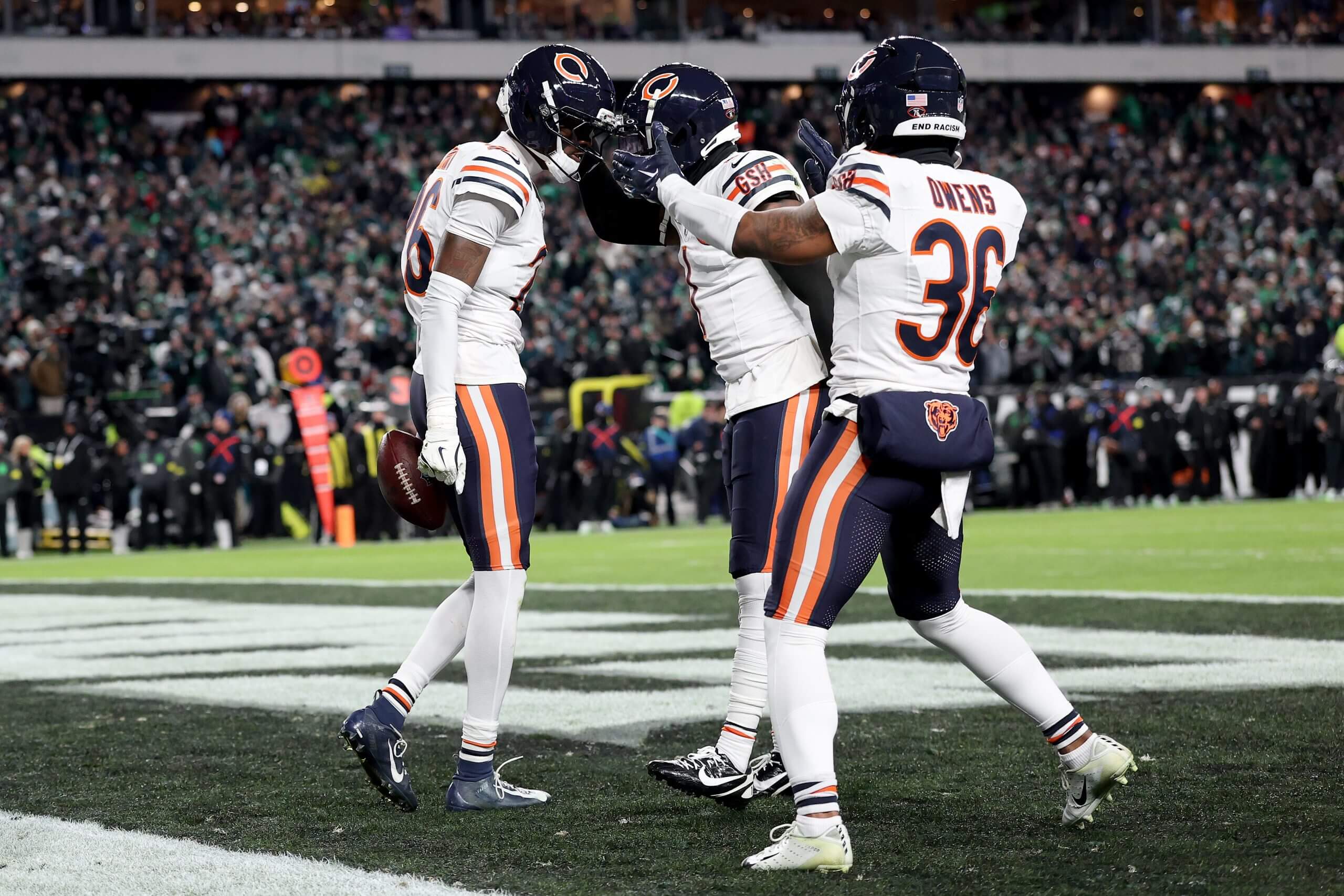
The Bears’ defense may give up a lot of yards, but their ability to force takeaways has been a winning formula. (Emilee Chinn / Getty Images)
Yes, in an age of pro football traditionally ruled by elite passers and prolific scoring attacks, Mahomes, Jackson and Allen find themselves in trouble while less-heralded quarterbacks do their best Trent Dilfer, directing steady yet unspectacular offenses while leaning on imposing defenses to get it done.
This league truly is cyclical.
But don’t mistake the lack of front-runner starpower for boring football.
The 2025 NFL season has ranked among the most prolific and the most hotly contested campaigns in league history. Teams have combined for an average of 45.89 points per game — the highest mark since the 2020 season’s 49.49. Offenses have scored 946 touchdowns — the fourth-highest total through 13 weeks behind that 2020 campaign (1,040), 2018 (1,055), 2021 (1,020) and 2015 (1,000). Meanwhile, 49 games have come down to deciding scores in the final two minutes of regulation or overtime (tied with the 2015 season for the league record through Week 13). Sixty-six percent of games (129 of 194) have been within one score in the fourth quarter, and 50 percent of games have been decided by 7 points or fewer. And 27 percent (53 of the 194 games) have been decided by 3 points or fewer.
Entering Week 13, a whopping 16 teams — half of the league — already had recorded at least seven victories, and six had at least nine wins. That’s why December should play out in such captivating fashion.
Early surprise divisional leaders like the Colts and Pittsburgh Steelers have started coming back down to earth, and the healthy return of Joe Burrow, along with a win over Baltimore last week, has sparked hope for the Bengals. But it’s impossible to predict outcomes as the AFC North, AFC South, NFC North, NFC South and NFC West all appear headed for dog-fight finishes.
Will seasoned squads shrug off the late-season pressure and regain the upper hands, carrying the momentum and experience into the postseason? Or, is this indeed the year of the scrappy newcomers? It’s anyone’s guess. There’s most definitely no script for this.