
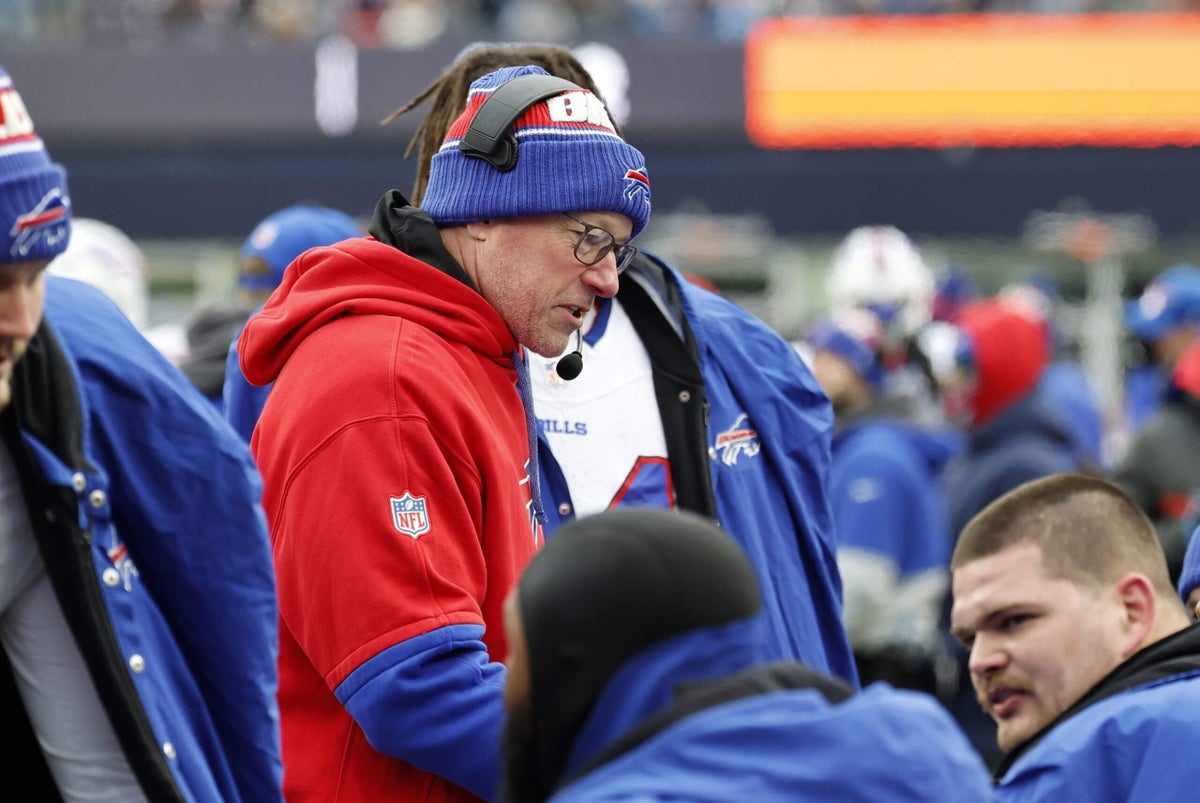
ORCHARD PARK, N.Y. — These men aren’t naïve. They’ve been around, witnessed a bunch and done the work from every angle. They’re neither rookies nor on the fringe.
They know. Except they struggle to explain.
Eloquence can switch into a meandering stammer rather quickly when trying to explain Buffalo Bills offensive line coach Aaron Kromer, considered one of the best to ever do the job even if his players cannot articulate why or how.
“It’s hard,” former Bills center and captain Mitch Morse said after several unfinished sentences. “Even as I’m saying it out loud.”
They use words such as “mysticism” and “superpowers.” They say he’s “a wizard” and “one of one.” When he was with the Chicago Bears, his linemen spoke of him moonlighting as Ra’s al Ghul, the mysterious League of Shadows ninjutsu master who taught Batman to fight.
Whether they were able to demystify Kromer’s influence on football and their careers, The Athletic spoke to several of his students who described a towering figure in their lives, who insist he inspired or salvaged their careers — sometimes both. They describe methods that sound obvious yet are rare within the coaching profession and speak of techniques that contradict long-held assumptions.
In a sometimes-teary interview, Kromer discussed his coaching philosophies, shared why techniques other teams deploy are “disgusting,” detailed what it takes to play for him and, for the first time, addressed embarrassing incidents that contributed to the Bears firing him in 2014 and made the Bills suspend him in 2015.
“I’m factual. I’m direct. I’m not good at bulls——-,” Kromer said. “I tell it the way it is, and I’ve helped people get better. I’ve helped people grow as humans.”
Kromer’s words were catching in his throat.
“It’s what I do,” Kromer continued, his chin quivering. “It’s what I’m supposed to do. I’m a teacher. I take pride in that. It’s really all I care about.”
Kromer doesn’t hold the title of run game coordinator, but that’s what he is in addition to guiding and drilling offensive linemen. With help from tight ends coach Rob Boras, Kromer is responsible for devising Buffalo’s ground attack each week, identifying which rushing plays will work best, and suggesting in-game what offensive coordinator Joe Brady should call when it’s time to run.
“That guy is a wizard, a genius with run schemes,” Bills left guard David Edwards said. “People don’t see the game like he does. His ability to scheme things up is one-of-one.”
Buffalo, on the ground, ranks first at 155.7 yards a game, second at 5.0 yards per carry, second with 21 touchdowns and third with 100 first downs.
Kromer also is chiefly responsible for scheming protections that keep Josh Allen safe. That’s what might make last Sunday perhaps Kromer’s signature coaching performance. Ten days after the Houston Texans registered 12 quarterback hits in a surprisingly easy victory, the Bills slobberknocked the Pittsburgh Steelers. With two backup tackles making rare starts, the Bills didn’t allow a single sack and rushed for 249 yards, most by an opponent in Pittsburgh since 1975.
“Unique. I don’t know that I’ve ever seen …” said Sean McDermott, but he couldn’t finish the thought. Now the Bills’ head coach was struggling to explain Kromer’s latest work. “That rushing performance stands almost alone in terms of my NFL career.
“Toughness, togetherness, finishing plays the right way, great technique, mindset, it was just really fun to watch.”
That’s been the case for most of Kromer’s career. His reputation as an O-line authority was cemented with the New Orleans Saints, where he won a Super Bowl and served as interim head coach after the bounty scandal got Sean Payton suspended for the 2012 season. Kromer also helped the Los Angeles Rams reach a Super Bowl as offensive line coach and run game coordinator.
Aside from two tumultuous, controversial years as Chicago Bears offensive coordinator, Kromer has been an often-overlooked catalyst for every team he has coached, helping 15 players reach the Pro Bowl.
“There’s definitely a mysticism about Aaron Kromer,” Morse said. “There’s something beautiful about it, dude. He’s the man.”
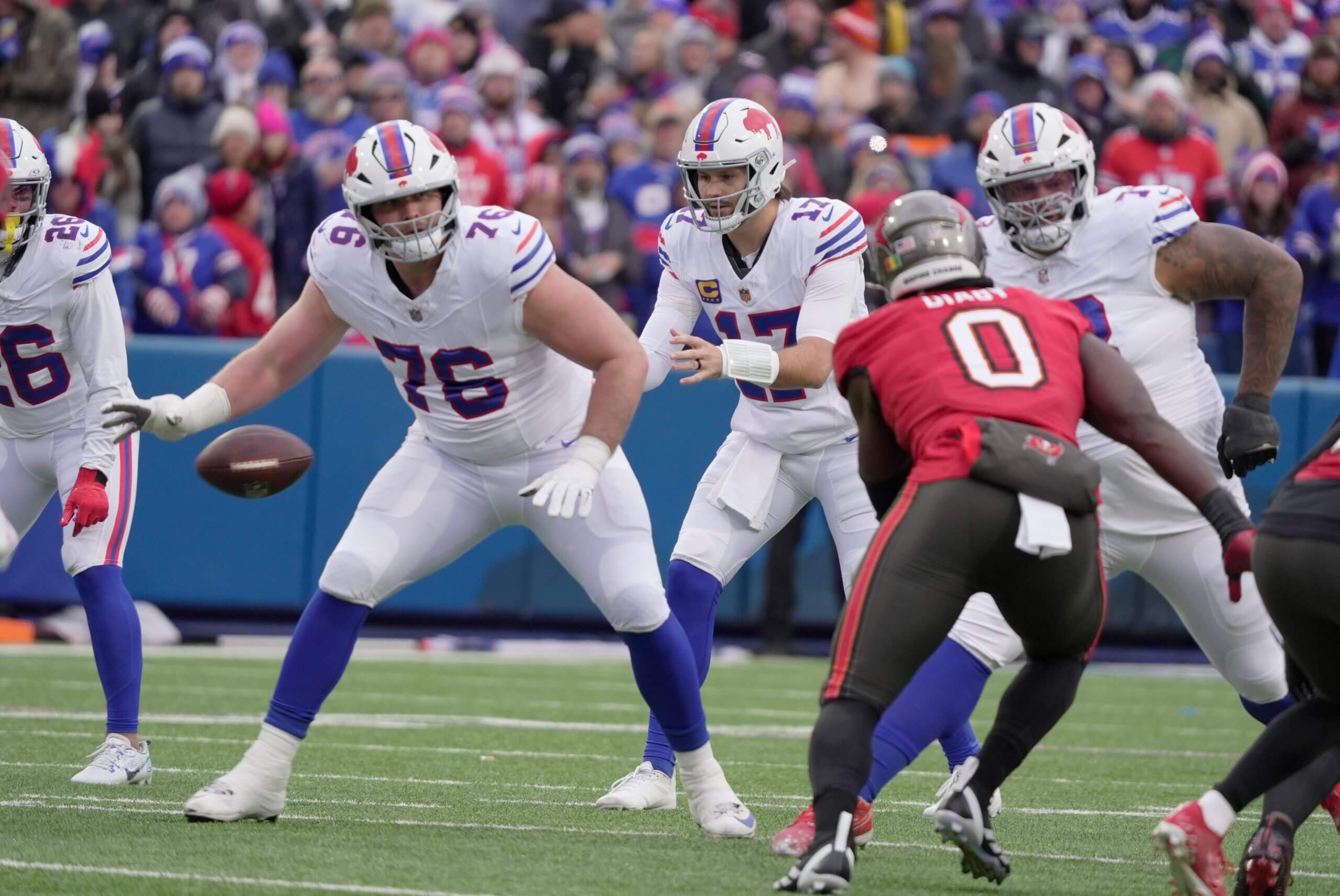
Bills offensive lineman David Edwards (76) said Kromer is a wizard. (Tina MacIntyre-Yee / Imagn Images)
Of the dozen players and coaches The Athletic interviewed about Kromer, to a man, each attempt to explain his effectiveness began the same way, and it sounds simple at first.
Kromer coaches his linemen individually. Some rely on power, others on deft footwork and hand fighting. Players of identical heights and weights possess varying postures and body types. Everyone digests instruction in a variety of ways.
Former Saints right tackle Jon Stinchcomb: “He had a healthy perspective that skill sets are distinct and every player is not alike in how they approach the game, practice or start their day. He could adapt X’s and O’s and scheme to each player.”
Morse: “He accentuates every good part about a person while limiting their deficiencies.”
Bills left tackle Dion Dawkins: “He does not have a default way of coaching. Guys are different athletically. Even the same guy gets older and changes every year.”
Former Bears guard Kyle Long: “The most important way he attacked coaching was by letting you be yourself. He always said, ‘Go be a freak. There’s a reason we picked you.’”
No duh, right?
Bills center Connor McGovern: “You look around and wonder ‘Why have I not been doing this before?’”
McDermott: “Because in the coaching world, there’s a tendency to say ‘This is what I believe in philosophically, and this is the technique that goes with it, or else it’s not going to work.’”
Morse: “Other people can’t do it, but he can.”
Kromer was an All-MAC tackle and two-time captain for Miami (Ohio) with no intentions of a life in football. He majored in education and wanted to be a teacher — maybe a principal. But he was convinced to stick around his alma mater and earn a master’s degree while serving as a low-level assistant. He never looked back.
Kromer wasn’t satisfied with repeating the ways he had been taught. There had to be a deeper appreciation for blocking schemes and technique that went beyond simply mauling the man across the line of scrimmage. Kromer attended as many coaching clinics as he could, especially those conducted by Cincinnati Bengals O-line maestro Jim McNally.
In 2001, after eight seasons at Miami and two at Northwestern University, he took an entry-level job working for Oakland Raiders coach Jon Gruden alongside ascending offensive line coach Bill Callahan. A year later, Callahan replaced Gruden as head coach and elevated Kromer into the O-line vacancy.
Kromer also learned from revered assistant Howard Mudd, a consultant with the Saints after a pioneering career.
From the sacred McNally-Mudd-Callahan trinity of O-line elders and other enthusiasts down his path, Kromer honed his patented approach.
“He has created his own way of doing things,” McDermott said. “The great teachers are able to take what seems complex and break it down to make it seem simple even when it’s not.”
Such was the case last week, when Kromer helped prepare undrafted backups Ryan Van Demark and Alec Anderson for a critical matchup against Pittsburgh’s aggressive defense. Van Demark replaced Dawkins, the concussed four-time Pro Bowler, while Anderson made his first start at tackle since UCLA four years ago for injured Spencer Brown.
Kromer summoned the idea of moving Anderson into the role instead of backup tackles Chase Lundt or Tylan Grable, asked the healthy starters about the plan and coached them up throughout the week. McDermott marveled at how much on-field preparation still was being done Friday afternoon.
“He breathed life into Vandy and Alec,” Edwards said. “There was no gray area as to how we were going to win these blocks with each play. When you have somebody that believes in you, you feel that wind at your back.”
Kromer hasn’t had the pleasure of coaching many first-round draft picks. His legendary Saints line had zero among its starters. None exists on the Bills depth chart.
Kyle Long was one of them. Hall of Fame defensive end Howie Long’s son and 2008 first-round edge rusher Chris Long’s little brother was a project. Kyle Long originally went to Florida State to play baseball, was arrested for drunk driving and returned home. He eventually landed at Saddleback Community College to play the family position, switched to offensive line a year later and spent one season at the University of Oregon.
Still too raw, Kyle Long anticipated being a 2013 third-round draft choice. His father concurred.
Kyle Long didn’t know that his trajectory changed during his pre-draft visit with the Bears. Kromer and assistant offensive line coach Pat Meyer brought him into a small office above the weight room and shut the door.
“On the TV was a snuff tape,” Long said. “It was Ndamukong Suh, killing guys — our guys. Jay Cutler just getting smashed, Matt Forte getting hit in the backfield, offensive linemen just getting chucked.”
Kromer spoke at just the right time, in just the right tone.
“He said, ‘Make no mistake: You’re here because this guy’s been terrorizing us, and we need to find a way to stop him and other guys like him, and we think you can do it.’” Long recalled.
Long’s reaction — visceral, animalistic — to the obscene football imagery and verbal affirmations was all Kromer needed to see, along with the prospect’s untapped potential.
Kromer lobbied Chicago to make him the 20th overall selection. Long went to the Pro Bowl each of his first three NFL seasons and was voted second-team All-Pro behind only all-decade guards Marshall Yanda and Zack Martin.
“Thank God for Aaron Kromer,” Long said.
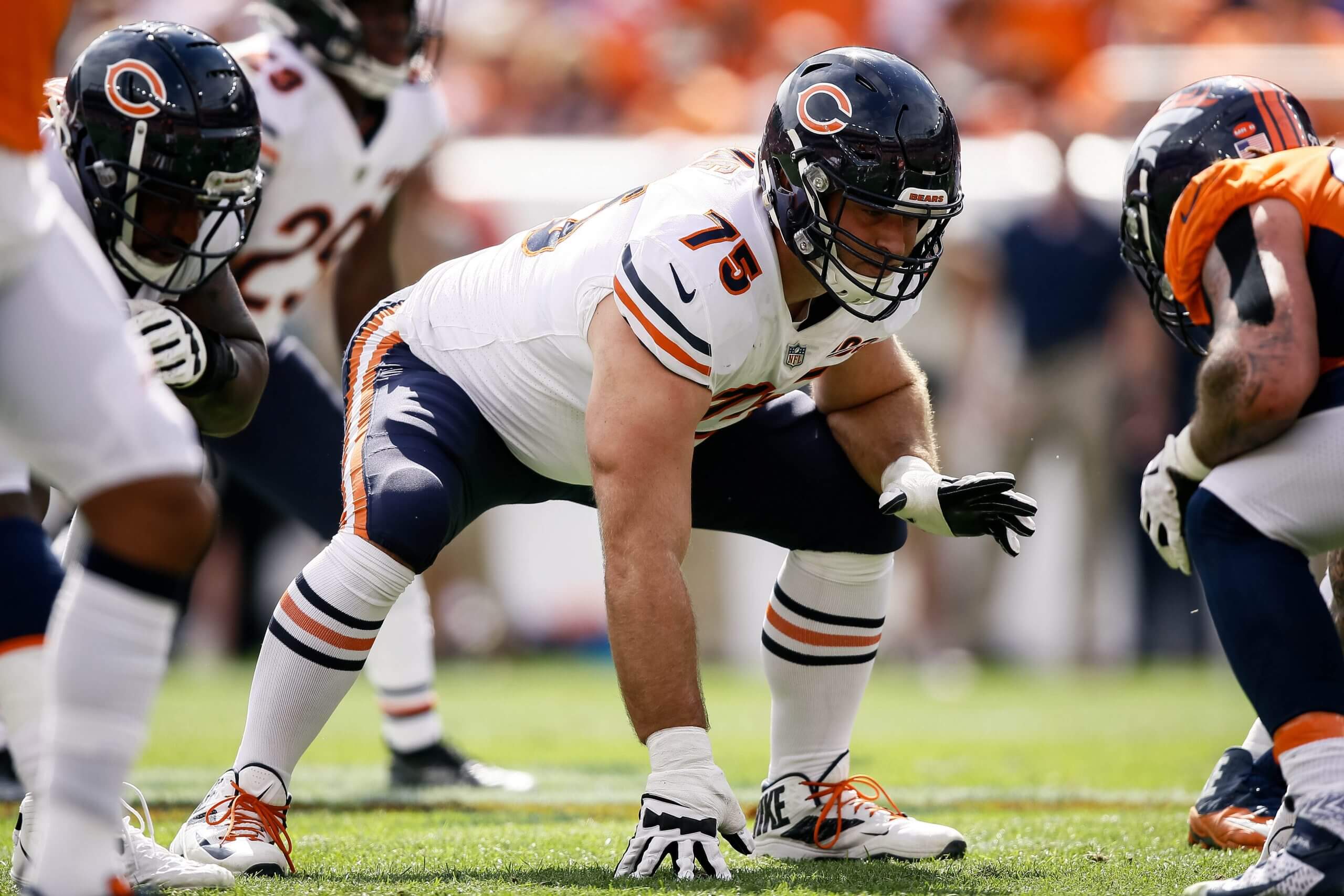
Former NFL lineman Kyle Long was a first-round draft pick, thanks in part to Kromer’s influence. (Isaiah J. Downing / USA Today)
Under Kromer, there are no excuses
Kromer is okay with barbarian players, but the blocking techniques he espouses are sophisticated. He coaches the individual, albeit within a construct that’s unopen for debate.
Leverage is key. Kromer wants his blockers to move efficiently, to remain on their feet as much as possible, and to “unweight” the defender by lifting him.
“You drive force through the ground,” Long said, “and the only way to do that is if your feet are on the ground. If one of your feet are off the ground, you’re going to get tossed to the side like a wet diaper.”
There is no room on his line for momentum blocking, the bloodthirsty style old-school fans froth about: Smash and detonate, mangle the other chump’s facemask.
“Some players are taught to kill everybody their whole life,” Kromer said. “You have way more control if you’re using the ground to lift a defender off of his power as opposed to trying to smash him like two rhinos colliding.”
Kromer finds that needlessly aggressive style so useless that, when he’s scouting opponents and sees it being applied against them, he junks the video.
“That drives us nuts,” Kromer said. “It’s so disgusting. It blows our mind; we can’t watch it.”
Once the rules are established — using the ground for power, efficient movements, staying in position — Kromer lets each player decipher his personalized, preferred way to do it that might not look like anybody else.
Edwards calls this aspect “Krome’s superpowers” because each player is given ownership. Through practices, drills and film sessions, Kromer gives his linemen freedom to work out what’s best for them.
“It’s Krome’s idea, but it’s like you came up with it,” Edwards said. “He gives you the space to try something that still falls under his umbrella of how we want to do it. He gives you the answers to the test. He put the tools in your toolbox to figure it out yourself.”
Collaboration is how Kromer holds his linemen accountable. If the player has determined how he is going to handle a particular situation, scheme or defender, then flimsy excuses have been eliminated.
And excuses aren’t tolerated in Kromer’s realm, himself included.
An ugly turn in Chicago
Unlike Kromer’s other NFL stops, Chicago got ugly.
In 2013, longtime offensive coordinator and quarterbacks coach Marc Trestman finally got his first chance to be an NFL head coach after winning a couple Grey Cups in the CFL. Although he would call Chicago’s plays, Trestman hired Kromer to be his offensive coordinator — similar to Payton’s setup in New Orleans.
The Bears went 8-8 in their first season, scored 27.8 points a game, eclipsed the legendary 1985 team’s record for total yards and broke a 52-year-old record for yards per play.
In 2014, they imploded. Jay Cutler, the NFL’s highest-paid player, committed a league-worst 24 turnovers. After throwing three interceptions and getting sacked seven times in a loss to the Saints, he was replaced by Jimmy Clausen with two games remaining.
The NFL Network, citing an unnamed source, reported the Bears had a “serious case of buyer’s remorse” over Cutler’s seven-year contract extension the previous offseason.
Kromer was outed as the source, confirmed it to the Chicago Tribune and made an apology in front of the team, admitting he was wrong to speak to anyone outside the organization, regardless of the frustration.
“I chose to do that because I said it,” Kromer said in his first comments since the incident. “I was perfectly fine with saying it, and I still believe what I said. If the person doesn’t want to join the team, if he wants to be an individual, then that’s wrong, and I believe it’s wrong. I apologize that it caused a ruckus, but in my mind, I’m still right, and I still stand by what I said.”
Asked for his take on the situation, Long acknowledged that while Cutler was viewed as a warrior by his teammates and had their loyalty, Kromer was used to a different type of quarterback personality in Saints folk hero Drew Brees.
“I thought he was incredible to watch play football,” Long said of Cutler. “He was tough as hell, and he was a leader to me.
“Do I think that he’s the Disney-character quarterback in front of the room? Absolutely not, but we had such great leadership, particularly in the offensive line. If we didn’t have your archetypal leader at quarterback, we got what we needed out of him and we had it in the offensive line, and that’s thanks to Aaron Kromer.”
Kromer also lamented that his relationship with Trestman didn’t progress to what he was used to in New Orleans with Payton. Trestman hasn’t been an NFL head coach, and Kromer hasn’t been an offensive coordinator again.
“I was used to working together with people,” said Kromer, “and there were some people that didn’t want to work together on that team. They didn’t allow someone to be trustworthy, so I was no good there. I had no superhero strength because if a person won’t let you in to help them, then I’m no good. We were successful up front, but we couldn’t do it as a group.”
Trestman did not respond to messages for comment.
Kromer also addressed his 2015 arrest in Florida for allegedly assaulting a minor during an argument about beach chairs. The charge eventually was dropped, but the Bills suspended him for the first six games of the season. Kromer stayed on for another year, leaving when Rex Ryan and his staff were fired.
McDermott reviewed the incident before hiring Kromer in 2022 to replace Bobby Johnson, who joined the New York Giants with their new head coach, former Bills offensive coordinator Brian Daboll.
“In the world I live in, I believe I was right,” Kromer said. “And I don’t care if anyone thinks I was wrong. They can think I was wrong. The law says I’m wrong, but I disagree wholeheartedly, and so did some people here. That’s why I was still here, and that’s why I’m back.
“I have no regrets.”
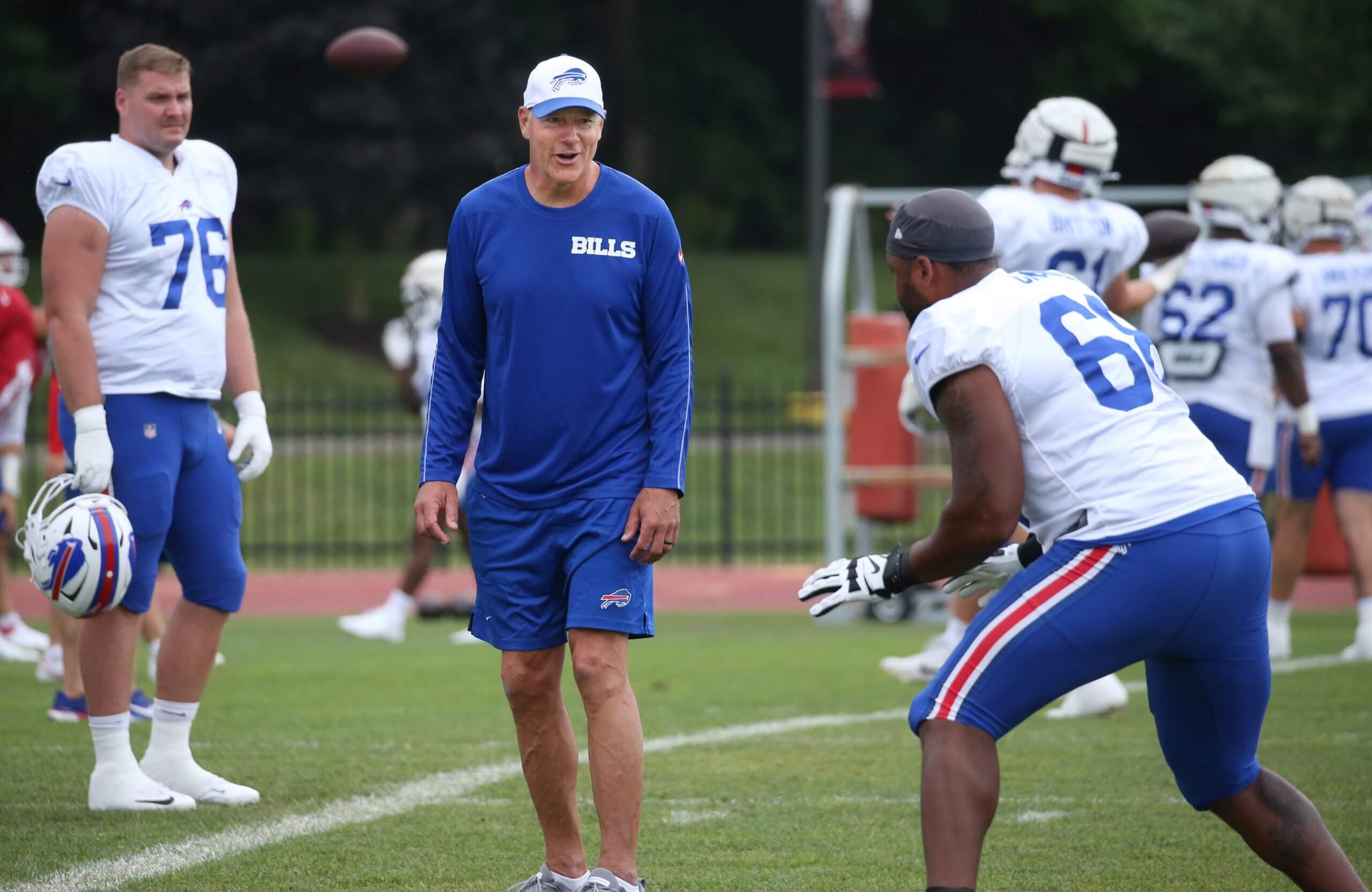
The Bills brought Kromer back to Buffalo in 2022. (Shawn Dowd / USA Today)
A rejuvenating second stint in Buffalo
Such incidents might derail lesser coaches, but Kromer possesses undeniable gravitas as a man and a coach.
The players might have trouble putting it into words, but the results speak for themselves on the stat sheet and are good for the general manager’s bottom line.
Kromer’s most decorated unit was a quintet of overachievers. His entire Saints line at one point had been selected for at least one Pro Bowl: left tackle Jermon Bushrod (fourth-round draft pick from Division I-AA Towson), left guard Carl Nicks (fifth-rounder), center Jonathan Goodwin (fifth-rounder), right guard Jahri Evans (fourth-rounder from Division II Bloomsburg) and right tackle Stinchcomb (second-rounder who played only 10 games as a backup guard through his two seasons and missed his third entirely with a knee injury).
Two of Kromer’s stars departed in 2011. Stinchcomb was replaced by Zach Strief, a seventh-round pick with seven spot starts through five years, who would start 91 at right tackle. When free agency claimed Goodwin, the Saints signed former Bears pillar Olin Kreutz, but an early-season injury and surprise retirement forced Kromer to use frequently waived guard Brian De La Puente in the middle.
Not counting De La Puente, because he wasn’t drafted, the average Saints starting offensive lineman for 2011 was selected 152nd overall, the middle of the fifth round.
The 2009 and 2011 editions of New Orleans’ offensive line won the Madden Most Valuable Protectors of the Year Award.
“With development,” Stinchcomb said, “there’s just not a lot of coaches that can recognize what it’s going to take for a player to be ready and able to contribute. I think he’s got that ability to cultivate that within each guy and recognize what they need.
“Candidly, I’ve worked with a number of guys — even in college and getting ready for the pros — from a diverse cross-section of coaching styles and haven’t learned a lot about the game. He was different in that way.”
The average draft slot for Buffalo’s starting offensive line is 95th, a very late third-round selection. His line in Chicago averaged 116th overall, the middle of the fourth round.
The Madden Most Valuable Protectors Award was rebranded in 2016 as the Built Ford Tough Offensive Line of the Year. The Rams won it in 2018 with Kromer as their coach and run game coordinator. That starting five’s average draft position also was 116th overall.
Los Angeles went to the Super Bowl behind a rushing attack that generated 2,231 yards, 4.9 yards a carry, 23 touchdowns and 134 first downs. Todd Gurley ran for 1,251 yards and 17 TDs.
“If you can develop a guy, it’s about economics,” Kromer said. “If you can elevate a backup you didn’t have to draft, then you can draft cornerbacks and D-linemen and receivers.”
Edwards isn’t ashamed to say he came from Kromer’s lab.
The seventh-year pro became emotional while reflecting on what makes Kromer special because the coach has impacted his life so profoundly.
A high school quarterback, Edwards enrolled at Wisconsin to play tight end and eventually shifted to right tackle. In the preseason of his senior season, he suffered a torn left labrum with nerve damage in his neck. He tried to play through it and missed the final three games.
Edwards was damaged goods entering the 2019 draft. With Kromer vouching, the Rams drafted Edwards in the fifth round for a position he’d never played. Two years later, Edwards started at left guard in the Super Bowl and helped the Rams beat the Cincinnati Bengals.
Edwards played only four games in 2022 — his contract year — because a concussion sent him to injured reserve. Kromer, now with the Bills, convinced them to sign Edwards, who has played all 50 games since and started 28 straight.
“The two darkest, most challenging times in my career, Krome believed in me,” Edwards said. “Without him, I don’t know if I would have gotten the same chance to play in the NFL at all, and no one was knocking on my door after 2022.
“It’s really difficult for me to think of another scenario without him. I owe my entire career to that guy — literally.”
Severe anxiety nearly derailed Morse in the spring of 2022. He credits the freshly hired Kromer for giving him “grace, clarity and an opportunity to play free.” Morse played two more seasons for the Bills and finished his career with the Jacksonville Jaguars.
“Kromer saved my career,” Morse said. “He gave me life when I was almost down and out of the game. I owe him the world.”
Dawkins described Kromer as the type of coach who makes players want to keep showing up for work at the season’s most grueling times and to keep returning for another season when careers are winding down. McGovern, after four seasons as a Dallas Cowboys guard, came to the Bills specifically to learn from Kromer. McGovern last year switched to center, a position he hadn’t played since Penn State, and he went to the Pro Bowl.
Kromer’s eyes welled up when told what his players said about him.
“It isn’t about me. It’s about them,” Kromer said. “It’s about how successful they can be, how much money they can make. I’m not trying to be the head coach. I don’t want to be the coordinator. I just want to do what I do and teach.
“I constantly say, ‘Look, I’m not a genius. I’ve just gathered this information, and I’m providing it to you. If you want to use it, you’ll probably make a lot of money. If you don’t, that’s fine.’”