
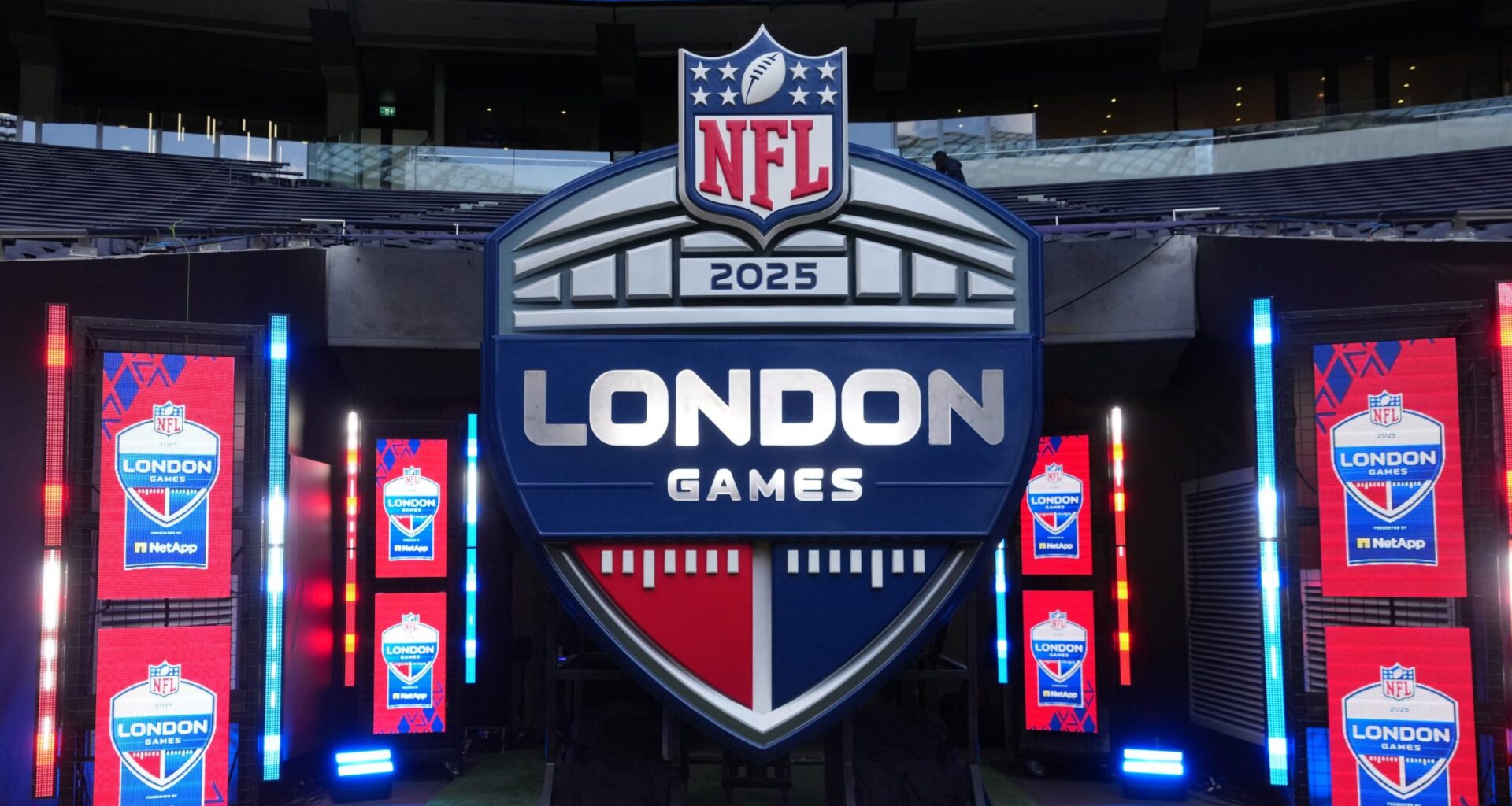
Hans Schroeder swears fans are coming around on the 9:30 a.m. kickoff. You’d be forgiven for wondering who, exactly, he’s talking to.
The NFL’s executive VP of media distribution appeared on The Rich Eisen Show this week to talk up the early Sunday morning window, arguing that the league’s international time slot has won over its fanbase. According to Schroeder, the 9:30 games give fans more football while hitting prime viewing hours in Europe and parts of Asia, and the league plans to keep building on it.
“We look at the 9:30 window, it’s an incremental way to just give fans more football on a Sunday, which we thinks exciting,” Schroeder explained. “It’s also internationally in a time slot that gets games into a really attractive viewing period in Europe. Also reaches parts of Asia in prime time on Sunday, where some of our other games don’t do that. So, as we think about engaging the world, we really thought that 9:30 slot and believe that 9:30 slot is becoming more and more embraced by our fanbase, and excited that there’s just more football on those Sundays.
“And so, we definitely think it’s something we’re going to build on. We’ve certainly had other partners ask about it. We certainly think the NFL Network’s done a great job building it. So, we’ll see where the future goes, but I think we’re here to stay at 9:30 and there’s probably going to be more of them in the future.”
The viewership backs him up, at least on paper. This year’s international games on NFL Network averaged 6.2 million viewers across six games in Dublin, London, Berlin, and Madrid. That’s a 32% jump over 2024 and a record for the most-watched International Games season. The Vikings-Steelers Dublin game drew 7.9 million viewers, making it the second-most-watched international game ever.
But saying fans are embracing the 9:30 slot is doing some heavy lifting. The time slot has been divisive since the NFL introduced it in 2014. For East Coast fans, waking up early on a Sunday morning for football generally works. For West Coast fans, setting an alarm for 6:30 AM is a completely different ask.
If you think the criticism is bad now, it reached a boiling point nearly a decade ago when the Rams played in London shortly after relocating back to Los Angeles. The NFL scheduled a 6:30 AM local kickoff for a team actively trying to rebuild its fan base after moving from St. Louis. As Awful Announcing’s Ben Koo wrote at the time, it was a middle finger to Rams fans. The league was asking season ticket holders to either book a trip overseas or wake up before dawn to watch their team, all in service of international expansion.
The complaints haven’t gone away. West Coast fans still have to choose between sleep and football every time their team plays internationally, and the NFL treats this as a minor inconvenience worth the tradeoff. The league’s pitch is that a 9:30 a.m. ET kickoff hits 2:30 p.m. in London and creates a Sunday night primetime window in parts of Asia, which the traditional 1 p.m. ET slate doesn’t reach. From a business perspective, it makes sense. The NFL wants to be a global sport, and you can’t do that by scheduling games at times when international audiences are asleep.
But the league’s international expansion has come with real costs for American fans. What started as one London game in 2007 has grown into a full slate of international matchups in Germany, Ireland, Spain, and soon Australia. Every one of those games means another 9:30 kickoff, another early morning for fans on the West Coast, and another round of complaints about the NFL prioritizing international markets over domestic ones.
The viewership is strong because fans will watch regardless of the time. That doesn’t mean they’re happy about it. The NFL knows this, but the league also knows that upset fans will still tune in, which makes the complaints easier to ignore.
Schroeder is right in the sense that the 9:30 slot isn’t going anywhere. The viewership justifies it, the international push is real, and the NFL has made global expansion a priority. But framing it as something fans have embraced misses the very real complaints from people who would rather not be setting alarms to watch the Jaguars and Falcons at dawn.
The NFL can keep expanding the 9:30 window all it wants. That doesn’t mean fans have to pretend they like it, even if they’re still watching.