
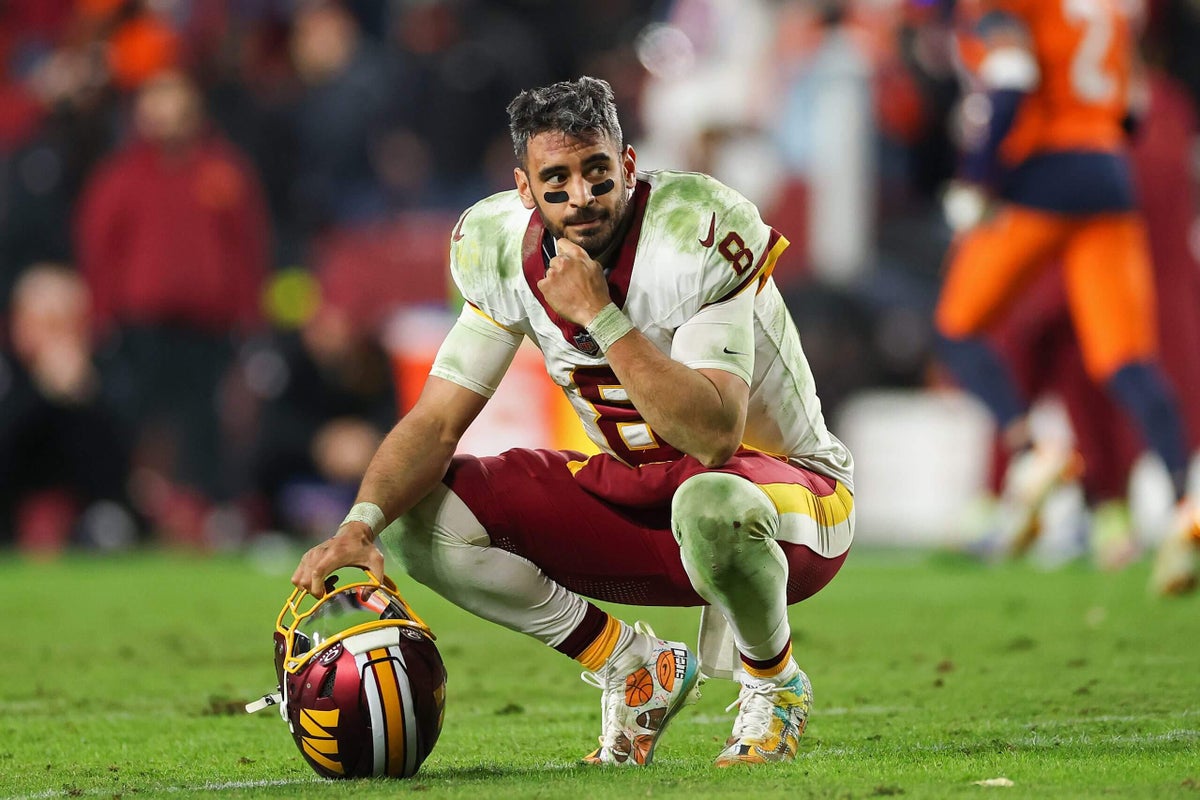
The NFL’s officiating and rules analyst, Walt Anderson, acknowledged during a Sunday morning appearance on the NFL Network that referees erred on an intentional grounding call in the Week 13 game between the Denver Broncos and the Washington Commanders.
The penalty was called on Commanders quarterback Marcus Mariota during the final drive of regulation, in what became a 27-26 overtime win for the Broncos on Nov. 30. On first-and-15 with 1:25 left in regulation, Mariota rolled left before stopping and launching a pass high and well over the head of receiver Terry McLaurin, who was outside the numbers.
Anderson discussed multiple calls during the NFL Network segment, ending with his opinion on what he felt was an incorrect decision in Denver’s win over Washington.
Walt Anderson breaks down the safety that wasn’t a safety on today’s edition of Making the Call 🚩 pic.twitter.com/ErjUib2dfv
— NFL GameDay (@NFLGameDay) December 7, 2025
“It wasn’t intentional grounding,” Anderson said. “There are a lot of different aspects to intentional grounding. First, you’ve got to determine: Was the quarterback in or out of the pocket? Where did he throw the football? Did it get past the line of scrimmage? All of those factors have to come into play.”
Mariota had not left the pocket, but he threw the ball well out of bounds past the line of scrimmage, in the direction of McLaurin, who was breaking toward the middle of the field but remained several yards outside the numbers. The officials ruled it a penalty — a decision that NBC rules analyst Terry McAuley disagreed with on the broadcast.
“This is absolutely not grounding,” McAuley said. “(Mariota) throws it over the head of No. 17, who is outside the numbers. By rule, that is not intentional grounding.”
Because grounding penalties can’t be reviewed, the call stood. The result: Washington was faced with second-and-25 and ultimately settled for a field goal to tie the game and force overtime. Both teams scored touchdowns in the extra period, but Washington failed to convert a potential game-winning two-point attempt, which handed Denver the victory.
Although the intentional grounding call didn’t determine the outcome of the game, the referees’ inability to review penalty calls remains a hot topic around the NFL. Anderson weighed in on whether replay could help correct errant grounding calls in the future.
“Some of them we can help with replay, but some of them we can’t,” he said. “…We can help with in or out of the pocket, but we can’t help with the position of a player relative to being inside or outside the numbers — and that’s the part of the rule that’s critical, so that would not have been reviewable as a foul.”