
In college football, you never really know whether a coaching hire is going to work — just take a peek at all those A’s for Brian Kelly and Billy Napier four years ago. But you also don’t need to wait around to evaluate whether a school hired the right fit.
As the 2025-26 coaching carousel heats up, we’re handing out initial grades to the hires as head coach openings are filled around the country, focusing on how much the hire makes sense and whether it satisfies what a team identified it needed going into a coaching search.
Check back as more jobs get filled.
Iowa State hires Jimmy Rogers: B
(Hired Dec. 5)
Iowa State moved quickly and announced the hire of Rogers before Penn State had even announced the hire of Matt Campbell. Rogers took over a difficult spot at Washington State and turned in a more than admirable first season. The Cougars went 6-6 and reached a bowl game, and three of those losses were a three-point defeat at Ole Miss, a two-point loss at Virginia and a four-point loss at James Madison, two of whom are playoff bound. Rogers previously spent two years as South Dakota State head coach, winning the 2023 FCS national title. This will be his first full-time job in a Power 4 conference, competing with multiple schools that have more resources. Can he help the Cyclones punch above their weight the way Campbell did?
Tulane promotes Will Hall: B-
(Promoted Dec. 8)
A search in which the Green Wave talked with several outsiders ultimately led to a promotion from within, a bit of a surprise for what is one of the best Group of 6 jobs. Hall knows what it takes to win at Tulane, working as an assistant under both Willie Fritz and Jon Sumrall. Before that, he was a very good Division II head coach at West Georgia and West Alabama. But his run as Southern Miss head coach from 2021 to ’24 brought mixed results, with one bowl appearance, a remarkable rash of injuries that led to running backs playing quarterback, and his firing in Year 4.
Hall will certainly have more resources at Tulane, with a roster budget of around $5 million and a supportive administration. He may be able to keep much of the staff, as Sumrall has made several key hires from outside Tulane to join him at Florida. Hall brings head coaching experience and familiarity with the roster, but he will have to show he can handle an FBS head coaching job with high expectations.
Memphis hires Charles Huff: A-
(Hired Dec. 8)
Huff checks off a lot of boxes for Memphis. He has won a conference championship, doing so at Marshall in 2024. He’s very good at accumulating talent on a roster, as one of the best recruiters in the country at Penn State and Alabama as an assistant. Memphis has one of the largest roster budgets in the Group of 5, so it should be able to get players, and fans had become frustrated with former coach Ryan Silverfield’s inability to take the Tigers to a conference championship game.
Huff went from Sun Belt champion Marshall to 1-11 Southern Miss last offseason in one of the weirder coaching moves we’ve seen due to clashes with the Marshall administration. But he brought a lot of those good Marshall players with him and improved Southern Miss to 7-5 and played for a division title on the last week of the season. The upside here is clear, and Memphis wanted upside.
UConn hires Jason Candle: B
(Hired Dec. 6)
The last time the UConn job was open, people wondered whether the program should drop down to the Football Championship Subdivision. But after Jim Mora reached three bowls in four years and posted consecutive nine-win seasons, there is excitement here again. Enter Candle, a coach who won a lot of games at Toledo, with an 81-44 record in 10 years, with two MAC championships and no losing seasons. Candle led the best-resourced program in the MAC, and the Rockets were annually one of the best teams in the league. It’s hard to say what the expectations should be at UConn, since there is no conference championship to play for as an independent and a Playoff run is very unlikely. Does Candle just need to go to bowl games? He’s shown an ability to do that. He arguably didn’t win as many MAC titles as he could have, but that’s not a concern for a program without a conference.
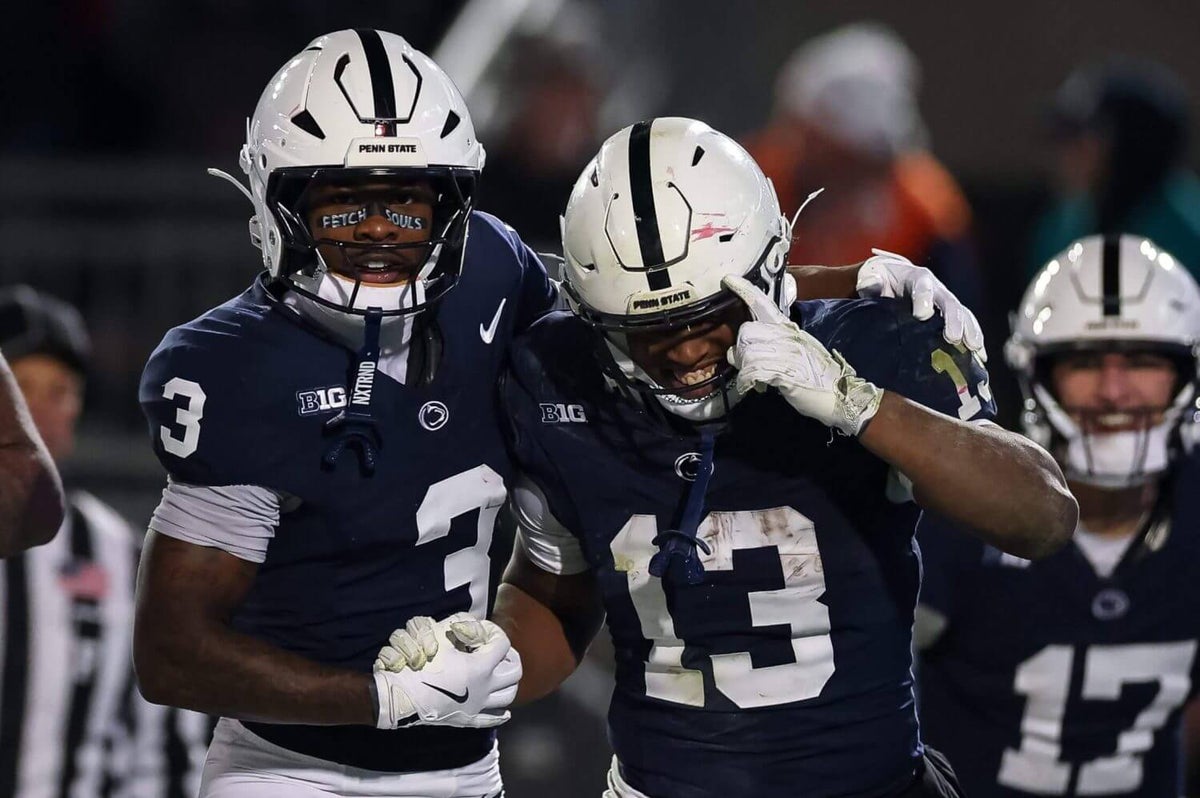
Penn State hires Matt Campbell: A-
(Hired Dec. 5)
A long and winding search settled on someone who probably should’ve been a top target from the beginning. Campbell was the winningest coach in Iowa State’s history. He twice led the Cyclones to the top of the Big 12 standings, something the school hadn’t done in a conference since 1912. Penn State fired James Franklin for not overachieving, which is something Campbell has shown he can do. The Cyclones have 12 wins against Oklahoma and Texas in school history, and five of those came under Campbell. He was also 4-6 against top-10 teams at Iowa State, a program that has a total of 12 top-10 victories in 128 years of football.
The concerns will be how Campbell handles the pressure and the spotlight. He wasn’t expected to win conference and national championships in Ames. Now he is. He will also be tasked with signing top-10 recruiting classes, something he hasn’t done. At Iowa State, he did more with less. At Penn State, he must do more with more.
Kansas State hires Collin Klein: A-
(Hired Dec. 4)
The K-State legend returns to replace a retiring Chris Klieman. Klein has done a really strong job as Texas A&M’s offensive coordinator, and he was in the mix for the Oklahoma State job in this cycle as well. Only two head coaches have won big in Kansas State’s history: Bill Snyder and Klieman. Klein played and/or coached under both of them. He what it takes to win here, and he was the offensive coordinator on the 2022 Big 12 championship team. It’s his first head coaching job, but it’s a familiar place, and Klein’s time at Texas A&M was valuable outside experience to bring back to Manhattan. It’s hard to ask for much more here.
Cal hires Tosh Lupoi: B+
(Hired Dec. 4)
Lupoi was the obvious target from the beginning, one sources pointed to even before the season. He’s a former Cal player and coach, and he’s one of the best recruiters in the country. This year’s Oregon defense has played really well under his watch. There is optimism that Lupoi will be able to keep talented freshman quarterback Jaron-Keawe Sagapolutele, and if that happens, it’s a huge win. If Lupoi can elevate the alignment with new university leadership and boosters while improving the talent level at Cal, there’s a chance this could be very successful. But he’s a first-time head coach, and Cal has been one of the least-resourced programs in the Power 4. Bowl games are clearly possible and expected, but can Cal win big again?
James Madison hires Billy Napier: B
(Hired Dec. 4)
On one hand, Napier went 33-5 in his last three years at Louisiana, including a 24-3 record against Sun Belt competition. JMU officials liked that, per sources. On the other hand, Napier looked like he was in over his head at Florida, with three losing seasons in four years. The track record of former Power 4 head coaches immediately coming back to the Group of 5 level is mixed, but maybe Napier’s talents are just better suited for Group of 5 life. JMU’s last three hires were all sitting FCS head coaches, and each won more than 70 percent of his games. This is a bit of a new direction, a sign of a program with real CFP chances looking to take that next step forward. Expectations are high here, and the resources are there to match. We’ll see if Napier learned from his Florida mistakes.
South Florida hires Brian Hartline: B+
(Hired Dec. 3)
USF hired one of the best recruiters in the country, someone who got Florida high schoolers Jeremiah Smith, Brandon Inniss and Carnell Tate up to Ohio State. USF is already atop the Group of 6 in roster spending, with a budget around $8 million this past season, and the school is on the verge of committing to maximum roster revenue-sharing with athletics. An on-campus stadium is also set to open in 2027. The questions with Hartline concern how he will handle the job of being a head coach. He has been the offensive coordinator at Ohio State, but he hadn’t called plays until this season. USF doesn’t have the resources and infrastructure of an Ohio State, clearly. The 39-year-old has also spent his entire coaching career with the Buckeyes. How will he handle a bigger role in an unfamiliar place? But college football is about acquiring talent first and foremost, and Hartline should be able to do that very well at USF.
North Texas hires Neal Brown: B
(Hired Dec. 2)
Brown’s overall resume is very solid, with a 31-8 record in his final three years at Troy, plus four bowl games in his last five years at West Virginia. He knows how to be a head coach and won’t have to learn on the job. But he’s somewhat limited in the Texas connections that are very necessary for this job. He spent this past season as a special assistant at Texas, which helps, and he spent three years at Texas Tech from 2010 to ’12. But his West Virginia teams featured just a couple of Texas kids, and none of his final three Troy teams had a Texas player. Brown will have to put together a staff with deep connections to the state. He’s replacing a coach in Eric Morris who knew every corner of the region, which is how you end up with a breakout quarterback like Drew Mestemaker. North Texas hopes this 11-1 season will increase donations for roster spending, which is necessary as the Mean Green have a budget of around $2 million this year, one-third of what the richest schools in the league pay. North Texas has rare momentum right now. It’s on Brown to keep it going.
Kentucky hires Will Stein: B+
(Hired Dec. 1)
Stein is a Louisville native who grew up a big Kentucky fan (the son of a former UK player) and played and coached at Louisville. There’s no one out there who knows Kentucky better. The 36-year-old has had a quick and impressive rise — he was UTSA’s offensive coordinator as recently as 2022 and a high school coach in 2019. Stein has done a really good job as Oregon’s offensive coordinator in creating elite units with three different quarterbacks over three seasons. It would be huge if he can hold onto quarterback Cutter Boley. Stein has also figured out how to make the most out of a difficult situation. The Ducks have spent the past month without most of their top offensive weapons, and Stein’s play calling has adapted accordingly.
But we don’t know how he’ll translate to being a head coach, and he has never coached in the SEC (though he was a quality control assistant at Texas from 2015 to ’17). Much of Stein’s success will depend on the resources provided to him, at a school that prioritizes men’s basketball (Mark Pope has a reported $22 million roster this season). Kentucky is a very difficult job, but it landed a coach a lot of Power 4 schools had their eyes on in in the future.
UCLA hires Bob Chesney: B+
(Hired on Dec. 1)
Chesney has won everywhere he’s been. If you want to Google him, feel free, but the Curt Cignetti comparisons go well beyond just coaching at James Madison. Chesney has one losing season across 16 years as a head coach spanning four schools. He’s moved up from Division III to Division II to the FCS to the Group of 5, winning big at every step, and the success rate of those kinds of coaches at the Power 4 level has been good recently. The concern would be that he’s never coached outside the Eastern time zone. He’s going to be in a new world with new relationships to build.
The Bruins have to keep Southern California as the lifeblood of the program. UCLA had a wide-ranging search with lots of candidates with no California ties, so that clearly was not a hindrance. But the school needs to dramatically increase its football spending if it’s going to have a chance, no matter who the coach is. Still, it found a coach with a proven track record, and that’s often hard to find for a school in UCLA’s position.
Michigan State hires Pat Fitzgerald: B-
(Hired on Nov. 30)
A lot to unpack here. Fitzgerald won a bunch of games over a lot of years at a Northwestern program with almost no winning history, and he knows the Midwest. He will be a lot different from West Coast native Jonathan Smith, whose personality never seemed to fit. The donors are behind this Fitzgerald hire, and that’s as important as anything, as the Spartans have been behind financially.
But it’s also a surprising that a school still dealing with the fallout from multiple sexual misconduct scandals would hire a coach whose previous program had a hazing scandal, even though Fitzgerald was found to not have knowledge of it. He also won only four games in his final two seasons as head coach. How much of that was the natural disadvantage Northwestern had in the NIL era? How much has Fitzgerald learned about the modern game in his three years away from the sideline? And are Spartans donors about to pour much-needed money into the roster?
LSU hires Lane Kiffin: A
(Hired Nov. 30)
He was the best coach reasonably available, and LSU was the best job available. Kiffin’s departure from Ole Miss was messy and self-inflicted, but LSU has a lot to be excited about. Few coaches have proven better at adapting to this era of college football, from managing a roster budget to recruiting the transfer portal. Kiffin was given a lot of roster money at Ole Miss and made a lot out of it, with a 32-6 record over the last three years and four top-15 finishes in the last five. He turned transfer quarterback Jaxson Dart into a first-round NFL Draft pick and this year has turned Division II transfer Trinidad Chambliss into one of the best quarterbacks in the SEC.
Now he takes over an LSU job that has a hold on its in-state talent unlike any other in college football The concerns would be that Kiffin has never won a Power 4 conference championship as a head coach, he never reached an SEC title game and his record against top-five teams is 3-11. But Kiffin has always had the less-talented team in those matchups and within the SEC. At LSU, Kiffin should be able to put together the most talented rosters he’s ever had. His LSU tenure will not be short on drama, and it will probably end messy because nearly every Kiffin job does, but there’s a good chance there will be a lot of wins in between. Do you want a coach who would walk out on Ole Miss the way Kiffin did? You do when you’re the beneficiary.
Ole Miss promotes Pete Golding: B
(Promoted Nov. 30)
Promoting from within to keep continuity after the departure of a high-profile coach has historically had mixed results. It worked the last time a coach went to LSU; Marcus Freeman has arguably taken Notre Dame to a higher level than Brian Kelly did. But there are a slew of other examples where it didn’t work out. Golding deserves a lot of credit for his work in putting together the roster Ole Miss has this season. He’s done a solid job as a defensive coordinator and is respected in the coaching community. He’s also a Louisiana native who went to school in Mississippi and knows the state. It’s just a real unknown what kind of coaching staff he can put together as Kiffin builds his own staff at LSU, and it’s impossible to know what will happen to the roster with the transfer portal.
We do know Ole Miss will continue to fund a roster at the level needed to compete for championships, and that’s as important as anything else. If the goal was to create the best possible situation for the upcoming Playoff run and try to keep as much continuity as possible, Golding had to be the choice.
Florida hires Jon Sumrall: A-
(Hired Nov. 30)
Sumrall has been a head coach for four years across Troy and Tulane and has reached the conference championship game in all four years. This year’s Tulane team will play for a College Football Playoff spot against North Texas on Friday. Sumrall took over a Troy team coming off three consecutive 5-7 seasons and went 23-4 with two Sun Belt championships. He took over a successful Tulane program when Willie Fritz left the Green Wave for Houston, but he had to rebuild the roster in his first season, then had to deal with the loss of star quarterback Darian Mensah and running back Makhi Hughes to Power 4 programs for Year 2.
Sumrall is very good with roster management and logistics, and he brings SEC experience as a former Kentucky and Ole Miss assistant (and Kentucky player). But he has also coached at programs with more resources than many of their peers. Florida will have more competition. Sumrall will also have to adjust to recruiting and roster building at a Power 4 level. Florida fans are upset they didn’t get Lane Kiffin, but comparing Sumrall to Billy Napier as a fellow Louisiana Group of 5 coach would be unwise, because they’re very different coaches.
Auburn hires Alex Golesh: B+
(Hired Nov. 30)
Golesh brings a strong offensive background and SEC experience, two things needed at Auburn after this season’s dreadful offense wasted a talented defense. It’s too early to know whether Golesh will be able to retain Auburn’s top offensive players like receiver Cam Coleman. But Golesh took over a 1-11 South Florida program and went to three bowl games in three years, including a 9-3 start to this season with a win over Florida.
His USF success came after a good run as Tennessee’s offensive coordinator under Josh Heupel. But Golesh also had the most resources in the Group of 5 from a roster budget standpoint and fell short of the conference championship game this year by blowing a 14-point fourth-quarter lead to Memphis and losing to Navy. He has shown a strong ability to build at his various stops, and that could bode well for the Tigers.
Arkansas hires Ryan Silverfield: B
(Hired Nov. 30)
There are two ways to look at Ryan Silverfield’s run as Memphis head coach. On one hand, he went 29-9 over the last three years, never had a losing season over six years, won his last four games against Power 4 opponents, and he went 6-1 against fellow G5-to-P5 hires Jon Sumrall, Alex Golesh and Eric Morris. On the other hand, he never reached the American Conference championship game despite those wins and with some of the league’s highest roster budgets because losses to UAB, East Carolina and UTSA in the last two years cost the Tigers a spot.
Silverfield will have to show he can recruit at an SEC level, but the reality is Arkansas was low on the coaching carousel pecking order compared to other open jobs, with questions about football roster spending when so much money is designated for John Calipari’s men’s basketball team and a strong baseball team. In a loaded SEC, the ceiling here does not look very high, no matter the hire. Arkansas will hope Silverfield can bring back respectable seasons with consistent bowl appearances with the occasional big win or two.
Stanford hires Tavita Pritchard: C
(Hired Nov. 28)
Stanford got someone who most certainly knows Stanford. Pritchard was in Palo Alto from 2006 to 2022, first as a quarterback and then as an assistant. Pritchard also did a good job working with Jayden Daniels as the Washington Commanders’ quarterbacks coach. Stanford is a uniquely difficult job, so knowledge of the landscape is important, but Pritchard has been out of college football for the last three years as it has undergone big changes, and Stanford has been hurt as much as any school by those changes. Does he know how to navigate this?
Pritchard likely wasn’t going to become a head coach anywhere other than at Stanford right now. That usually doesn’t bode well. But with Andrew Luck running the show, a new $50 million donation into the football program and now Pritchard taking over, Stanford is doubling down on itself.
Oregon State hires JaMarcus Shephard: C
(Hired Nov. 28)
It’s surprising Oregon State is going with another first-time head coach, after admitting mistakes in promoting Trent Bray with that inexperience last time. Shephard has experience in the region, having worked at Washington and Washington State, and he’s developed some of the best wide receivers in college football in recent years. Every coach has to get their first shot somewhere, and he knows the area, which helps. But this move is quite an unknown.
Colorado State hires Jim Mora: B
(Hired Nov. 25)
It’s a compliment to the hire that most observers were surprised Mora didn’t land a bigger job. Mora has a rare spectrum of experience, from being an NFL head coach who reached an NFC Championship Game to taking over a 1-11 UConn program and winning nine games twice. His UCLA tenure also looks better in hindsight. His ceiling as a coach may not be as high as others’, but he should be able to bring structure, planning and vision to a program that has mostly lacked it for two decades, outside of one brief spurt. Can Mora use his West Coast connections to get better players to Colorado State? He has done more with less, and Colorado State’s resources shouldn’t make it a “less.”
Oklahoma State hires Eric Morris: B+
(Hired Nov. 25)
Morris checks a lot of boxes for Oklahoma State. He has deep ties to Texas, having spent almost his entire playing and coaching career there. And he knows how to develop quarterbacks, as names like Patrick Mahomes, Cam Ward, John Mateer and now Drew Mestemaker have thrived under his watch. He has also shown an ability to do more with less at North Texas and FCS Incarnate Word.
But while Morris’ offenses have long been good, his defenses have been up and down, and he’s won six games or fewer in four of six non-pandemic seasons as a head coach as a result. The hire of Skyler Cassity as Mean Green defensive coordinator in 2025 was one of Morris’ best moves. We don’t know yet whether Cassity will follow him to Stillwater, but that side of the ball will have to keep up with the offense.
Virginia Tech hires James Franklin: A-
(Hired Nov. 17)
Franklin was the No. 1 target from the moment he was fired at Penn State, and for good reason. He’d never missed a bowl game in 15 years at Vanderbilt or Penn State, outside of the pandemic-altered 2020 season. He turned Penn State into a top-10 program again. He dominated recruiting in the state of Virginia while at Penn State. He has a long track record of fostering alignment and investment. All the characteristics Virginia Tech needed, Franklin has them. He has only won one conference championship, and his game management has come under fair criticism, but he checks off all the other boxes of what Virginia Tech needed.
Kent State promotes Mark Carney: B
(Named interim coach in April, hired to full-time job Oct. 30)
What Carney has accomplished this season cannot be understated. He became the interim head coach on the eve of spring practice in April, when coach Kenni Burns was fired amid an investigation into his financial dealings. Then his defensive coordinator left in the summer for an assistant job at North Dakota State. The Golden Flashes were 1-23 in the previous two years and appeared headed for a doomed 2025 season. Yet this year’s team is 4-7 and remained in bowl contention until a loss to Central Michigan in the season’s penultimate week. Kent State is arguably the toughest job in the Football Bowl Subdivision, so keeping a coach who turned the Golden Flashes back into a respectable MAC outfit was an easy decision.