
 Photo by Evan Farrell
By Billy Watkins
Sports has a way sometimes of making no sense.
Everything was aligned for the Ole Miss Rebels to make the college football playoffs in 2024. The postseason system had expanded to 12 teams. Ole Miss had many of its star players returning from a team that went 11-2 the year before, including star quarterback Jaxson Dart. Several other standouts were added via the transfer portal.
The team even had a nickname for its journey to playoff land: The Last Dance, borrowed from the miniseries about Michael Jordan’s final run with the NBA’s Chicago Bulls.
The players openly talked about making the playoffs and winning a national championship. In fact ,they talked about it all the time.
In any other year, that season would have been one to celebrate. It went 10-3, dominated mighty Georgia, and had eight players drafted by NFL teams — four of them in the first two rounds.
Two games did them in: Am inexplicable home loss to heavy-underdog Kentucky and a road loss in the next-to-last game of the season at Florida, another underdog. The overtime loss at LSU in mid-season would most likely have been forgiven by the playoff committee.
The Last Dance ended with a victory over Duke in the Gator Bowl.
************

This year’s team received little preseason fanfare. It was ranked 21st in the preseason Associated Press poll. Eight SEC schools were ranked ahead of Ole Miss.
Playoff talk was all but non-existent in Oxford, but the team did have a mantra: Go 1-0 every week.
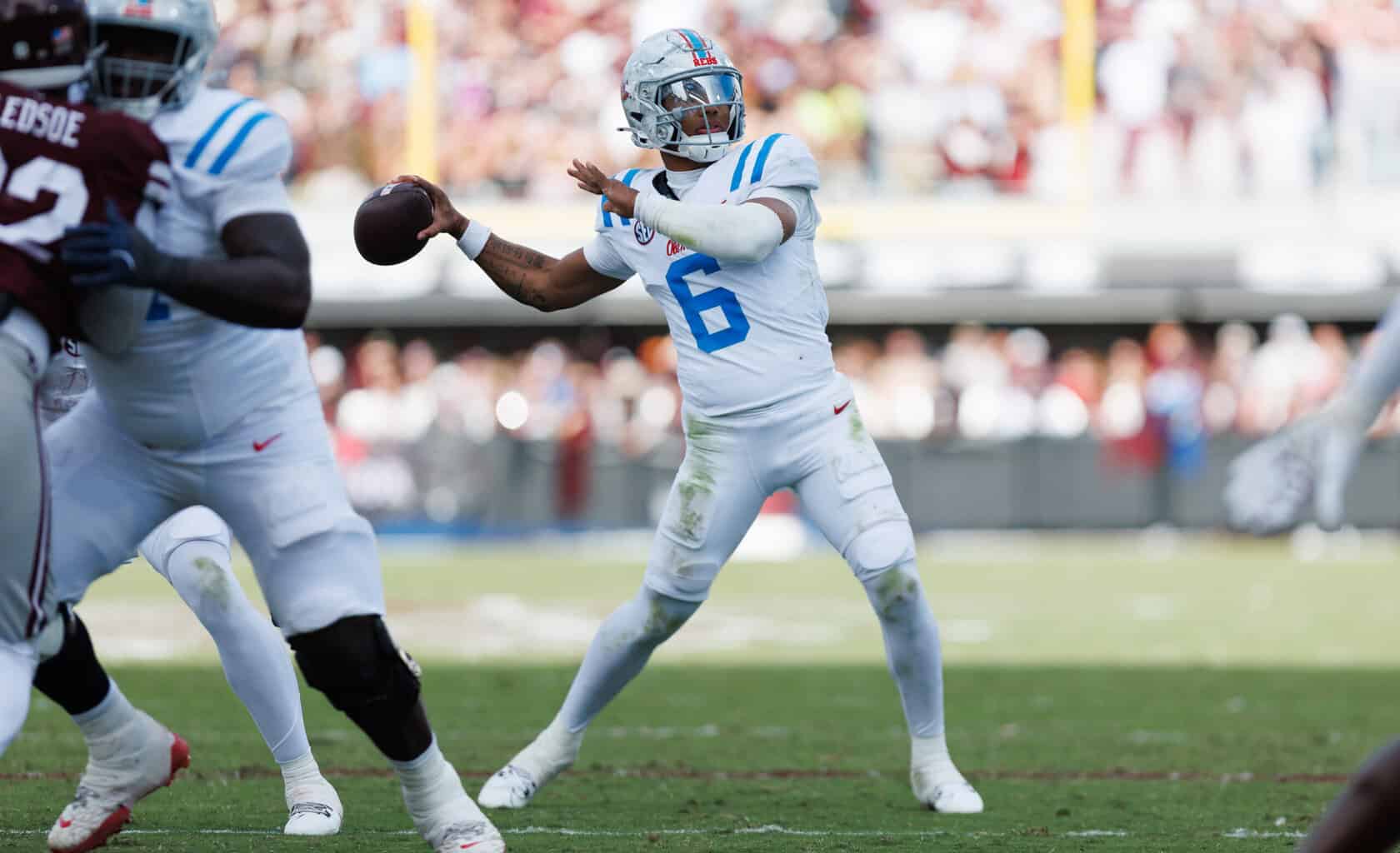
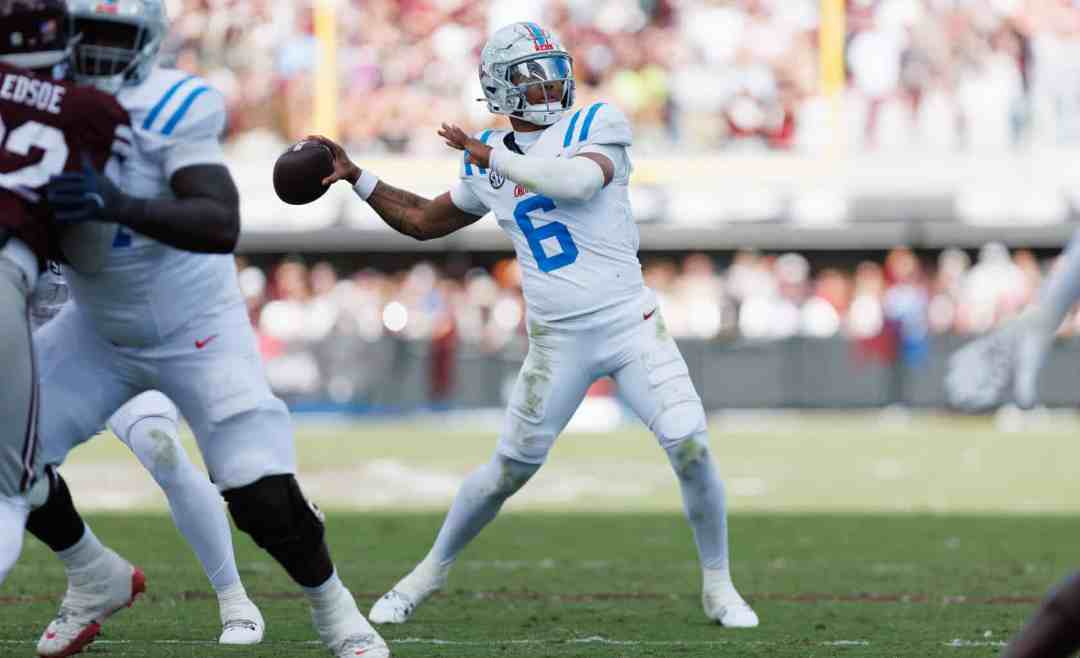
Of course, the “experts” who voted on the preseason AP poll, along with most of the rest of us, had never heard of Trinidad Chambliss, a transfer quarterback from tiny Division II Ferris State. He stepped in when highly-touted Austin Simmons was injured in the season’s second game.
Chambliss won this year’s Conerly Trophy, awarded to Mississippi’s top collegiate player, and the SEC Newcomer Award. A dual-threat, Chambliss gave defenses fits.
Few had heard of Kewan Lacy, a sophomore running back who transferred from Missouri. He led the SEC in rushing touchdowns with 20 and finished second in rushing yards with 1,279. He is relentless with the ball in his hands.
The offensive line improved each game and developed into a solid unit. Newcomers at wide receiver stepped up big time. Tight end Dae’Quan Wright, a holdover from the previous year, became a go-to target.
And the young defensive line, which had to replace one of the best units in Ole Miss history, more than stood its ground. Sophomore defensive tackle Will Echoles was named First Team All-SEC.
This year’s group finished the regular season 11-1, the lone loss at Georgia in a game Ole Miss led into the fourth quarter.
The Rebels faced five of the eight SEC teams ranked ahead of them in the preseason and beat four. The team ranked No. 1, Texas, failed to make the playoffs.
So on Dec. 20, at Vaught-Hemingway Stadium in Oxford, Ole Miss will play a game in the first round of the College Football Playoffs vs. Tulane. Kickoff is at 2:30 p.m.
No, I haven’t mentioned that the regular-season head coach, Lane Kiffin, took the job at LSU and abandoned this year’s group that accomplished so much. He took the job knowing he would not be allowed to coach the team in the playoffs.
Until he wins a national championship, that will be Kiffin’s legacy.
New head coach Pete Golding, previously the defensive coordinator, made it plain during his first press conference that he will do things his way. For now, he will focus on the players and preparing them for the postseason. He will not be into self-promoting, tweeting or hot yoga — three of the previous coach’s well-known priorities.
*****************

I have spent the past week trying to make sense of why the 2024 team missed the playoffs and the 2025 team earned a spot. What makes it even more puzzling is how good last year’s defense played.
The Rebels finished second in the country in scoring defense (14.4 per game) and led the nation in rushing defense. They registered 39 sacks and 73 tackles for loss. They held four of its eight SEC opponents to fewer than 100 yards rushing.
This year’s defense wasn’t nearly as suffocating, but it came up with stops at critical times late in games.
I compared the two offenses, using the numbers ONLY FROM SEC GAMES.
This year’s offense averaged 33.3 points per game compared to 28.5 a year ago.
Dart and Chambliss had strikingly similar numbers.
Chambliss accounted for 15 touchdowns; Dart 13.
Dart threw for 2,321 yards and 13 scores; Chambliss 2,064 and 10 TDs.
Dart rushed 89 times for 362 yards without a TD; Chambliss rushed 87 times for 336 yards and five touchdowns.
The 2025 team had a weapon the 2024 team longed for — Lacy. He could gain a couple of yards when he appeared to have nowhere to go. He could break a long one. And he could close out tight games. College football today is considered a throw-it-around-the-yard sport. And it is. But teams still need to be able to run the ball to keep defenses honest, wear down opponents and finish games.
A perennial bully, Alabama has struggled on offense this season because it can’t do the one thing it’s always been able to do: Run the football. Even though it slipped into the playoffs, the Tide ranks 14th among the 16 SEC teams in rushing. Georgia held Alabama to minus-3 yards on the ground in the SEC title game last weekend. Bama’s legendary coach, the late Paul “Bear” Bryant would cringe at such nonsense. He would applaud the Rebels’ success.
I came away from my research believing that you can crunch and compare numbers for hours, but so much of football is this: How will a team perform in clutch situations? Will it find a way to get it done? The 2025 team did that, on offense and defense.
I still believe that the constant talk of The Last Dance and the playoffs weighed on the ‘24 squad. It seemed to appear in critical situations. This year’s team plays loose and free. It’s visible.
So, welcome Mississippi— a year later than many expected — to the College Football Playoffs. It feels good for our state to be a part of it.
############