
CLEVELAND, Ohio — As the Browns get ready to face the Chicago Bears, everything starts with the edge in the run game. It has been the one area that has consistently shown up on tape, not because of a lack of effort or talent, but because a series of small breakdowns add up quickly on the perimeter.
False reads, poor leverage, edges playing too wide, interior gap integrity issues, and missed fits have all appeared at different times. When those things are paired with creative play-calling and well-designed blocking schemes from opponents, it creates stress points that can be exploited.
The Browns have been outstanding on defense overall, but perimeter run defense has been the Achilles’ heel. Tony Pollard’s performance last week for the Titans put that issue front and center. He rushed for 161 yards on 25 carries, averaged 6.4 yards per rush, and scored two touchdowns, with both long scoring runs coming on the edge. One on wide zone and the other on a pin-and-pull scheme.
That performance now serves as a clear blueprint on tape, one Bears head coach Ben Johnson will study closely, and one the Browns must address if they want to control this matchup.
Let’s start with what the Titans did to win the edge and how the Browns can address it moving forward.
1. Unbalanced look with size
The Titans used a four-man surface to out-flank and out-leverage the Browns on the edge. To the right side, they aligned right tackle J.C. Latham at 6-foot-6, 342 pounds, tight end Gunnar Helm at 6-6, 240, and back-up tackle Olisaemeka Udoh at 6-5, 320 as the wing.
Most personnel groups would be lined up as tackle, tight end, and a second tight end as the wing. However, with Udoh’s size, he is able to block Garrett down, and that alignment is the chess piece.
Garrett is in a 9-technique on Helm, but with Udoh added to the surface, the Titans create a massive edge that stresses the defense before the snap. At the snap, Garrett and Kamara are both caved down by Latham and Udoh, immediately removing the true edge defender from the play.
Once that happens, the edge responsibility falls to Devin Bush at 5-11, 234 coming from depth, which is an impossible ask against size, angles, leverage, and speed. From there, the Titans go hat on a hat, with every Browns defender covered, and the responsibility shifts to the secondary to get the back on the ground.
A big gain is one thing, but a touchdown is unacceptable. Putting a 320-pound backup tackle at wing to collapse a 9-technique like Garrett at 6-4, 272 is top-tier game-planning. the Titans did not just block Garrett, they schemed him, and that is exactly how they won the edge.
Below is a look at that 65-yard touchdown from Pollard and how the Titans blocked Garrett inside.
The answer
The answer is to make sure the Browns have a true edge defender on the line of scrimmage, and that edge has to have size. If the edge player is a linebacker, he cannot be asked to handle it from the second level. That is an unfair match-up against angles, leverage, and mass.
The Browns started to address this in the second half, and it made a noticeable difference. By setting the edge at the line of scrimmage, they were able to force the ball back inside, allowing the interior movement and flow of the rest of the defense to rally and make the tackle. When the edge is firm, everything else in the run defense works the way it is designed to.
Below is a look at the adjustment from Browns defensive coordinator Jim Schwartz as he moves linebacker Devin Bush up the line of scrimmage to help set the edge.
2. Use Garrett’s aggression and alignment against him
The Titans’ wide zone concept is a clear example of how they handled Garrett in the run game. They were content to let the All-Pro defensive end rush up field, knowing his natural aggressiveness could be used against him.
Instead of trying to block him traditionally, the left tackle simply walled him off, widened him, and ran him past the play. By doing that, Tennessee removed the most dangerous edge defender without extra bodies, allowing the ball to cut underneath his rush path. It was disciplined, intentional, and sound run game planning, and it demonstrates how elite players are often neutralized not by overpowering them, but by redirecting them.
The clip below shows how the Titans allowed Garrett up field and ran wide zone underneath him for a 32-yard touchdown from Pollard. Below the clip are diagrams that show the same play.
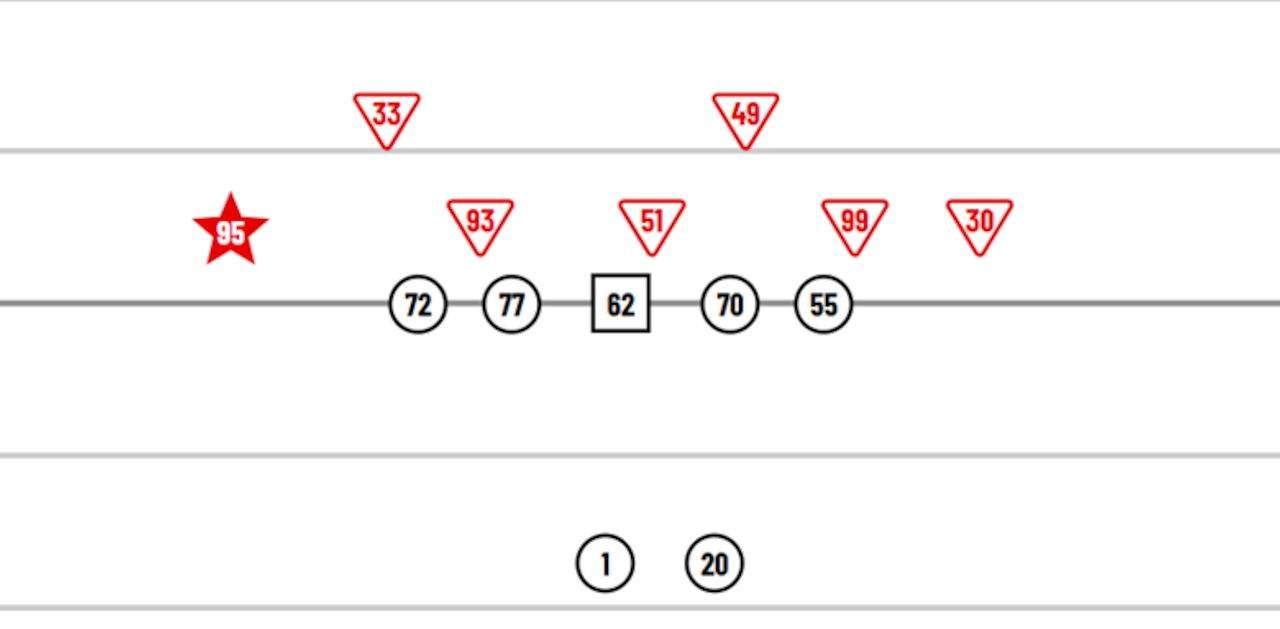 This is a pre-snap diagram that shows how the Titans played Myles Garret on a wide zone play that resulted in a 32-yard touchdown run by Tony Pollard.cleveland.com
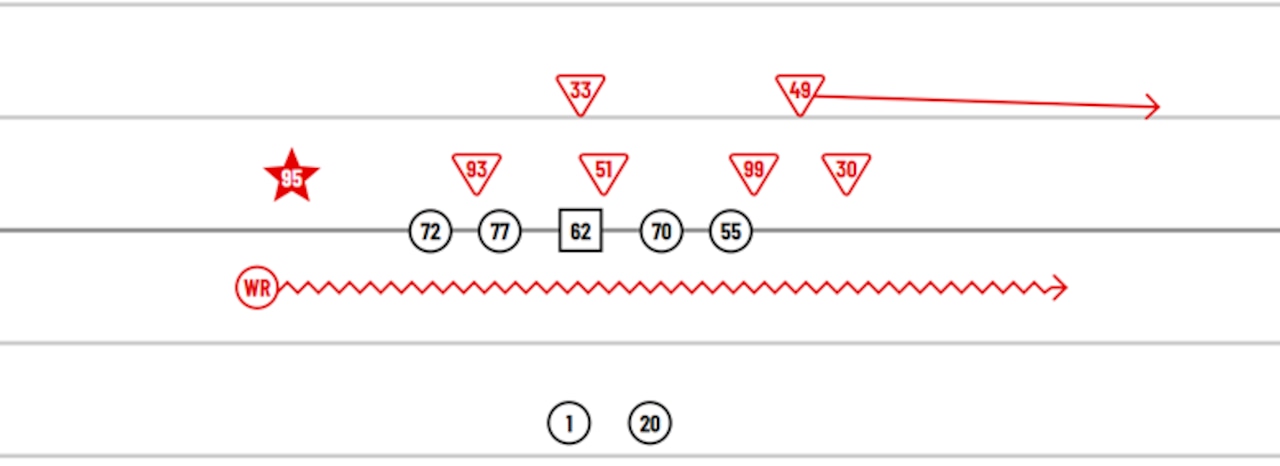 This is a pre-snap diagram that shows how the Titans played Myles Garret on a wide zone play that resulted in a 32-yard touchdown run by Tony Pollard.cleveland.com
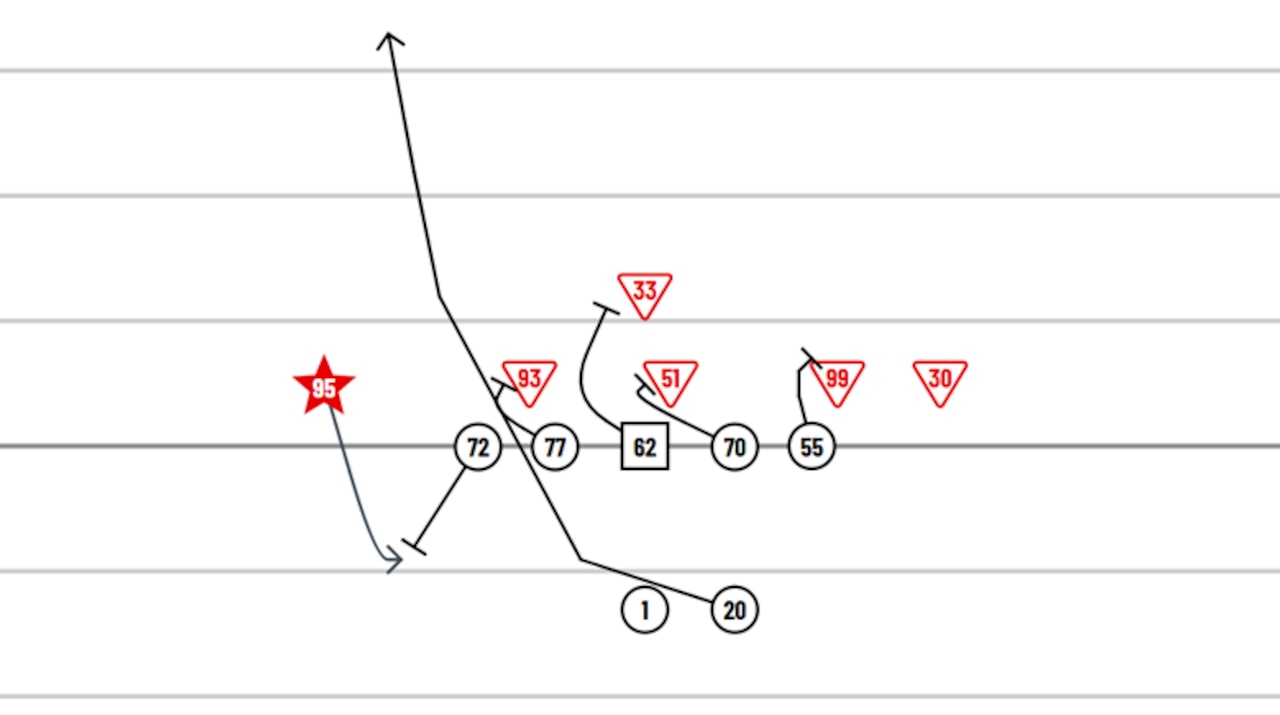 This is a post-snap diagram that shows how the Titans played Myles Garret on a wide zone play that resulted in a 32-yard touchdown run by Tony Pollard.cleveland.com
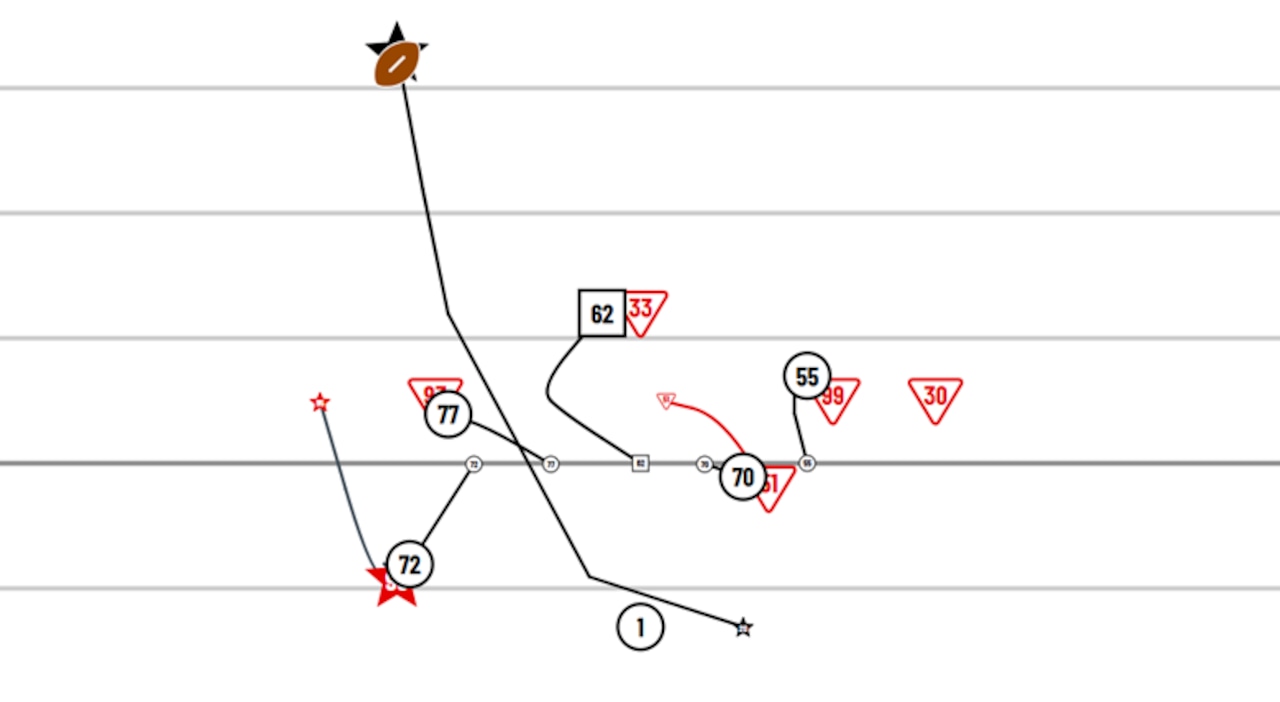 This is a diagram that shows the result of how the Titans played Myles Garret on a wide zone play that resulted in a 32-yard touchdown run by Tony Pollard.cleveland.com
The answer
Garrett squeezes the alignment down a little and plays the tackle first, instead of immediately defaulting to pass-rush mode. It is not just Garrett, either, the rest of the defensive line has to do a better job of getting their hands on the offensive linemen in front of them and letting those blocks take them to the ball. That discipline reduces the surface, closes cutback lanes, and forces the run play to declare. Setting the edge has to be the priority, because once the edge is firm, everything inside has a chance to flow and finish the play.
The first diagram below shows how the Browns typically align in their base four-man front, using wide 3-techniques and wide 5-techniques. Garrett, in particular, often lines up extremely wide on his side. That alignment is designed to stress protections and create pass-rush lanes, but it can also create space on the edge if it is not paired with firm leverage and interior control.
The second diagram shows a possible answer the Browns can use by covering up the guards and tackles, tightening the front, controlling the line of scrimmage, and setting a firmer edge against the run.
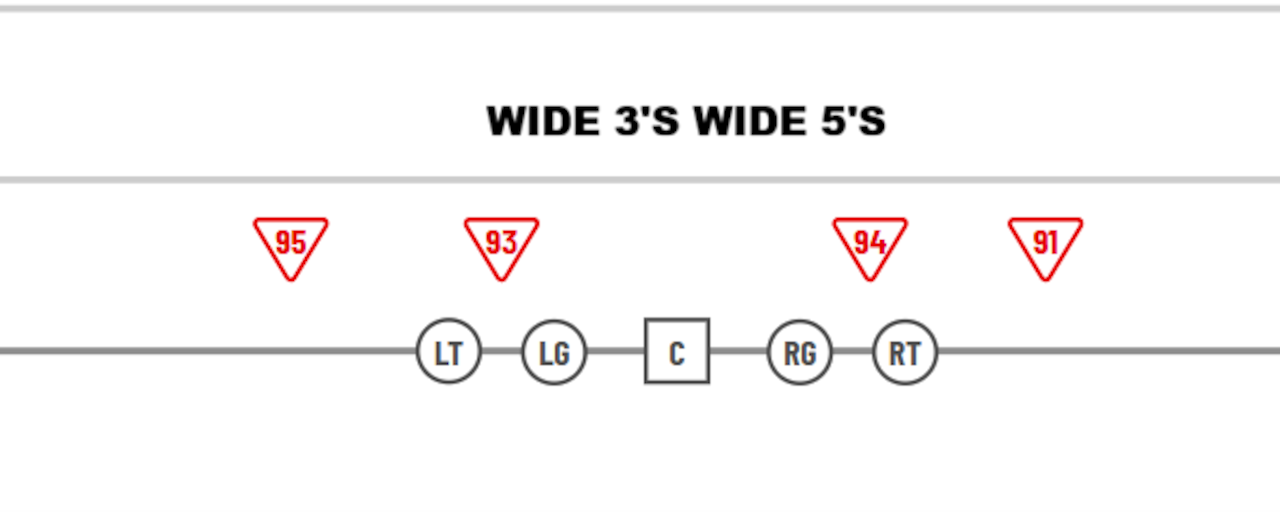 The diagram shows how the Browns typically align in their base four-man front, using wide 3-techniques and wide 5-techniques.cleveland.com
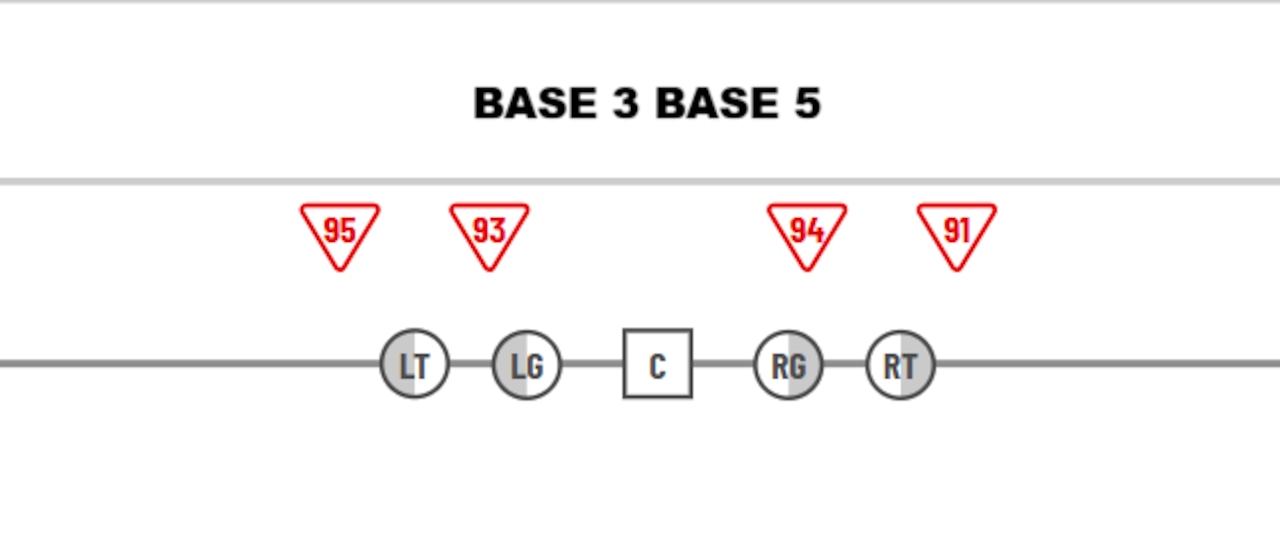 The diagram shows an alignment the Browns can use for setting the edge by covering up the guards and tackles, tightening the front, controlling the line of scrimmage, and setting a firmer edge against the run.cleveland.comWhat we learned
Edge integrity is essential in stopping the run game. When the Browns set the edge, the defense works as designed and the run game gets funneled inside. When they do not, opponents can redirect Garrett, spill the ball to space, and create explosive plays. However, against power running teams like the Bears, controlling the edge must come first.
Lance Reisland is the former coach at Garfield Heights High School, where he spent 18 seasons as an assistant for his father, Chuck, and four as head coach, from 2014 to 2018. In 2018, his team finished 11-1 and appeared in the OHSAA Division II regional semifinals. That team went 10-0 and made history as the first Garfield Heights team in 41 years to have an undefeated regular season along with beating Warren G. Harding for the first playoff win in school history.
Football Insider newsletter free trial: Take a minute and sign up for a free trial of our Football Insider newsletter, featuring exclusive content from cleveland.com’s Browns reporters.