
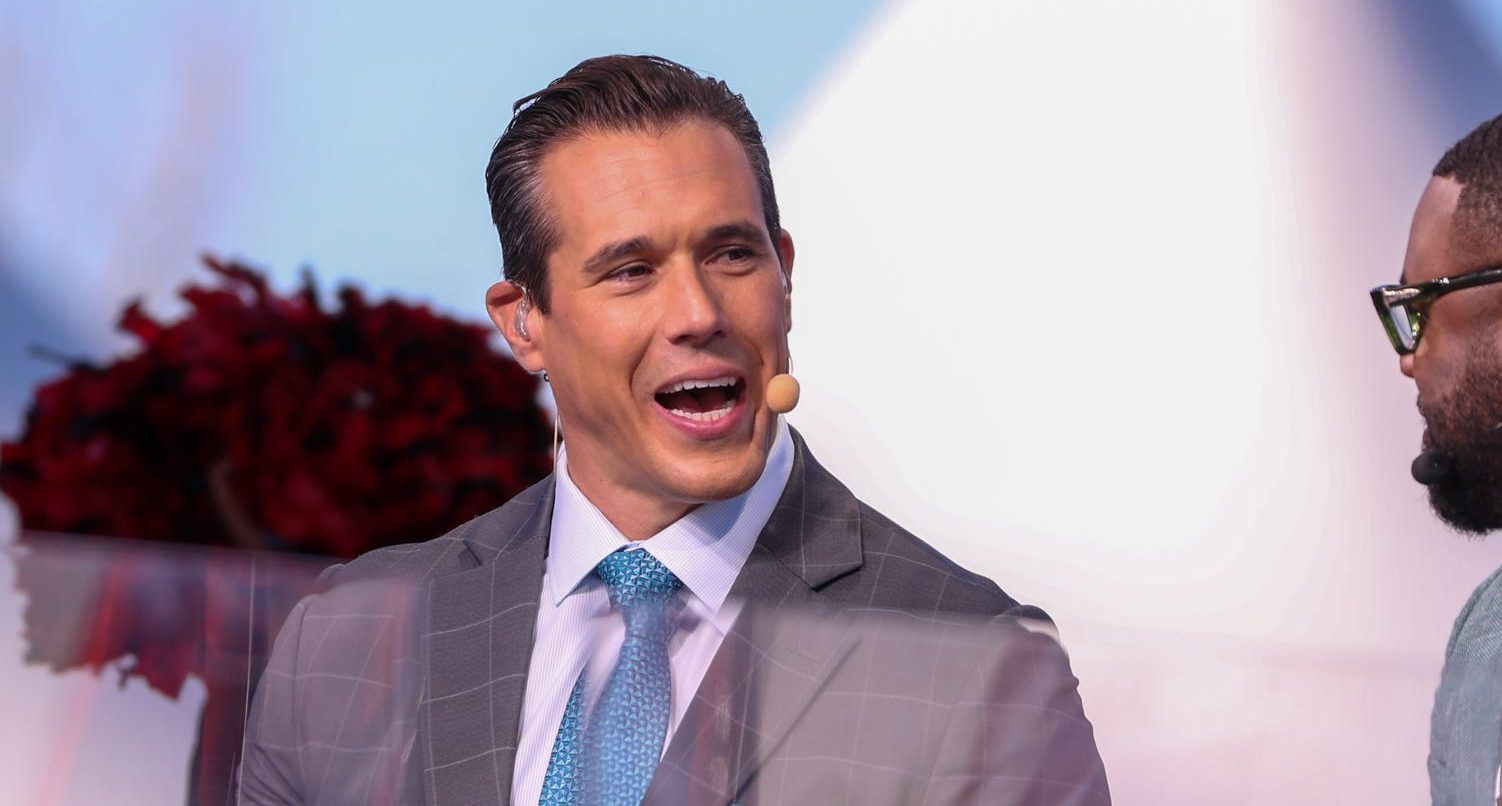
Brady Quinn isn’t buying the narrative that the College Football Playoff committee operates independently from ESPN’s interests. And on Stugotz and Company this week, he spent considerable time explaining exactly why.
The Fox Sports analyst and former Notre Dame quarterback laid out a detailed — and pointed — case for why he believes ESPN and Disney are manipulating the playoff structure to benefit their broadcast partners, specifically the SEC.
“This entire process is controlled by ESPN and Disney,” Quinn argued. “And just to compare it to the NFL — because that’s where college football is going, it’s more of a professionalized model — what you have is an NFL that controls all of it. And they kind of say, ‘Hey, we decide who gets access on this and who doesn’t,’ it’s entirely different with college football. This is all an ESPN creation, a Disney creation, so I think that’s where they think there’s a big sense of bias.”
The NFL controls its own product and makes no pretense about it. College football, meanwhile, exists in this weird space where ESPN broadcasts the games, produces the selection show, and employs many of the loudest voices shaping public perception, yet the committee is supposedly making decisions in a vacuum. Quinn doesn’t think that’s realistic.
“I mean, let’s just go back before the season. [ESPN] talked about the committee changing the criteria in how they evaluate schedules, because what did we have last year in the playoff? Only three SEC teams and they all got stomped for the most part, besides Texas, that at least made its way to the semifinal round. And, by the way, barely made it there,” Quinn said.
The SEC, which ESPN has a massive financial stake in through its broadcast deal, had a disappointing playoff run. The Big Ten, which has its own separate media rights deal with Fox, CBS, and NBC, is pulling away financially and competitively. So heading into the 2025-26 season, the committee — which operates within an ESPN-produced ecosystem — suddenly decided to place more emphasis on the exact criteria that would benefit SEC teams: strength of schedule, conference depth, and quality losses within a tough league.
“So, when you look at the landscape, I think the SEC was watching the Big Ten now win the last two national championships, there’s a lot more money in some of these Big Ten programs that are starting to distance themselves,” Quinn said. “And you look at their media rights deal, same thing, they keep kind of distancing themselves. I think there’s a concern for the products that ESPN has and the SEC and ACC.”
Quinn isn’t saying ESPN executives are literally calling the committee with orders. His point is that the whole system runs on ESPN’s infrastructure, serves ESPN’s interests, and pretending the results just happen to break ESPN’s way requires ignoring some very convenient timing.
“As much as you know, I sit there and say, is there separation between the committee and ESPN? Sure,” Quinn continued. “But it also lends itself to the conspiracy theories that are out there because it’s hard to make a case for a team that went 2-2 in its last four, got absolutely drummed in the SEC championship game, and watched every other team conference championship weekend dropped that lost but them.”
He also pointed to the Group of Five automatic bids as another example of the system protecting ESPN’s interests. He referenced James Madison and Tulane getting in while noting the committee could have structured the criteria differently to keep more power conference teams in the mix.
“When we talk about the ACC’s criteria, which is obviously primarily owned and distributed by ESPN, we talked about their conference championship, playoff criteria, look at the criteria for the teams that get the auto bids in that are conference champions,” Quinn added. “Like, this whole JMU, Tulane, with the AAC, that’s also part of the issue that I have with how we’ve constructed which five conference champions get in. You could also put in language there that kind of protects some of those power four teams, but you didn’t, right? So, you know, I realize it’s only because they’re making it up as they go along.”
“That’s exactly what it is,” Stugotz agreed. “It’s a made-for-TV event throughout the course of the season. Otherwise, why would you tune in?”
This isn’t the first time Quinn has gone after ESPN over the playoff mess. He previously called out the network for criticizing Notre Dame’s decision to skip a bowl game after getting snubbed, pointing out the hypocrisy of ESPN complaining about a problem they helped create.
Whether you buy Quinn’s argument or not, he’s at least asking questions that deserve answers. The College Football Playoff operates within an ESPN ecosystem, and pretending that creates zero conflicts of interest requires ignoring a lot of convenient timing.