
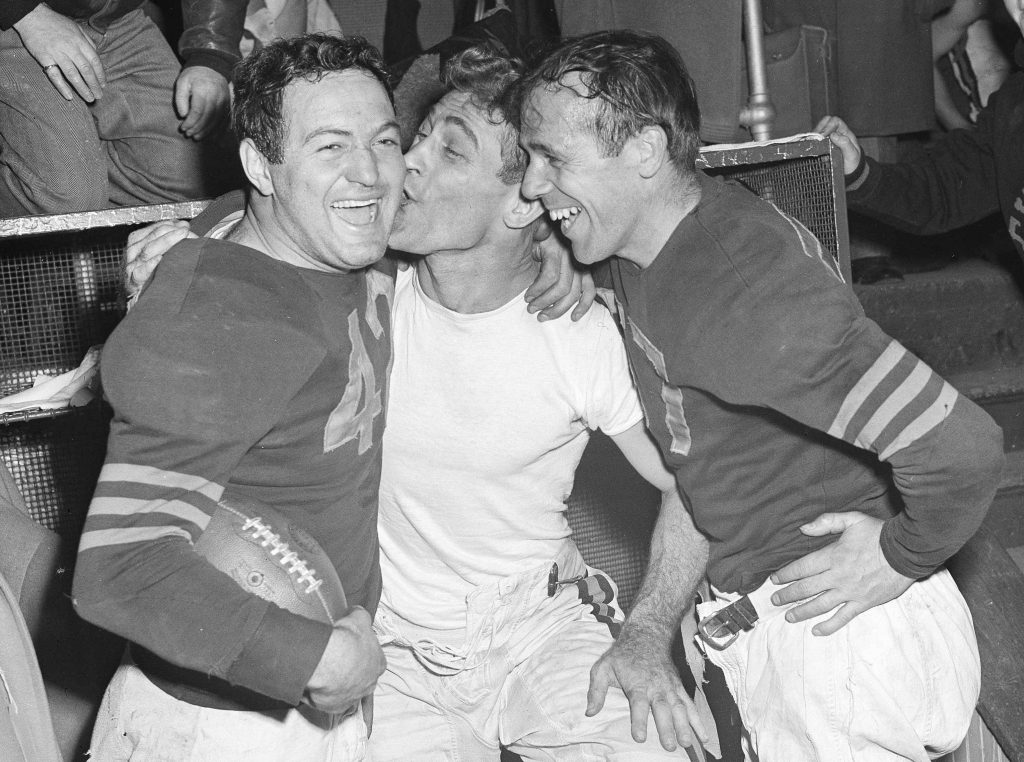
Here’s a look back at what happened in the Chicago area on Dec. 15, according to the Tribune’s archives.
Is an important event missing from this date? Email us.
Weather records (from the National Weather Service, Chicago)
High temperature: 66 degrees (2021)
Low temperature: Minus 12 degrees (1901)
Precipitation: 1.1 inches (1971)
Snowfall: 8 inches (1987)
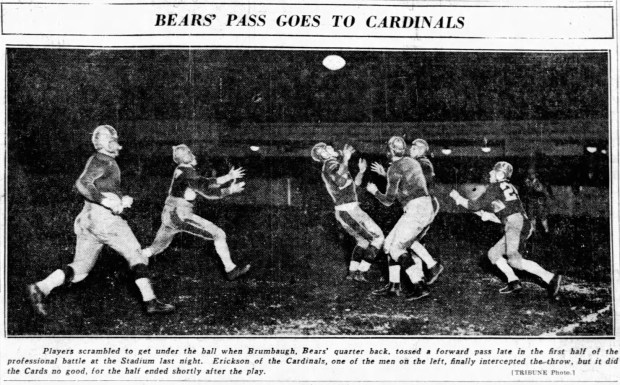 The Chicago Bears beat the Chicago Cardinals 9-7 during a night game played for charity in Chicago Stadium on Dec. 15, 1930. (Chicago Tribune)
1930: The Chicago Bears and Chicago Cardinals played in the NFL’s first indoor game on an 80-yard field in Chicago Stadium. Its terrazzo floor was covered with six inches of dirt, Tribune reporter Wilfrid Smith wrote. More than 10,000 spectators watched the Bears win 9-7.
The event — which took place during the Great Depression— raised money for Chicago’s unemployed. A football autographed by the Cardinals’ Ernie Nevers (who scored a touchdown and the point after in the game) and Bears’ Red Grange was auctioned off during halftime and sold for $180 (or about $3,600 in today’s dollars).
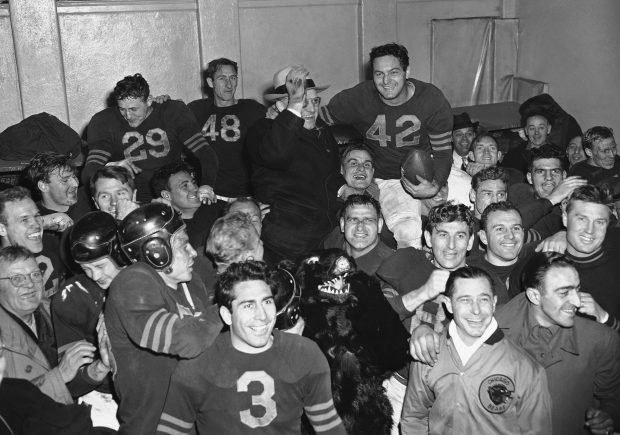 Members of the Chicago Bears hoist owner and coach George Halas, center with waving gloved hand, and quarterback Sid Luckman (42), to their shoulders as they celebrate in their locker room at the Polo Grounds in New York on Dec. 15, 1946, after defeating the New York Giants, 24-14, to win the NFL championship. (J.D. Collins/AP)
1946: The Bears defeated the New York Giants 24-14 before a record NFL title crowd of 58,346 at the Polo Grounds in New York.
In the final quarter, coach Luke Johnsos, up in the press box, sent down a message to Bears coach George Halas on the sideline during a timeout: ”Now!”
Quarterback Sid Luckman approached Halas and asked, ”Now?”
”And I,” Halas recalled, ”told him, ‘Yes, now.’ ”
They all agreed that, with the score tied 14-14 and the ball on New York’s 20-yard line, it was time to call ”Bingo Keep It,” the play Luckman had practiced all season in the hope he would have an opportunity to use it.
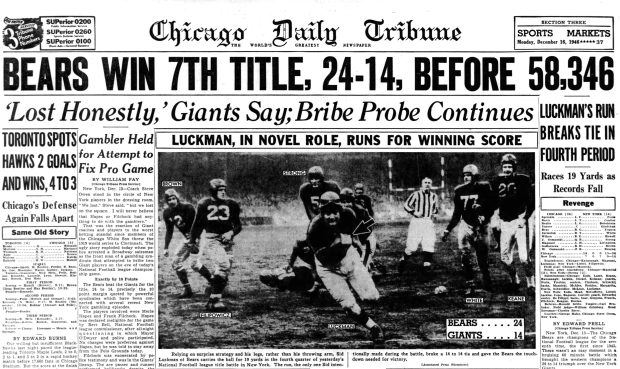 The Chicago Bears beat the New York Giants 24-14 at the Polo Grounds in New York on Dec. 15, 1946, to win the team’s seventh championship. (Chicago Tribune)
New York’s linebackers were keying on George McAfee, so Luckman faked a handoff to his All-Pro halfback. As the blockers pulled one way, Luckman bootlegged the ball on his hip and swept the other way. He evaded a defender at the 10, picked up blocks from center Bulldog Turner and guard Ray Bray and scored his only TD of the season.
”Nobody touched me,” said Luckman. ”Easiest run of my life.”
Pregame headlines screamed about a ”Fix Scare.” Commissioner Bert Bell announced that two Giant stars — quarterback Frank Filchock and fullback Merle Hapes — had been offered $2,500 apiece, a $1,000 bet on the game and an offseason job if they would ”ease up.” The players rejected the offers but failed to report them.
After both players talked to the police, Bell ruled that Filchock could play against the Bears but Hapes could not. Filchock, who had his nose broken on the fourth play, passed for both Giant touchdowns.
”We lost, but we lost on the square,” said Steve Owen. ”I`ll never believe that Hapes or Filchock had anything to do with gamblers.”
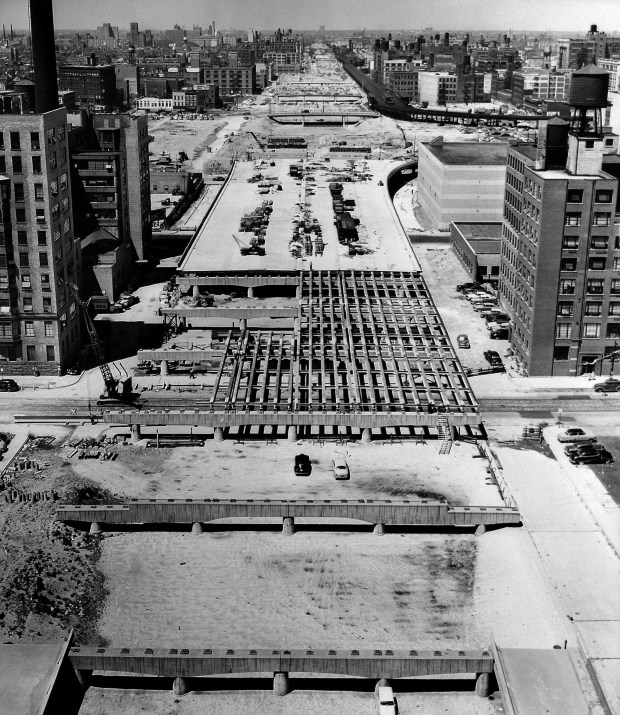 The Congress Expressway project, looking west from the Main Post Office, as a section of pavement had been completed. The cleared area for the highway extends into the distance. (Chicago Tribune historical photo)
1955: The 4.5-mile Congress Expressway, which became the Eisenhower Expressway in 1964, opened after three years of construction, a cost of $185 million, the demolition of more than 1,000 buildings in its path and the relocation of more than 3,000 bodies buried in two cemeteries.
The major downtown thoroughfare Congress Parkway was renamed in honor of investigative journalist Ida B. Wells in 2019.
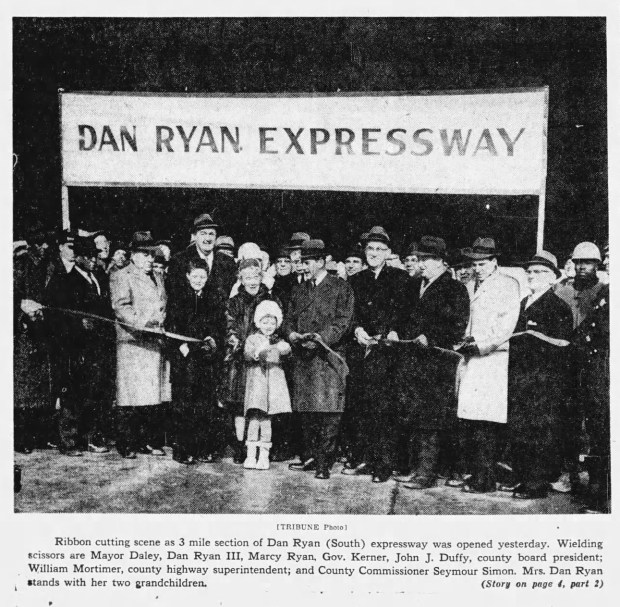 The first section of the Dan Ryan Expressway was opened Dec. 12, 1961, and the remaining 13 miles were opened to motorists a year later. (Chicago Tribune)
1962: The Daniel B. Ryan Expressway, which was named in honor of the late president of the Cook County Board of Commissioners, opened. The 16-mile, $209 million route attracted many sightseers, who quickly jammed it after a ribbon cutting attended by Gov. Otto Kerner and Mayor Richard J. Daley.
Rewriting a constitution not for the weak of heart
1970: Illinois voters approved a new state constitution — by a 2-1 margin in the city and suburbs — to replace the state’s century-old charter.
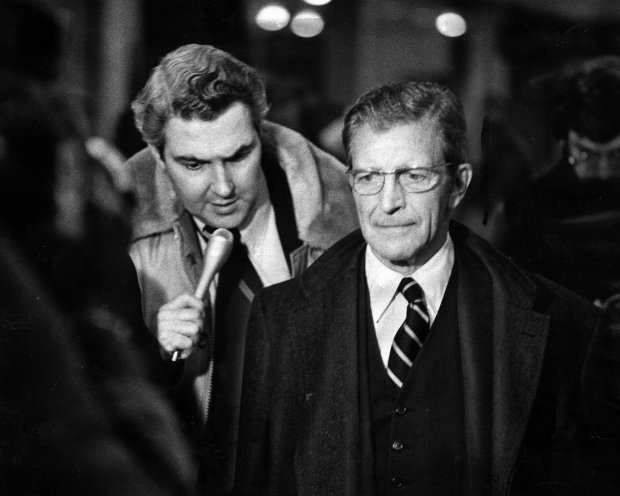 Former Illinois Gov. Otto Kerner at O’Hare International Airport in March 1975 after his release from a federal prison in Lexington, Kentucky. A parole board freed him because of poor health. (Frank Hanes/Chicago Tribune)
1971: Appellate Judge Otto Kerner, who was governor from 1961 to 1968, was indicted in a bribery scheme to benefit Arlington Park and Washington Park horse racing tracks while he was governor. Kerner was accused of secretly buying stock in the tracks at a steep discount allegedly in exchange for political favors.
The Dishonor Roll: Meet the public officials who helped build Illinois’ culture of corruption
Kerner, who had resigned as governor to become a judge in the U.S. Court of Appeals in Chicago, was found guilty in February 1973 of bribery, conspiracy and income tax evasion.
Vintage Chicago Tribune: Janet Jagan’s journey from Chicago’s South Side to the presidency of Guyana
1997: Chicago native Janet Jagan was elected president of Guyana.
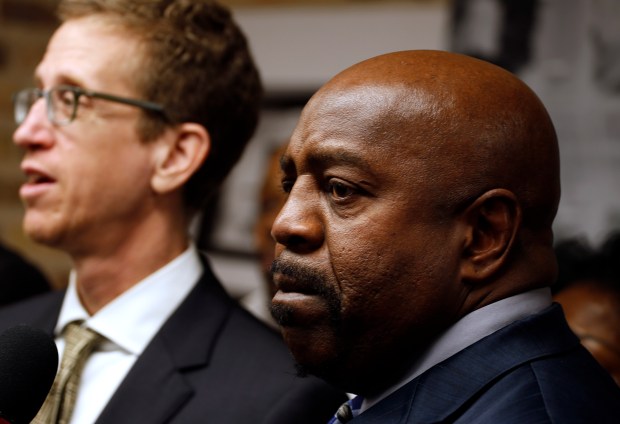 Former El Rukn gang member Nathson Fields, right, with his attorney Jon Loevy on Dec. 15, 2016, after a federal jury awarded $22 million in damages to Fields who claimed two Chicago police detectives framed him for an infamous 1984 double murder that sent him to death row. (Phil Velasquez/Chicago Tribune)
2016: A jury awarded former El Rukn gang member Nathson Fields $22 million in a wrongful conviction lawsuit tied to secret police “street files.”
 Marina Del Rios, from University of Illinois Hospital & Health Sciences System, receives Chicago’s first COVID-19 vaccination from Nikhila Juvvadi on Dec. 15, 2020, at Loretto Hospital in the Austin neighborhood. (José M. Osorio/Chicago Tribune)
2020: Illinois began administering the COVID-19 vaccine.
Want more vintage Chicago?
Subscribe to the free Vintage Chicago Tribune newsletter, join our Chicagoland history Facebook group, stay current with Today in Chicago History and follow us on Instagram for more from Chicago’s past.
Have an idea for Vintage Chicago Tribune? Share it with Kori Rumore and Marianne Mather at krumore@chicagotribune.com and mmather@chicagotribune.com