
Because I’m an absolute loser with serious mental problems, I often spend my downtime daydreaming about the biggest possible sporting event in a given state.
New York has seen it plenty of times when the Yankees met the Dodgers, Giants or Mets in the World Series. Kentucky and North Carolina went 99 percent of the way there with Kentucky-Louisville and Duke-UNC Final Four games. In my home state of Texas, our beloved oil will turn into banana pudding before we experience our BPSE (biggest possible sporting event) — a Cowboys-Texans Super Bowl.
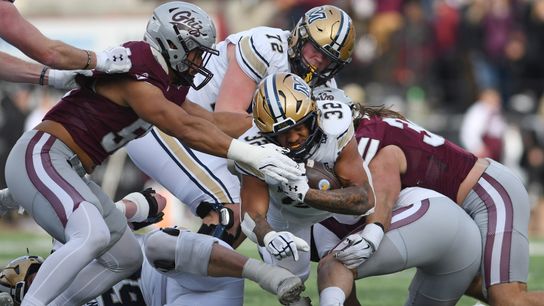
Montana is getting 99 percent of the way there on Saturday. The only two Division I football programs in the state of 1.1 million will meet in Bozeman for a spot in the FCS national title game.
Saturday’s FCS semifinal game is, of course, a replay of Montana State’s 31-28 win at Montana on Nov. 22. That game was for the Big Sky’s regular-season championship, but everyone knew at the time the most tangible prize — other than the destruction of their enemies — was the No. 2 seed and the right to host a possible (likely) semifinal rematch. But the stakes have somehow climbed even higher than they appeared back in November. The elephant in the room here is the Bison not in the room. Top-seeded, defending national champion North Dakota State was stunned by Illinois State in the second round, putting the national championship trophy within the claws of the Grizzlies and the Bobcats. No disrespect to unseeded Illinois State or 12th-seeded Villanova, but the Re-Brawl of the Wild winner will head to Nashville early next month as the heavy favorite to win the national championship.
Montana has won two national championships previously, most recently in 2001. Montana State owns three national titles, but their only FCS championship came in 1984. It’s been a while in Missoula; it’s been even longer in Bozeman. In Montana State’s case, Brent Vigen’s club was in the title game last year and was upset by NDSU, 35-32. Montana was in the championship the year before that, losing to South Dakota State.
The “University Of/State University” dynamic exists within nearly every state in America, with the University Of typically being the older, larger, more cosmopolitan school and the State University being (or least starting) smaller and more rural, a reflection of its agricultural mission. Think Texas/Texas A&M, Ole Miss/Mississippi State and Alabama/Auburn. That dynamic exists in Montana, but with a twist. Both schools were established in 1893 but, like twins, UM is fractionally older than MSU; Montana was established in February of that year, Montana State in November. And while the University of Montana is the flagship of the state’s university system, Montana State’s student population is nearly 60 percent larger than Montana’s.
On the football field, the Grizz maintain a 74-44-5 lead, largely because they dominated the series early. Montana State lodged only three wins between 1909 and 1955; Montana also ripped off a 16-game winning streak from 1986 to 2001. But Montana State has won seven of the last nine, including a 4-game home winning streak. Saturday (4 p.m. ET, ABC) will be the 125th Brawl of the Wild, but the first in the playoffs.
The cheapest ticket on the secondary market is $675, nearly double the get-in price for Texas A&M’s first home playoff game at Kyle Field, and $500 more expensive than the get-in price for Oklahoma’s first home playoff game. Though MSU’s enrollment is higher, its stadium is smaller. Bobcat Stadium lists a capacity of just over 18,000. Expect more than 20,000 to find their way into the venue.
“I expect it to be an unbelievable atmosphere here,” Vigen said this week. “These things don’t happen too often.”
As the 31-28 score implies, the November game was an incredibly tight contest decided on the margins. The Bobcats led most of the way, but the game turned on a tipped pick-six in the third quarter. Montana also had a go-ahead fourth-quarter touchdown called back for holding, then had the game-tying field goal blocked.
Since the loss, Montana scored 50 on 14th-seed South Dakota State in their opening round win, and 52 on 11th-seed South Dakota in the quarterfinals. Quarterback Keali’i Ah Yat was 51-of-68 for 666 yards with seven touchdowns and no interceptions in those games. Saturday will be the 10th time in Montana’s history to play the same team twice in a season; in eight of the previous nine games, the loser of the first game won the rematch.
“You grow up watching this game,” Montana offensive lineman Dillon Botner said. “It’s our Super Bowl, so to play in it twice in your senior year is pretty special.”
It’s a game so big where the coaching staffs almost have to downplay its importance, because stating the obvious builds the stakes into something bigger than a human mind can handle. For Montana State, Saturday afternoon will be either the biggest party or funeral in the university’s history. For Montana, they either end their rival’s season on their home field, or head into a long, cold winter at 13-0 against the remainder of their schedule but 0-2 in the games they most wanted to win. The winner puts itself in position to win their first national championship in 25 or 41 years, and the loser watches their arch rival win that title at home on their couch.
Either way, decades from now, the combatants on both sides can say they participated in the biggest sporting event the state of Montana can play.