
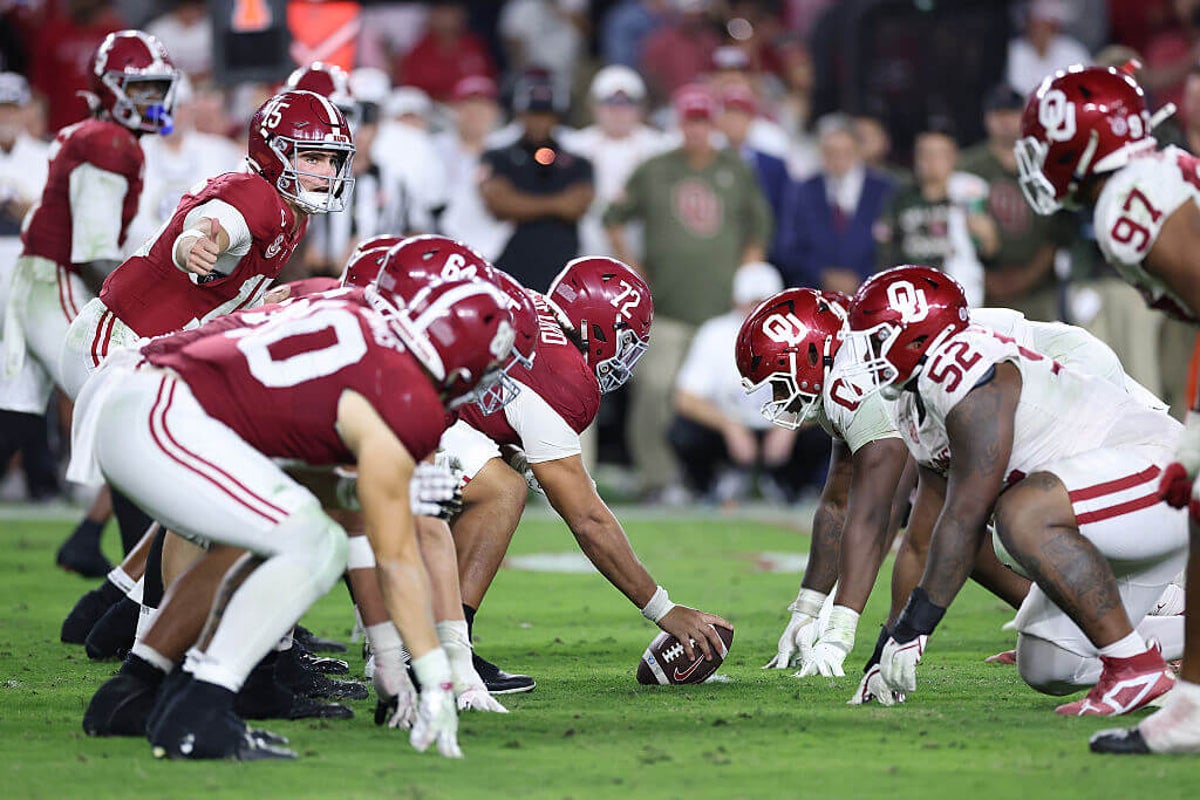
Nick Saban never had time to stop and survey his influence on the sport. Over his 17 years as head coach of Alabama, as he amassed six national championships and nine SEC titles, he — seemingly — didn’t care about it.
“When you’re a coach, you look at everything through a straw,” Saban said last week.
To the outside, the reach of Saban’s Alabama was vast, undeniable. For the better part of two decades, the Crimson Tide were college football’s main character. Loved by some. Envied by many. Respected by all. More often than not, a favorite to win the national championship.
It was more than winning, too. Programs nationwide tried to imitate what Saban built — and still are, two years after his retirement. Four of the top six coaches in the College Football Playoff are former Saban assistants, including Curt Cignetti at No. 1 Indiana, who has engineered the most dramatic turnaround in recent college football history. In all, 22 of the 136 FBS head coaches (16.2 percent) this season spent time on Saban’s staff.
But as Alabama returns to the main stage, reaching the College Football Playoff one year after being the first team left out, college football has lost its main character. The Crimson Tide (10-3), ranked ninth, remain an excellent program with a chance to win their first Playoff game in four years on Friday night at No. 8 Oklahoma (10-2). But the aura is gone. Alabama is no longer the bar by which all others are measured and no longer defines the sport.
Whether it’s even possible a single program can take Alabama’s place as a singular force in the increasingly transient nature of college football is an open question.
For the duration of Saban’s tenure, nothing validated a program more than beating Alabama on one of the sport’s biggest stages. Programs tried and failed to recreate the secret sauce that fueled his dynasty. He grew the biggest and most productive coaching tree in the sport, and often beat those teams on the way to another title.
“You never take it for granted,” Alabama athletic director Greg Byrne said of the program’s success.
Does any such hurdle exist now?
Second-year coach Kalen DeBoer, who led Washington to a national championship game appearance before taking the Alabama job, stepped into a role with impossible shoes to fill. He brought Alabama to the SEC championship and the Playoff in his second season and just signed the No. 2 recruiting class in the country a year after inking the No. 3 class.
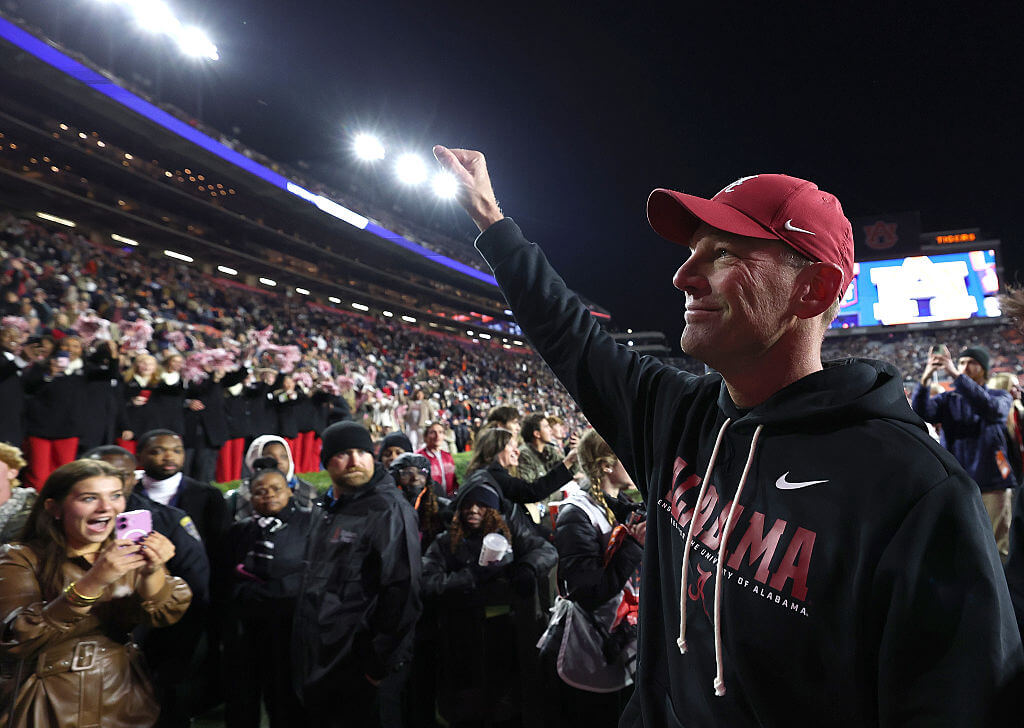
Kalen DeBoer is 19-6 in two seasons at Alabama after taking Washington to the national championship game in the 2023 season. (Kevin C. Cox / Getty Images)
But a trio of losses pierced the program’s air of invincibility in this new era.
Last year, Vanderbilt pushed around the Tide for a 40-35 win, their first over Alabama in 40 years. Late in the season, the Crimson Tide lost by 21 at unranked Oklahoma, knocking them out of the Playoff. This year, Alabama was pushed around again in a season-opening 31-17 loss to a Florida State team that finished 5-7, sparking early-season questions about job security that quickly faded.
Including last year’s bowl loss to Michigan, the Crimson Tide have lost four ranked games in two years. Saban was 123-4 against ranked teams over 17 years.
Alabama rebounded this year, reeling off eight consecutive wins at one point, but by Saban’s standards, going 10-3 and starting the postseason on the road after being demolished in the SEC title game would be a down year. No Alabama players finished in the top 10 of the Heisman Trophy voting for the second year in a row, something that occurred just once from 2013 to 2023. No Alabama players showed up on The Athletic’s All-America first or second team. Left tackle Kadyn Proctor was the only player on the Associated Press’ first or second teams.
Still, Byrne is bullish on the future in the midst of what he calls “one of the most historic transitions in the history of sports.”
“The expectation for fans — understandably, and please put that in there — is that you should win every game. I want us to win every game. The coaches want that. The kids want that,” Byrne said. “But in my role, you want to look at not only the current year but the long term.”
Alabama’s AP poll history, CFP era
YearWeeks at No. 1Final rankingCoach
2025
0
TBD
DeBoer
2024
1
17
DeBoer
2023
0
5
Saban
2022
3
5
Saban
2021
7
2
Saban
2020
8
1
Saban
2019
4
8
Saban
2018
15
2
Saban
2017
14
1
Saban
2016
15
2
Saban
2015
1
1
Saban
2014
2
4
Saban
In the NIL era where rosters are more fluid than ever, it’s fair to wonder if any program can ascend to main character status when dominance is harder to sustain. Stockpiling talent and convincing top-100 prospects to sit for multiple seasons may no longer be possible. So it may also be impossible to build the kinds of rosters that fueled Alabama’s national titles and Georgia’s consecutive titles in 2021 and 2022. Perhaps the top tier of programs — a group that still includes Alabama — is more destined to ebb and flow.
Defending champion Ohio State is the closest thing to what Saban built, but one championship in six years under Ryan Day pales in comparison to what Saban’s six in 17. Georgia looked capable of becoming the sport’s new king after Saban’s retirement, but hasn’t won a Playoff game since winning the 2022 national title.
Clemson, once considered another heir, has finished sixth or worse in the ACC in two of the last three seasons. Texas flashed the potential but hasn’t done it on the field.
Alabama may have exited stage right as the sport’s main character, but if anyone has replaced it, it’s lawyers and billable hours.
Chaos in college football has turned the rulebook into mostly unenforceable suggestions. Upstart Playoff teams like Ole Miss and Texas Tech used it to climb the sport’s ladder, leaning into transfers and well-paid rosters to enjoy seasons previously thought impossible. Indiana made one of the best coaching hires ever to turn its program from a laughingstock into a juggernaut overnight.
From 2014 to 2024, the four-team Playoff era meant only a handful of programs — namely Alabama, Georgia, Ohio State and Clemson — could tell recruits the surest path to the Playoff meant signing with them. It worked. But those stacked rosters are thinner now, with money flooding the recruiting trail and players eager to get on the field to maximize their value, rather than sit on the bench and play one or two seasons at a blue blood on the way to the NFL.
Thinner rosters have led to more parity in the sport and near-immediate upward mobility for programs that have spent decades mired in mediocrity or worse.
“The dinosaurs didn’t evolve. You better evolve,” Byrne said, borrowing a famous line from Saban.
Alabama has evolved. It pays well, but didn’t overhaul its program and dive headfirst into the new world as aggressively as some like Texas Tech or Ole Miss, sensing an opportunity to improve its lot in life.
“If you aren’t thinking about what’s ahead, shame on you. You’re going to get left behind,” Byrne said.
The sport changed, and even late in Saban’s tenure, Alabama’s hold on the sport was beginning to slip. The Tide didn’t win a Playoff game in Saban’s final two seasons, and hasn’t won one in four years.
It has an opportunity to swing the narrative again, starting Friday.