
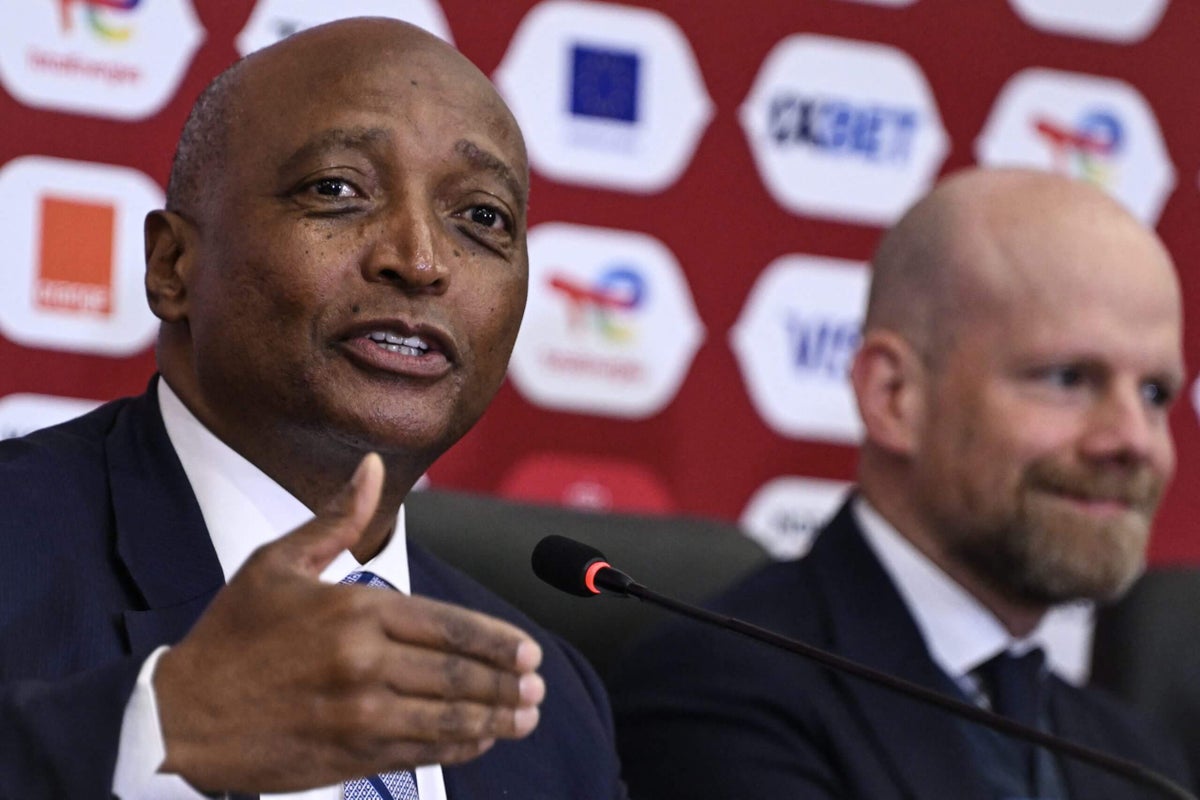
When arriving 55 minutes late for his press briefing in Rabat on Saturday afternoon, ahead of the 2025 Africa Cup of Nations, Patrice Motsepe did not apologise for his punctuality but he did explain where he’d been.
After landing in Morocco at 7am, the president of Confederation of African Football (CAF) missed breakfast and lunch because of a series of meetings. One of them was with the executive committee of the organisation he represents, along with senior figures from FIFA, including the president, Gianni Infantino.
Infantino was not amongst the six football delegates sitting beside Motsepe when he started speaking, even though a “historic” decision had been reached in the previous hours. Instead, FIFA’s secretary general, Mattias Grafstrom, offered a few thoughts on the development that from 2028, AFCON will be a competition held every four years rather than two.
In 2020, speaking to a CAF executive committee, Infantino had described the current AFCON cycle as “useless”, but no-one in the room was expecting this to happen now. There had been no speculation about the future of the tournament before the announcement was made by Motsepe, who also revealed that a new African Nations League, similar to the one organised by UEFA in Europe, will begin from 2029, running every year.
It means that after AFCONs in 2027 and 2028, with the second edition brought forward a year from 2029, international football in Africa will now operate within FIFA’s window. Motsepe identified it as the “most important” moment he has been involved in across nearly a quarter of a century in football.
Although specific dates are yet to be fixed, Motsepe thinks the certainty of the schedule will give CAF and by extension, African football nations, the chance to achieve “sustainable financial independence” because consistency attracts sponsors.
“Africa needs more money than ever before,” he reasoned. “You can’t compete with the rest of the world without financial resources.”
That was also, presumably, why Motsepe also announced that the prize money for winning this edition of the tournament has increased from $7million (£5.3m) to $10m (£7.5m).
Motsepe, South Africa’s first black billionaire, was elected as CAF president for the first time in 2021 because of his success in mining and other businesses. He completed a full takeover of Mamelodi Sundowns in 2004, and they have since emerged as South Africa’s dominant football club.
He acknowledged that the pressure experienced by some African footballers ahead of release from their clubs had influenced CAF’s position. Motsepe claimed he had wanted players to arrive for international duty a fortnight ahead of this edition of AFCON before the period was halved by FIFA.
“We know how frustrating it is for the players when their clubs say, ‘We need you’. It’s unfair to put them in the middle of the fight.
“My number one obligation is Africa, but I’ve got an obligation across the world because success elsewhere contributes towards ours. You do not want unnecessary arguments…”
Motsepe qualified this by implying African players risked being “devalued” by AFCON because clubs would sign players from other continents, whose international commitments did not clash with the club calendar. He also tried to reason that a new competition meant African players would play for their countries more often, increasing their exposure to Africa.
Though he insisted a “compromise” had been reached, and a variety of figures inside African football had supported the move (including Samuel Eto’o, now the president of Cameroon’s football federation), Motsepe will face criticism from those who believe Infantino and FIFA have got their way.
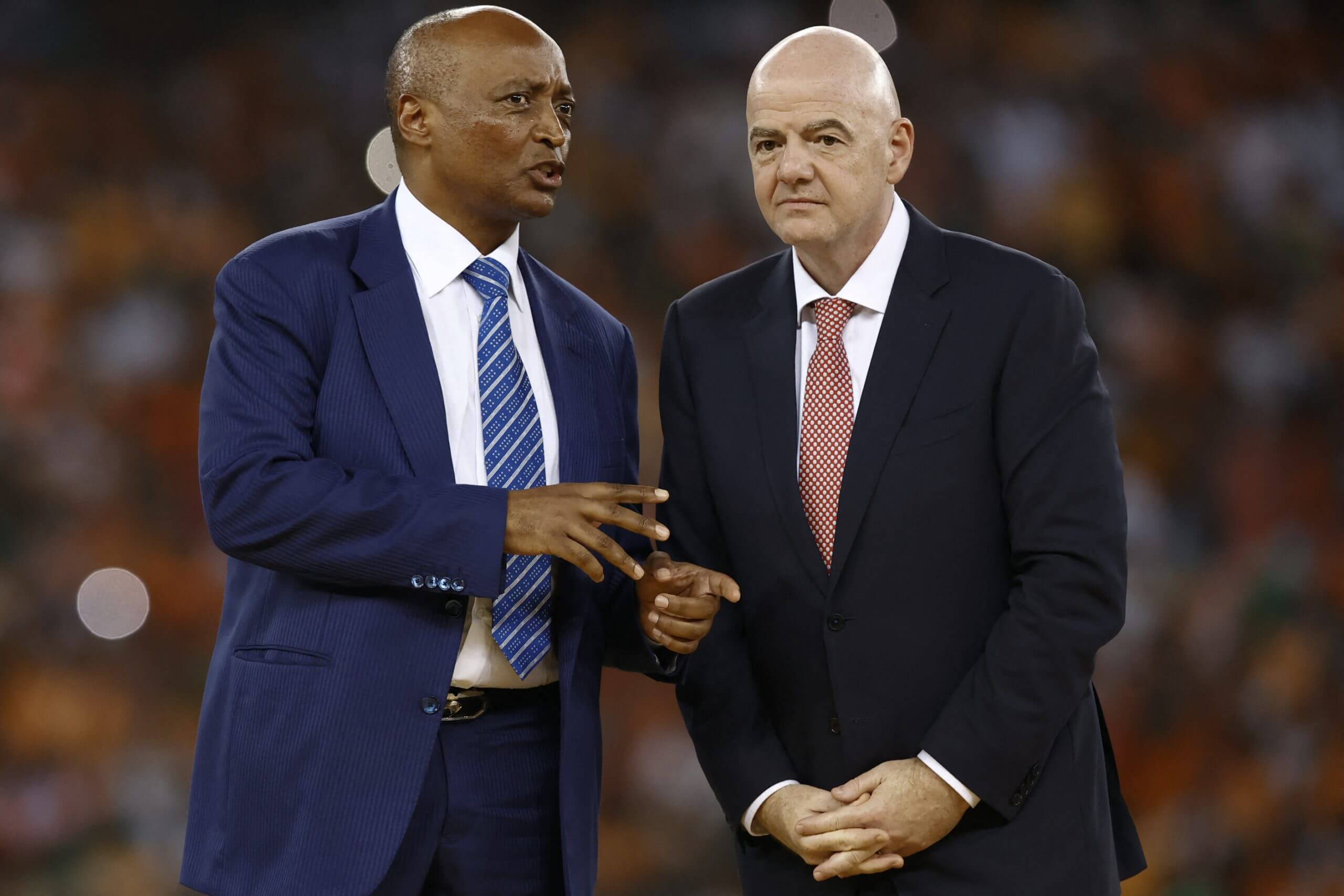
Motsepe will face criticism that Gianni Infantino and FIFA have got their way with the schedule change (Daniel Beloumou Olomo/AFP/Getty Images)
Issa Hayatou, a previous CAF president, resisted calls for AFCON to follow patterns outside of the continent because it was a “uniquely” African event, immune to the international agenda. The new arrangement will mean AFCON does not conflict with the FIFA World Cup and will instead be held in years concurrent with the European Championship, as well as the Olympic Games.
In theory, European clubs will have less of an excuse to refuse the participation of their players, unless the tournament is held in the winter. Yet the problem, as far as European clubs are concerned, has not entirely gone away. Most sub-Saharan countries cannot host AFCON in the European summer due to rains. Little consideration seems to have been given to the fact that Africa is the continent with the most diverse climate in the world.
Meanwhile, if AFCON was held in the European summer, it would compete with the European Championship for attention and potentially, money. CAF has been vocal about the number of broadcasting deals it has secured for this tournament. Will they get the same deals if they are competing with the Euros? While there may be some clear upsides to aligning the calendar, there may well be downsides too.
It remains to be seen at which time of year the 2027 version of AFCON (to be held in Tanzania, Uganda and Kenya) will take place, and who will act as host in 2028 given the limited timeframe.
Motsepe says the Africa Nations League will be divided into zones and there are concerns about the familiarity of match-ups affecting interest.
One of the big selling points of AFCON is the element of surprise. On this occasion, perhaps the breaking news story with the widest consequences has fallen before the tournament has even started.