
Follow all of The Athletic’s AFCON coverage here
When the French arrived in Rabat at the start of the 20th century, the city’s limits were at the Medina. Now, Morocco’s capital stretches much further, for a dozen or so kilometres along the Atlantic coastline, with a mainly low-rise spread bookended by symbols of the country’s ambition.
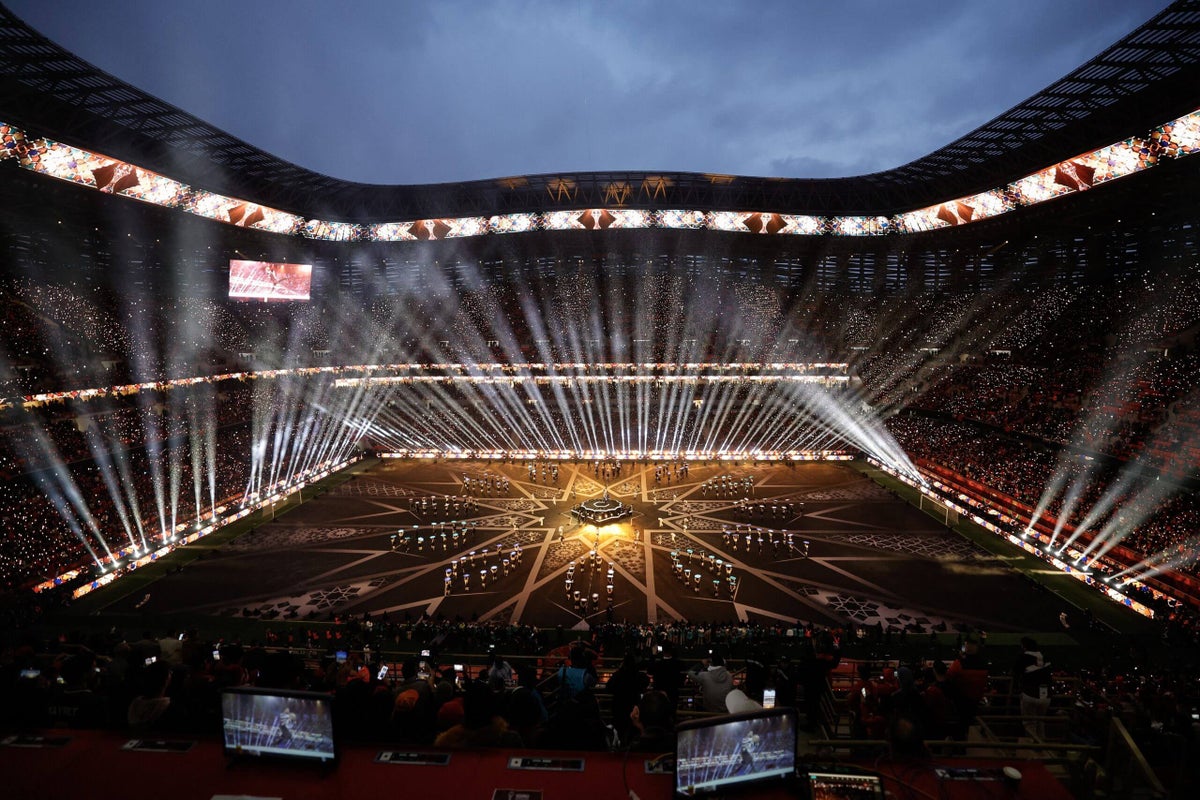
To the north, there is the second-tallest building in Africa, the rocket-shaped Mohammed VI Tower. To the south, the Prince Moulay Abdellah Stadium is a meringue-shaped venue inaugurated only in September. It has everything aside from the cream and fruits on top.
In the same complex, the Salle Omnisport temporarily accommodates a huge media centre. Above the seats that overlook a court normally used for basketball and volleyball is a long, rectangular hoarding that is a reminder of the source of recent development. Between a red and green flag of Morocco and a basic map of the country is a photograph of the head of state, the same man who has a tower named after him on the other side of town.
King Mohammed’s investment in sport has positioned Morocco as a pillar of African football. It will co-host the World Cup in 2030 and an even newer stadium called the Grand Stade Hassan II is being built beyond the outskirts of Casablanca, which might host the final. With a capacity of 115,000, it promises to be the biggest in the world.
Not everyone in Morocco is happy about the country’s priorities, however. In October, protests were held in several cities because of the direction of public spending. Yes, the stadiums hosting Africa Cup of Nations (AFCON) matches over the next month look spectacular, but what about services that matter to the average person? There were stories of women dying during childbirth because of a creaking healthcare system. When the Global Health Security Index issued a ranking in 2021, Morocco came 108th out of 195 countries. Things do not appear to have improved since: earlier this year, a different index focusing on healthcare for women placed Morocco 131st out of 141 nations.
In the five days before the opening game of the 2025 AFCON between Morocco and Comoros, there was no sense of frustration relating to such concerns on the streets of Tangier or Rabat, where The Athletic has been reporting from. That does not necessarily mean Morocco’s issues have gone away, of course. Maybe they are nesting.
What is certain, conversations about sport’s place in civic society have increased pressure on a host team that has not won AFCON since 1976 and has not reached a final since 2004. Having become the first African or Arab country to make it to the semi-final of the World Cup in 2022 before disappointing at the last edition of AFCON in the Ivory Coast, there is a feeling it has to be Morocco’s time on the pitch, for all sorts of reasons.
Their head coach, Walid Regragui, was a no-nonsense full-back in the French leagues as a player, but he has excelled since taking charge of the national team in 2022. Huge investment in football has been happening in Morocco for longer than a decade, but it has only been under his guidance that great possibilities on the international stage have seemed real. On Saturday, before the Comoros game, he spoke about the challenge of adjusting the mentality of the players from being eager participants at continental and global competitions to being winners in a relatively short space of time. It was not just about performing well, but “giving glory to the country”.
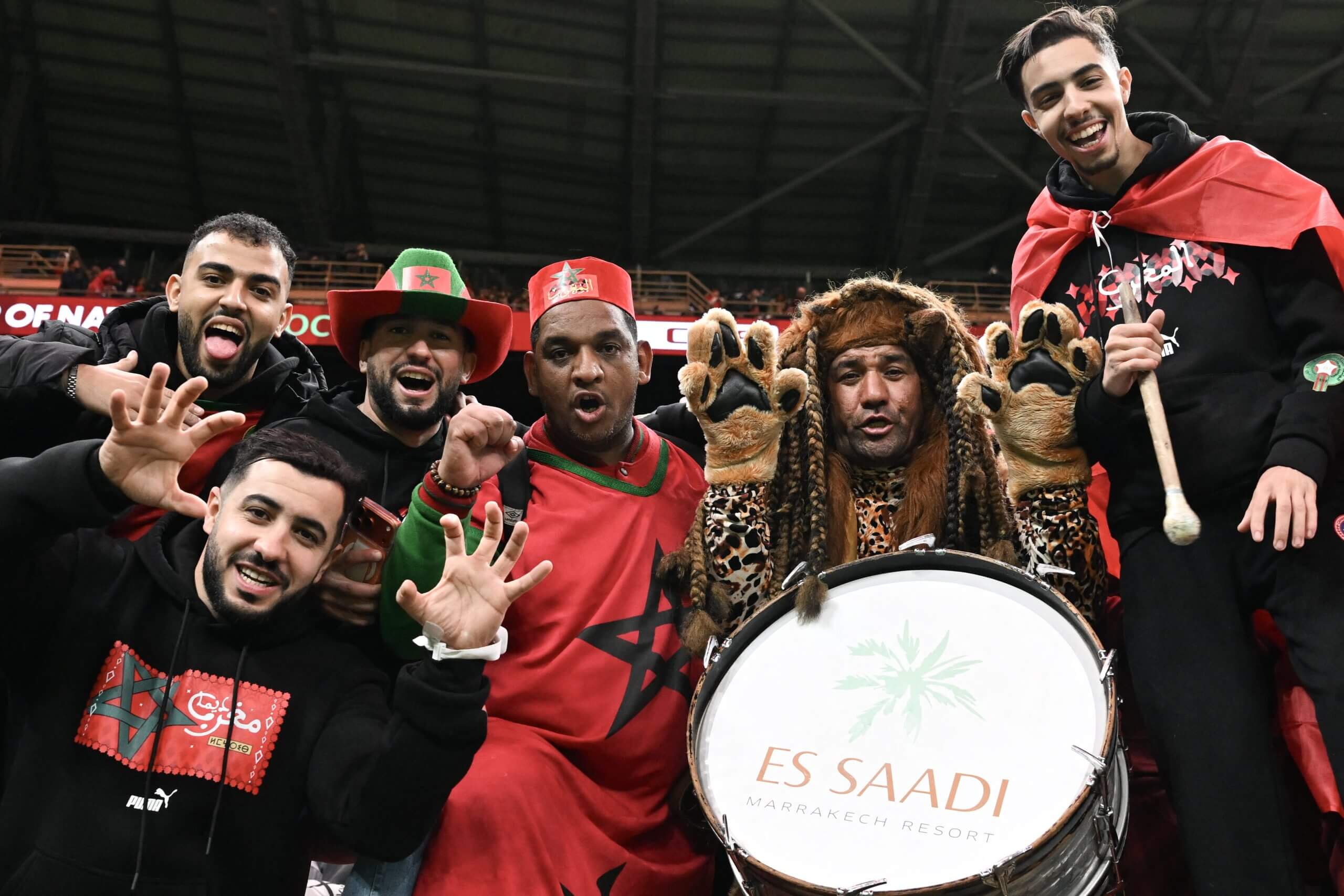
Morocco fans attend the opening game against Comoros (Paul Ellis/AFP via Getty Images)
During a press conference that lurched between rousing messages and warnings about some of the hurdles Morocco might face over the next month, Regragui slipped in a couple of comments that made the ears of keen African football followers perk up. There was a role for the crowd in all of this — he did not want the audience in Rabat to be too busy taking selfies at the must-be-seen-at event of the year.
Rabat is the administrative capital of Morocco, but Casablanca is its cultural soul, traditional football centre, and home to the most popular clubs. Due to the scale of stadium building and renovations over the past few years, Morocco has played matches across the country, but if Casablanca seemed like a natural setting for the national team at this AFCON, organisers had other ideas.
Casablanca will host eight fixtures over the next month, but if Morocco win their group, as they are expected to, they will remain in Rabat for the tournament. Coaches before Regragui campaigned for matches to be played in Casablanca because it is intimidating for opponents and referees, but Morocco’s football development has been led by Rabat’s technocrats, positioned a fair distance away from febrile crowds, criticism and distractions.
The stadium in Rabat acts as a symbol of Morocco’s rationality, but it might mean they lose something special in atmosphere, as Regragui seemed to be getting at, potentially making it easier for teams such as Comoros to feed off the quieter moments and develop confidence.
At the launch of previous AFCONs, stadiums have been bursting hours before kick-off, but in Rabat — like in Egypt in 2019, a country where the authorities have attempted to redesign football culture, marginalising the most fervent fans — entry was slow, and the terraces never filled up to capacity even though ticket prices were reasonable at source.
The venue might pass for the Allianz Stadium in Munich from the outside, and on the inside, the Stadium of Light in Lisbon. It is one of the “world-class” arenas Morocco has been commended for delivering, using the language of presidents from FIFA, Gianni Infantino, and the Confederation of African Football (CAF), Patrice Motsepe.
Yet even the official attendance of 60,180 from CAF (more than 7,000 short of its capacity) seemed overstated, unless supporters came dressed as red seats. Local reporters think touts saw an opportunity — this is Morocco’s first AFCON as host since 1988 — and ended up setting tickets at price points beyond the means of many.
Morocco would beat Comoros, enforcing their power in the second half with two goals following a sticky opening 45 minutes and a missed penalty. It was only then that the crowd really got going, but if a bicycle kick, scored by substitute Ayoub El Kaabi, can’t stimulate an extremely loud response, then nothing will.