
Kansas and the Kansas City Chiefs have laid out the basic framework for a major public-private deal to build a new domed NFL stadium, team headquarters, practice facility and surrounding mixed-use development.The agreement is a nonbinding term sheet and sets the rules of the road, including funding limits and responsibilities, while final contracts and approvals are still pending. The centerpiece would be a new stadium in Wyandotte County, with additional development spread across Wyandotte and Johnson counties.The project is split into two phases.Phase one focuses on the stadium itself. Plans call for a state-of-the-art domed facility with at least 65,000 seats, built near the I-70 and I-435 interchange. The target opening date is Aug. 1, 2031, in time for the start of the NFL season.The stadium is expected to cost about $3 billion. Kansas would cover up to $1.8 billion, capped at 60 percent of the total, using STAR bonds backed by new sales tax revenue generated inside the stadium district. The Chiefs would pay the remaining 40 percent and cover any cost overruns.Public and private funds would be spent side by side throughout construction to maintain the 60-40 split.A government or quasi-government entity would publicly own the stadium, while the Chiefs would operate it under a long-term agreement. The team would pay annual rent starting at $7 million, with yearly increases tied to inflation.The Chiefs would commit to playing all home games at the stadium for at least 30 years, with options to extend. Strong non-relocation clauses are built in. If the team tried to leave early, Kansas could seek repayment of public funds and bond-related costs, with penalties gradually declining after year 15 and disappearing by year 30.A separate fund would be set up to handle repairs, maintenance and operations, supported by stadium rent and state sports wagering revenue. Phase two involves at least $1 billion in additional stadium-related development. That includes a new team headquarters and practice facility, estimated at up to $300 million, along with retail, restaurants, hotels, housing, entertainment, office space, medical facilities, parking and public spaces.Kansas could contribute up to $975 million toward this second phase through a tiered STAR bond structure, with public participation ranging from 60 to 70 percent depending on how much is built. Across both phases, total public funding would be capped at $2.775 billion.The deal requires minimum investment levels in both Wyandotte and Johnson counties and enough sales-tax-generating development to support bond repayment.Community benefits are also part of the package. The Chiefs would be required to commit to charitable investments across Kansas, youth sports and wellness programs, local hiring efforts, and at least $3 million per year into a community impact fund. The state would also receive limited access to the stadium for events like graduations and high school sports.The agreement does not become final until several conditions are met. Approval from the Kansas Legislative Coordinating Council was required by Dec. 22, 2025. Final contracts must be completed by Oct. 31, 2026, unless extended, and the NFL must sign off before construction can begin.
KANSAS CITY, Kan. —
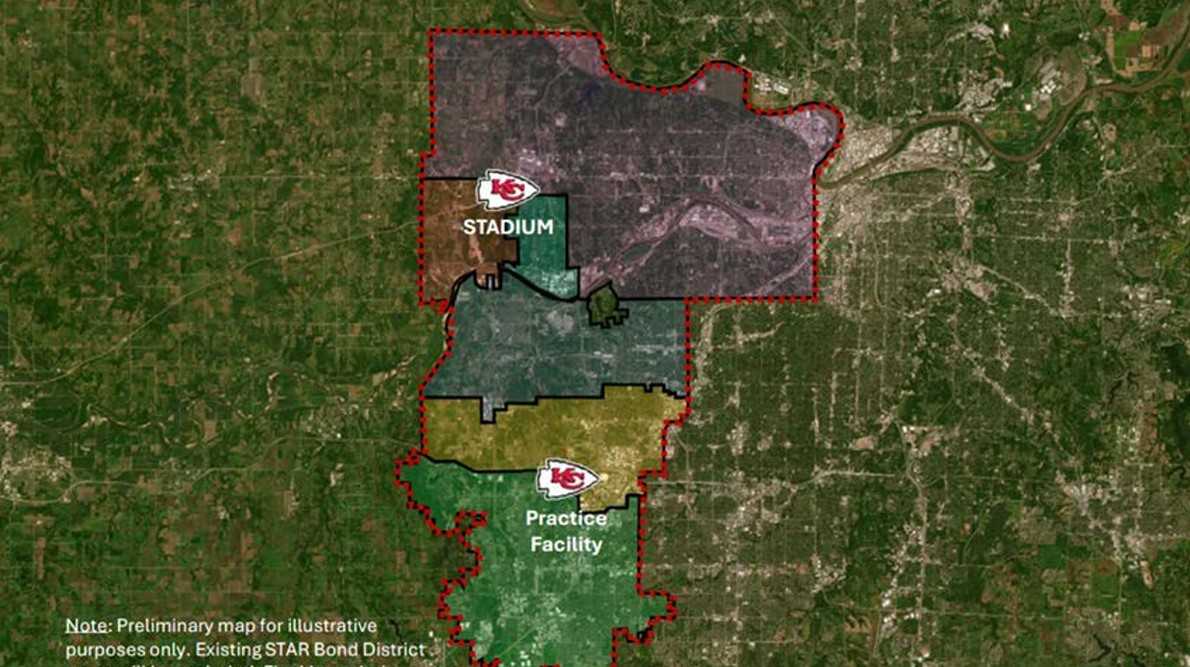
Kansas and the Kansas City Chiefs have laid out the basic framework for a major public-private deal to build a new domed NFL stadium, team headquarters, practice facility and surrounding mixed-use development.
The agreement is a nonbinding term sheet and sets the rules of the road, including funding limits and responsibilities, while final contracts and approvals are still pending.
The centerpiece would be a new stadium in Wyandotte County, with additional development spread across Wyandotte and Johnson counties.
The project is split into two phases.
Phase one focuses on the stadium itself.
Plans call for a state-of-the-art domed facility with at least 65,000 seats, built near the I-70 and I-435 interchange.
The target opening date is Aug. 1, 2031, in time for the start of the NFL season.
The stadium is expected to cost about $3 billion.
Kansas would cover up to $1.8 billion, capped at 60 percent of the total, using STAR bonds backed by new sales tax revenue generated inside the stadium district.
The Chiefs would pay the remaining 40 percent and cover any cost overruns.
Public and private funds would be spent side by side throughout construction to maintain the 60-40 split.
A government or quasi-government entity would publicly own the stadium, while the Chiefs would operate it under a long-term agreement.
The team would pay annual rent starting at $7 million, with yearly increases tied to inflation.
The Chiefs would commit to playing all home games at the stadium for at least 30 years, with options to extend. S
trong non-relocation clauses are built in.
If the team tried to leave early, Kansas could seek repayment of public funds and bond-related costs, with penalties gradually declining after year 15 and disappearing by year 30.
A separate fund would be set up to handle repairs, maintenance and operations, supported by stadium rent and state sports wagering revenue.
Phase two involves at least $1 billion in additional stadium-related development.
That includes a new team headquarters and practice facility, estimated at up to $300 million, along with retail, restaurants, hotels, housing, entertainment, office space, medical facilities, parking and public spaces.
Kansas could contribute up to $975 million toward this second phase through a tiered STAR bond structure, with public participation ranging from 60 to 70 percent depending on how much is built.
Across both phases, total public funding would be capped at $2.775 billion.
The deal requires minimum investment levels in both Wyandotte and Johnson counties and enough sales-tax-generating development to support bond repayment.
Community benefits are also part of the package.
The Chiefs would be required to commit to charitable investments across Kansas, youth sports and wellness programs, local hiring efforts, and at least $3 million per year into a community impact fund.
The state would also receive limited access to the stadium for events like graduations and high school sports.
The agreement does not become final until several conditions are met.
Approval from the Kansas Legislative Coordinating Council was required by Dec. 22, 2025.
Final contracts must be completed by Oct. 31, 2026, unless extended, and the NFL must sign off before construction can begin.