
Not everyone will agree that offensive play calling is a critical trait when a team is hiring a new head coach, but a trio of first-year coaches this season is making a strong case for it.
It is certainly true there is a lot more to being a head coach, including intangible characteristics that are required for the big job. A quality like leadership that is hard to measure or project.
Play-calling is a tangible skill, and it’s one advantage a coach can bring to a team. Also, quarterback is maybe the most important position in all of sports, and to maximize him, he must have a good-to-great play-caller. This past offseason, the Jacksonville Jaguars’ Liam Coen, Chicago Bears’ Ben Johnson and New Orleans Saints’ Kellen Moore were all hired for their ability to call plays. All three have made an impact on their franchises and showcased it in Week 16.
Kellen Moore
Moore’s season pales in comparison to Coen’s and Johnson’s, who have their teams leading divisions, but Moore has helped develop second-round pick Tyler Shough into a quarterback who looks like one worth investing in. Obviously, the jury is still out, but Shough’s development has quietly been one of the most impressive for a signal-caller this season.
The physical talent jumps off the film. He’s making first-round throws and he’s hurt teams with his legs. The most encouraging area of development for Shough is how he’s reading defenses pre-snap and post-snap. He’s sniffing out pressure, setting protections and playing confidently from within the pocket.
2:25 remaining in the second quarter, second-and-12
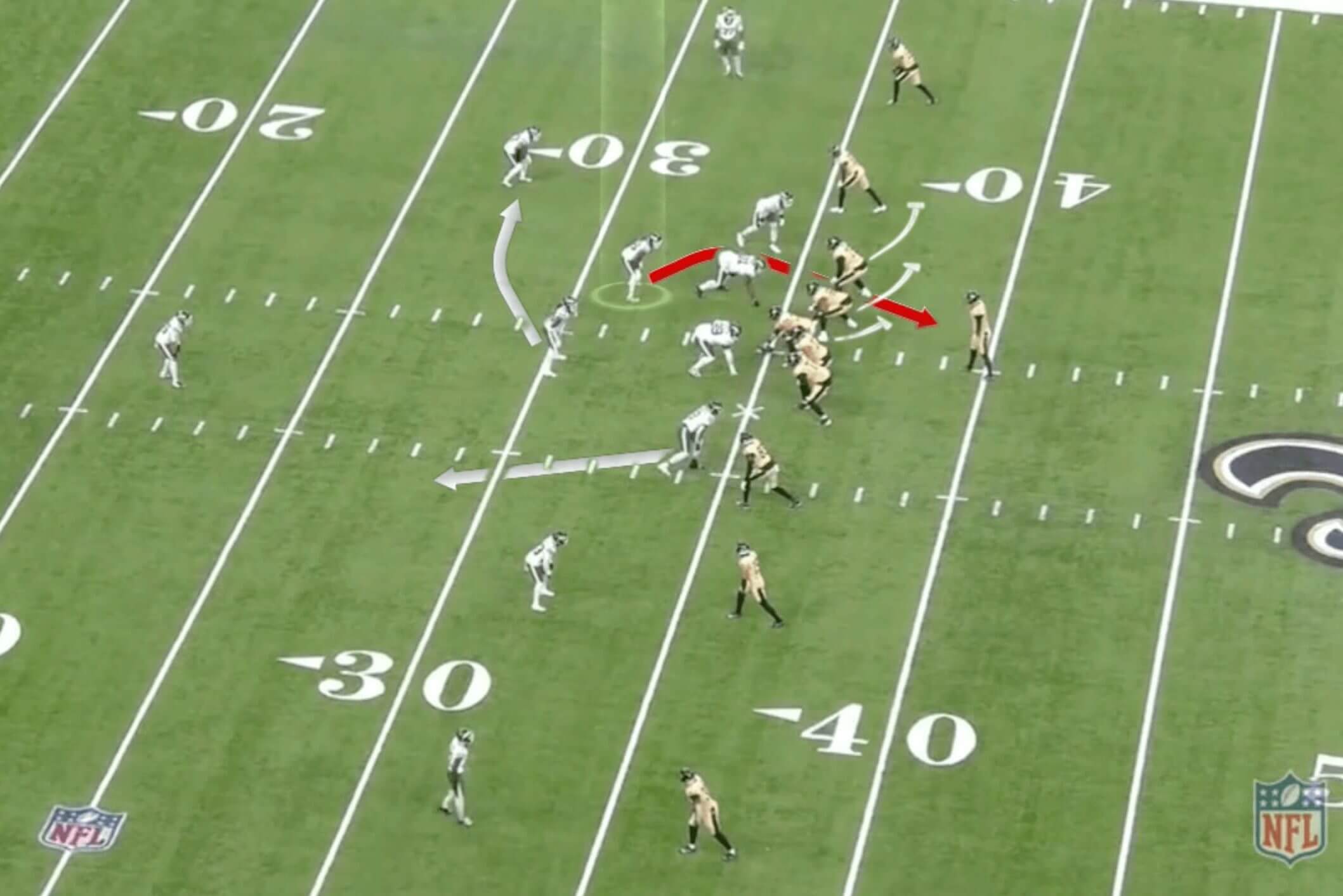
On second-and-long, the Jets had a “creeper” pressure called, in which they didn’t show pressure initially. Shough saw the Will linebacker lined up closer to the line of scrimmage with his weight moving forward, so he had a clue that he would blitz, but he knew the Saints were in the right protection with the protection sliding to the right. The Saints were in empty (no backs in the backfield), so Shough had to be ready to throw hot in case the defense rushed more than five.
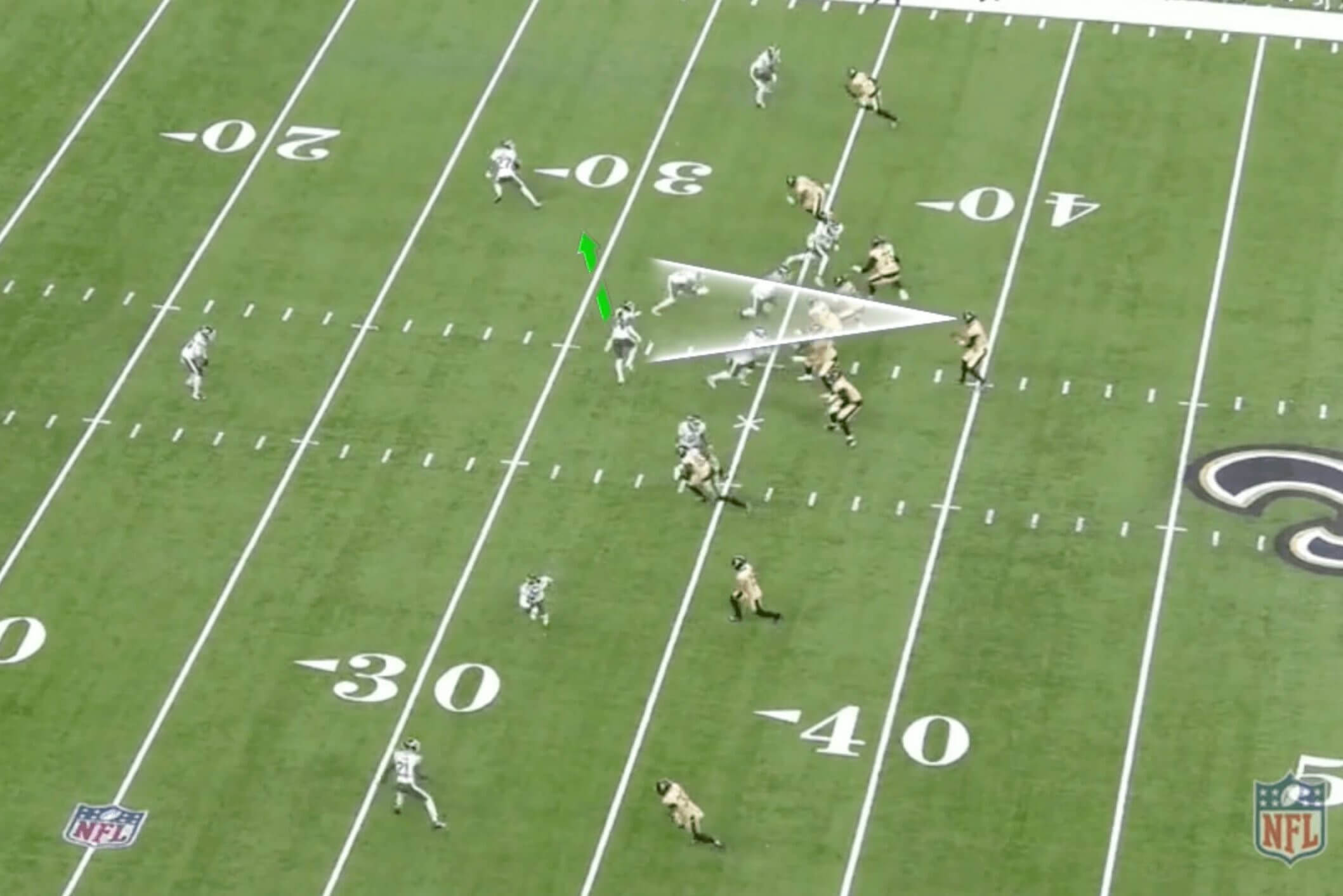
Defensively, the goal of the call was to trick Shough into throwing hot toward the side of the blitzer and have the Sam linebacker drop to that side to defend a hot route. Shough saw the linebacker’s drop and instantly looked to the opposite side.
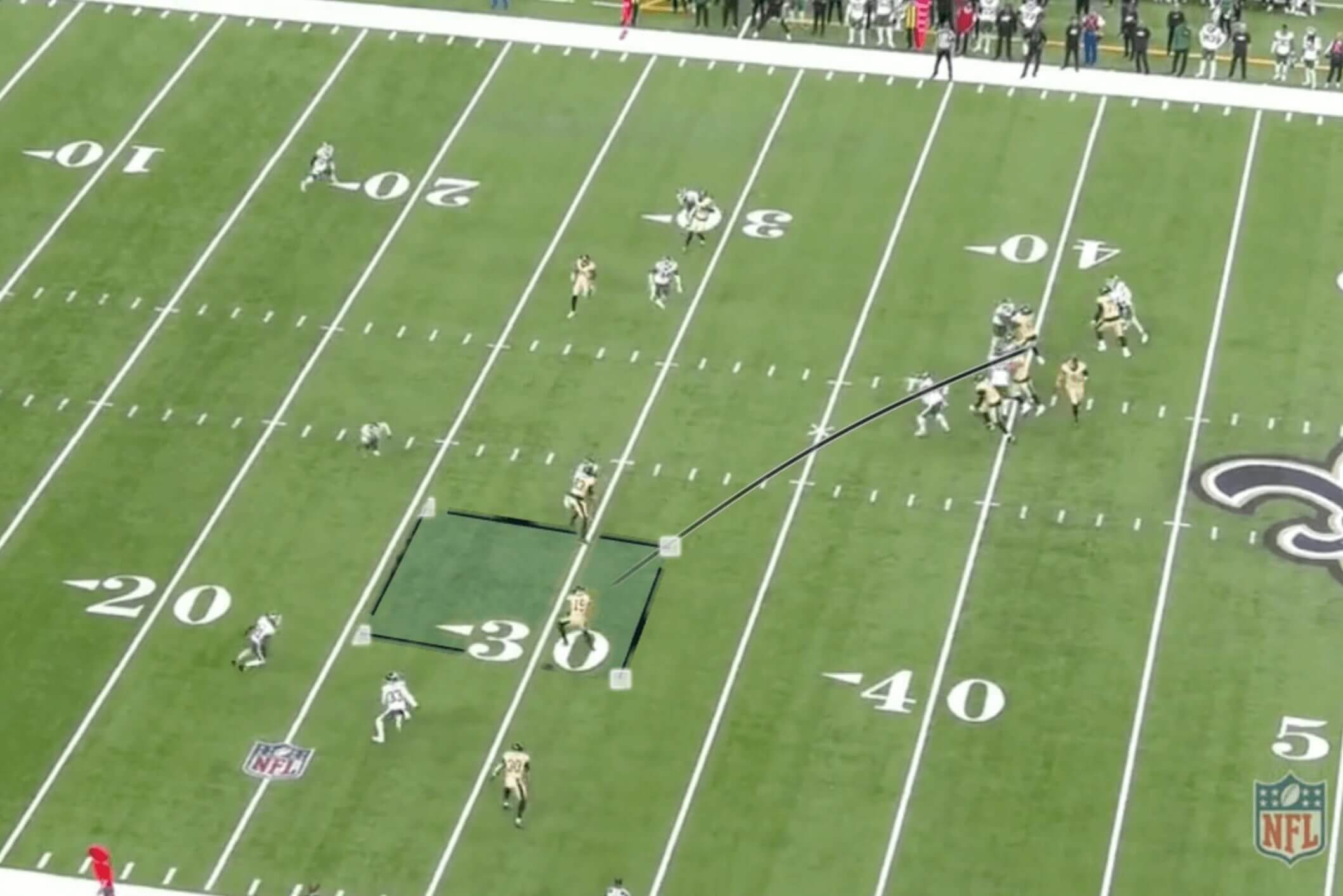
Receiver Mason Tipton saw a hole in the zone open up and throttled down his route. Shough saw the same thing and calmly delivered him the ball. Tipton was able to convert for a first down.
Since Week 10, Shough ranks 14th in EPA per drop-back and 11th in total rushing yards. The Saints don’t have a lot of talent up front and need to add playmakers, but Moore is getting the most out of this roster and giving Shough the answers he needs to respond to what defenses are throwing at him. Obviously, the Saints will need a talent overhaul to get a true evaluation on Moore, but if he finishes the season strong, that should convince the Saints to give Shough another year of development.
Liam Coen
Before this week, Trevor Lawrence was having one of the best three-game stretches of his career, but they were against struggling defenses (Titans, Colts, and Jets), including a historically good statistical game against the Jets. The naysayers could have chalked up Lawrence’s success to the level of competition, but after a four-touchdown performance (3 passing, 1 running) against the Denver Broncos on the road, it’s time to take Lawrence’s transformation seriously.
How Coen and the Jaguars have built an environment in which Lawrence could succeed has been textbook. Maslow’s Hierarchy of Needs is a psychological theory proposing that humans have five levels of needs to reach their full potential. I’d argue that quarterbacks also have a five-level hierarchy of need, starting with a great play caller.
• Level 1: Great play caller
• Level 2: Pass protection
• Level 3: Running game
• Level 4: Dependable receivers
• Level 5: Self-actualization
Everything starts with having a play-caller with a system that gives the quarterback answers to modern defenses, a system that highlights a quarterback’s strengths while hiding his weaknesses. That is exactly what Coen did with Baker Mayfield in Tampa Bay last year and what he’s brought to Jacksonville this year.
Next is pass protection. Obviously, a quarterback needs to have time to throw and to minimize hits — the Jaguars rank 14th in pass block win rate according to ESPN.
Third is a strong run game. The Jaguars have been inconsistent running the ball, but it’s been respectable enough and they stick with it (10th in rush rate), which aids their play-action passing.
Finally, they traded for Jakobi Meyers midseason, which gave Lawrence a dependable receiver who catches everything, particularly in the middle of the field, which this offense desperately needed.
With his hierarchy of needs fulfilled, Lawrence has reached self-actualization as a quarterback and the former No. 1 pick finally looks like one. In the last four games, Lawrence has accounted for 14 touchdowns and zero turnovers.
With the offense fully installed, Coen has been exceptional with his game planning. Against the Broncos, rather than target their two excellent outside corners, the Jaguars went after every other matchup and isolated players like nickel Ja’Quan McMillian and safety Talanoa Hufanga with slot Parker Washington and tight end Brenton Strange, who combined for 17 targets.
0:35 remaining in the first quarter, third-and-3
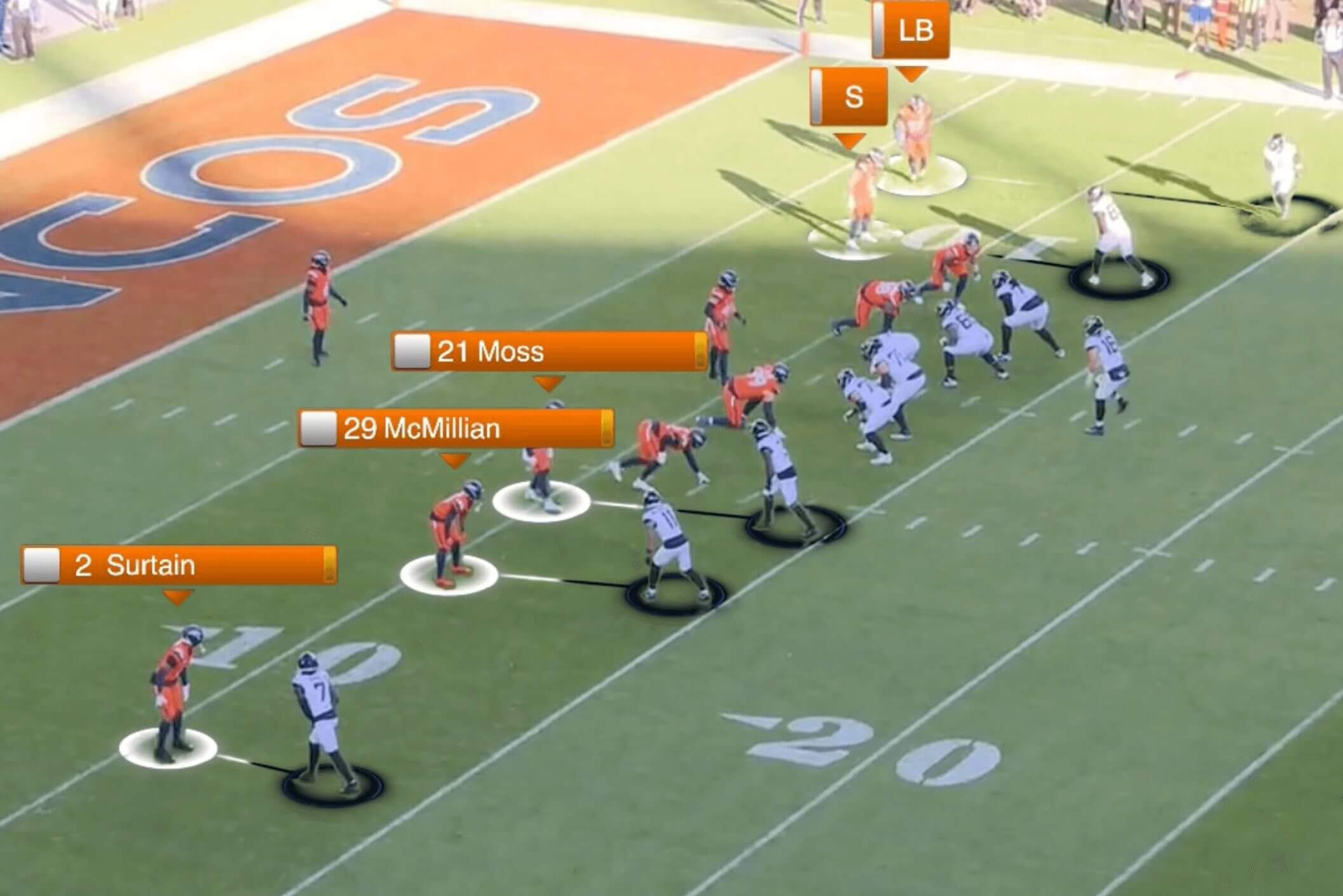
Here, the Jaguars lined up in empty with Strange and running back Travis Etienne lined up to the right, and Brian Thomas, Parker and Meyers lined up on the left. This formation gave Lawrence easy coverage indicators. Linebacker Dre Greenlaw, lining up outside on Etienne, let Lawrence know the Broncos were in man coverage.
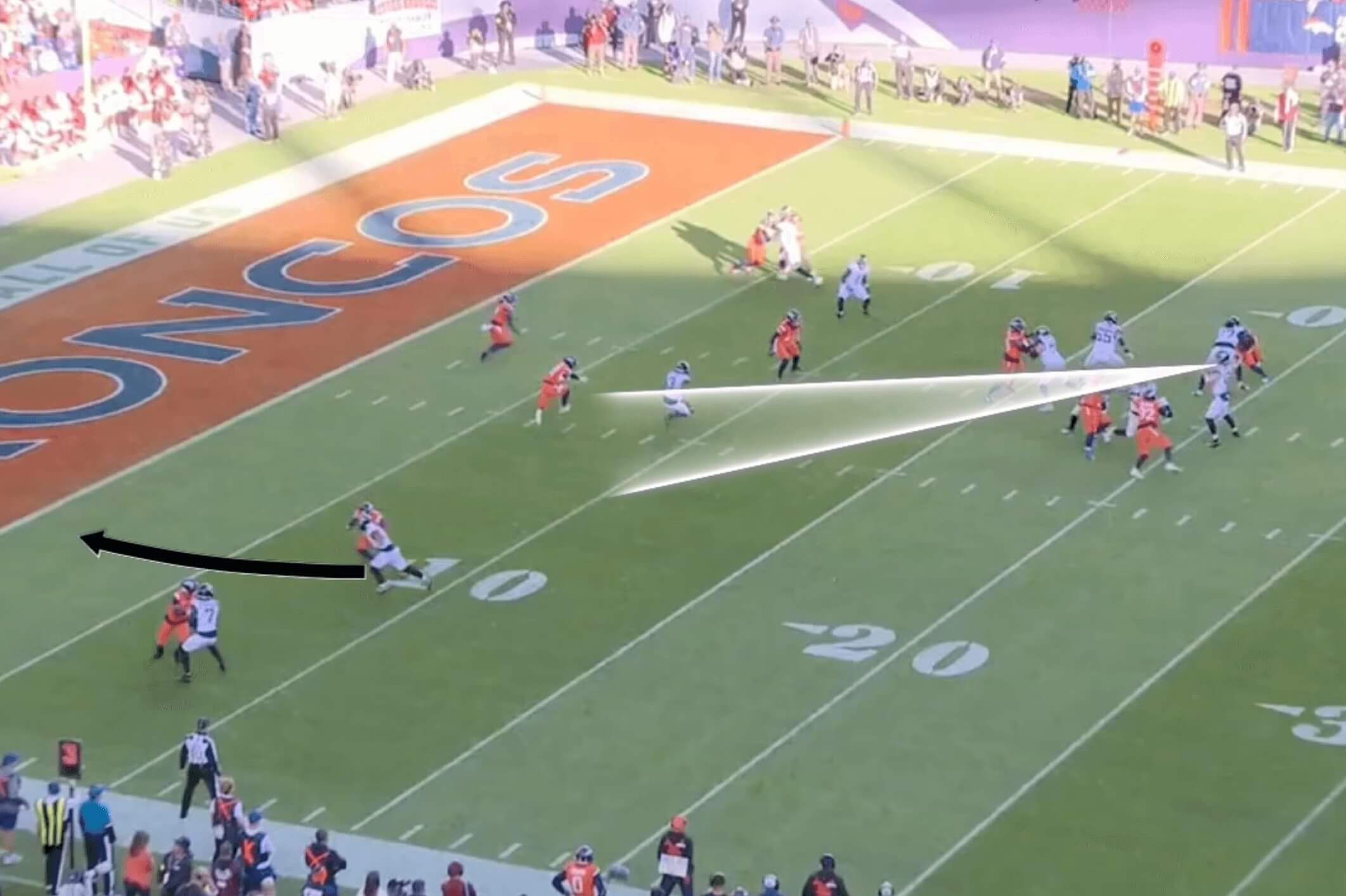
Washington ran a slot fade against McMillian and used up all of the horizontal space created by running the route.
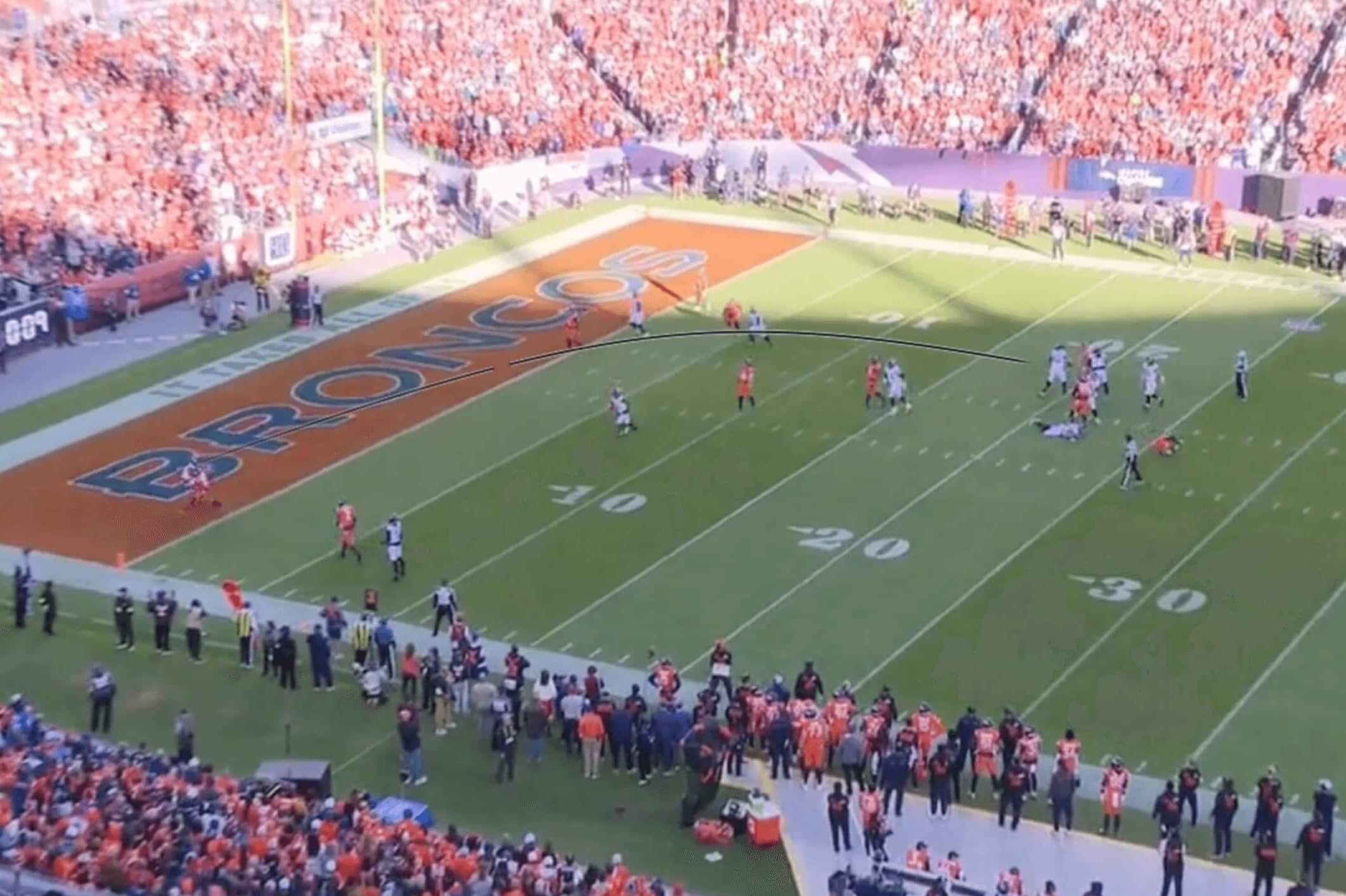
Lawrence threw a good ball, and Washington made an excellent contested catch in the end zone.
Trevor Lawrence to Parker Washington for the TD!
JAXvsDEN on FOX/FOX Onehttps://t.co/HkKw7uXnxV pic.twitter.com/cHFgVwot0m
— NFL (@NFL) December 21, 2025
The play design wasn’t overly complicated, but it simplified the defense, gave Lawrence a coverage indicator, created a mismatch and created space for Washington.
Having a coach who can tailor the game plan every week and a quarterback who can execute it will make the Jaguars dangerous with the playoffs approaching.
Ben Johnson and Caleb Williams
Similarly, the Bears have also satisfied the hierarchy of quarterback needs for their No. 1 overall pick. After hiring Johnson, the Bears prioritized fixing the offensive line and the running game.
Williams doesn’t have nearly the experience of Lawrence, and he’s still a work in progress, but he’s showing improvement every week. His commitment to playing within the system is only going to speed up his learning curve.
Against the Packers, without receivers Rome Odunze and Luther Burden, Williams played within himself even as the Bears offense struggled for most of the game. When they needed it most, Williams and the Bears executed at an elite level and overcame a double-digit deficit in the fourth quarter.
0:28 remaining in the fourth quarter, fourth-and-4
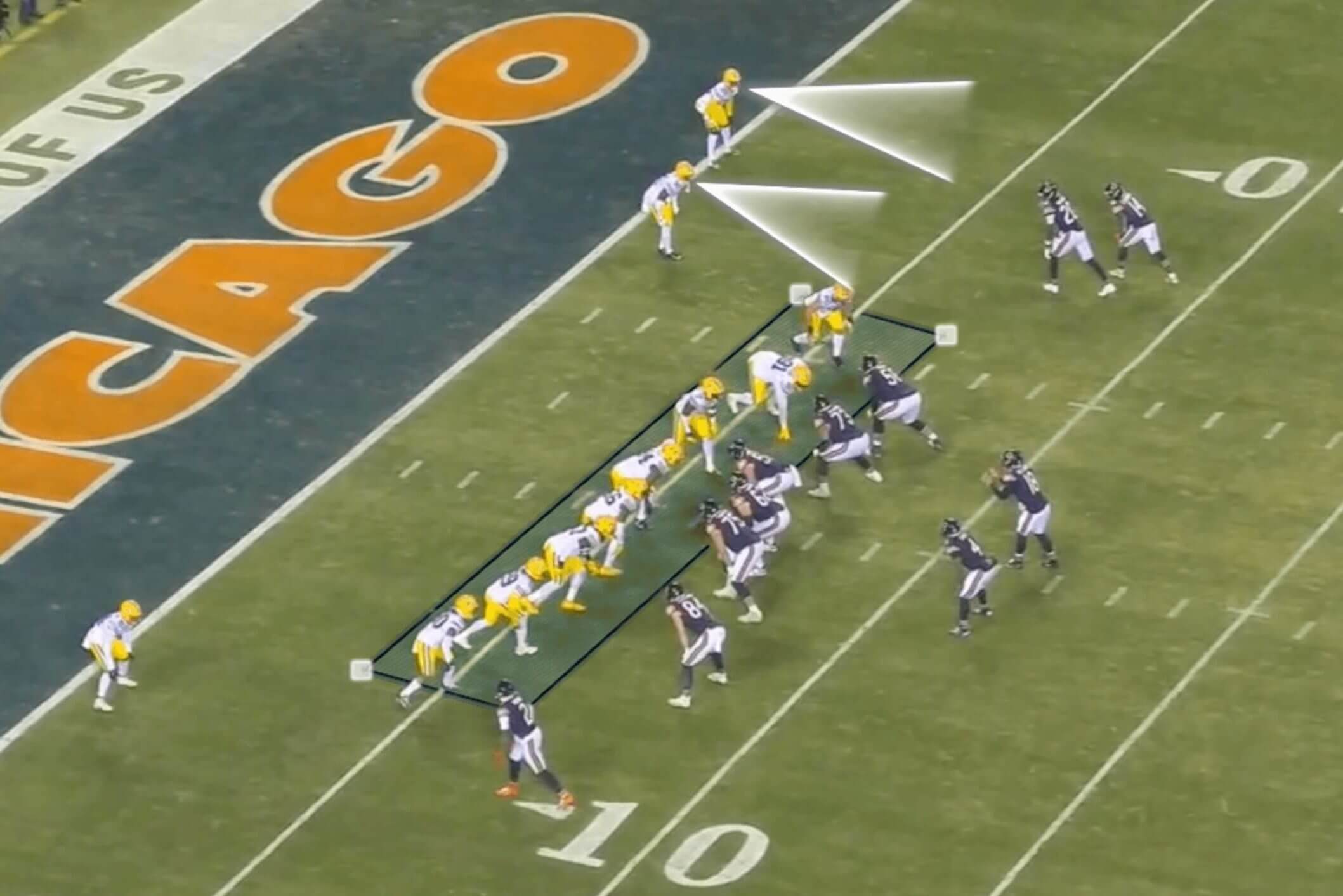
Down by seven points, on fourth-and-4, Packers defensive coordinator Jeff Hafley wanted to force Williams to stay in the pocket and execute by sending a cover 0 blitz. Knowing that they were going to see a zero blitz, Johnson had an excellent play called.
Receivers Olamide Zaccheaus and Jahdae Walker lined up in a stack alignment, which forced the Packers’ defensive backs to play “banjo” technique. Nickel corner Nate Hobbs would cover whichever receiver released inside, while the outside corner would take whoever went outside to avoid getting picked.
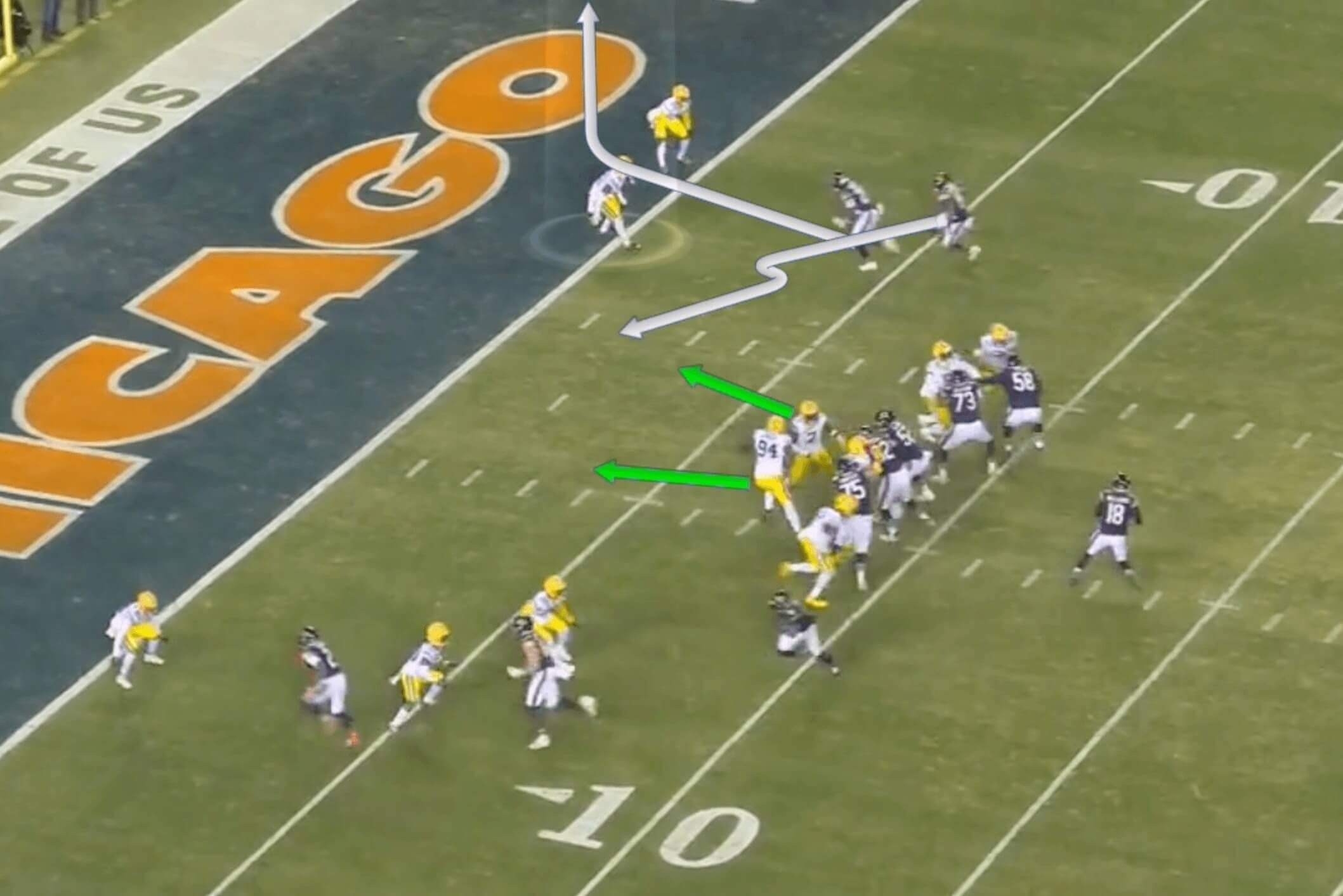
The pass concept created indecision for Hobbs. Walker released vertically, which should have triggered Hobbs to cover him. At the same time, Zacchaeus crept inside, which would have made it very difficult for the outside corner to cover him.
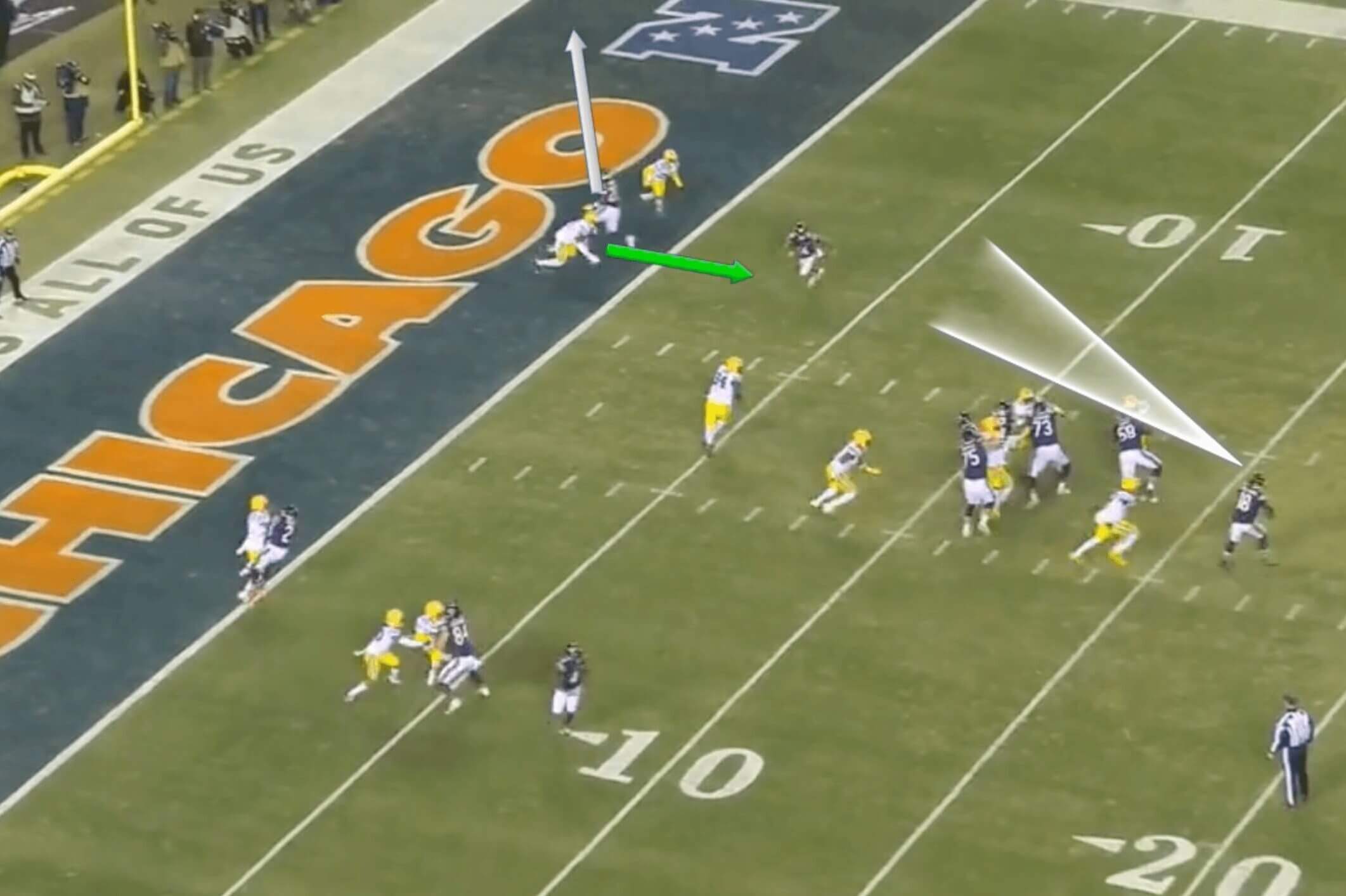
Both Hobbs and the outside corner covered Zacchaeus. Williams saw the coverage bust but had to retreat to buy time against the free blitzer. When Williams started his throwing motion, Walker didn’t break yet. Williams knew he would be wide open, so he threw a touch pass to where Walker would run to.
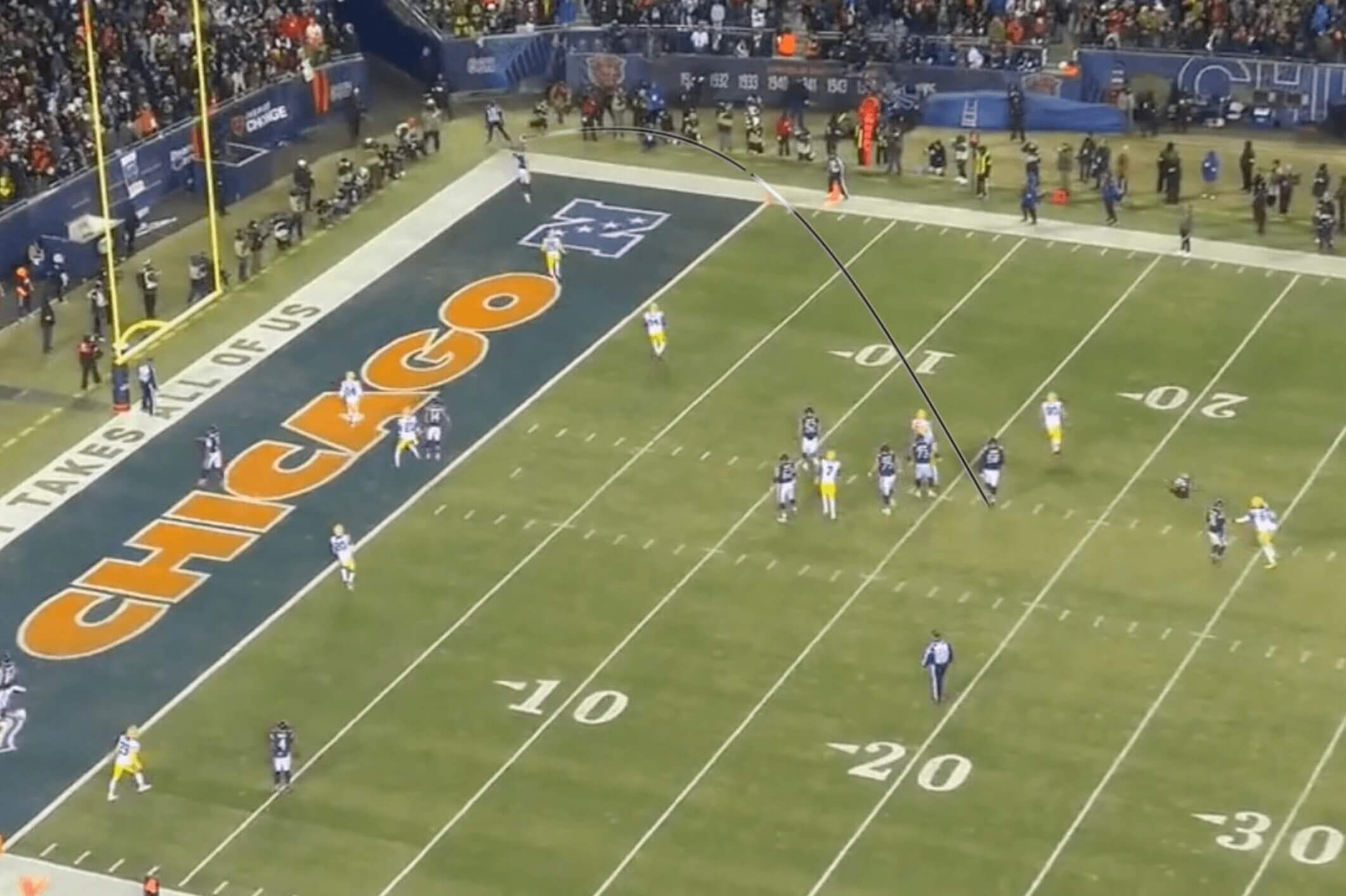
Walker made a great catch in the corner of the end zone to tie the game.
CALEB WILLIAMS TD TO JAHDAE WALKER
GBvsCHI on FOX/FOX Onehttps://t.co/HkKw7uXVnt pic.twitter.com/BWav3hisrZ
— NFL (@NFL) December 21, 2025
This was a great concept to stress the coverage, but it requires a lot from the quarterback because the routes need time to develop and there isn’t much space to work with in the red zone. Beating this blitz, in this moment, required the highest level of execution within structure and Williams pulled it off. Then he put the game away in overtime with maybe the best throw of the season, throwing a bomb that traveled 56.9 yards in the air in the gusting wind.
The combination of Johnson’s scheme and Williams’ rare abilities is going to provide Chicago with many memorable moments for a long time.