
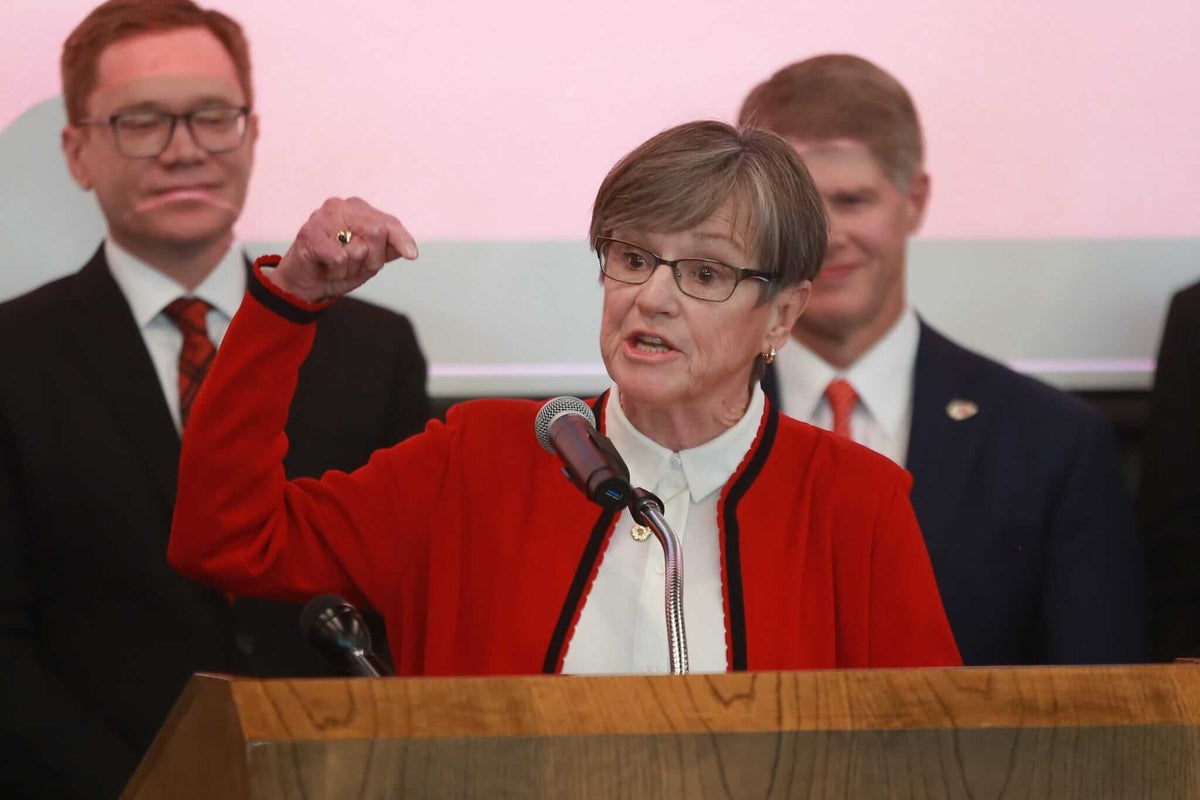
Kansas Gov. Laura Kelly says she’s previously had phone calls with the Kansas City Chiefs, but the two parties’ stadium negotiations took a notable turn during a meeting in Kansas City earlier this month.
It was the first time, Kelly said, she had sat down face-to-face with Chiefs owner Clark Hunt to discuss a potential stadium deal.
“I think the fact that both of us were there in the same room at the same time with the same agenda. … I think he was as anxious as I was to seal this deal, to get this done,” Kelly told The Athletic on Tuesday. “I certainly wanted the Chiefs to choose Kansas.”
While there was excitement, Kelly said there also was some apprehension on both sides.
Kelly said she realized immediately that Hunt and Chiefs team president Mark Donovan were “very professional and very thorough and very reasonable.”
Each side, though, also had a lot at stake.
“Just like I wasn’t going to give away the farm, nor was he. He wasn’t going to sell his soul to come to Kansas, and I wasn’t going to sell out Kansas to get them to come,” Kelly said. “But I think underneath it all, we both are very pleased with the fact that we were able to reach agreement.”
That news became official Monday, as Kelly announced that the Chiefs would be moving from Missouri to a domed stadium in Kansas in 2031 during a news conference at the Docking State Office Building across from the State Capitol.
During an exclusive interview with The Athletic on Tuesday, Kelly expressed her excitement while also addressing criticism that the state had catered to the Chiefs too much.
“This is a very conservative, thoughtful, protective approach to this. Kansas taxpayers will not be at risk at all for this,” Kelly said. “Kansas just happens to have a really innovative, creative tool that has worked for us before, and I fully expect it will work for us with this.”
Kelly, specifically, is referring to the state of Kansas’ STAR bonds, which will be used to pay for 60 percent of this new project that includes a new stadium in Wyandotte County, a practice facility in Olathe and mixed-use entertainment districts.
Kansas Lt. Gov. David Toland said Monday that those state-issued bonds were projected to pay $2.4 billion. The program allows the state to use up-front money to pay for development, with those bonds getting paid off over time through sports betting, lottery ticket and tax revenue.
Kelly says that means the Chiefs project isn’t taking funds away from schools, roads or the state’s rainy-day fund. Instead, she says, this will all be new money raised that wouldn’t have been available if the Chiefs hadn’t decided to come to Kansas.
The STAR bonds district — where the state will collect taxes for the project — is expansive. It will include the areas around the stadium and practice facility, where a portion of sales tax revenue will be used for repayment.
Kelly said Kansas will take tax dollars only above and beyond what was previously generated in the area — thanks to the Chiefs’ arrival — to fund the new initiative.
“So the shopper, the diner, they will not be paying any new tax,” Kelly said.
In nearby Lenexa, Bonner Springs and Shawnee, meanwhile, Kelly said the state portion of the sales taxes in those cities (but not the local sales tax) will also go toward the Chiefs-issued STAR bonds.
The state’s bond program has had previous successes and failures. For instance, Sporting KC’s Children’s Mercy Park — a soccer stadium in Kansas City, Kansas — received $150 million in STAR bonds in 2010 and paid off that debt ahead of schedule.
Meanwhile, nearby Kansas Speedway — a NASCAR track also in Kansas City — was allocated $24 million in STAR bonds in 1999, but its outstanding debt remains above $12 million, according to the Kansas Department of Commerce website.
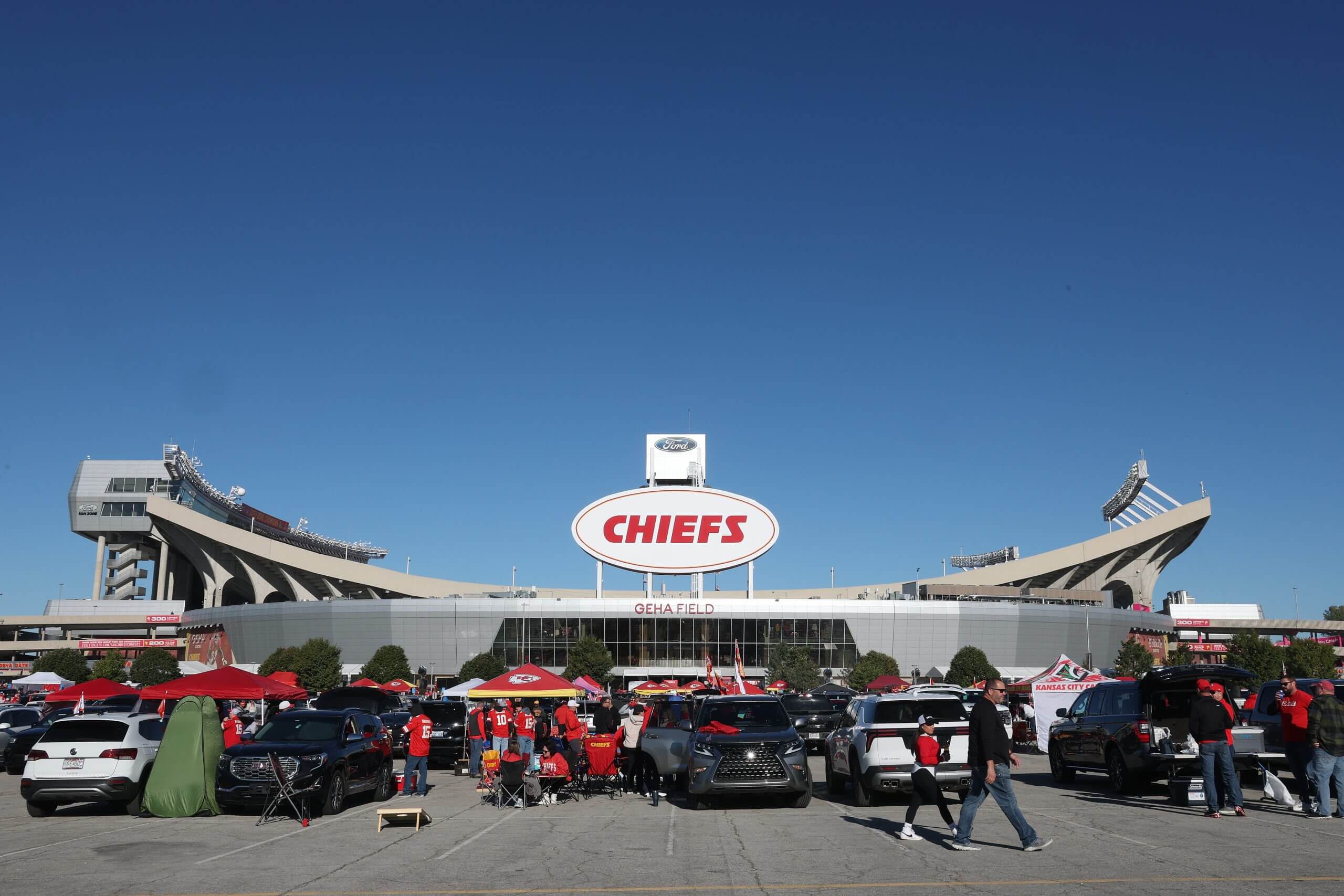
The Chiefs will continue to play their home games at Arrowhead Stadium through the 2030 season when their lease expires. (Jamie Squire / Getty Images)
The money — however it is viewed — remains a huge amount offered to assist the Hunt family. Sportico reported Monday that Kansas’ deal with the Chiefs was “by far the highest public subsidy ever for a major U.S. sports venue.” Many others have criticized Kansas for the deal, arguing the state is essentially providing a taxpayer handout to the billionaire Chiefs ownership group.
Kelly, however, says one needs to take into account the “unique” way the state can help pay for the stadium through bond financing. She said Tuesday that she believed repayment of these Chiefs STAR bonds would move ahead of schedule.
“I fully expect — we’ve got the window of 20 years here — but I will not be surprised if it’s paid off early, because this is a winner for the state of Kansas and for that region,” Kelly said. “So I don’t see anything but success.”
Kelly, who was first elected governor in 2018, acknowledged that the Chiefs potentially coming to Kansas never crossed her mind as she was first running for the state’s highest office — or even during her first few years in the job.
While tackling the state’s budget issues then, Kelly said one overarching objective was to attract businesses and jobs to broaden the tax base. That, she believed, would be a more effective fund-raising method than simply increasing taxes.
This Chiefs project, then, aligns with her convictions. She believed Kansas held a significant advantage with the Chiefs because it had an “economic tool” in the STAR bonds, combined with government alignment on this project.
Hunt confirmed Monday that one reason the Chiefs chose Kansas was that the team was able to work with a single entity; in Missouri, the team was negotiating at the city, county and state levels.
“They knew who they were dealing with, and they knew what the answer was. They didn’t have to go check it out with somebody else. That worked,” Kelly said of the Chiefs working with Kansas. “So I think our approach to economic development has been why we’ve been so successful.”
Kelly said the last 24 hours have been a whirlwind since the initial announcement.
Through all the messages she’s received, the one she’ll remember most was from a close family member in Washington, D.C. — someone she says is far from a sports fan. Once that family member saw Monday’s Chiefs news, she sent Kelly a message: “This is what you said you wanted to do. Congratulations on doing it.”
The message, Kelly said, had nothing to do specifically with the Chiefs and everything to do with one ultimate goal regarding the state she loves.
“In all the work that I’ve done in trying to attract business and jobs here, I also really wanted to change people’s perception of Kansas and have others see Kansas as I know it to be,” Kelly said, “which is really an innovative, very cool place to live, a very affordable place to live, and a fun place to live.”
This belief is what spurred Kelly’s most quotable line from Monday’s news conference while standing alongside Hunt.
Kansas, she said, is no longer a flyover state. Backed by the Chiefs’ arrival, it’s now a touchdown state.
“So I think that’s the message people are going to get,” Kelly said, “is that it’s going to put Kansas on the map.”