
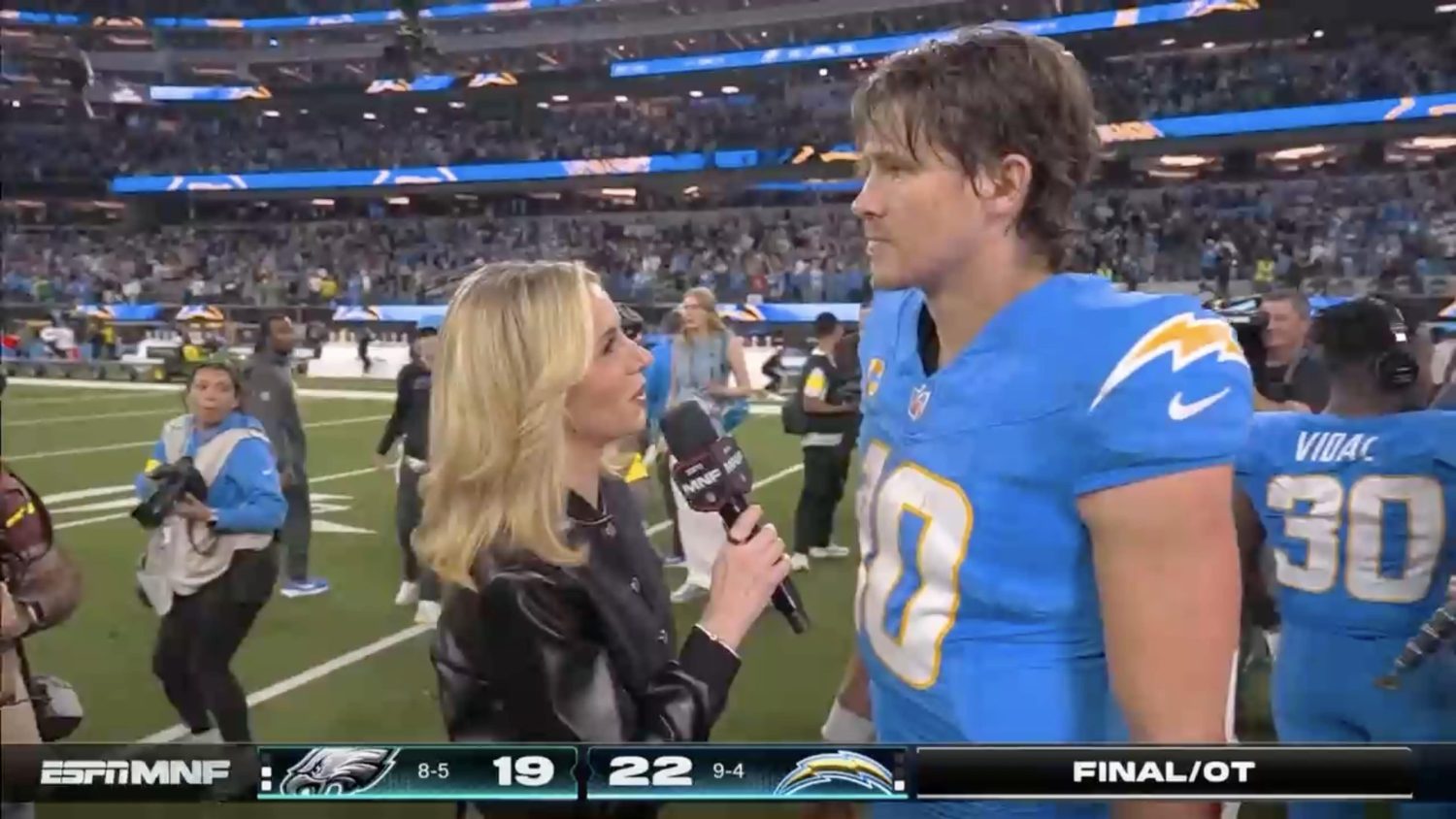
Justin Herbert didn’t want to talk.
That much was obvious two weeks ago when Laura Rutledge tried to get the mandatory postgame interview after the Los Angeles Chargers beat the Philadelphia Eagles in overtime on Monday Night Football.
“I’m trying to celebrate with my team,” Herbert told her, looking annoyed that she was even standing there.
“I’m trying to celebrate with my team.”
Justin Herbert was reluctant to do a postgame interview with ESPN’s Laura Rutledge. #NFL #MNF pic.twitter.com/zq1Ho4yN1u
— Awful Announcing (@awfulannouncing) December 9, 2025
Speaking with Athlon Sports, Rutledge walked through the circumstances that led to one of the more uncomfortable moments of the NFL season, starting with the reality that broadcast windows don’t wait for players to finish celebrating.
“That situation was rare,” Rutledge said. “We don’t usually see that, especially with a player that is offered up for an interview by the team, so they’re very much aware they’re going to be doing the interview, especially on Monday Night Football.”
What viewers didn’t see was everything that happened before Rutledge ever walked up to Herbert. She wasn’t hovering the moment the game ended, and she didn’t barge into his celebration seconds after the final whistle. Rutledge gave him space, told her producers she didn’t have him yet, and deliberately stalled the broadcast while waiting for the right moment.
“I think a lot of people don’t know that there’s a broadcast window that only goes so far, so we were actively stalling until I could get him,” she said.
The situation Rutledge describes is one of those impossible positions that sideline reporters constantly deal with, but most viewers never think about. Wait too long, and you miss the window entirely. Approach too early and you’re the jerk interrupting a player’s moment. Push too hard during an awkward interview, and you look tone-deaf. Back off too much and you’re not doing your job.
“The interesting thing about that was we did not interview him until about over 90 seconds until the game had gone final,” Rutledge explained. “So, he had been going around celebrating with his teammates, congratulating people.”
The alternative scenarios are all worse. If she doesn’t approach Herbert at all, ESPN doesn’t get the postgame interview from the winning quarterback that the Chargers had agreed to provide. If she waits any longer, the broadcast ends without it, and she hasn’t done her job. If she pushes through the awkwardness and asks follow-ups that Herbert clearly doesn’t want to answer, the whole thing becomes even more uncomfortable, and she looks bad for not reading the room.
What she actually did was recognize an impossible situation, handle it as professionally as possible given the constraints, and get through it. The interview looked bad on TV because it was bad, but not because Rutledge did anything wrong. Sometimes a player doesn’t want to talk, the timing doesn’t work, and everyone involved is just trying to survive the moment without making it worse.
Rutledge threaded that needle about as well as anyone could.
Herbert’s perspective is also valid. He’d just won a huge game in overtime, his adrenaline was pumping, and he wanted to enjoy it with his teammates. Those are completely understandable feelings. The fact that his team had already agreed he’d be available for the interview doesn’t change how he felt in that moment.
“I had initially planned on doing a totally different interview with a lot more fun and different questions and things, and once I realized the tone of it, I adjusted to get him in and out as quick as possible,” she said.
Not every postgame interview is going to flow smoothly. Sometimes the player is annoyed, the timing is off, and the best you can do is minimize the discomfort and move on. Rutledge’s explanation makes clear she understood all of that in real time and handled it accordingly. The interview was uncomfortable to watch, but given what she was working with, it’s hard to argue she should have done anything differently.