
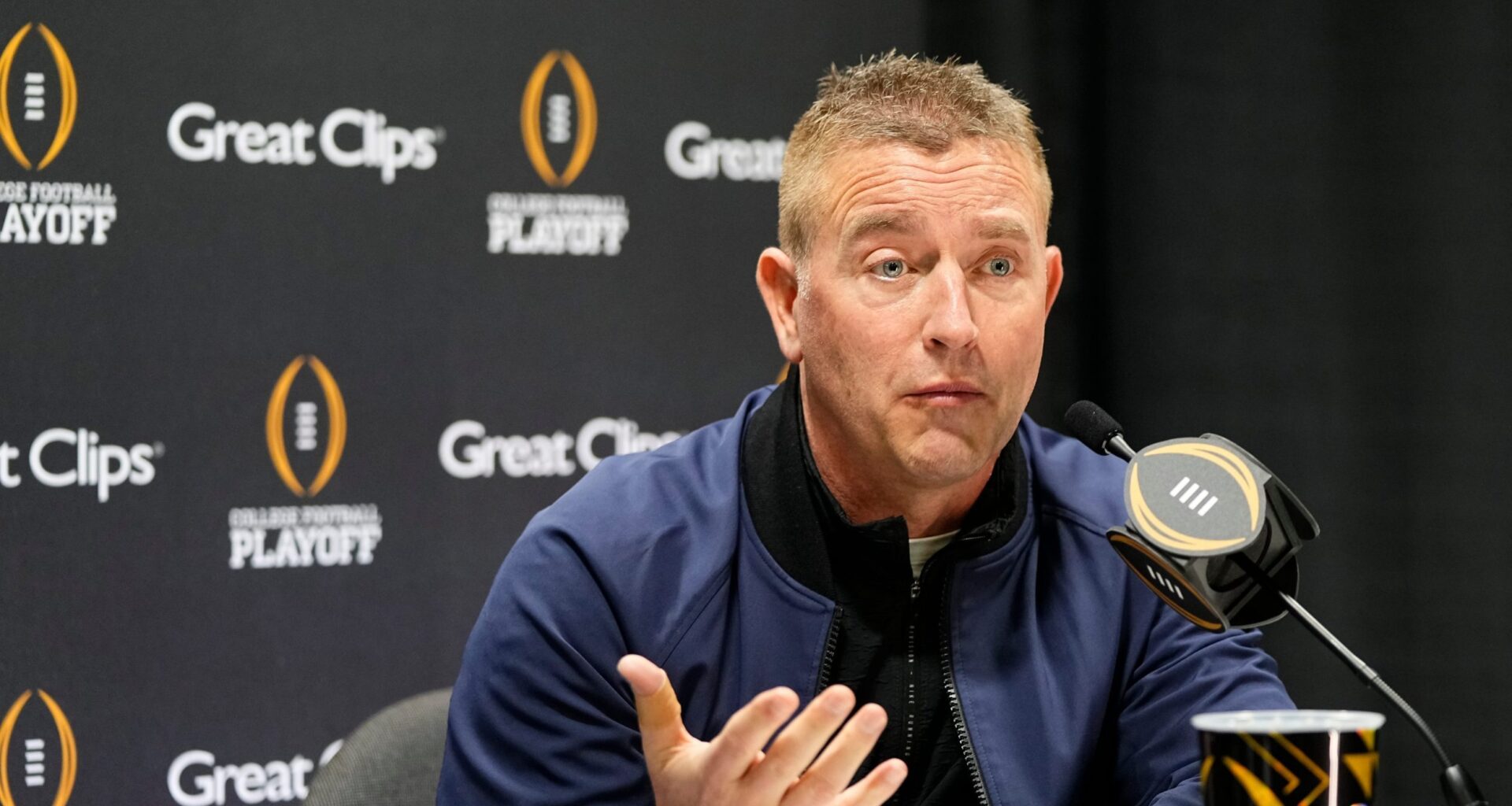
Kirk Herbstreit has some thoughts on the state of sports media.
The ESPN analyst appeared on The Inner Circle Podcast recently and spent a considerable amount of time diagnosing what’s gone wrong with the industry. The debate show format that Skip Bayless and Stephen A. Smith perfected at ESPN with First Take has metastasized across networks, creating an ecosystem where loud comments and viral moments matter more than actual analysis. Herbstreit traced the problem back to those early First Take days when the show established a template that everyone else has been copying ever since.
“I think it started with Skip Bayless and Stephen A. because they kind of had a thing with them way back, way back at ESPN, where they would just kind of ‘Let’s argue to argue’ kind of thing,” Herbstreit said. “And it works for them, but I think other shows copied it and it just has become — I have to turn it off because it makes me get really frustrated as a sports fan and as somebody in the industry.”
Herbstreit said he’d quit before doing that himself.
“I watch some of these shows on various networks, especially the NFL shows, and it drives me crazy where our industry has gone,” Herbstreit said. “And politics are obviously this way, too, but it’s a lot of clickbait. It’s a lot of like really loud comments that will maybe go viral. ‘I might not believe in it, but it’s gonna go viral, and people are going to know who I am.’ Man, I will quit before I ever do that. Like, if that’s what it takes to make it, I would never do this.”
Herbstreit then positioned College GameDay as the antidote to all of this. The show, he said, keeps the focus on players, coaches, and storylines rather than manufacturing controversy around its own personalities. McAfee brings energy and entertainment value, Herbstreit said, while arguing that GameDay doesn’t revolve around hot takes or theatrical arguments the way debate shows do.
“On GameDay, we don’t do that. Again, Pat [McAfee’s] crazy and fun, but we make it about the players, we make it about the coaches, and we make it about the storylines. We really don’t make it about us,” Herbstreit said. “And the reason I’ll tell y’all that is if it ever changed, I would be so fast gone out of studio television. But I’m lucky. I kind of live on an island where we’re allowed to still talk ball and still just have fun talking about ball.”
There’s also the matter of where Herbstreit works. ESPN built its entire daytime programming strategy around the debate show format he’s criticizing. Shows like Pardon the Interruption and Around the Horn established the template, First Take perfected it, and then Get Up and others followed. The network applied the format systematically across the schedule because it works from a business perspective. Herbstreit can say he lives on an island where they’re allowed to talk ball, but that island is owned and operated by the company that popularized everything he claims to find so distasteful.
College GameDay isn’t operating on a different plane either. The show has always thrived on storylines and controversies, but McAfee’s addition accelerated its evolution into something more personality-driven and viral-friendly. That’s not a criticism of McAfee, who’s excellent at what he does and brings genuine entertainment value. But pretending GameDay exists above the clickbait culture, when it’s become increasingly focused on moments that play well on social media, doesn’t square with reality. The show still does plenty of legitimate football analysis, but it’s also designed to generate viral content in ways it wasn’t a decade ago.
The gap between Herbstreit and the people he’s criticizing isn’t what they’re doing. It’s that he doesn’t think his version counts. When Skip Bayless makes a bold proclamation, it’s manufactured outrage. When Herbstreit does it, it’s analysis. When Stephen A. Smith goes after someone, it’s clickbait. When Herbstreit goes after Ohio State fans or questions which teams deserve playoff spots, he’s speaking the truth.
There’s a version of this critique that makes sense. Debate shows have changed sports media, and not always for the better. The constant churn of hot takes and viral moments can crowd out substantive analysis. That’s a legitimate concern about where the industry has gone.
But the argument falls apart when the person making it participates in the same dynamics they’re condemning. Herbstreit generates headlines for controversial comments. He works for the network that built the model he’s criticizing. He’s part of a show that’s evolved to prioritize viral moments alongside traditional football coverage. The only real difference is that he seems convinced his approach is fundamentally different from everyone else’s.
It’s not.