
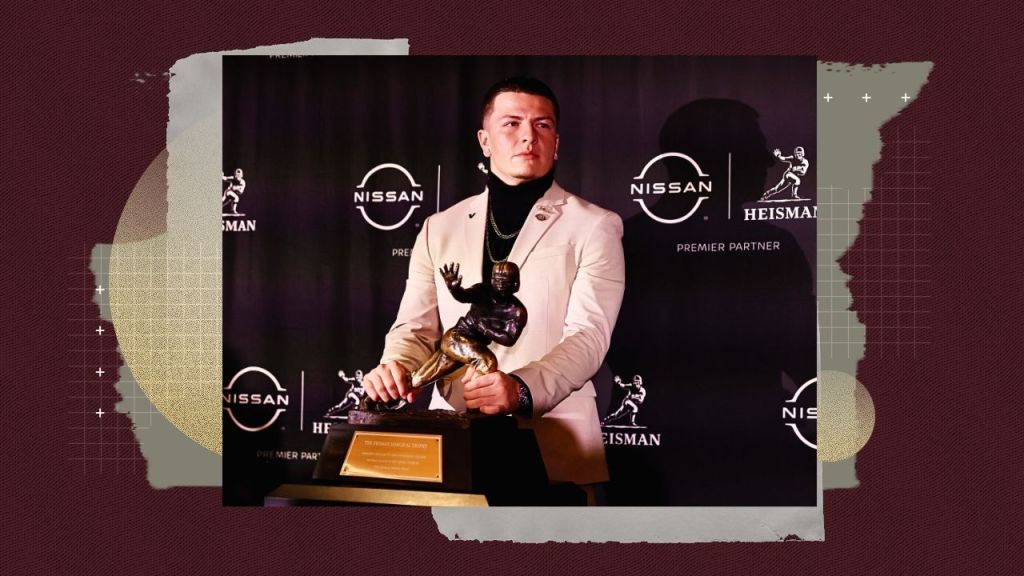
As he and the Vanderbilt Commodores prepare to play the Iowa Hawkeyes in Wednesday’s ReliaQuest Bowl, quarterback Diego Pavia and 26 other former JUCO football players on Friday asked a federal judge in Tennessee to let them play in 2026 and potentially 2027.
Through attorneys Ryan Downton and Salvador Hernandez, Pavia’s group wants Chief U.S. District Judge William L. Campbell Jr. to issue a temporary restraining order and preliminary injunction that would block the NCAA from enforcing applicable eligibility rules pending a final judgment in Pavia v. NCAA. Final judgment means the case would be completed at the trial court level and appealable; no trial date has been set yet for Pavia v. NCAA, with the two sides suggesting trial dates to Campbell ranging from June 2026 to February 2027.
Pavia’s group desires for former JUCO football players to be able to compete in D-I “without regard to years of eligibility or seasons of competition at junior colleges.” The NCAA limits eligibility in one sport to four seasons of intercollegiate competition—including JUCO and D-II competition—within a five-year period. It also generally restricts former JUCO players to three years of D-I football. Pavia has proposed that the D-I eligibility clock begin when a player first registers at an NCAA member school, not when they first register at a “collegiate institution,” which includes non-NCAA schools.
In a related antitrust litigation brought by Pavia’s attorneys, Vanderbilt senior linebacker Langston Patterson is among players suing the NCAA over eligibility rules, and in particular the ones that govern redshirt. Patterson argues that since redshirt players have five years to practice and graduate, there’s no persuasive reason to limit them to four seasons of D-I play. These players seek to expand their maximum number of D-I seasons from four to five. Patterson’s case is before the same judge, Campbell, who is weighing whether to grant a preliminary injunction to authorize a fifth season of play.
Pavia, 23, is a seasoned college football player. He’s playing in his sixth season of college football, with his first two seasons at JUCO New Mexico Military Institute and the last four at New Mexico State and Vanderbilt. Pavia is also one of the best quarterbacks in college football and recently finished second to Indiana’s Fernando Mendoza in the 2025 Heisman Trophy voting. Pavia is earning a great deal as a power conference QB, too. In June, he said he was offered $4-$4.5 million by other colleges to transfer.
Pavia has publicly indicated he intends to participate in the 2026 NFL draft. With more than two dozen other former JUCO players as co-plaintiffs, the case brought by Pavia against the NCAA could continue without him. The NFL’s deadline for underclassmen to declare is Jan. 14. If Pavia gains the choice to remain in college, it’s plausible he might stick around.
After all, Pavia’s NFL draft prospects are mixed. Listed at 6-foot and regarded as relatively slight, Pavia would be on the smaller side for an NFL quarterback. Although it is early for draft prognostications and the NFL combine isn’t until February, Pavia is generally regarded as a late-round draft pick or priority free agent. He also doesn’t project as a likely NFL starter, at least early in his NFL career. Those outlooks have financial implications. A sixth-round pick will sign a four-year contract worth in the ballpark of $4 million. With NIL and House settlement revenue share, Pavia could probably earn more, and potentially much more, by staying in college and dominating.
Last year at around this time, Campbell granted Pavia a preliminary injunction to play in 2025. Shortly thereafter, the NCAA issued a one-time waiver for the 2025–26 academic year that allowed qualified former JUCO players the chance to remain in school. Since that time, more than three dozen “Pavia lawsuits” have been filed by former JUCO and Division II players who want to keep playing in college. Also, in October, a three-judge panel on the U.S. Court of Appeals for the Sixth Circuit on Wednesday dismissed as moot the NCAA’s appeal of Campbell’s order on grounds that Pavia was already playing, and the NCAA had granted a waiver. The Sixth Circuit remanded the case back to Campbell.
In Friday’s court filing, Pavia describes this arrangement as unfair and unlawful under antitrust law. He notes how other categories of relatively older players receive five years of eligibility to play four seasons, a longer window than ex-JUCO players. Those categories include:
• A player who graduates from high school, then plays football at a prep school for a post-grad year before joining a D-I college.
• A player who plays another professional sport (Chris Weinke became a football player at Florida State in 1997 as a 25-year-old after a six-year pro baseball career).
• As of 2025, the NCAA allows former pro basketball players to play college basketball even though they are former pros in the G League and Europe. As noted by Pavia, former NBA draft pick James Nnaji, who grew up in Nigeria and has played professionally in Europe but not in an NBA regular season game, will soon join Baylor’s men’s basketball team. Sportico examined the topic of pro basketball players joining NCAA teams and its impact on Pavia v. NCAA in depth last summer.
Pavia insists that if the NCAA was worried about the impact that he and other seasoned college players have on competitive balance, “it would preclude other older athletes from competing in Division I NCAA sports.”
The antitrust argument leveled by Pavia depicts the NCAA and its member schools and conferences as engaging in a group boycott of former JUCO football players. By limiting how long these players can play D-I, those players are denied potential NIL and revenue-share compensation. Pavia’s expert witness, Dr. Joel Maxcy, is quoted as saying NCAA member schools enjoy a “financial advantage by moving older players out and replacing them with younger players,” since “an outgoing star would be considerably more costly to the school than an incoming player.”
The underlying logic is that football players of Pavia’s caliber, experience and fame can demand more in compensation from colleges than a teenage high school student who might not play a featured role in college until his sophomore or junior year. Pavia says by pushing “older, more experienced players” out of NCAA football, “schools will have the ability to bring in additional freshmen at a much lower cost.”
As Pavia tells it, D-I college football players constitute a labor market, meaning a group of players who seek to sell their (relatively) elite football services to colleges. Colleges, as competitors to buy players’ services, can run afoul of antitrust law by limiting how they compete.
To advance that point, Pavia draws extensively from former Ohio State football star Maurice Clarett’s antitrust litigation against the NFL. Clarett challenged an eligibility rule that requires players be three years out of high school. As a disclosure, I was one of the attorneys representing Clarett in the litigation.
Clarett argued that the relevant market for his case was the market for NFL players, with NFL teams as the buyer of players’ services. That market is distinct and there are no reasonable substitutes; no one would credibly say the XFL, UFL, CFL, AAF or any other non-NFL pro league is a credible substitute. Pavia analogizes that point to say that the market for his services is D-I football, especially since “more than 99% of NIL dollars are paid to those athletes.” Neither playing in JUCO nor playing in the NFL is a substitute to D-I football, Pavia insists. He cites data showing how “less than 1% of Division I football players get drafted into the NFL each year.”
An NCAA spokesperson responded to a request for comment on Pavia’s latest court filing by providing context on the Nnaji eligibility decision. As discussed above, Pavia contends the NCAA allowing Nnaji and other former pro basketball players to play D-I undercuts the association’s justification to limit the number of eligible seasons.
“Each eligibility case is evaluated and decided individually based on the facts presented,” the spokesperson said in a statement. “Schools continue to recruit and enroll individuals with professional playing experience, which NCAA rules allow with parameters.”
The spokesperson added that “as NCAA eligibility rules continue to face repeated lawsuits with differing outcomes, these cases are likely to continue, which underscores the importance of our collaboration with Congress to enable the Association to enforce reasonable eligibility standards and preserve opportunities to compete for future high school student-athletes.”
Attorneys for the NCAA will have the opportunity to try to rebut Pavia’s arguments.
Expect NCAA attorneys to argue, as they have in other court filings, that eligibility rules ought to fall outside the scope of antitrust law since they concern how long a college student can play a sport—a primarily educational, rather than economic, matter.
The NCAA will also assert that eligibility rules are designed to link an athlete’s athletic experiences with the normal trajectory of a college student. Usually after four years of college courses, athletes and non-athlete students graduate and move on to another phase of life, usually a job.
In addition, the NCAA will likely maintain that Division I college football is a unique product and the closer it resembles an inferior version of the NFL, the more it will seem like minor league football. Fans, consumers, broadcasters, media and others, so the theory goes, could then tune out.