
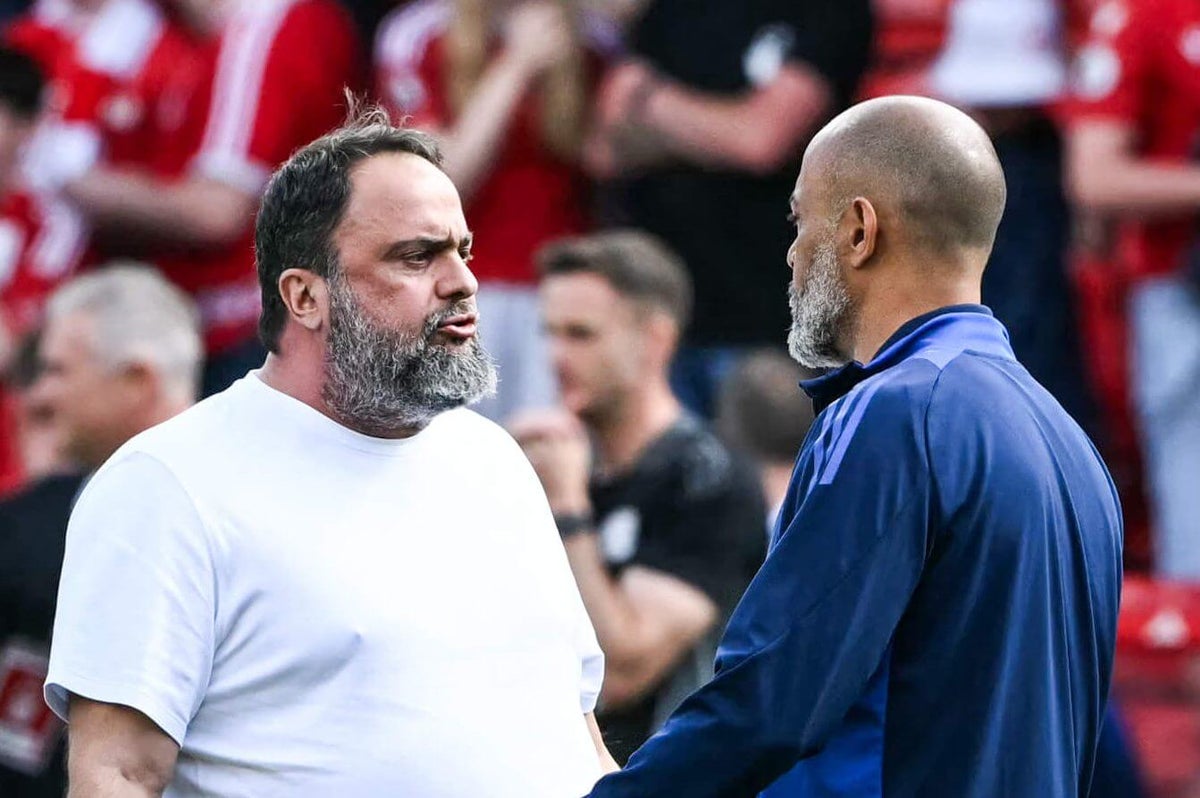
Football in 2025 did not disappoint on the numbers front. There was Liverpool’s 20th league title, Tottenham’s first trophy for 17 years, England’s second successive win at the UEFA Women’s European Championship and the first-ever 32-team FIFA Club World Cup.
That’s some of the headline stuff, but what about some of the subtler moments that might have passed you by?
The Athletic’s Duncan Alexander and Will Jeanes look back at the year through a numerical lens.
January
The year 2025 saw Champions League games played in the month of January for the first time since 1968 (Eintracht Braunschweig 3-2 Juventus on the 31st in case you were wondering) when the competition was still known as the European Cup.
Before 2025, there had been just nine European Cup/Champions League matches played in January, but in the opening month of this year there were 36, thanks to the tournament’s expanded format.
There will be a further 36 games in January 2026, too.
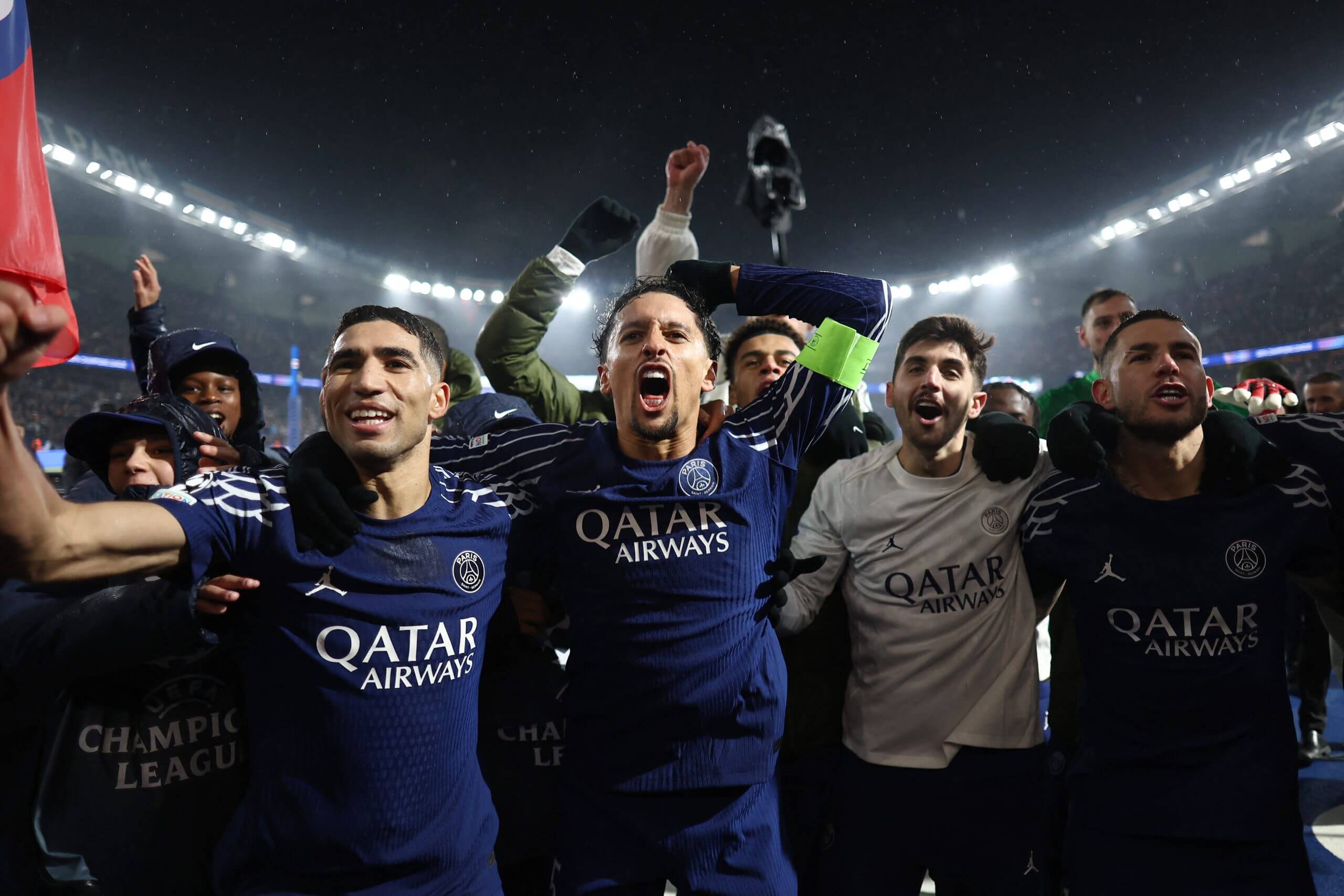
PSG’s players celebrate a January victory over Manchester City (Franck Fife/Getty Images)
February
Everton’s long goodbye to Goodison Park took in many elements as the first half of the year unfolded and the final men’s Merseyside derby, in February, certainly didn’t disappoint. Via a thumping finish from James Tarkowski, it contained the second-latest goal Liverpool have ever conceded in the Premier League and also ensured that Everton didn’t leave their second home having lost more times to Liverpool than they defeated them — a handy outcome given Everton won their first league title in 1890-91 with Anfield as their home stadium.
And no fixture in the Premier League era has seen more red cards, so it was apt that Curtis Jones, Abdoulaye Doucoure, Arne Slot and his assistant Sipke Hulshoff were all sent off after the final whistle following a classic melee.
March
Newcastle United won their first major trophy since 1969 (and since humans walked on the moon for the first time) in March when they triumphed over Liverpool in the Carabao Cup final.
The north-east club’s previous piece of silverware had been the Inter-Cities Fairs Cup, which they claimed after beating Hungarian side Ujpest in a two-legged final just weeks before Neil Armstrong and Buzz Aldrin set foot on the lunar surface.
Managed by Eddie Howe, the victory at Wembley on March 16 this year was also the first time an English head coach had won any of the country’s three main domestic trophies (Premier League, FA Cup and Carabao Cup) since Harry Redknapp’s victory in the 2008 FA Cup with Portsmouth. The previous 48 trophies had all been won by non-English managers.
April
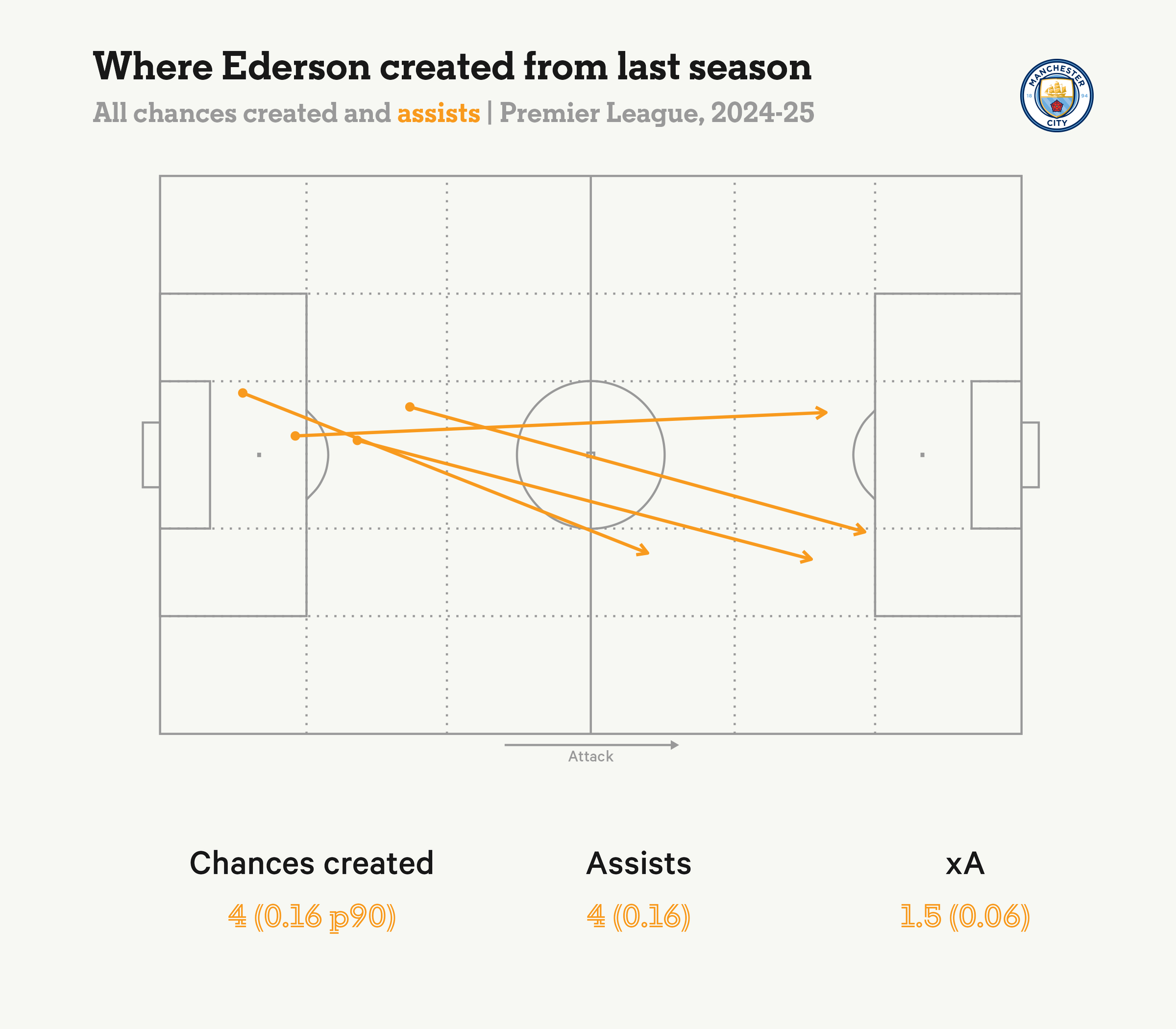
There are certain things that don’t seem right. An animal operating heavy machinery, perhaps. Or a goalkeeper assisting goals. That’s quite literally not their job, and yet as the position has evolved, certain ‘keepers are getting creative. And none more so than Ederson, someone who pretty much redefined the role in his time with Manchester City.
The Brazilian left City for Fenerbahce in the summer but he departed the Premier League with a record seven assists, four of which came in 2024-25, with the last of them against Crystal Palace in April.

Ederson’s prowess at simply hammering the ball downfield meant he ended 2024-25 with as many assists as Bernardo Silva and Cody Gakpo, among others.
May
Whether it was a sign of growing egalitarianism in the Premier League or, more likely, just a quirk of an unusual season, the fact remains that May saw the remaining honours of 2024-25 handed out. For the first time, five different English teams landed a major trophy: Liverpool (Premier League), Crystal Palace (FA Cup), Newcastle United (Carabao Cup), Tottenham Hotspur (Europa League) and Chelsea (UEFA Conference League) were the sides in question — with Enzo Maresca’s side then adding the Club World Cup several weeks later.
June
And the endgame to Tottenham’s confusing 2024-25 season took place in early June, with the club parting company with Ange Postecoglou just 16 days after he had guided the club to their first trophy since 2008. On one hand, this was the first time a trophy-landing Premier League manager had been sacked at the end of that season since Antonio Conte at Chelsea in 2018 (this seems harsh), on the other he oversaw 26 defeats in all competitions with Spurs in 2024-25, more than they had in any other season in their history (OK, this seems fair enough).
Thomas Frank’s largely underwhelming start to life at Tottenham since then only clouds the wisdom of the decision further.
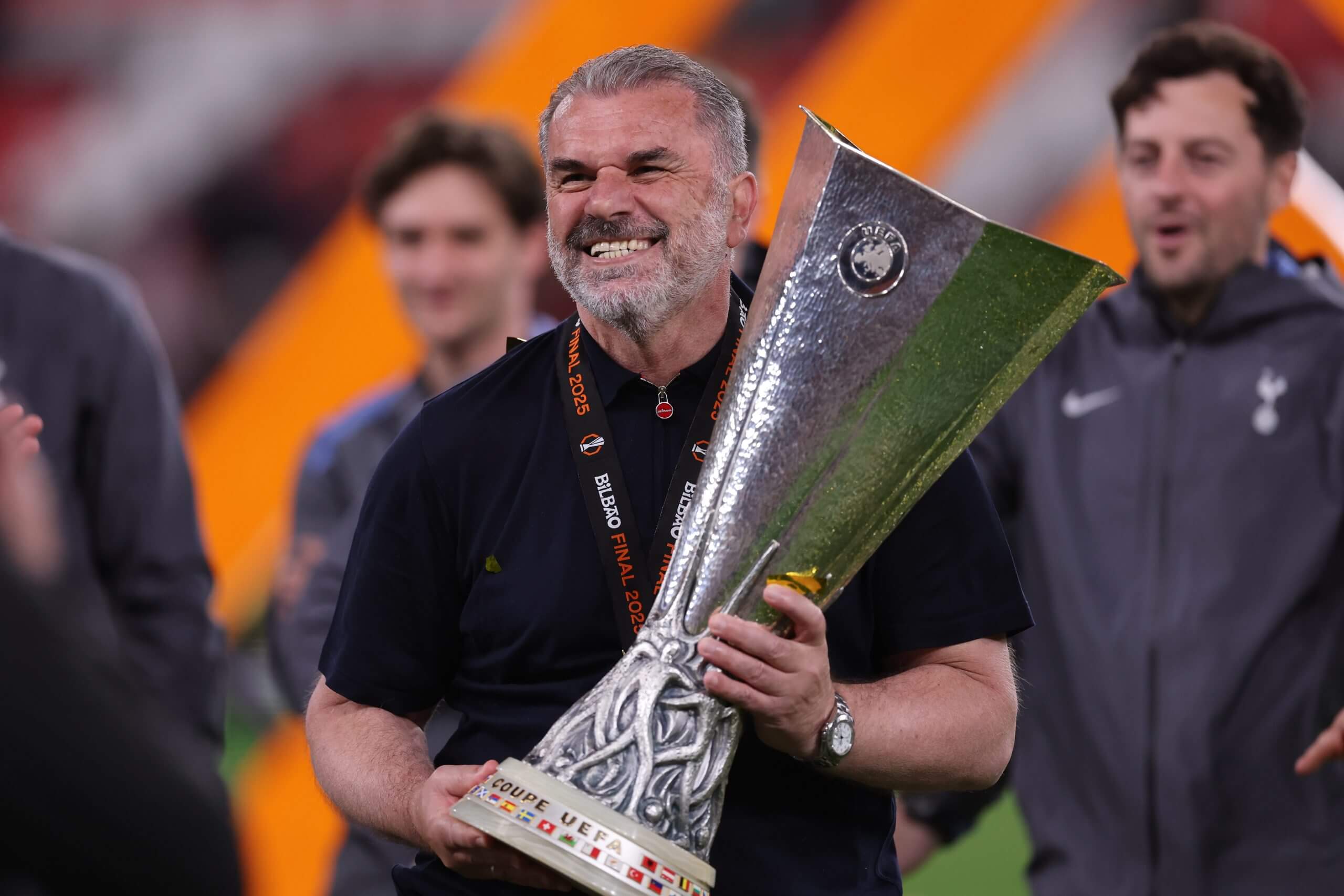
Postecoglou lifts the Europa League trophy in May… before being sacked in June (Catherine Ivill/Getty Images)
July
The first qualifying matches for the 2025-26 Champions League and Conference League took place on July 8, while on the same day Chelsea played Fluminense in the first of the Club World Cup’s semi-finals.
This means that the 2025-26 traditional European club season began before the 2024-25 one had finished. And few things felt more 2025 than that.
August
James Milner’s goal for Brighton against Manchester City on the last day of August saw him become the oldest player ever to score a penalty in the Premier League — aged 39 years and 239 days.
The longevity of Milner, who begins his forties in a few days, can be illustrated in myriad ways but perhaps none better than the fact that of the more than 3,000 penalties taken in the Premier League’s history, 5.7 per cent of them have been awarded in games in which Milner has featured.
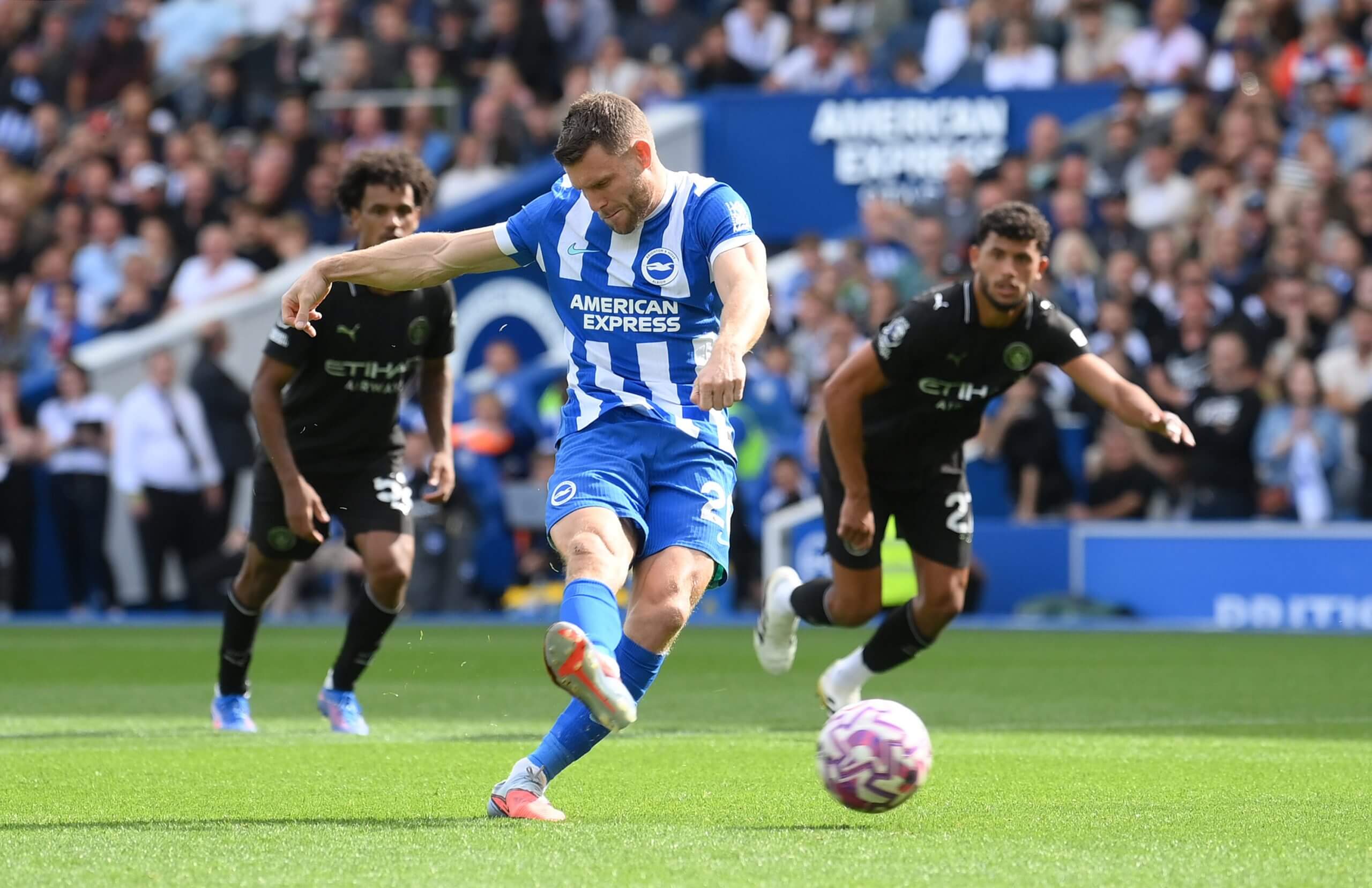
Milner scoring from the spot against Manchester City in August (Mike Hewitt/Getty Images)
September
Erling Haaland became the fastest player to score 50 goals in the European Cup/Champions League when he netted against Napoli on September 18.
The Manchester City forward got to the half-century mark in just 49 games, smashing Ruud van Nistelrooy’s previous record of 62 matches.
Games taken to score 50 European Cup/Champions League goals
PlayerGamesDate
Erling Haaland
49
Sep 2025
Ruud van Nistelrooy
62
Sep 2007
Lionel Messi
66
Apr 2012
Robert Lewandowski
77
Nov 2018
Kylian Mbappe
79
Dec 2024
Karim Benzema
88
Dec 2016
Cristiano Ronaldo
91
Apr 2013
Raul
97
Sep 2005
Thierry Henry
103
Apr 2009
Thomas Muller
130
Dec 2021
The goal also meant that Haaland nudged Alfredo Di Stefano, the iconic Real Madrid forward of the 1950s and 1960s, out of the competition’s all-time top 10 scorers. As a result, there are now no longer any players from the European Cup era of the tournament in the top 10.
How Di Stefano dropped out of the top 10
Dropped toDateSurpassed by
2nd
Sep 2005
Raul
3rd
Sep 2007
Ruud van Nistelrooy
4th
Apr 2009
Thierry Henry
5th
Apr 2012
Lionel Messi
6th
Apr 2013
Cristiano Ronaldo
7th
Dec 2016
Karim Benzema
8th
Nov 2018
Robert Lewandowski
9th
Dec 2021
Thomas Muller
10th
Dec 2024
Kylian Mbappe
11th
Sep 2025
Erling Haaland
October
October was a wonderful month for fans of things happening for the first time. Chief among them was Nottingham Forest reaching their third permanent manager of the season before the clocks had gone back. In recent seasons, there has been an increase in the number of clubs making their way through three coaching teams in a single season but to do so before British Summer Time had ended was truly a new paradigm.
November
On November 14, the 40-year-old Luka Modric appeared alongside the 18-year-old Luka Vuskovic for Croatia against the Faroe Islands in a World Cup qualifier.
As a result, it meant that Modric has played for Croatia with someone born in 1971 and 2007. The midfielder played with Niko Kovac (born October 1971) at the start of his international career before nearly 20 years later running out alongside Vuskovic (born February 2007).
Modric had already played for Croatia 13 times, scored three goals, and been to a World Cup when Vuskovic was born.
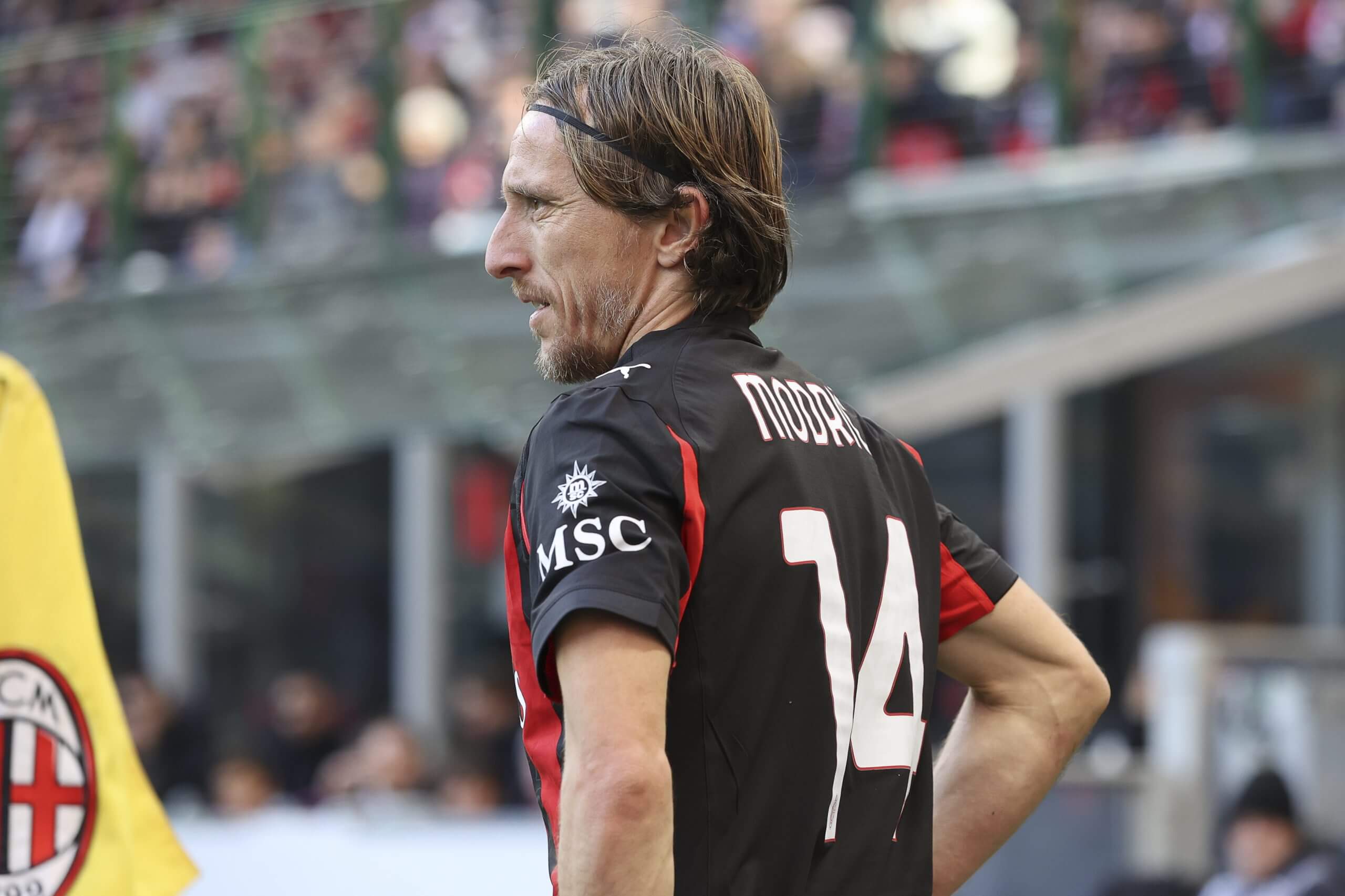
Luka Modric turned 40 in September (Davide Casentini/Getty Images)
December
The 2025-26 Premier League season began sedately, with the frantic goals-per-game rates of the last couple of seasons nowhere to be seen — but in recent weeks it has been creeping up again, helped by some classic encounters in December. There was Manchester United’s 4-4 draw with Bournemouth — the first game since 2012 to see both sides score a direct free kick — and then there was Fulham 4-5 Manchester City.
That was just the fourth time a team has scored four goals in a home game in the Premier League and lost the match, a trend that seems to solely apply to either teams based in Norfolk (Norwich City, twice) or teams based in London who play in white (Tottenham and Fulham).