
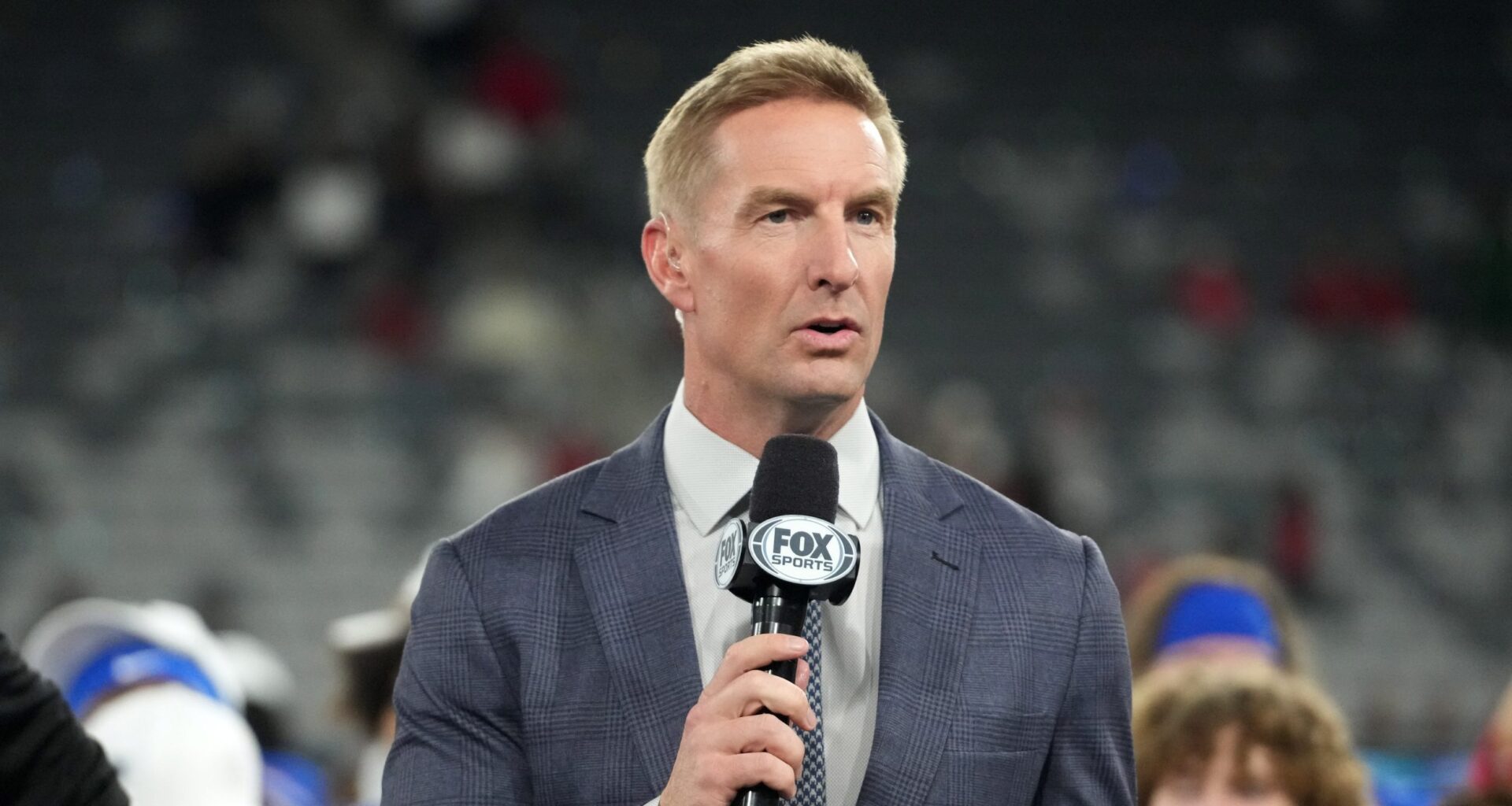
Joel Klatt has spent the better part of this playoff season criticizing how the whole thing is run. The scheduling doesn’t make sense, the format has obvious flaws, and the selection committee makes decisions that feel disconnected from reality. So when Oregon coach Dan Lanning complained about the playoff’s timing issues after the Ducks beat Texas Tech, Klatt agreed with him and decided to pile on with another complaint about something that’s bothered him for a while now.
“They chose the wrong path when it comes to the presentation of this playoff,” Klatt said on his eponymous show. “There is no playoff that should be a single television partner. It just shouldn’t. Because the presentation is important, in particular, when you’re down to this point in the sport where you’re trying to showcase games.”
ESPN pays about $1.3 billion annually for playoff rights through 2031, and the network also owns the SEC’s broadcast rights through 2034 while running the SEC Network. So you’ve got one broadcaster with massive financial stakes in one conference also controlling every single playoff game. That’s Klatt’s issue. Whether ESPN’s coverage actually leans toward SEC teams is almost irrelevant when the setup itself looks this compromised.
“Let’s face it, it’d be better if every network was giving an A-level broadcast versus a single presenter, in particular when that single presenter has a deep relationship with just one conference within college football,” Klatt said.
ESPN does sublicense some first-round games to TNT through 2028, and TNT also gets quarterfinal games starting in 2026. ESPN and TNT even finalized a deal back in June to have TNT get one semifinal game annually from 2026 through 2028. But that’s still fundamentally ESPN’s deal to sublicense. TNT is just renting the rights from Disney rather than bidding for them independently, so the arrangement keeps everything under the umbrella of networks ESPN either controls or partners with. That doesn’t really solve what Klatt is getting at.
The obvious counterargument here is that Klatt works for Fox and might just have an axe to grind with ESPN, but he tried to get ahead of that criticism by saying he wouldn’t want his own network to have exclusive rights either.
“That’s how you know this isn’t a Fox-ESPN thing for me, because I don’t think it would be great if we at Fox solely had the College Football Playoff,” he said. “That wouldn’t be good for the sport, and it’s not good the way that it is right now. It just isn’t.”
Whether Klatt intends it or not, his comments align with what appears to be a coordinated effort from Fox and the Big Ten to crack open ESPN’s exclusive playoff deal. Big Ten commissioner Tony Petitti keeps floating expansion to 24 or 28 teams. Fox Sports CEO Eric Shanks endorsed that idea back in October, specifically noting that more networks would need to be involved in a larger playoff. Ohio State’s Ryan Day has himself pushed for expanding to 20 teams. The Big Ten is the only conference seriously advocating for going beyond 16 teams, which makes sense when you consider that ESPN’s contract allows them to control everything as long as the field stays at 16 or fewer. Expand past that threshold, and suddenly Fox and other networks have to be brought in as partners.
Until that happens, the reality is that Klatt can’t call playoff games, and neither can any other analyst at a competing network. Fox, CBS, and NBC are all locked out regardless of broadcast quality or analyst talent. Compare that to how the NFL handles things by spreading playoff games across multiple networks, or how March Madness airs on CBS and Turner channels with different broadcast teams throughout the tournament. College football went in the opposite direction by consolidating everything with one broadcaster.
ESPN would probably point to its production quality and long track record covering the sport — and understandably so. The network has deep experience and no shortage of strong voices, Sean McDonough chief among them. But that’s not really what Klatt is pushing back on. His issue is more about the concentration of power and what it looks like when one broadcaster controls the entire postseason while simultaneously having major financial commitments to a specific conference.
And in a sport built on regional identity and competing power centers, handing that level of control to one network for a decade was always going to invite scrutiny.