
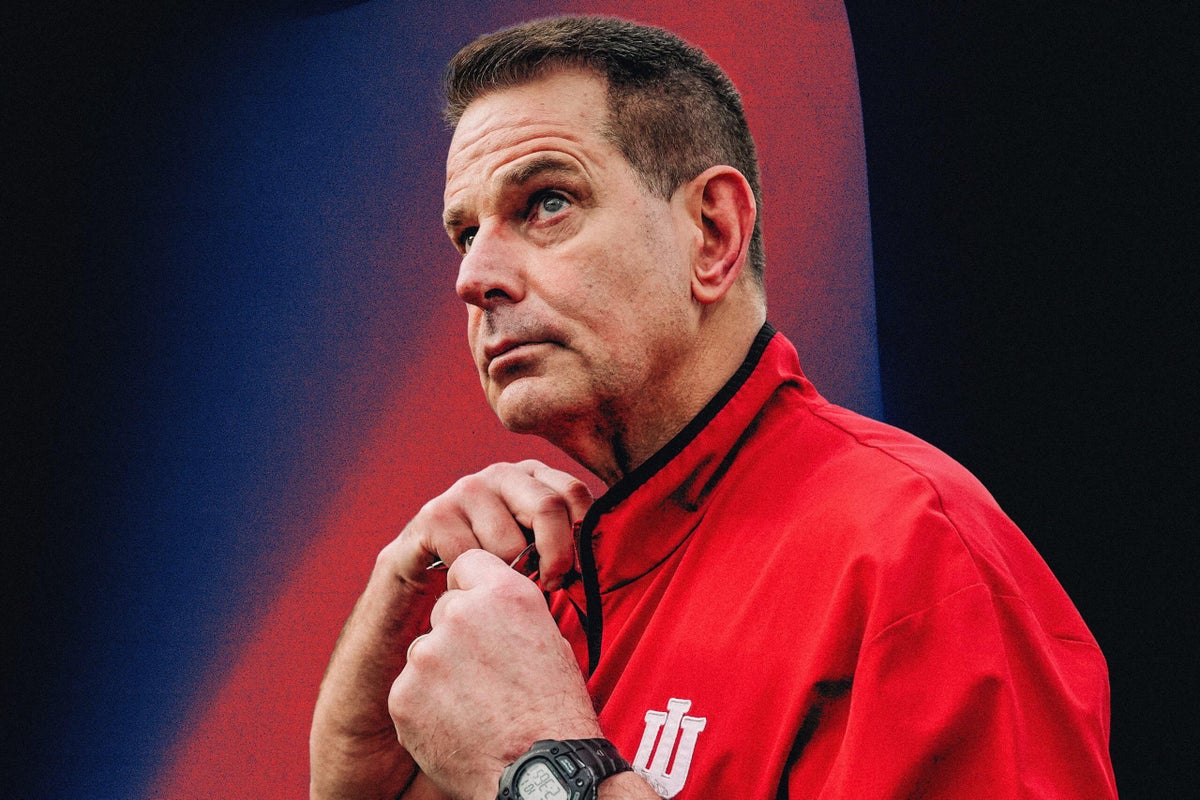
Percy Agyei-Obese played for coach Curt Cignetti for four seasons at James Madison. He played in the CFL and is now a middle school football coach in Maryland. Cignetti is now the head coach at Indiana, which plays in the College Football Playoff semifinals against Oregon on Friday. This is Agyei-Obese’s experience playing for Cignetti, as told to The Athletic’s Jayson Jenks.
One thing about Curt Cignetti: He’s going to play the best players. Period. He doesn’t care about your stars, or your ranking or your name. He cares if you produce and if he can trust you.
I saw that right away.
When he took over at James Madison in 2019, I was a junior and one of the older guys on the team. I had played as a true freshman and rushed for 100 yards in my first college game.
Cignetti wiped the slate clean. Within his first two weeks, there was turnover. Guys leaving, guys coming in. It was kind of crazy to see. Players on the team were like: Am I staying? Am I going? What’s going to happen?
During camp before his first season, Cignetti started the younger guys in front of me. I was practicing with the third-string offense, and I was confused. All my teammates were coming up to me: Why aren’t you starting? You should be this, you should be that. That was the case all the way until the last week of camp. I had to do everything I could to prove myself to him.
And then we played West Virginia in the first game of the season, and I fumbled.
Cignetti sat me all the way until the fourth quarter, and I didn’t play much in the first half of the next game either.
Looking back, I respect him for it. That brought out a different fire in me. I had to prove myself to him all over again. I knew I was in the wrong. I had to dig myself out of the hole. In the third game of the season, I scored two touchdowns. The game after that, I scored two more and rushed for 100 yards. I went on to have one of the better rushing seasons in JMU history that year.
Cignetti changed my mindset by forcing me to see football through his standard. It made me realize nothing was guaranteed.
He would easily sit a guy who wasn’t handling his business and put someone in who was. That sends a message throughout the locker room.
We had transfers who were three- or four-star recruits, who came from Power 5 schools and thought they had a job locked in. I saw situations where walk-ons played over top recruits. Cig wouldn’t even blink an eye. He’d slide that guy in because he practiced better and did things right every single day. That’s what he looked for.
He always had team guys on the roster — guys who might not play heavily but were the first ones there. First one in the weight room, grinding, doing everything possible to make the team better. Cignetti saw things like that.
It’s so much easier to buy in to a coach when you know you’ll get a fair chance. You may not get as many opportunities as someone else, but you will have your opportunity to prove yourself.
In our four years together, I got to see two types of coach Cignetti. The first was when I was just another player trying to prove myself. The second was when I actually gained his trust.
I’ll give you an example.
It was our first year in the Sun Belt Conference, and guys on the team were coming to me as their captain: “We’re beat up. Our bodies are beat up. It’s a lot. Do you think you can talk to Coach?”
I went to Cignetti. I gave him the whole spiel. I told him, “As a captain, I wanted to communicate this to you.” The way that coach Cignetti responded made me realize: OK, this is why he’s a leader. This is why people buy in for him.
When he answered, he said he totally understood and then started asking for my opinion: “How do you think we should go about it? Should we shorten this practice? Should we just have an off day tomorrow?”
I always tell this to the kids I coach now: I had an epiphany about football while playing for him. I called Cignetti to let him know. I told him: “I understand it now. Football is an art. This really is chess, not checkers. It’s bigger than just catching the ball. It’s bigger than just scoring touchdowns. There are so many pieces that need to be put together on a team and on the field to be successful. All the pieces matter.”
It was nothing that he did or said specifically. It was just the way he was. He made me realize that I loved the game of football.
Some people may look at him and think: He’s never satisfied. He’s never happy. But that mentality is picked up by the players. There were games where I had 100 yards, three touchdowns, and then I’d go watch the film and sigh. I could have had 15 more yards on that run. I could have had a better block for my teammate on that.
You pick that up as a team, and you develop that mindset. Everyone on the team held themself to that level and held each other accountable.
There are players who do not like Cignetti, but what head coach is liked by everyone? As a head coach, you have to make the best decisions for your team, and he is very tough. But that’s the thing: You need to be.
It puts you in a different mindset. I’ve talked to some of the guys on Indiana this season. They’re in that same mindset now. Honestly, it’s hard to beat teams like that. You can’t help but believe that you can’t be stopped.