
The long campaign is over. The longships return home. Weary warriors and the clan gather around the fire in the longhouse for the annual accounting. A river of mead flows in the tankards. Battles are relived. Stock is taken of the spoils and the losses. Despite a positive end to the campaign, murmurs and grumbling fill the longhouse when results have fallen bitterly short of expectations. Fingers are pointed. Blame is freely dispensed. The eyes of every heart gaze toward the future. Enter this old Seer who has endured more of these annual gatherings than the entire life span of most of those gathered around the communal fire.
Wisdom often speaks words that young hearts full of passion find difficult to accept. Nevertheless, I urge you to incline your ears. Here is what the runes of time reveal.
The most pressing issue facing “Vikings Nation” is what we do about our scarred young warrior at quarterback. We have been here before. So have so many others. We have never lacked talent at quarterback. We have lacked patience and tolerance for the long slog through the wilderness of development. Across the NFL we have been the most persistent practitioners of short leashes, veteran stopgaps, and “one piece away” thinking. It has resulted in a feast of addictive season wins but left us perpetually starving in the postseason.
The rune of time clearly shows that teams who endure those ugly, painful years of quarterback growth and development are more likely to ultimately discover they have a warrior of legend:
Troy Aikman was 0-11 his first year. Cowboys didn’t flinch. Two more years of struggle. Super Bowl champions in year four.
Peyton Manning was 3-13 in year one. His 28 interceptions is still a rookie record. Colts leaned in not out. He found his command in year three. Colts didn’t need rescuing. Manning needed reps.
John Elway didn’t make his leap until years 3-4. Broncos leaned on defense to buy time during the long slog. He learned when to throw only after throwing too much. The Broncos paid dearly for it for a few years, but they have a championship legacy to look back on.
Drew Brees was benched, injured and questioned. Miami passed on him because of fear of his pesky injuries. New Orleans took a chance. It was years 4-5 that revealed he was precision incarnate, and a Super Bowl was in his sight.
Steve Young arguably didn’t become Steve Young until after year four. [Tampa Bay] was a bad team with a bad scheme. Some QBs don’t grow in bad soil. It doesn’t make them a weed. Let’s be honest, the soil around J.J. McCarthy this year was perpetually rocky for multiple reasons.
Ah, yes. The Seer hears the grumbles and gripes echo through the longhouse. “Yes, but, the young warrior has had too many injuries. He’s missed too many battles in just two years. It’s a bad omen.”
Too often we have fallen prey to our fears of bad omens and our desire for shortcuts rather than seeing the more difficult truth. We’re not talking about a recurring career-ending injury from the same joint, same tissue and recurring mechanics. We’ve witnessed random, common injuries in McCarthy.
The bad omen is only worth noting with repeated soft-tissue injuries, recurrent ligament damage and biomechanical breakdown patterns. Absent those, injuries do not downgrade a QB’s long-term projection in any way. Aikman, Peyton Manning, Steve Young and Drew Brees all dealt with injuries. Manning was out for an entire season. All were stuck with the “concern” label early on, yet their teams chose faith and patience.
Yes, there are those QBs whose injuries created limitations (e.g. Sam Bradford, Carson Wentz), but these QBs typically deal with the same body systems, mechanical compensations and declining efficiency metrics. McCarthy does not match that profile. Different injuries, different causes, no shared weakness.
The runes do not read that as a curse. Unlucky chapters do not doom the outcome of the story unless you choose to close the book.
NFL history is clear. QBs who miss time in their first 2 seasons due to non-recurring injuries show no statistically significant reduction in long-term starter success. Teams that abandon first-round QBs due to early injury volatility more often experience regret than feel vindication.
So, here is this old Seer’s final words on our young warrior’s latest campaign and the season yet to come…
The Vikings greatest enemy has been fear of waiting long enough to find out who a quarterback could become. Brothers and sisters, every time we have chosen certainty over curiosity, comfort over conviction, floor over ceiling, the result has been respectable irrelevance. Lots of regular-season wins, but a dearth of the wins we most desire.
And almost every time the league’s great teams have risen?
They first endured seasons that we continually refuse to embrace as the necessary path to ultimate victory.
So, this ancient Seer says this: “Faith and the long slog matter.”
It nods. Slowly. Gravely.
The runes whisper: “Don’t flinch this time.”
The fire burns steady for those willing to sit through the dark night.
— Tom V.W. in Pella, Iowa
It was somewhat apropos to mention Moore in my intro since he was Manning’s offensive coordinator in Indy for the superstar QB’s first 13 pro seasons.
I’d imagine those early days of the 1998 season were testing and trying times, but there was no flinching or second guessing that the Colts had their franchise QB, who proved to be one of the best all-time.
Neither at that time had to deal with the hyper-scrutiny that exists in today’s “hot-take-social-media-and-podcast-palooza-landscape.”
I expect first-round picks and quarterbacks and quarterbacks who are first-round picks to be scrutinized, but the level and intensity directed toward McCarthy honestly surprised me.
Tom highlights multiple other Gold Jackets/a surefire in Brees to illustrate the non-linear ascension to an elite level is a bit more common than we might remember.
That above statement is not to say J.J. McCarthy is destined for the Pro Football Hall of Fame. He, coaches and the team around him can each impact where this goes.
There were late-season signs of improvement, despite a couple more injury-related setbacks, but McCarthy did make his 10th career start, and the Vikings improved to 6-4 (would have been 7-3 without the biggest “what if” of the season on the kickoff return allowed to the Bears) in the finale to emerge from a season wrought with struggles at 9-8 overall.
We’ll be rolling out or position recaps, beginning with quarterbacks on Wednesday and conclude them on Jan. 23, but I do want to mention McCarthy’s stats in his final four starts of 2025.
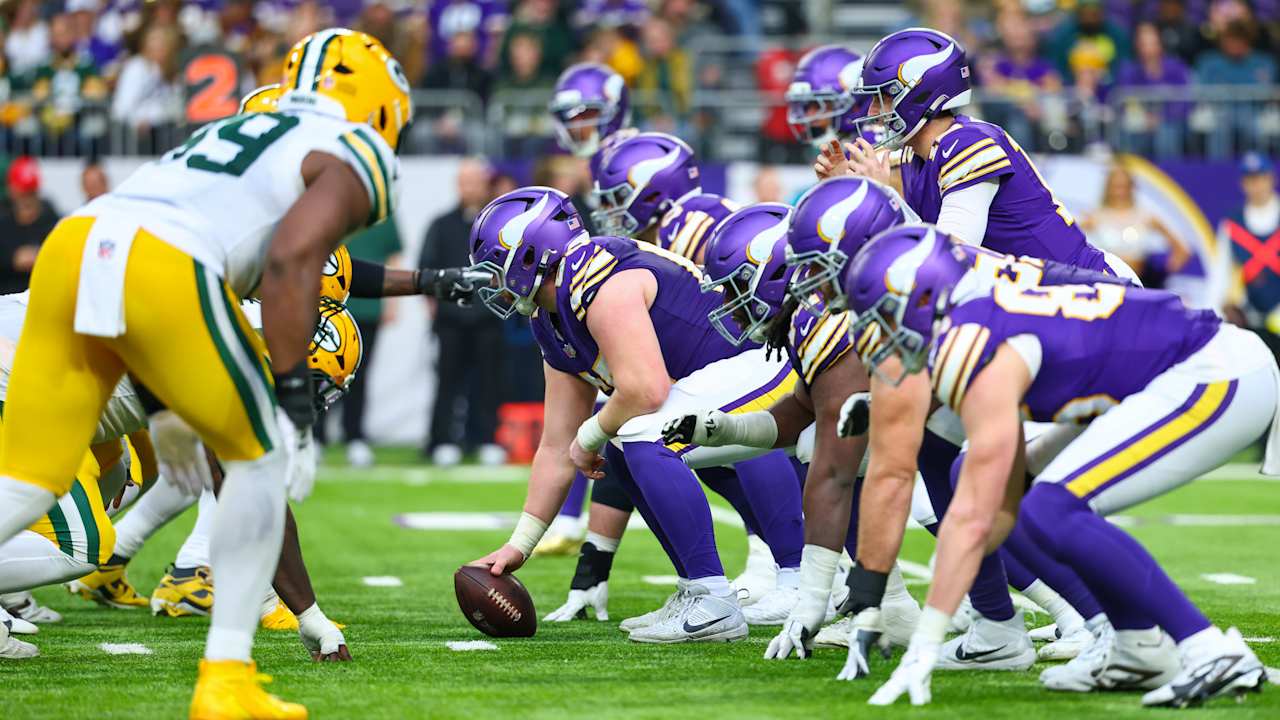
Against Washington, at Dallas, at the New York Giants and against Green Bay, McCarthy completed 54 of 84 passes (64.3 percent) for 703 yards with five passing touchdowns and two interceptions for a passer rating of 100.5. He was sacked seven times in that stretch, including the fumble lost at New York that was returned for a TD, caused by dealing with an injury in his right hand.
McCarthy rushed 14 times for 61 yards in those final four starts, scoring on the ground at Dallas and at the Giants.
The passing numbers could have been even better, but a drop in the end zone by Jordan Addison and a pass that bounced off Jalen Nailor was intercepted in the game at New York.
The injury factor is gigantic, although the torn meniscus, sprained ankle, concussion and right hand are somewhat different animals. I remove the meniscus from counting against McCarthy’s games missed (Sam Darnold was most likely going to be the starter), but I do factor into reducing his on-field time to develop, even if Darnold would have gotten most practice reps last season.
Still, the ankle (it was a hip-drop tackle), concussion (likely from running into harm’s way) and hand (most likely from hitting a helmet) illustrate areas where his self-preservation can — and needs to — improve.
But the play by McCarthy at the end of the season, combined with impressive efforts on defense and special teams, is the kind of complementary football that can win NFL games.