
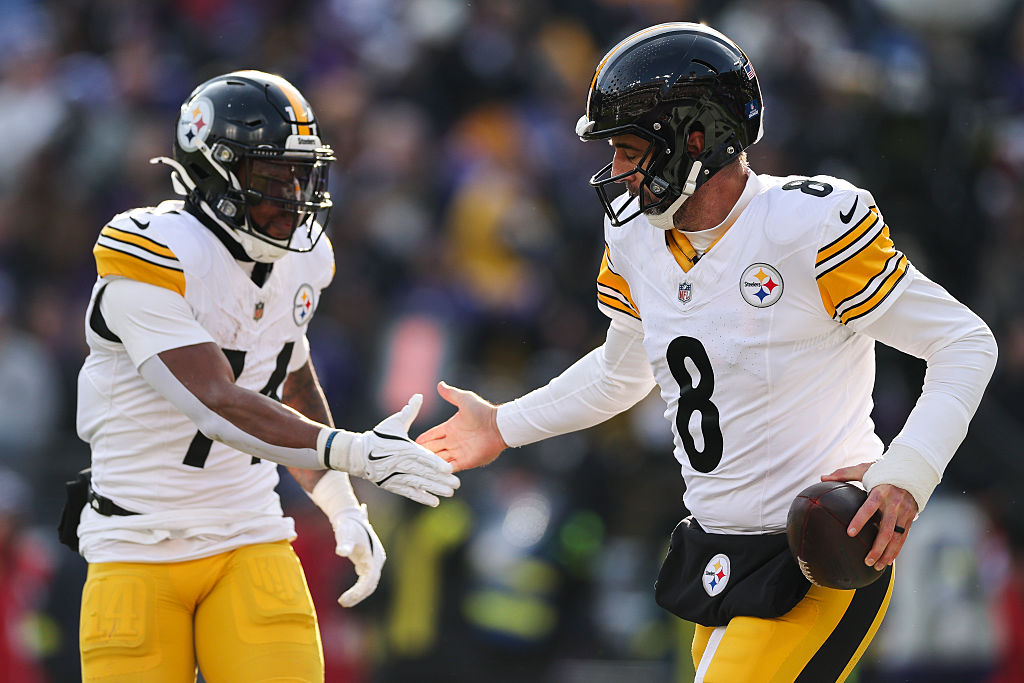
Dan Johnson takes you through his preview, prediction, and pick for the NFL Wild Card game between the Pittsburgh Steelers and the Houston Texans.
Monday night in Pittsburgh, the Steelers carry a decade of postseason questions into a street fight. Mike Tomlin needs a win, and Aaron Rodgers knows one January mistake becomes a headline. Houston shows up as a defense-led team that squeezes early downs and dares you to earn every chain. DK Metcalf returns as Pittsburgh’s boundary hammer, while Nico Collins is Houston’s one-play counterpunch. This game is about protection, field position, and who can finish drives when the cold tightens every throw. Below is my prediction for NFL Week 18’s game between the Pittsburgh Steelers and the Houston Texans.
Here’s how I’ll play it. I’ll be pumping out these predictions for individual games all season, with plenty of coverage here on DraftKings Network. Follow my handle @dansby_edits for more betting plays.
The quarterback split is real, and it matters against these fronts. C.J. Stroud is at 0.189 EPA per dropback, with 7.2 yards per attempt and an 8.0 aDOT. He’s also at 0.225 EPA versus the blitz, which matters with Pittsburgh blitzing 28.7% over the last six. Aaron Rodgers is at 0.131 EPA per dropback, with 6.7 per attempt and a 6.1 aDOT. C.J. Stroud (QB) has lived in aggression, sitting at a 34.0% deep completion rate with a 2.68-second time to throw. Nico Collins (WR) is the cleanest way Houston cashes that aggression, with 1,117 yards, 18 catches of 20-plus, and 2.44 yards per route run. Dalton Schultz (TE) is the chain-mover, with 82 receptions that keep Stroud on schedule when the shots aren’t there. Jayden Higgins (WR) matters as the “third read” winner, because Pittsburgh’s zone shells can force patience.
Rodgers’ answer is speed, because his time to throw is 2.46 seconds and his aDOT stays compressed. When he does see heat, his screen rate versus blitz is 82.1%, which puts Calvin Austin (WR) and Kenneth Gainwell (RB) in the catch-and-go business. DK Metcalf (WR) returning changes the geometry, because it gives Rodgers a real boundary winner and a true red-zone body. Metcalf led Pittsburgh with 850 receiving yards, and that’s the one profile Houston has to tilt coverage toward. Marquez Valdes-Scantling (WR) is the other stressor, because one clear-out can turn Cover 2 into a liability. The pressure response widens that gap, because Stroud is -0.041 EPA under pressure versus Rodgers at -0.205. That’s why the Steelers can’t just “blitz to win,” because Stroud is built for it.
Stroud is also more efficient on third down at 0.229 EPA, while Rodgers sits at 0.098. Pittsburgh’s best path is keeping Rodgers clean, and the line trend supports it. Over the last six, Pittsburgh allowed pressure on only 22.9% of dropbacks, while Houston sat at 41.6%. That protection edge matters even more with Houston’s pressure rate near 39% both season-long and lately.
That’s also why I care about early-down texture. Pittsburgh’s offense is slightly positive early, at +0.006 EPA per play with a 43.3% success rate, and Houston’s defense is elite there at -0.151 allowed with only 37.1% success allowed. That early-down squeeze is the game, because it decides whether Rodgers lives in second-and-six or third-and-eleven. The Steelers’ run game also has real pop lately, with 4.85 yards per carry over the last six and 2.19 yards before contact per attempt. Jaylen Warren (RB) has 70 carries in that stretch, a 49.3% share, and he’s the tone-setter. Gainwell has 43 carries, a 30.3% share, and he’s the pass-game release valve when Rodgers has to play fast.
Houston’s run efficiency has sagged to 3.52 per carry with only 1.24 yards before contact, and their stuff rate is 25.26%. Houston still wants early-down runs at a 55.5% rate, and Woody Marks (RB) leads the committee with 81 carries. Jawhar Jordan’s 43 carries are now off the table, so Marks’ workload can concentrate at the worst possible time. If Pittsburgh can stay on schedule, the +3 is instantly sturdier.
Texans vs. Steelers pick, best bet
The Texans cover case is obvious, and it deserves respect, because Stroud is built for heat. He’s at 0.225 EPA versus the blitz, while Rodgers is at 0.030. Pittsburgh still blitzes 28.7% over the last six, and Stroud’s best seasonal split is Cover 1 at 0.452 EPA. That matters because Nico Collins is the vertical answer, with 1,117 yards, 18 catches of 20-plus, and 2.44 yards per route run. Dalton Schultz is the steady outlet with 82 receptions, so blitz wins don’t always end drives. Stroud also handles pressure better, at -0.041 EPA under pressure versus Rodgers at -0.205. Houston can also suffocate early downs on defense, sitting at -0.151 EPA/play allowed with 37.1% success allowed. That can choke Rodgers’ pass-heavy neutral DNA, because he’s throwing in neutral at 96.5%.
Rodgers’ stress splits tilt Stroud too, with 0.106 EPA in one-score games versus 0.257. The refutation is that this matchup can turn into a field-goal economy, where three points is oxygen. Pittsburgh’s defense has tightened in the red zone lately, allowing TDs on 14.29% of red-zone plays. Pittsburgh’s offense has been worse there, scoring TDs on only 11.94%, which drags everything toward a tight finish. Both defenses are pressuring at about 39% lately, but sack conversion is down for both. That keeps possessions alive just long enough to trade threes instead of landing haymakers.
The script I want is physical and deliberate, but not conservative for its own sake. Pittsburgh should lean into early-down runs because the last-six run blocking is creating 2.19 yards before contact. Jaylen Warren (RB) has 70 carries and a 49.3% share over the last six. Kenneth Gainwell has 43 carries and a 30.3% share as the secondary handle. That workload split is how Rodgers avoids living in pure dropback stress. The passing plan should be quick rhythm with selective shots, because Rodgers is a different quarterback when pressure lands. DK Metcalf returning gives Pittsburgh a real boundary hammer after leading the team with 850 receiving yards. Calvin Austin becomes the catch-and-go outlet when the rush wins late. Marquez Valdes-Scantling can still steal a coverage snap and flip field position. Houston should still run early, because their early-down run rate sits at 55.5%. Woody Marks leads their committee with 81 carries, which is 42.6% of team carries. With Jawhar Jordan out, that usage can condense fast. The problem is efficiency, because Houston’s last-six run lane is thin at 1.24 yards before contact. That can set up second-and-long, invite pressure, and turn touchdowns into field goals.
Houston is -3 (-105), Pittsburgh is +3 (-115), and the total is 38.5 with the under juiced. In a game priced this low, I want the points, not the paint job. The run-and-punt shape is supported by early downs, red-zone stalls, and negative-play rates. Houston’s offense is slightly negative early at -0.005 EPA/play with a 40.1% success rate. Their run game is getting swallowed too often, with a 25.26% stuff rate and only a 7.37% explosive rush rate lately. Pittsburgh is far more explosive on the ground, at a 13.38% explosive rush rate over the last six. Pittsburgh is also slightly positive early at +0.006 EPA/play with 43.3% success. If this stays in the expected scoring band, three points can be the whole game. This feels like a one-possession knife fight, not a comfortable road margin.
I’ve got it Steelers 20, Texans 19, and I’m taking Steelers +3.
Best bet: Steelers +3 (-115) vs. Texans
Tail it with me in the DKN Betting Group here!
I’d rather ride Kenneth Gainwell (RB) 34+ receiving yards at -115 on DraftKings, because this game is built to force Pittsburgh into fast answers. Rodgers is at -0.205 EPA under pressure, and Houston’s front is still generating pressure near 39% lately, even with sack conversion slipping. That combination pushes the ball into outlets and screens, not slow-developing downfield routes. Rodgers also plays compact, sitting at a 6.1 aDOT and a 2.46s time to throw, and his blitz answer is still “get it out now.” Pittsburgh’s early-down clash is the other driver. Houston’s defense is elite early, at -0.151 EPA/play allowed with only 37.1% success allowed, so third downs should arrive with real frequency. That’s when Gainwell can cash, because he’s the clean checkdown and the designed screen option when the rush wins. His usage is stable enough to trust for a yardage ladder, with 43 carries over the last six and a 30.3% share behind Warren, which keeps him involved even if the run game is flowing. If the Steelers are covering +3, it usually means they’re chaining short completions, stealing first downs, and letting field goals keep the scoreboard tight. Gainwell’s receiving line fits that exact script.
Best prop lean: Kenneth Gainwell 34+ receiving yards (-115)
Tail it with me in the DKN Betting Group here!