
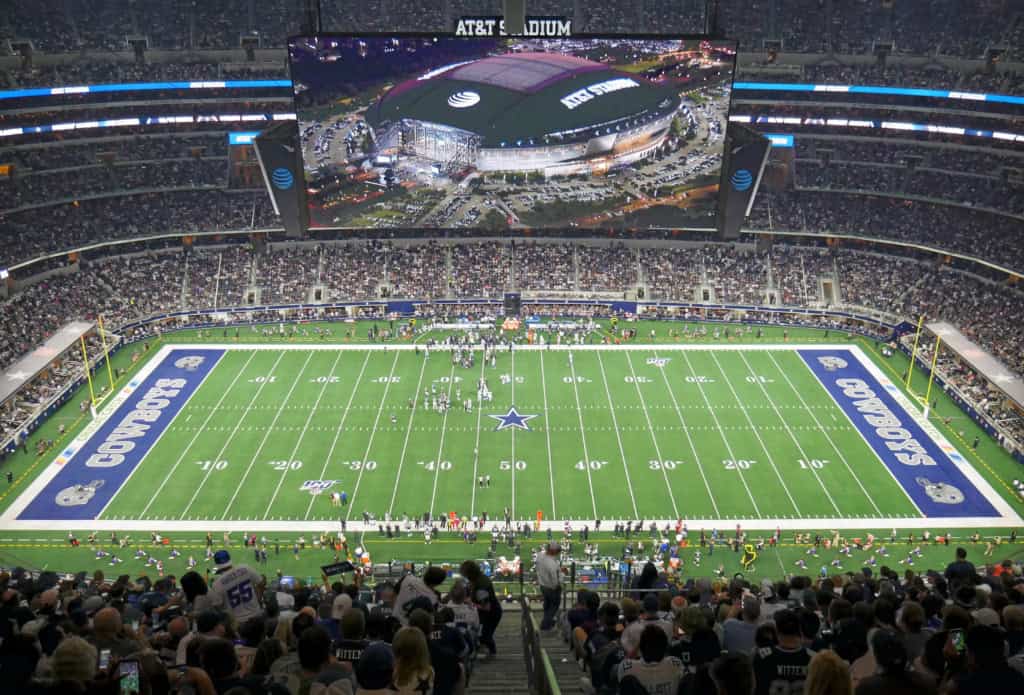
For much of modern NFL history, the Dallas Cowboys have carried the nickname America’s Team with little resistance. The label grew out of national television exposure, sustained success, and a front office that understood how to turn players into household names.
Fans in cities with no connection to Texas still wore the star.
That identity formed before social metrics or engagement dashboards existed. Loyalty was measured by packed living rooms and full stadiums.
Today, those emotional bonds remain, but they are now joined by numbers that track attention in ways earlier generations never considered.
How Analytics Changed the NFL Conversation
The way fans talk about football has changed as much as the way teams build rosters. Analytics have pushed discussions beyond final scores and into efficiency, situational performance, and long-term trends.
Even casual viewers hear references to expected outcomes and play success during broadcasts.
For the Cowboys, this added scrutiny has complicated their image.
Their popularity is easy to confirm through ratings and interaction data. Performance metrics, however, often tell a more uneven story.
The gap between how often Dallas is discussed and how consistently it delivers has become harder to ignore.
Betting Data as a New Measure of Loyalty
As fandom becomes easier to quantify, analysts have started to look beyond ratings and social media to understand how confidence in a team actually shows up.
Online betting fits into that picture because it sits at the intersection of emotion and decision-making. Placing a wager requires commitment, especially over a full season.
Data from betting platforms, like those compiled by CasinoBeats, show the Cowboys attracting consistent action year after year. That support often remains even when performances disappoint.
Many sports bettors favor modern Bitcoin sites over traditional sportsbooks because they offer stronger privacy, quicker payouts, more competitive odds and bonuses, and broader access across state lines.
Ultimately, in an era where loyalty can be measured in clicks, dollars, and wagers, the Cowboys remain a national team because fans continue to choose them.
Social Media Numbers Tell a Parallel Story
Social media provides a different but equally telling stream of data.
The Cowboys consistently rank near the top of the league in followers and engagement, regardless of where they sit in the standings.
When they make any team-related announcement on social media, fans react.
Wins spark celebration, losses invite criticism, and both travel widely.
Analytics show that attention rarely drops, even during disappointing stretches. This constant visibility keeps the team woven into daily sports conversation.
In a league where relevance can fade quickly, Dallas maintains it through volume alone.
Being discussed, argued over, and debated still carries real weight.
Merchandise and Market Reach
Retail data reinforces the idea that the Cowboys remain a national brand. For years, Dallas cowboy jerseys and apparel have sold incredibly well in regions far from Texas, a trend that has lasted decades.
Unlike teams that see sharp spikes tied to recent success or a new star, Dallas maintains steady demand.
That consistency suggests long-term attachment rather than short-lived interest.
Fans may question decisions or criticize results, but many still spend money on the brand. Purchasing behavior often lags behind frustration, and for the Cowboys, that loyalty has proven difficult to shake.
Performance Metrics Versus Popularity
Advanced metrics often place the Cowboys in an uncomfortable middle ground. They are competitive, but rarely dominant when postseason efficiency is measured.
This contrast fuels debate about what America’s Team should represent.
Some fans argue the title belongs to whoever wins most often. Others believe national reach has always mattered more than playoff results. Analytics do not settle that argument, but they frame it more clearly.
Numbers highlight where performance falls short while also confirming how much attention the team commands, even when expectations go unmet.
More Tech-Savvy Fans and Data Literacy
More tech-savvy fans tend to approach the Cowboys with fewer assumptions. Many follow statistical analysts, fantasy projections, and betting trends alongside traditional coverage.
Loyalty still exists, but it is more conditional.
When metrics support optimism, engagement rises quickly. When they do not, criticism is blunt and immediate.
This audience values evidence and transparency, and it applies that standard to every team, including Dallas.
Analytics have not reduced interest, but they have changed how belief is earned.
The Cowboys still attract more tech-savvy fans, though trust now comes with benchmarks.
Broadcasting and Media Coverage in a Quantified Age
Sports broadcasting has a long and respected history. Today, it has adapted to a numbers-driven audience, blending narrative with real-time data at every turn.
The Cowboys benefit from this approach because their brand guarantees airtime, while analytics provide endless angles for debate.
Television panels break down probabilities, efficiency charts, and betting lines tied to Dallas. Podcasts revisit the same figures from different perspectives. Even unfavorable data keeps the team central to discussions.
Coverage no longer depends solely on wins. It depends on relevance, and Dallas continues to supply it week after week.
How the “America’s Team” Label Took Hold
The Cowboys did not crown themselves America’s Team. The nickname emerged in the late 1970s as the NFL expanded its national television reach, and Dallas became the league’s most reliable ratings draw.
Consistent winning helped, but presentation mattered just as much. Frequent prime-time games, a massive market, and star personalities turned Roger Staubach, Tom Landry, and later Troy Aikman into national figures.
Exposure fueled merchandising, loyalty, and eventually transformed the Cowboys from a regional favorite into a default team for fans without a local option.
Redefining What America’s Team Means
The analytics era has not erased the Cowboys’ national presence, but it has redefined it.
America’s Team is now measured through viewership, spending, engagement, and betting behavior, not just trophies or nostalgia.
By those standards, Dallas remains one of the NFL’s most powerful brands, deeply embedded in American sports culture even as fandom becomes more measurable.
Was this helpful?