
The SEC has lost three straight national championships to the Big Ten. Ohio State poached Caleb Downs and Julian Sayin from Alabama. Michigan outbid LSU for Bryce Underwood. Indiana just won a national title. The Big Ten has more money than the SEC, and that gap is changing college football in ways the SEC can’t control.
Matt Barrie knows all of this. He acknowledged the crisis on his eponymous podcast with Paul Finebaum this week. And then he made a claim that reveals how the SEC is trying to maintain relevance even as it watches the Big Ten collect championships.
“I think two things can be true,” Barrie said. “One, that the Big Ten right now is the preeminent championship conference in college football because I’ve got three examples of why that’s true. But also, it can be true that the week-in, week-out matchups in the SEC draw more eyeballs because a lot of them are just like, the bottom, bottom tier in the SEC is good. And so both can be true that maybe one league’s the deepest and gets the most eyeballs, but the other one is where it counts as the national champion.”
That’s the new SEC argument. Sure, the Big Ten wins championships. But the SEC still draws more viewers. Still generates more conversation. Still has the deepest conference and the most compelling weekly matchups. The brand still matters even if the results don’t match.
Finebaum essentially agreed. He said the Big Ten’s three-year championship run is serious, a major paradigm shift that represents a crisis in SEC country. But he also said it won’t stop him from promoting the SEC because everyone knows where the eyeballs are on Saturday afternoons.
“Will it stop people like me and SEC fans from promoting the league? No,” Finebaum said. “Because you and I both know where the eyeballs often are on Saturday afternoon and where the conversation is. But ultimately, a sport is judged by its champion. And if you’re not the champion, and this is not a one-off anymore. This is a three-off. That’s serious stuff, Matt.”
Finebaum opened the conversation by mocking SEC fans who try to sugarcoat the current situation. There’s no way to spin this positively, he said. The SEC is in a mess, and there’s no obvious team poised to pull the conference out of it next season.
“Listen, I think everybody knows where I live and where I work,” Finebaum said. “And I mean, I kind of snicker sometimes when I hear the SEC fans trying to make a long version case out of this. You can’t. There is no way to sugarcoat the mess the SEC is currently in. And it’s not as if there is a team next year that is going to pull you out of it.”
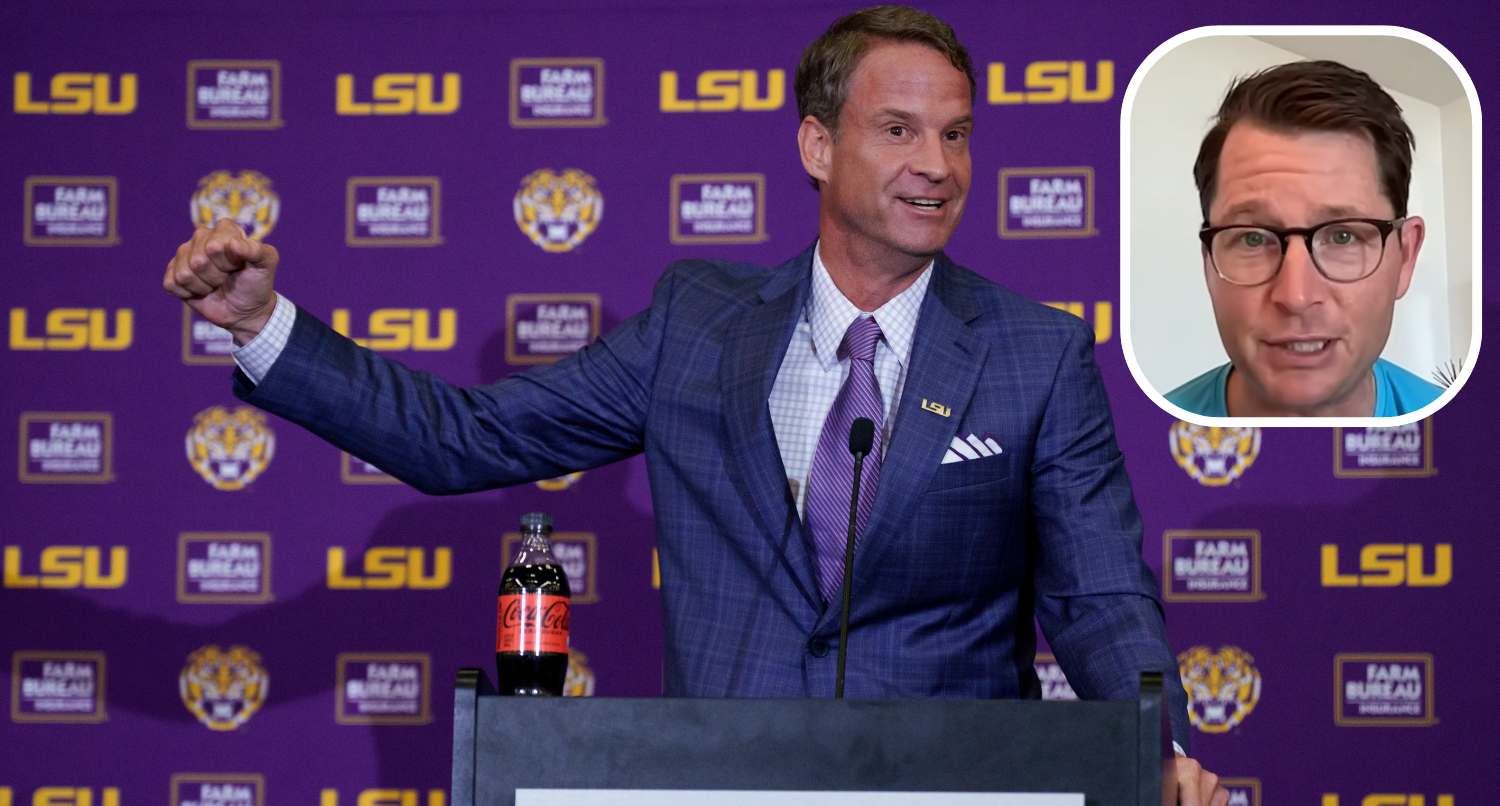
Except that Barrie thinks there is one team. LSU. Lane Kiffin’s LSU, specifically. That’s his answer for how the SEC competes with the Big Ten next season.
“The one team that can save the SEC next year, LSU, Lane Kiffin, and the move that he made because one, it appears they have the money because they went on this whole press conference tour with the governor after the Brian Kelly debacle that they don’t want to spend,” Barrie said. “Well, they spent the money on the coach, and they spent their money in the portal, and they seemingly have everything they need to go on a run. You need them to be national championship competitive.”
Barrie’s argument is that LSU showed it has the resources to compete financially with the Big Ten. The school spent money to land Kiffin. It spent money in the portal. The resources are there to build a championship roster. And critically, Kiffin left Ole Miss early enough to get ahead of the portal cycle, stockpiling talent while other programs dealt with coaching searches and bowl games.
Whether Barrie is right won’t be known until next season. But if he’s wrong, the SEC’s crisis gets significantly worse, and the eyeballs argument starts to sound like a talking point designed to obscure the fact that championships are going somewhere else.