
Jan. 21, 2026, 9:39 a.m. ET
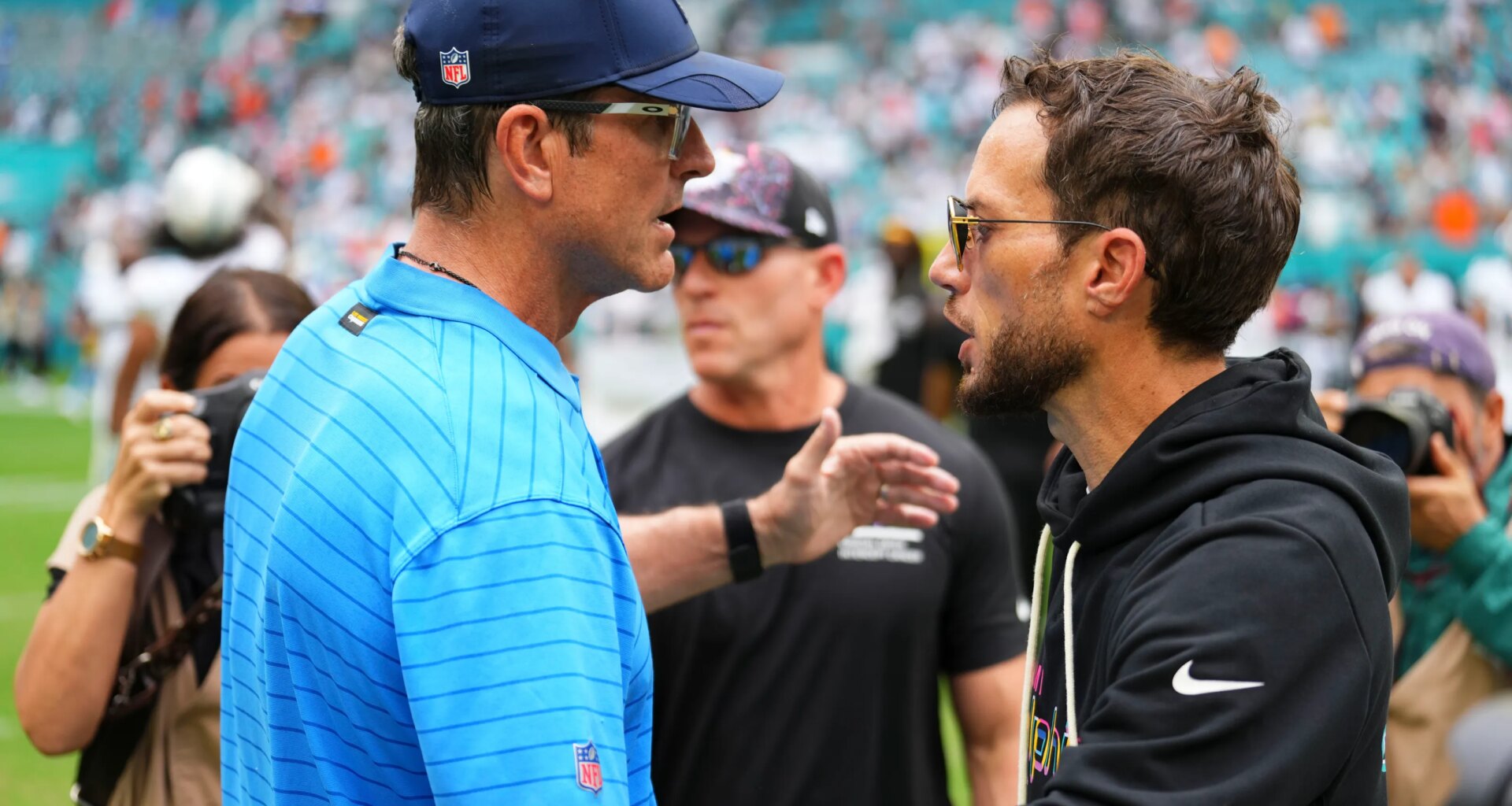
Mike McDaniel opted out of the Cleveland Browns‘ head coaching spot. Not to take another top job across a landscape with a half-dozen openings, but to serve as an assistant under Jim Harbaugh.
That should tell you all you need to know about the potential of the Los Angeles Chargers’ offense.
Indeed, the biggest winner from Tuesday’s coaching cycle news is Justin Herbert. Few quarterbacks in the league have put up more encouraging game film and more forgettable stats, creating a divide between the passer you see on the field and the one you consider in the offseason. As his age 28 season approaches, he’s running out of time to make the leap from good to great; especially with an 0-3 playoff record on his resume.
McDaniel may not have much to offer in that latter department — he’s 0-2 himself — but he can boost Herbert’s downfield game. He reinvented Tua Tagovailoa as a gunslinger after two underwhelming seasons, harnessing a peak Tyreek Hill to unveil a deep attack that left opposing defenses to catch their breath. “Throw it to the best wideout in the NFL” isn’t exactly rocket science, but it led to the explosion Miami needed and created the space his teammates needed to thrive.
Jaylen Waddle’s production spiked because Hill’s presence created the room for an average of three-plus yards of cushion per target (and a league-high 18.1 yards per reception). Raheem Mostert had the space to summon the two most productive seasons of his career. Tagovailoa thrived until he was injured, leaving us a “what if” for the 2022 season and a whole new set of challenges going forward (we’ll get to those).
Expert NFL picks: Exclusive betting insights only at USA TODAY.
There’s a certain harmony McDaniel brings to an offense of high functioning, complementary parts. Now he’s getting a rising offense with a sure-handed man-coverage beater who can thrive on in-breakers (Ladd McConkey), a big-bodied deep threat coming off his most productive season (Quentin Johnston), a young high-ceiling tailback platoon (Omarion Hampton and Kimani Vidal), a rookie tight end who powered through growing pains to look like a true weapon (Oronde Gadsden II) and, if the football gods ever allow them to be healthy again, a pair of offensive tackles with All-Pro capabilities (Rashawn Slater, Joe Alt).
Pretty good!
Most importantly, McDaniel has proven versatile behind a flawed quarterback. He built Tagovailoa into a fantasy star and NFL playoff starter early in his tenure. In 2022 he led the NFL in passer rating. In 2023 he led the league in passing yards. In 2024 he was tops in completion percentage. In those three seasons, the Dolphins’ offense changed considerably. Tagovailoa’s deep ball accuracy waned and he turned away from field-stretching passes. His air yards per attempt fell from 9.5 (second-highest in the NFL) to 7.7. to 5.7 (dead last at 36th). His deep ball rate slipped from 12.5 percent to five percent.
Things didn’t exactly go well in that 2024 season with Tagovailoa looking like late-stage Drew Brees, but McDaniel was able to tape pieces of his plane back together as it flew. In Weeks 1-7 Miami’s -0.209 expected points added (EPA) per snap were the lowest in the league. After Week 8 that improved to 0.059 — 14th place and honestly much higher than a quarterback who is only throwing five yards downfield, on average, should be.
McDaniel’s Miami tenure showcased his ability to pump up his passing game with an explosive run game. He’s been able to rely on high-efficiency tailbacks to keep his offense on schedule and reduce obvious passing downs and the blitzes that come with them. Raheem Mostert had a success rate — defined as a play that gains at least 40 percent of yards needed for a first down or touchdown on first down, 70 percent of yards needed on second down, and 100 percent on third or fourth down — of 55 percent or higher his first two seasons under McDaniel. The league average was about 49 percent. De’Von Achane has been closer to that number, but he’s also had the misfortune of playing with a low-impact passing game and significantly more stuffed boxes to run through.
With Herbert, McDaniel’s run game gets a quarterback who can keep opponents honest and a spritely backfield platoon. Hampton missed time due to injury but still posted a top-four broken tackle rate. Vidal was inconsistent but had three different 100-yard games. That duo isn’t Mostert/Achane, but there’s a lot of talent there with room to grow.
Harbaugh is a throwback head coach. He won a national championship at Michigan by running the ball more than 60 percent of the time. But as much as he’d like to grind you into dust, his success has come because he’s willing to adapt and innovate. He engineered a transition from Alex Smith to Colin Kaepernick in San Francisco. Now he’s got to maximize the franchise quarterback whose presence helped lure him back to the pros.
Enter McDaniel, who might have fit in somewhere as a team’s second- or third-choice at head coach and inherited a losing situation for a team with a broken quarterback situation and few ways to fix it (Browns, Pittsburgh Steelers, Arizona Cardinals). Instead he chose to rehabilitate his image after Tagovailoa crashed out so hard he was eventually replaced by a seventh round rookie. While a few suitors made sense — the Philadelphia Eagles have a boatload of talent in need of a play-caller — McDaniel bought in to Herbert’s rocket arm and the promise of reviving a type of gunslinger he’d brought to life four seasons earlier.
The Chargers can offer McDaniel everything he needs to be a top shelf head coach candidate again. McDaniel can offer everything Herbert needs to make his on-field production and playoff success match the guy who shines on game tape. Suddenly, Los Angeles may have become the AFC West’s most intriguing team.