
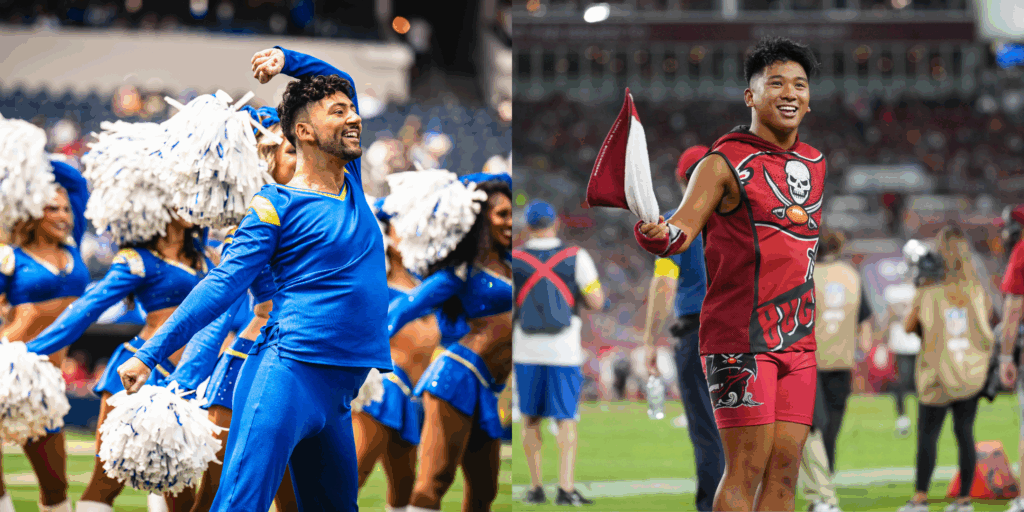
In August, the Minnesota Vikings Cheerleaders experienced backlash for adding two male cheerleaders to their roster, sparking a league-wide conversation about the presence of men on professional dance teams. Male cheerleaders have been part of the NFL since 2018, when Quinton Peron and Napoleon Jinnies joined the Los Angeles Rams Cheerleaders. Since then, the ranks have grown—in the 2025–26 season, 11 teams have both male and female performers.
Still, women far outnumber men in NFL cheer. And while male cheerleaders face a unique set of obstacles, they are also carving a path for themselves in professional dance. Dance Spirit spoke to two of those cheer pioneers about finding community, dealing with negativity, and breaking barriers.
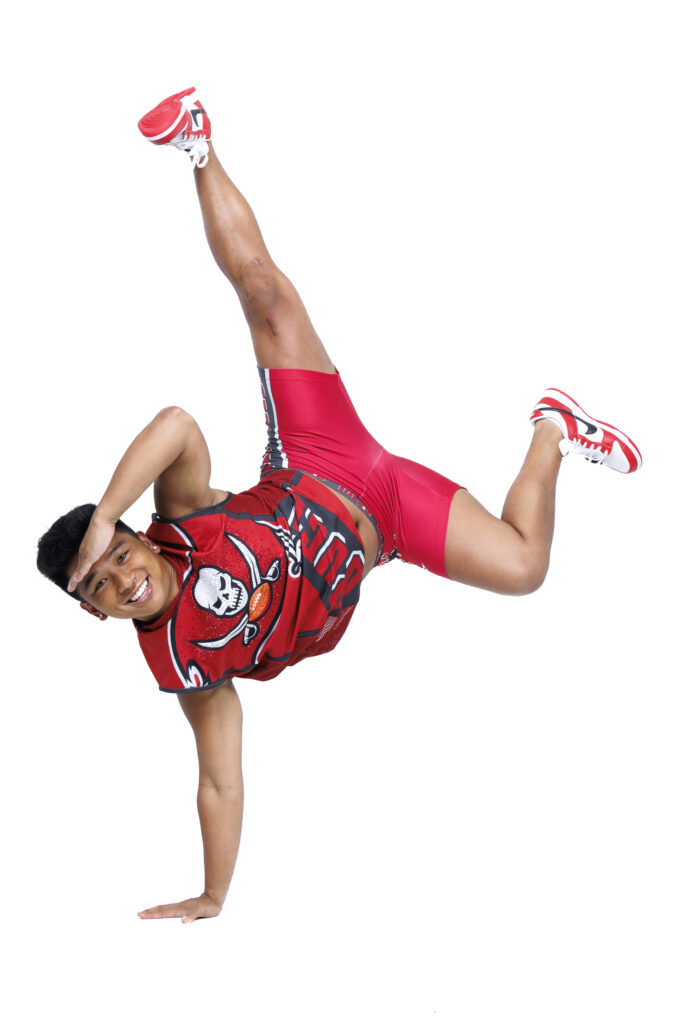 Sean Agustin. Photo by Tori Richman, courtesy Tampa Bay Buccaneers.
Making the Team
Sean Agustin, a rookie on the Tampa Bay Buccaneers Cheerleaders, started his dance training at age 5. He competed in dance throughout his teens and attended the University of South Florida, where he was the first male dancer on the USF SunDolls (he was nicknamed a “SunDude”).
After college, Agustin auditioned for the Tampa Bay Buccaneers Cheerleaders and made the team on his first try. He says he was motivated by the professional dance world’s shift toward inclusivity. “Auditioning was about more than making the team itself. It was about being part of the change that’s happening right now,” he says.
Visibility Matters
Agustin emphasizes the importance of his visibility as a male NFL cheerleader. “Every time I step out on the field, I represent something so much bigger than myself,” he says. “I have the opportunity to represent and inspire a young male dancer who wants to pursue NFL in the future.” He adds that the traits found in great performers aren’t limited to people of one gender expression. “Talent, hard work, and passion are not defined by gender. They’re defined by the individual.”
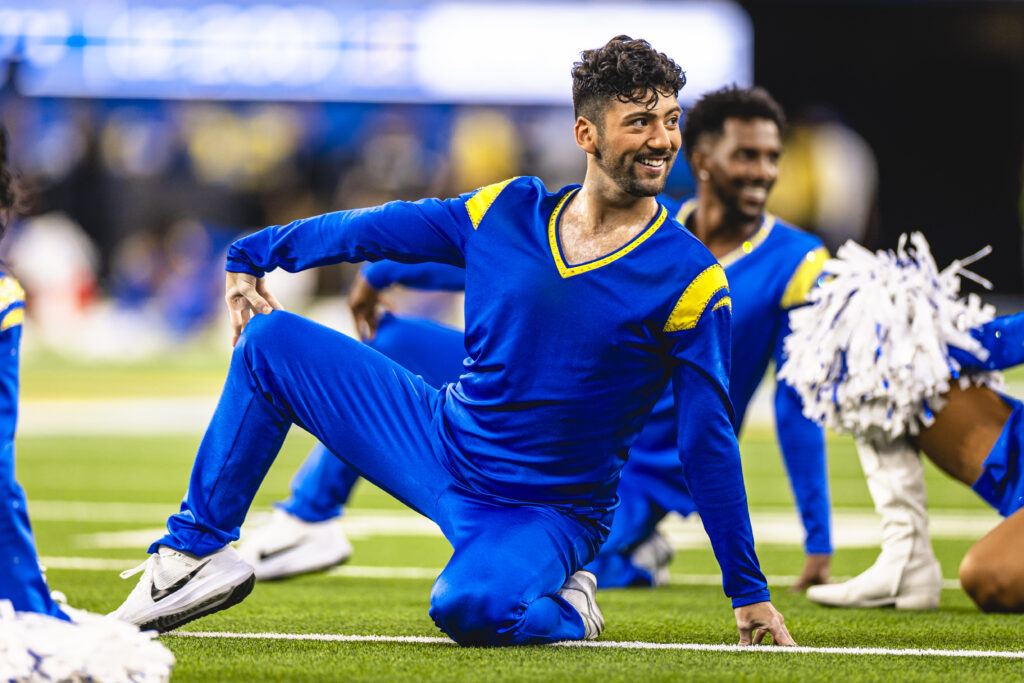 Jose Capetillo. Photo courtesy Los Angeles Rams.
Five-time L.A. Rams cheerleader and three-time captain Jose Capetillo was on the Purdue Dance Team in 2018 when he watched Peron and Jinnies join the Rams Cheerleaders. “When I saw Quinton and Napoleon make the team, I also saw myself in their shoes,” recalls Capetillo. Now, he says he’s proud to serve as representation for other dancers like him.
Power in Numbers
Although their numbers are growing, male cheerleaders remain a rarity in the NFL. The small- but-mighty group of dancers has created a tight-knit community across the league to connect and uplift each other. “When I first made the team, I had such strong support from guys not only on my team but from other teams across the league, who have become great friends of mine,” says Capetillo. “Whenever another guy joins a new team or makes a team for the first time, I try and be their biggest cheerleader because I know how far that support really goes.”
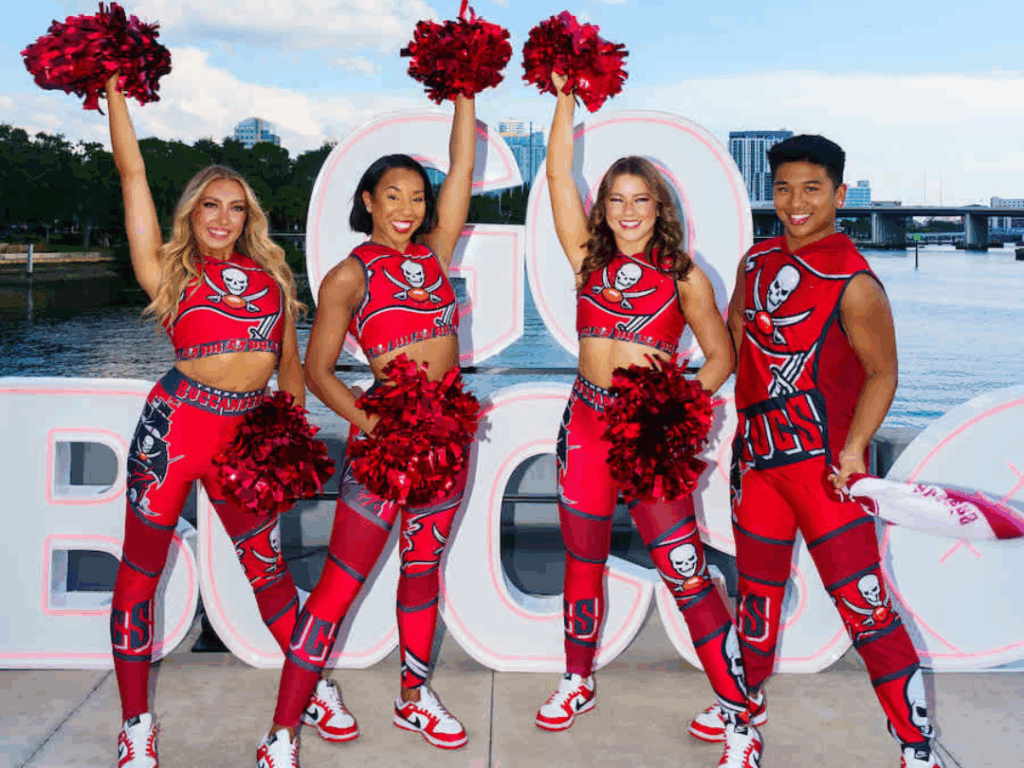 Sean Agustin (right) with fellow Tampa Bay Buccaneers Cheerleaders. Photo courtesy Buccaneers.
Dealing With Backlash
Capetillo acknowledges that being a male cheerleader comes with a darker side, something that he’s adjusted to over the years. “While I don’t feel particularly affected by negative comments anymore, I did have to build up to that,” he says. But it takes time, and those comments have their effects. “For some guys across the league, this is a new experience. Just because I’m okay doesn’t mean that everybody’s okay.”
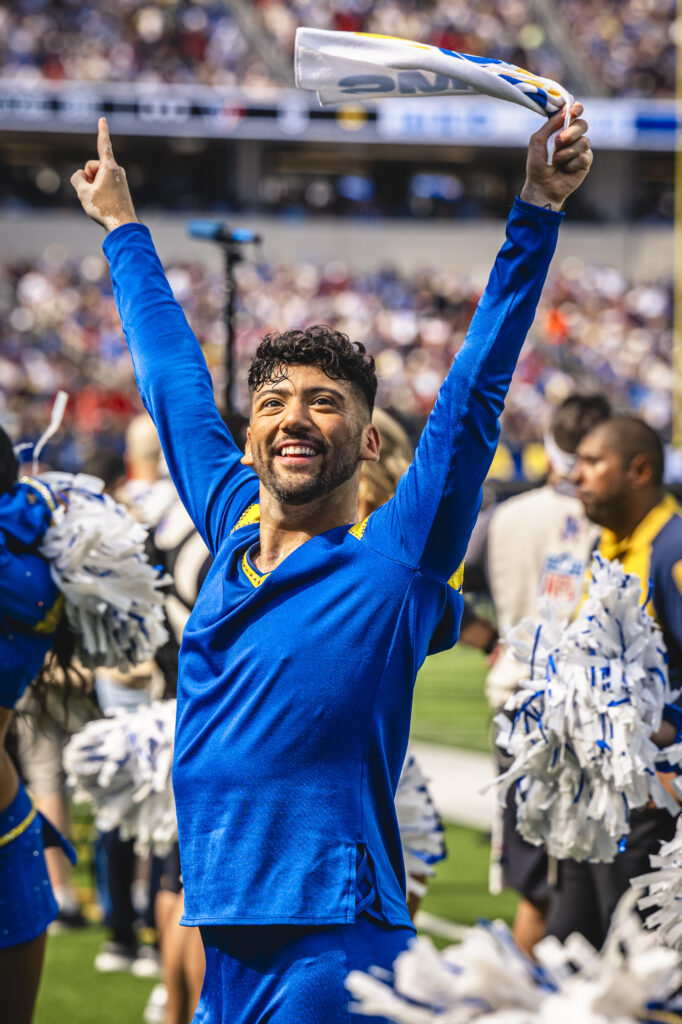 Jose Capetillo. Photo courtesy Los Angeles Rams.
He urges supporters to use their voices to uplift male cheerleaders and add positivity to the conversation. “It would be great if people would be more vocally supportive of us,” he says.
The Road Ahead
Looking toward the future of professional dance, Capetillo would like for all pro cheerleaders to be appreciated for their athleticism and craft. “A lot of people would be shocked at the amount of athleticism that actually goes into the job that we do.”
Agustin is excited about the direction the industry is taking, and he encourages aspiring non-female dancers to blaze their own paths in the dance world. “Don’t wait for permission or for someone else to break the mold. Be the first if you have to,” he says, adding: “If you love to dance and you love to perform, just trust and know that there’s a place for you.”