
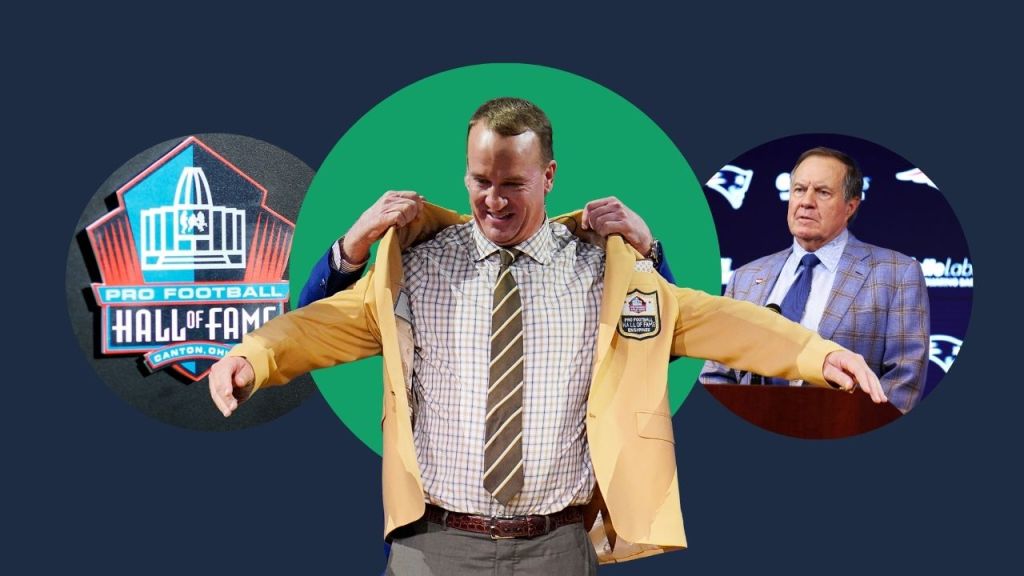
It’s been a tumultuous week for the Pro Football Hall of Fame, with widespread criticism for the 50-person panel of media members and other Hall of Famers who shockingly rejected eight-time Super Bowl–winning coach Bill Belichick in his first ballot.
Yet the organization, along with other defendants, scored a legal win Tuesday coincidentally involving the famed “gold jacket” presented to all new Hall of Fame inductees—a group that controversially won’t include Belichick in 2026 despite him having won the most Super Bowls, playoff games and divisional championships as a head coach in league history.
U.S. District Judge Donald M. Middlebrooks dismissed a trademark lawsuit brought by the estate of the man who in the 1970s sketched the original shield patch for the NFL Alumni logo, a prototype and symbolic Gold Jacket and the NFL Alumni ring. The case includes claims for trademark infringement and unfair trade practices that center on how Victor Maitland’s work was later used for substantial profits enjoyed by others.
The Florida-based judge acknowledged that Maitland, who was head of NFL Alumni and died at the age of 98 in 2019, had obtained trademark rights for the gold jacket and other Hall of Fame properties and those rights remained with him.
“At no time,” Middlebrooks explained, “did Maitland assign, sell, or otherwise transfer ownership of the various marks at issue in this case … all intellectual property rights, title, and interest in those marks remained with Maitland individually as an advisor and independent contractor.”
The judge also painted a sympathetic summary of Maitland’s role in NFL history, including his service as head of NFL Alumni and his lack of remuneration from a sport that would grow into a multibillion-dollar juggernaut.
In 1977, Maitland—who had retired from advertising and consulting—attended a meeting of NFL alums in Canton, Ohio. This was a very different era for the NFL, which was smaller in scope and less organized. Maitland agreed to help NFL Alumni, which at the time “could not afford” to pay for business and legal services to become a nationally recognized charitable organization. Maitland invested $50,000 of his money to perform a feasibility study.
“Maitland’s tenure can be adequately characterized by sacrifice in support of the organization,” Middlebrooks explained. “He spent more than one million dollars of his own money helping to revive and reinvent NFL Alumni.” Maitland also “allowed the NFL Alumni to run its national headquarters out of the NFL Alumni building without having to pay rent or reimburse him.”
Yet Middlebrooks reasoned the estate’s lawsuit suffers from major flaws.
One problem is the complaint, which also names the NFL, NFL Properties, NFL Alumni Inc. and Haggar Clothing as defendants, is a “shotgun” or “kitchen sink” pleading. This means the complaint expresses various facts and allegations of misconduct in a scattered manner without sufficiently explaining which defendants are associated with which facts and claims. The core problem with a shotgun pleading is the opposing side isn’t given adequate notice on what they allegedly did wrong and, as a result, how they can rebut the allegations.
To illustrate, Middlebrooks says he is left to “guess” which defendants are accused of wrongdoing with respect to the “Order of the Leather Helmet Award.” The complaint explains how Maitland designed and created the award in 1978, and how the award “represents the highest honor presented to those individuals and institutions who have made significant contributions to the game of football.” The complaint fails to link the award to any of the defendants’ conduct, so none of the defendants has an opportunity to defend itself.
The second problem is timing: Maitland and later his estate waited too long to pursue legal claims.
The relevant law, the Lanham Act, doesn’t contain a statute of limitations, but Middlebrooks highlighted how the equitable doctrine of laches applies in trademark disputes. This doctrine is used by defendants to argue that a plaintiff waited too long, and without a good excuse, to act and that the delay causes undue prejudice to the defendants. Here, the relevant evidence is from as far back as 49 years ago and alleged trademark misappropriation started in 1989, when the gold jacket was used for the 1989 Hall of Fame induction. The lawsuit wasn’t filed until 2025.
Middlebrooks acknowledged that Maitland had significant health issues in his later years, but the judge pointed out that doesn’t explain a gap that stretches from the 20th century to the 21st century. Also stressed by the judge is Maitland being awarded a “Lifetime Honorary Professional Member” proclamation from NFL Alumni in 2001. The announcement referenced trademarks belonging to Maitland, but no legal action was taken.
The defeat of the gold jacket lawsuit came on the same day ESPN revealed that Belichick failed to net the necessary 40 of 50 votes in his first ballot as a Hall of Famer and, thus, the 73-year-old will be denied his own gold jacket this summer.