
Jan. 28, 2026, 3:37 p.m. ET
The Tampa Bay Buccaneers don’t enter the draft with an urgent need at every offensive skill position, but that doesn’t eliminate the importance of planning for future depth or a roster emergency. Tight end depth remains thin, running back carries contractual uncertainty, and wide receiver selections would be considered a luxury draft selection rather than a necessity, but just because you have a lot of something doesn’t mean there isn’t room for more competition.
The Shrine Bowl provided an evaluation setting to identify skill players who project as realistic depth or developmental options rather than immediate contributors, aligning with Tampa Bay’s typical allocation of resources at these positions.
Tight End: Addressing a Thin Depth Chart
Tight end stands out as the clearest need among the Buccaneers’ skill positions. Beyond the top option, Tampa Bay lacks reliable in-line depth and developmental bodies capable of handling blocking responsibilities. Jack Endries and Bauer Sharp both offer frames that support early-down usage, with Endries measuring over 6-foot-4 and 240 pounds and Sharp checking in with a similar size and length. Neither profiles as a volume receiver, but both fit the mold of tight ends who can contribute as blockers while developing as secondary pass options. For a roster that values functional versatility at the position, that profile carries real value.
Running Back: Planning for Contract Uncertainty
Running back is a conditional need tied closely to Rachaad White’s contract outlook. Even if White returns, depth remains important in a league where durability and workload fluctuate quickly. Kentrel Bullock and CJ Donaldson project as physical depth backs rather than feature options. Both bring size and contact tolerance that translate to short-yardage work, pass protection responsibilities, and special teams contributions. In Tampa Bay’s case, that type of back makes sense in the late rounds or as a post-draft signing rather than a premium investment.
Need a news break? Check out the all new PLAY hub with puzzles, games and more!Wide Receiver: Luxury and Developmental Profiles
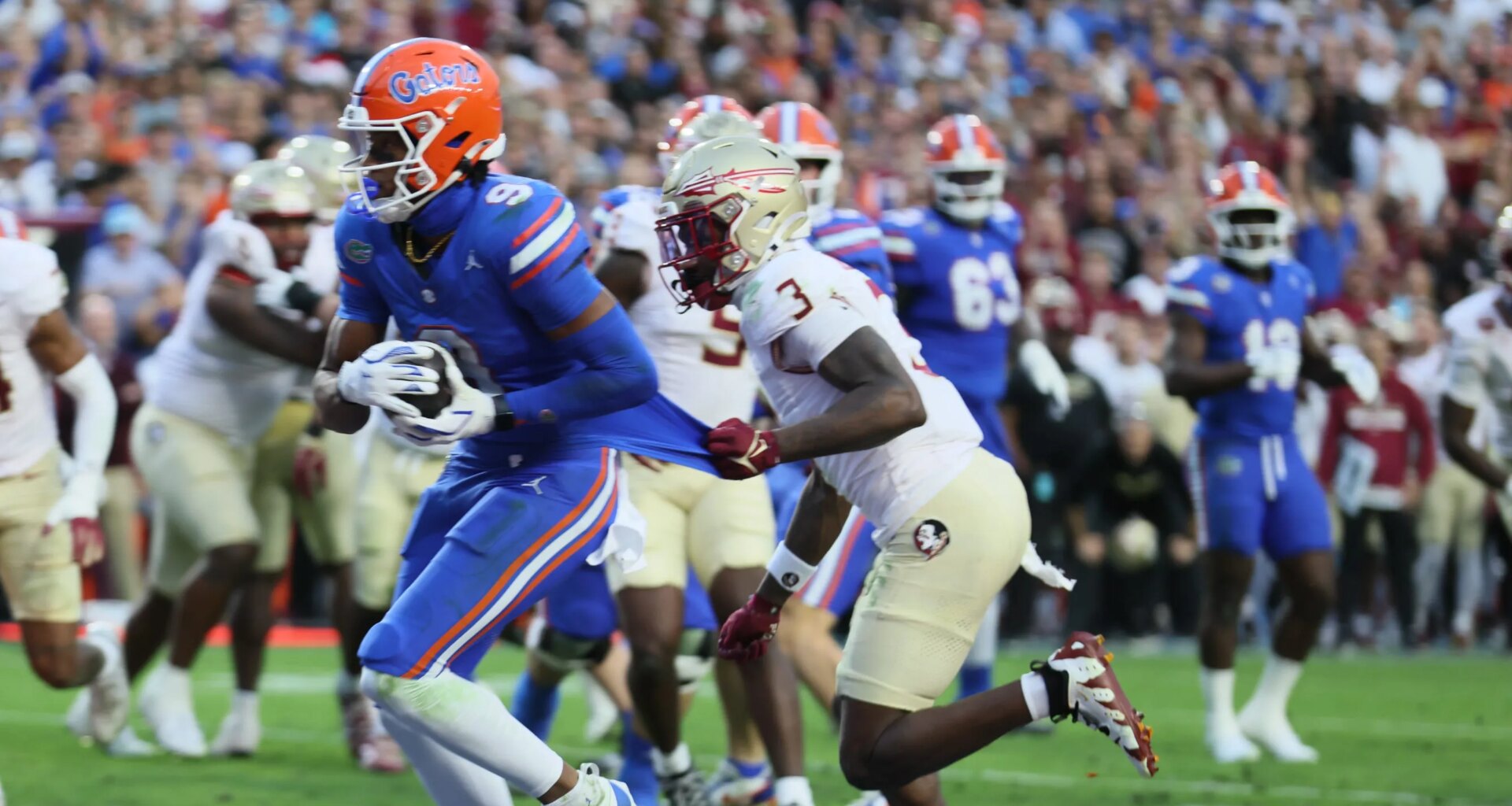
Wide receiver is not a pressing need for the Buccaneers, making any addition at the position more about long-term development than immediate usage. Players like Colbie Young, J. Michael Sturdivant, and Michael Wortham fit that mold as size-based or role-specific options. Their measurements suggest potential as boundary depth, red-zone targets, or special teams contributors, but none would be expected to challenge the current core. Framed correctly, these receivers represent low-risk developmental bets rather than answers to a roster problem.
Why the Shrine Bowl Matters for Skill DepthPlayerPosCollegeHeightWeightHandArmWingspanJack EndriesTETexas6’4”244 lbs9 5/8”31 4/8”77 3/8”Bauer SharpTELSU6’4”251 lbs9 5/8”31 2/8”76 3/8”Kentrel BullockRBSouth Alabama5’10”204 lbs10 6/8”30 6/8”74 1/8”CJ DonaldsonRBOhio State6’1”234 lbs9 4/8”32 0/8”77 5/8”Colbie YoungWRGeorgia6’3”215 lbs9 4/8”32 0/8”76 7/8”J. Michael SturdivantWRFlorida6’2”209 lbs9 3/8”32 7/8”78 2/8”Michael WorthamWRMontana5’8”182 lbs9 6/8”28 4/8”70 5/8”
The Shrine Bowl environment emphasizes role clarity, adaptability, and baseline functionality rather than production. For Tampa Bay, that context helps identify skill players capable of filling specific depth roles without forcing offensive changes. At tight end and running back, especially, these profiles align with realistic roster construction rather than speculative upside chasing. Players drafted later in the rookie draft may be asked to play special teams roles and contribute in practice in preparation for each week’s game.