
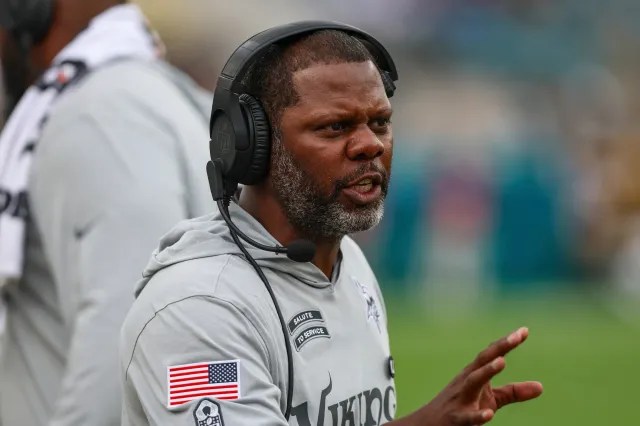
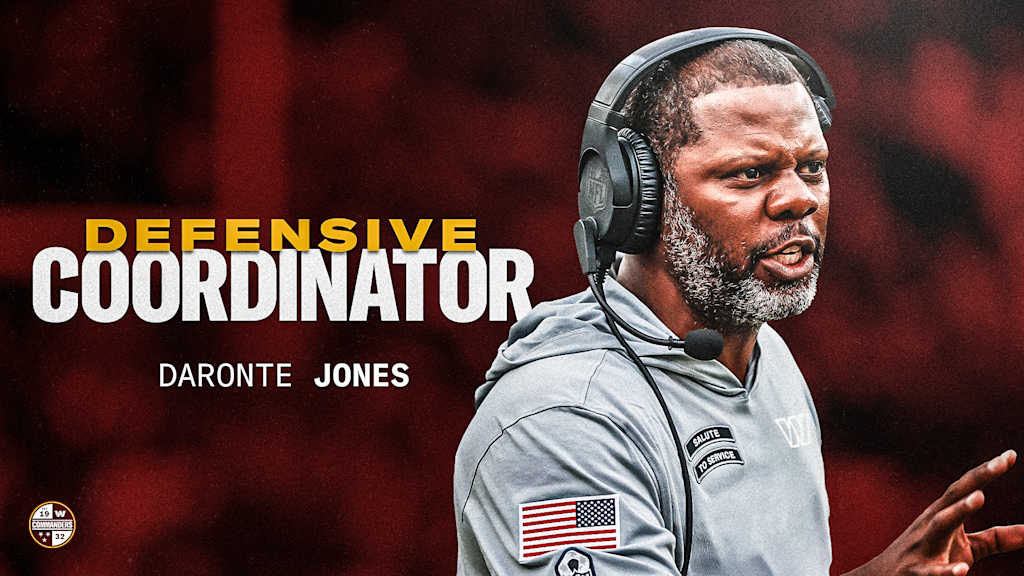
Daronte Jones, a Morgan State University alumnus, has been named the new defensive coordinator of the Washington Commanders, marking a meaningful milestone for both the franchise and the broader HBCU football community. The move places Jones among a select group of HBCU products holding coordinator-level roles in the NFL, reinforcing how historically Black colleges and universities continue to shape leadership at the highest levels of professional football.
Jones’s hiring comes as Washington looks to reset its defensive identity after a season defined by inconsistency and missed expectations. The organization’s decision signals a shift toward clearer communication, stronger teaching, and a more cohesive defensive approach—areas that often separate good units from great ones, regardless of star power.
A Morgan State Foundation That Shaped His Path
Before reaching the NFL’s coordinator ranks, Jones’s football journey ran through Morgan State, where he played defensive back after transferring from Temple. While injuries shortened his playing career, Morgan State proved pivotal in shaping his long-term trajectory in the game. The Bears program has historically leaned on preparation, accountability, and resilience—traits that tend to translate well to coaching, where durability and adaptability matter just as much as schematic knowledge.
His rise also adds to the broader narrative highlighted in HBCU Buzz’s Morgan State coverage, where alumni impact isn’t limited to who makes a roster—it’s who evolves into leadership and stays in the sport long enough to shape it. That’s the part that gets overlooked in mainstream football storytelling: HBCUs don’t just produce talent; they produce builders who learn how to earn trust, develop people, and lead through change.
Years of Coaching That Built a Coordinator
Jones’s path to this opportunity was not a straight line, and that’s precisely what makes his hiring instructive. He built his résumé across multiple levels of football, gaining exposure to different athlete profiles, program cultures, and scheme families. That breadth is often where the best teachers come from. When you’ve coached in environments with fewer resources, less margin for error, and more responsibility on communication, you tend to develop a practical coaching language players can actually use on Sundays.
He later gained high-profile experience as a college defensive coordinator, a role that typically demands fast decisions, player development, and the ability to adjust week to week. That experience matters because NFL coordinator work isn’t just drawing up a call sheet—it’s managing a system, diagnosing problems quickly, and building clarity for players who have to execute under pressure with minimal hesitation.
Jones then carried that development back into the professional ranks, working with NFL position groups and contributing to defensive game planning. That combination—coordinator responsibility, plus NFL teaching experience—helps explain why Washington viewed him as ready for the next step.
https://www.instagram.com/p/DT_vV6sEQhp
Why Washington Turned to Daronte Jones
Washington’s defense needed more than tweaks. It needed a real identity—one players can repeat, believe in, and execute consistently. A coordinator’s job, especially in year one, is as much about eliminating confusion as it is about adding complexity. For a defense that has struggled with cohesion, the most valuable trait is often clarity: players knowing where to be, why they’re there, and what the defense is trying to take away.
That’s where Jones’s background becomes an asset. Coaches with deep experience in the secondary tend to obsess over communication and leverage, because small mistakes become explosive plays. If Jones brings a detail-oriented approach that prioritizes assignment integrity while still creating opportunities for pressure and takeaways, Washington’s defense can improve even before the roster changes.
The hiring was reported by NFL.com, outlining Jones’s rise from Vikings assistant to the Commanders’ new defensive leader.
The HBCU Impact: Beyond Representation
For the HBCU community, Jones’s appointment resonates beyond the headline. It’s another reminder that excellence doesn’t always emerge from the most advertised pipelines. His career arc reflects how HBCUs continue to produce leaders whose influence shows up not only on the field, but in the rooms where strategy is built and standards are set.
HBCU programs often develop players in environments where grit and adaptability are non-negotiable. That reality can produce coaches who are unusually comfortable teaching through adversity, building buy-in, and managing transition. Those traits matter in the NFL, where the margin between “competitive” and “confused” is razor thin.
Jones’s promotion also creates a visibility moment for Morgan State: not just as a place that develops athletes, but as a place that helped shape someone now trusted to run an NFL defense. That kind of representation is powerful because it expands what “HBCU success” looks like—and it widens the imagination for what current players can pursue beyond playing careers.
A Milestone That Carries Forward
As Jones steps into this role, the spotlight isn’t only on how Washington performs—it’s also on what his leadership signals. His story is a blueprint for longevity: keep building, keep learning, and let your work travel with you. For Morgan State students, alumni, and HBCU athletes across the country, this hire is a tangible reminder that HBCU roots can lead to decision-making roles at the highest level of football.
If Washington’s defense finds its footing under Jones, the impact will be measurable on Sundays. But the bigger message is already clear: HBCU pathways don’t cap ambition—they sharpen it.
Washington’s Next Step
Washington’s defensive rebuild won’t be solved overnight, but coordinator hires matter because they define language, standards, and identity. Jones has the chance to install a system that players can own, and to bring structure to a unit that needs consistency. As the Commanders move into the next phase—personnel decisions, offseason development, and scheme installation—Jones will be one of the central figures in determining whether this defense becomes reliable or remains volatile.
For the HBCU community, the win is already visible: another Morgan State product, another HBCU story, another leadership seat at the highest table.