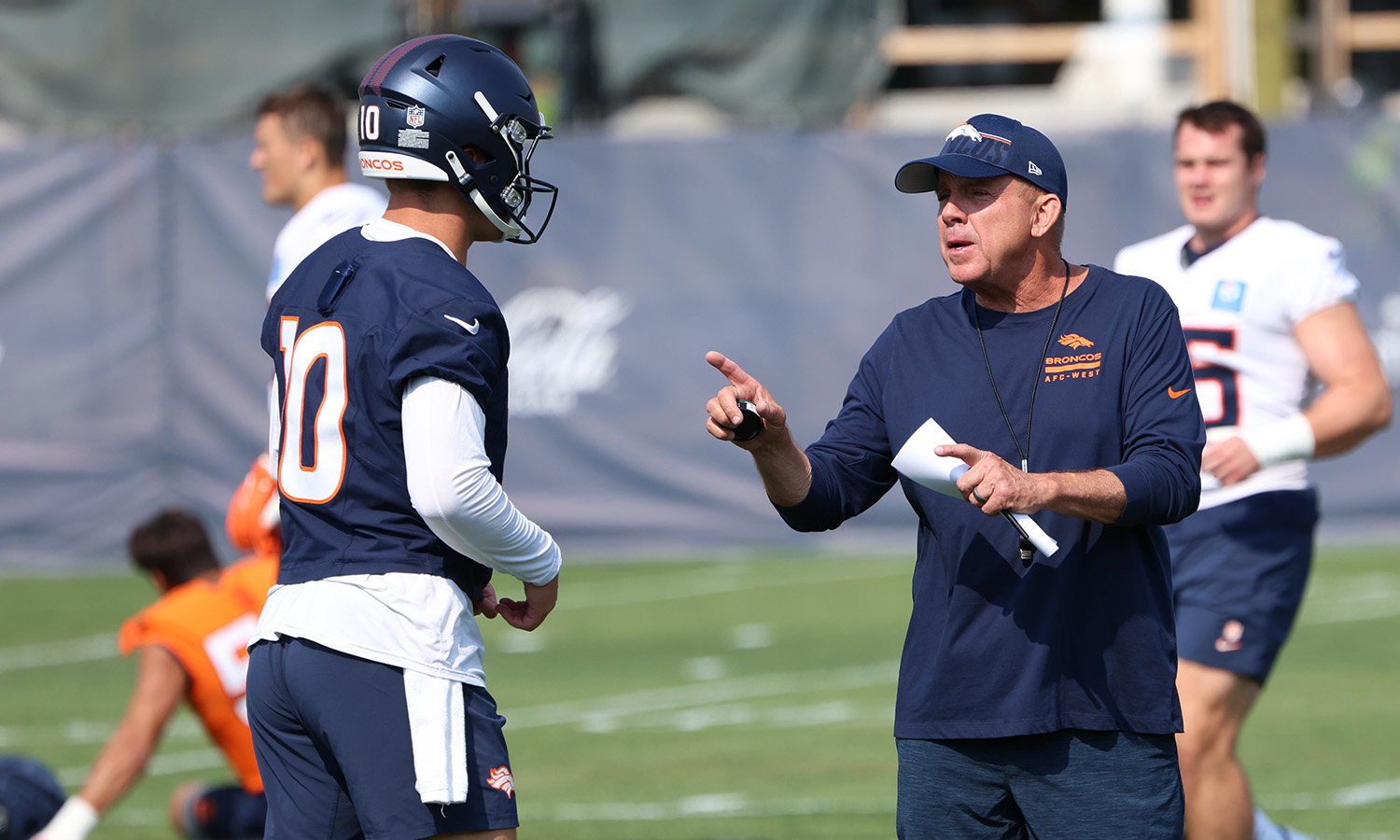
Broncos fans shouldn’t worry about the back-and-forth over Bo Nix’s ankle injury regarding comments from the quarterback and Sean Payton.
Did people forget about Nix yelling at the coach during a 2024 game against the Las Vegas Raiders? There is no “there” there, regardless of what people would say to try to stoke anger.
This will pass.
But the numbers from the season that just concluded? Those stick. That’s your permanent record. Remember that from your school days? If you fouled up, that was the threat: “It’s going in your permanent record.”
There’s plenty to love for the Broncos that goes into the all-time ledger: A handful of first- and second-team All-Pros, a franchise-record-tying 14 regular-season wins, a streak of 11-consecutive one-score wins that didn’t end until last week’s snow-strangled AFC Championship Game loss.
But it’s those close wins that provide the first of the red flags heading into 2025. Because most teams with so many narrow victories find the going far rougher in the subsequent campaign.
CLOSE WINS OFTEN BECOME NARROW LOSSES THE NEXT YEAR
In 2025, the Broncos became the 18th team in NFL history to win at least nine games by eight points or fewer. They also matched the 2022 Minnesota Vikings and the 2024 Kansas City Chiefs for the most one-score wins in a single regular season in NFL history, with 11.
But just two of the previous 17 improved their regular-season record the following campaign. only two — Washington from 1986 to 1987 and Indianapolis from 2012 to 2013 — advanced further in the postseason the year after winning so many close games.
On average, teams that won at least nine games by eight points or fewer saw their win total drop by 3.4 games; that rate has been even higher since 2016, at 3.9 games per year.
DEFENSES CAN VARY MASSIVELY FROM YEAR TO YEAR
The Broncos finished the season No. 2 in total defense behind the Houston Texans. But that doesn’t mean you should automatically expect them to be there next year.
Yes, the personnel should remain much the same, barring injuries. Nine of their 12 primary players — including nickel cornerback Ja’Quan McMillian — are under contract for 2026, and McMillian is a restricted free agent. There’s no reason why he shouldn’t return.
But it’s hard to keep a top-flight defense at that level from year to year. Since 2015, teams that finished first or second in total defense dropped an average of 9.1 spots the following season.
It’s been even worse in recent years; since 2019, the average drop is 11.9 spots, and just two of those defenses — the 2019 Buffalo Bills and the 2021 San Francisco 49ers — finished the next season in the NFL’s top five. Seven of the 12 fell out of the NFL’s top 10 entirely.
Vance Joseph will have his work cut out for him to maintain the Broncos defense at its level, even with a core of standouts returning. He will need to remain one step ahead of a roster of foes that includes a Buffalo side with a staff featuring two coordinators who know exactly what the Broncos do best.
WHAT THE BRONCOS’ POINT DIFFERENTIAL REVEALS
With a plus-90 point differential, the Broncos became the 11th team in the Super Bowl era to win at least 13 games with a point differential of fewer than 110 points over the course of a season.
Six of the previous 10 followed up by missing the playoffs the next year. Just two matched their previous record; none surpassed it (which is admittedly difficult). The average year-to-year drop was 4.4 games.
With the headwinds of regression working against them, the Broncos would probably do quite well to win 12 against a bruising schedule that will include both Super Bowl participants and 10 games overall against teams that were in this year’s postseason.
Given that their AFC West rivals also face a similarly demanding slate featuring the entire NFC West and AFC East — representing five playoff teams — there’s a good chance that a dozen wins would be good enough to earn at least one home game next January. That — and perhaps not the No. 1 seed — might be a realistic expectation for Broncos Country.
But matching the 14-win tally would require being a decided statistical outlier.