
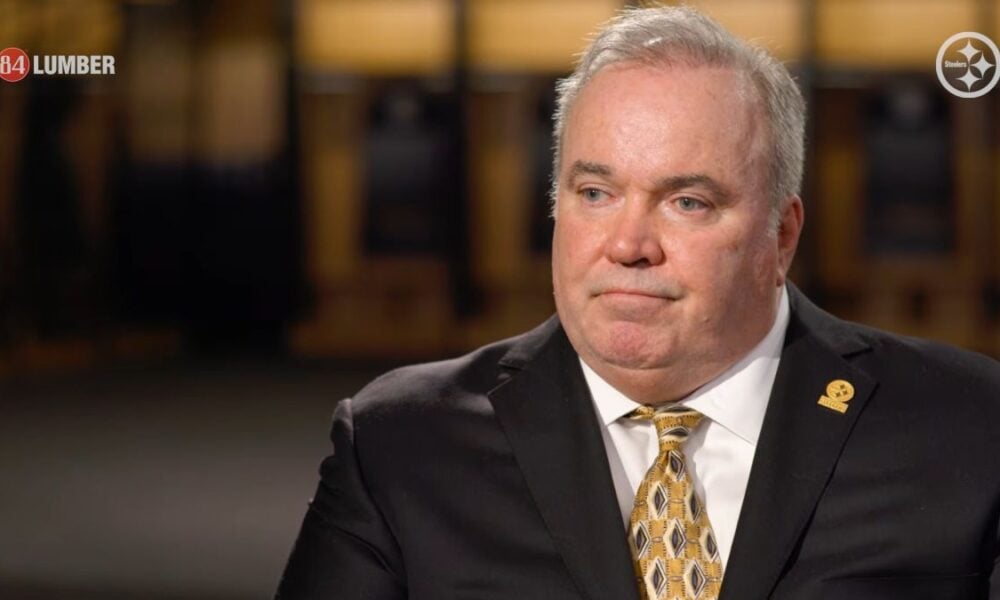
“The offense needs to be built to make the quarterback successful.”
Those are words Mike McCarthy uttered during last Tuesday’s press conference after he was introduced as the 17th head coach in Pittsburgh Steelers history. It’s hardly the first time he’s made that statement. In fact, it’s reflective of his entire offensive philosophy. One he’s expressed time and time again. Including at a coaching clinic in 2006, shortly after being hired by the Green Bay Packers.
Over the last few days, I’ve studied the clinic and key coaching points from it and will outline the main takeaways below.
Clearly, the game has changed since 2006. A lot. For one, much of this clinic focused on QBs taking drops under center, both reflective of the time and hallmark of the West Coast system. Shotgun rates have spiked since then. The highest under-center rate during McCarthy’s Dallas Cowboys tenure was just 25.5 percent. But it’s still the core and something most college quarterbacks, who almost exclusively work from shotgun, must learn.
Even knowing that change in times, there’s still core components that hold true today.
The first point McCarthy made to the room focused on him as much as it did the quarterback.
“If you’re going to call it, you need to install it,” he told the throng of coaches during the clinic.
Meaning, if you’re the play caller, you have to be the voice leading that week of practice’s install. McCarthy confirmed he will handle gameday play-calling duties in Pittsburgh so expect him to be in the quarterback’s ear all week. Not the offensive coordinator or an assistant coach.
This was a philosophy McCarthy admitted he strayed away from late in his Green Bay career. In a 2019 interview with Peter King, he admitted he began handing practice play-call duties to his staff. A noble idea, as he put it, to help their development and get them comfortable in the role. But it detached McCarthy and the quarterback from the process and produced worse results.
It’s not completely clear if McCarthy remedied that during his five years in Dallas, but it’s reasonable to believe he righted that wrong. And will continue heeding his own advice in Pittsburgh.
“Quarterback position is the most fundamentally neglected in football,” McCarthy said.
He added that isn’t just true at the high school level. Colleges and the NFL don’t teach the position enough, he argued. Given the constraints on practice and offseason work under the league’s CBAs, that adage remains even truer.
Much of the beginning of his clinic focused on a basic five-step drop from under center. A sign of the times that isn’t as relevant today but it’s a building block of how McCarthy views footwork. He broke down the purpose of each step under three main umbrellas: getting away from center, coming under control, and getting to a landmark to establish the protection (if a quarterback drops too deep, his tackle isn’t setting properly and the rush will win).
Five-Step Drop
Steps 1 & 2: Punch Step
Step 3: Control Step
Step 4: Dig Step
Step 5: Plant
“Do all your work on the front end of your drop,” McCarthy instructs his quarterbacks on the “punch step,” the first two steps to get away from center and gain as much depth as possible. That prevents a guard or center stepping on the quarterback’s foot and helps speed up the drop.
On the third “control” step, the quarterback’s body starts getting under control utilizing a “heel strike.” Level shoulders are key. Don’t let the front shoulder get too high. The quarterback can’t be leaning back.
Fourth step is the “dig” step. McCarthy showed a clip of former Green Bay Packers quarterback Matt Hasselbeck executing these two perfectly. The third step with the “heel to toe” strike that creates a long step to the fourth “dig” step. Finally, the fifth “plant” step to bring the quarterback forward.
On a five-step drop, McCarthy wants a 7-yard drop. Knowing quarterbacks speed up in a game, the practice landmark is different.
“You want 7 in a game? You better get 8 in practice.”
After reaching the top of the drop, the quarterback takes a target step up into the pocket. Front foot pointed to target but the quarterback can’t “overstride” with too wide a step. Good weight distribution is important.
“Rhythm motion critical to throwing the football accurately.”
So are loose hips. McCarthy focused heavily on warming up the groin before practice to keep quarterbacks loose given how often they’ll be working on their drops. A tight-hipped quarterback is easy to spot. McCarthy reps drop backs on a yard line. The 45 for example. He films the drop from every conceivable angle to understand where a quarterback works – and so the quarterback can see it himself instead of just being told.
He wants quarterbacks to drop back straight down the line. Those with tight hips will fall off that line. McCarthy showed a clip of a young Aaron Rodgers. Watch his right foot swing too far around on his initial drop, taking him off-line.
Ball carriage is key to McCarthy. The quarterback should hold the ball “between the nipples” was his coaching point. Two hands on the ball all the time. Though I think few teach it in the modern day anyway, McCarthy isn’t a proponent of quarterbacks carrying the ball high up on the ear. Some coaches liked it because it could create a quicker release. But McCarthy thinks quarterbacks must also generate power.
If there’s one obvious change McCarthy made to Aaron Rodgers’ mechanics, it’s this. Check out how high Rodgers held the ball at Cal under Jeff Tedford.
Versus how Rodgers carried the ball in 2008, his first year starting. Much lower.
Quarterbacks must keep their elbows in and have a relaxed posture.
The “draw” phrase is the beginning of the throwing motion. The goal is to get to the release point as quickly as possible. McCarthy doesn’t want a “drop in the draw,” referencing Rich Gannon’s elongated release. Here’s an example of the ball dropping at the start of his motion (I’ve slowed down the clip to make it easier to see).
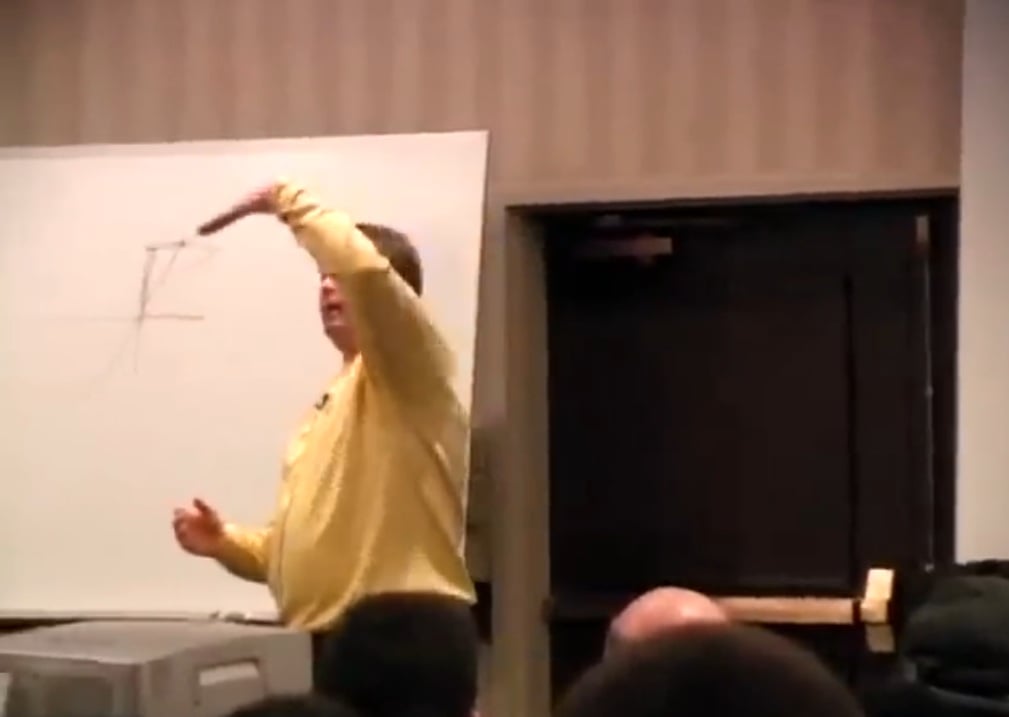
Ideally, McCarthy wants the ball thrown on a 45-degree angle of its axis. He illustrated that on a whiteboard and through his own motion.
However, McCarthy seems less dogmatic about the release. He generally won’t mess with it much if it works. He prefers quarterbacks not to throw side arm or over the top, but it isn’t a major sticking point.
“Gotta be sensitive on throwing motions,” he later said.
What is an important point is not opening the wrist out on the quarterback’s windup. The wrist should be facing up. That prevents a longer release and exposure to the ball getting knocked out by a would-be pass rusher. McCarthy demonstrated the difference. The first is wrong. The second is right.
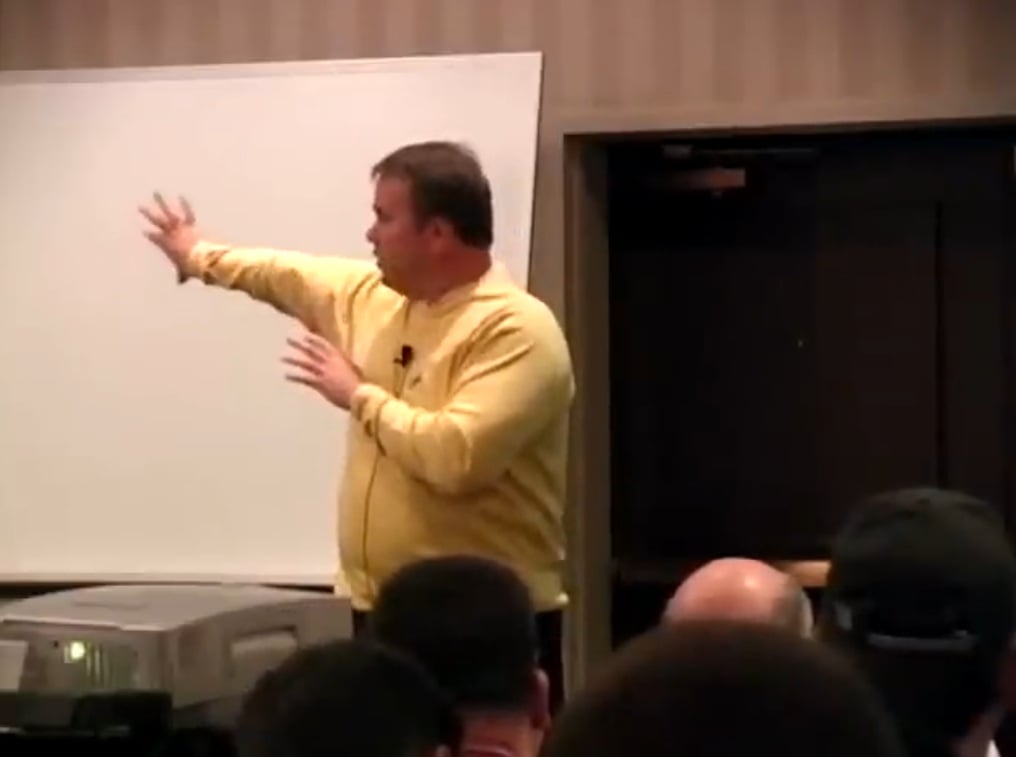
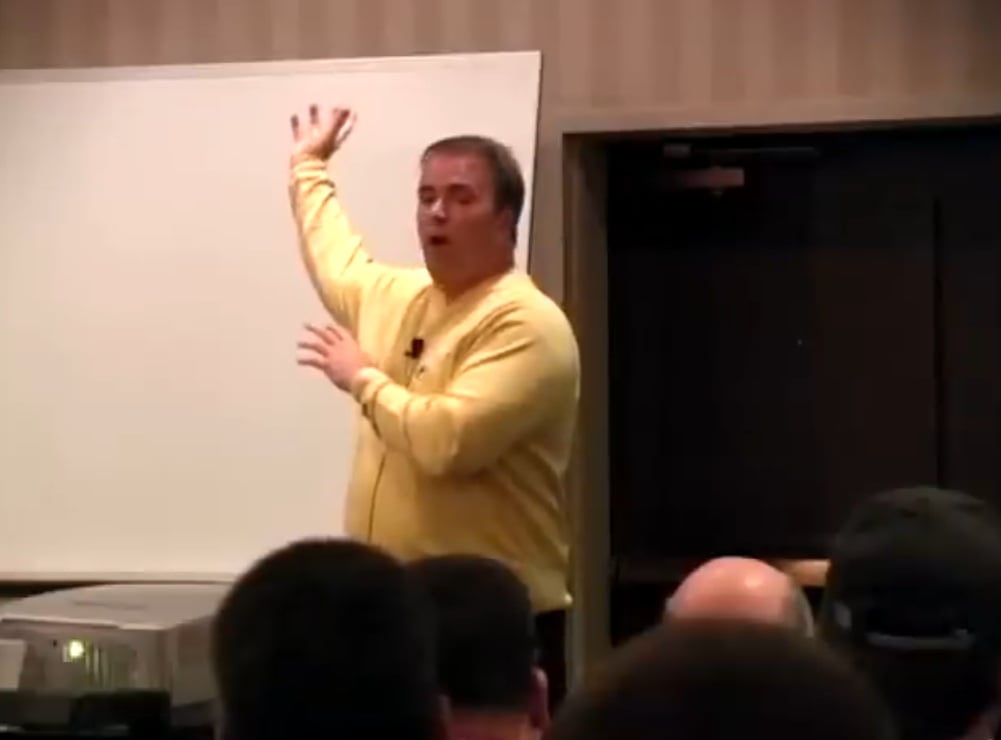
Another key point. The front/off hand (left hand for a right-handed quarterback) should stay in and tight. McCarthy made a funny quip about coaches who taught quarterbacks to point at their target with the front/off hand.
“The guy who said point to your target outta be shot,” he said.
Keeping the front hand in and tight creates power while also helping prevent over rotation. “Throw downhill” is the mantra for the follow through on the throwing hand. Down and diagonal with the throwing arm, not across. Or, again, the hips will over rotate. The front shoulder must stay level, which means the arm can’t rise up.
He mentioned Tom Brady, Brett Favre, and Joe Montana as power throwers with power generated “from the pull” of their left side. Here’s a good view of Alex Smith executing it. Left arm in right. Right arm with the correct path on the follow through.
While some may think the back foot leaving on the follow through is a sign of an unstable base, McCarthy sees it the other way. A sign that the quarterback is getting his hips and shoulders through the throw.
As mentioned above, McCarthy films a quarterback’s drop and release from several angles. He got as specific as how high the camera should sit from the side angle – 10 feet in the air. McCarthy then creates a checklist of technical flaws. But he knows Rome wasn’t built in a day. He shared the story of once diagnosing an unnamed quarterback with 10 problems. His goal that year was to fix five of them.
“There are major corrections then there are minor corrections. Pick the major ones,” he said.
Footwork is the biggest key for McCarthy. That’s what he often spends the most time on.
“Everything you do is footwork,” he said
McCarthy quipped he changed the footwork of every quarterback he’s ever worked with. Except Brett Favre. There’s always an exception.
Though slightly undefined, the natural movement of a passer can tell McCarthy plenty about his future odds.
“If a guy has a lot of rhythm in his body, the same stroke all the time, you got a chance to be accurate,” he said, “That’s something we look for.”
McCarthy noted the need for a quarterback to work from outside the move “five or six” plays a game. A number that’s only grown since. But mobility, even if it hasn’t been obvious in all his quarterbacks, is a bigger trait he desires than you might think. He later shared scramble drills they do, working on throwing the ball from every conceivable platform. Some coaches teach quarterbacks rolling to their left to only throw off their left foot. McCarthy knows that might sound good in practice but in a game, isn’t always feasible.
“I tell them when you’re running to your left, you better worry about the sonbitch behind you,” he said. “You better get the ball out.”
No matter the direction, McCarthy’s quarterbacks practice throwing off their left and right foot.
He later said, “Throwaways are okay, sacks are not.”
He also doesn’t want quarterbacks to take unnecessary hits along the sideline. He specifically worked on sliding drills and would put a quarterback on notice if he didn’t follow through during games.
“You got a guy who takes hits on the sideline, make him go out on Wednesday and do this drill in front of all his teammates,” McCarthy said.
Here’s an example of it from his QB school.
McCarthy is a fan of quarterback keepers, bootlegs that moves the launch point to either direction. His three tenets are “speed, depth, and control.” Speed to get away from the pocket, getting proper depth from the contain player on the keeper side (who is often left unblocked) and control to make a sound throw.
In a brief comment about throwing go/vertical routes, the path of the ball is important. The ball should dive down into the receiver’s hands inside of being flatter. If the latter, the defensive back has a greater chance to find and play the ball. Here’s what McCarthy wants.
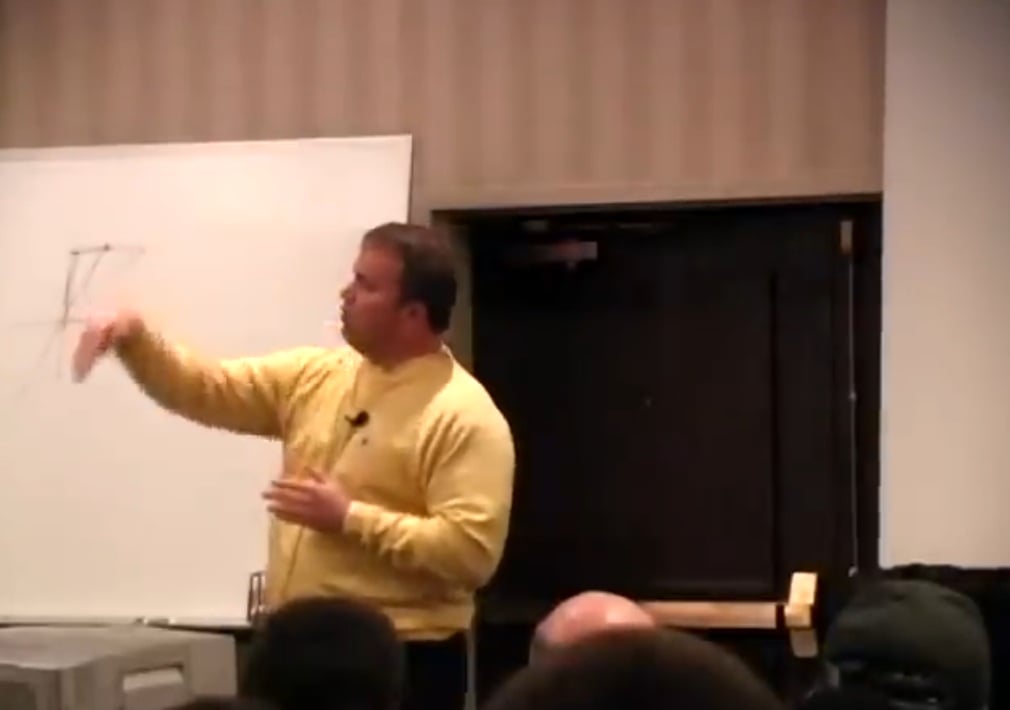
And what he doesn’t.
McCarthy showed several clips of drills from his quarterback school, something for which he’s become famous. Many “graduates” still reference it today. Aaron Rodgers and Tom Arth did throughout 2025. Hasselbeck mentioned it after McCarthy’s hire.
The “school” doesn’t seem to exist today. CBA restrictions on offseason work have made it difficult. But McCarthy noted in a recent KDKA interview that he aims to have a good relationship with the personal quarterback coaches to make sure everyone is on the same page. That is one real concern. A private coach teaching one thing counter to how the team does it.
Even without the QB school, it’s fun to watch McCarthy put big-time names through simple warmup drills. Like jumping rope. No coaching revelation here. Just a way to warm up the body. McCarthy also noted he liked to make it competitive to see who could have the most jumps in 20 seconds. The quarterback position, as he said, is filled with competitive people.
McCarthy stressed the need to keep drilling this foundation during the season.
“What do you do, you practice plays – that’s a bad habit,” he said of some teams that spend the regular season focusing on the game plan and forgetting about technique.
His quarterbacks will end practice throwing 10 go balls down each sideline. McCarthy also noted dedicated time to individual drills each practice, a critical time to refresh and re-stress the core of the position.
Simplicity can be good. McCarthy shared the story of working with famous offensive line coach Alex Gibbs while with the Kansas City Chiefs in 1993 and 1994. He marveled at Gibbs repping the same things each day instead of trying to reinvent the wheel.
“Volume looks good and sounds good. Doesn’t win football games…don’t get caught up in the plays,” McCarthy said.
McCarthy is in favor of giving his quarterback freedom at the line of scrimmage with audibles and checks. Quarterbacks should also have an understanding of run scheme, especially on calls that involve difficult blocks for the center. For example, if the center has a tough reach in regard to the d-tackle, the quarterback might adjust and ride the center a little longer so the exchange remains fluid.
There are four types of run calls.
1. “Run it” runs – McCarthy didn’t offer a clear definition for this.
2. “Spot it” runs – Offense will run the ball no matter what the defensive look is.
3. Adjustment runs – Can flip the side.
4. Optional runs – Run direction based on box count/side.
He didn’t go into great detail here, but I wanted to add.
McCarthy spoke a little more about how a quarterback should read a defense, a subject that became a hot topic late in 2025. There’s three ways a quarterback can read.
1. Pure progression – going through first, second, third, and checkdown reads no matter the coverage or look.
2. Progression with option – same as above but with the option to throw to a favorable coverage based on pre-snap look. Usually a 1v1 matchup backside.
3. PSL (pre-snap look) – based on shell coverage. Against two deep, quarterbacks work strong side, against three deep, work away from the safety rotation, and play matchups against man.
McCarthy tries to keep it simple. There are only three base coverages: two-deep shells, three-deep shells, and empty. There are also just man and zone. But given how multiple and creative defenses have gotten over the past 20 years, his mindset may have since shifted.
In his system, the center makes the initial line call. Quarterbacks are instructed to know the weakness of “pressure point” of every protection and can make adjustments if needed because he has the best “chair” to see the defense.
“We put more onus on the backs than most people do,” McCarthy said of his protection demands.
While McCarthy spent over an hour outlining how he teaches a quarterback, he understands there’s value in just getting the job done on the field. He shared the story of teaching Billy Joe Tolliver during one 7v7 session. Tolliver missed a wide-open receiver downfield. Discussing the play afterwards, Tolliver cited bad technique on his fifth step as the reason why. McCarthy shut that down.
“I said, ‘Bullshit fifth step. Guy’s wide open. I don’t care if you throw with your head.’ That was a lesson for me. I was overcoaching.”
There’s a line between teaching and letting things come naturally. McCarthy’s goal is to hope it’s repped enough it becomes natural and once on the field, a combination of nature (born talent) and nurture (what’s taught) wins out.
Finally, McCarthy fielded questions about the upcoming 2006 draft class. He offered admitted politician praise to all of them. Vince Young’s special athleticism. Jay Cutler’s limitless upside. Matt Leinart’s polish.
He also shared thoughts on his new quarterback – Aaron Rodgers.
“I think Aaron Rodgers has tremendous upside. Played two years at Cal Berkley. His strength, I think, is his ball accuracy and [his] strength. He’s a very good decision maker. If you watch him play the game, he doesn’t go outside the box too often. He’s not out drifting or trying to hit the backside post and things like that. I think the kid has a very bright future.”
McCarthy didn’t know how right he was. He’ll hope for the same success with his next quarterback. It is, after all, the ultimate goal.