
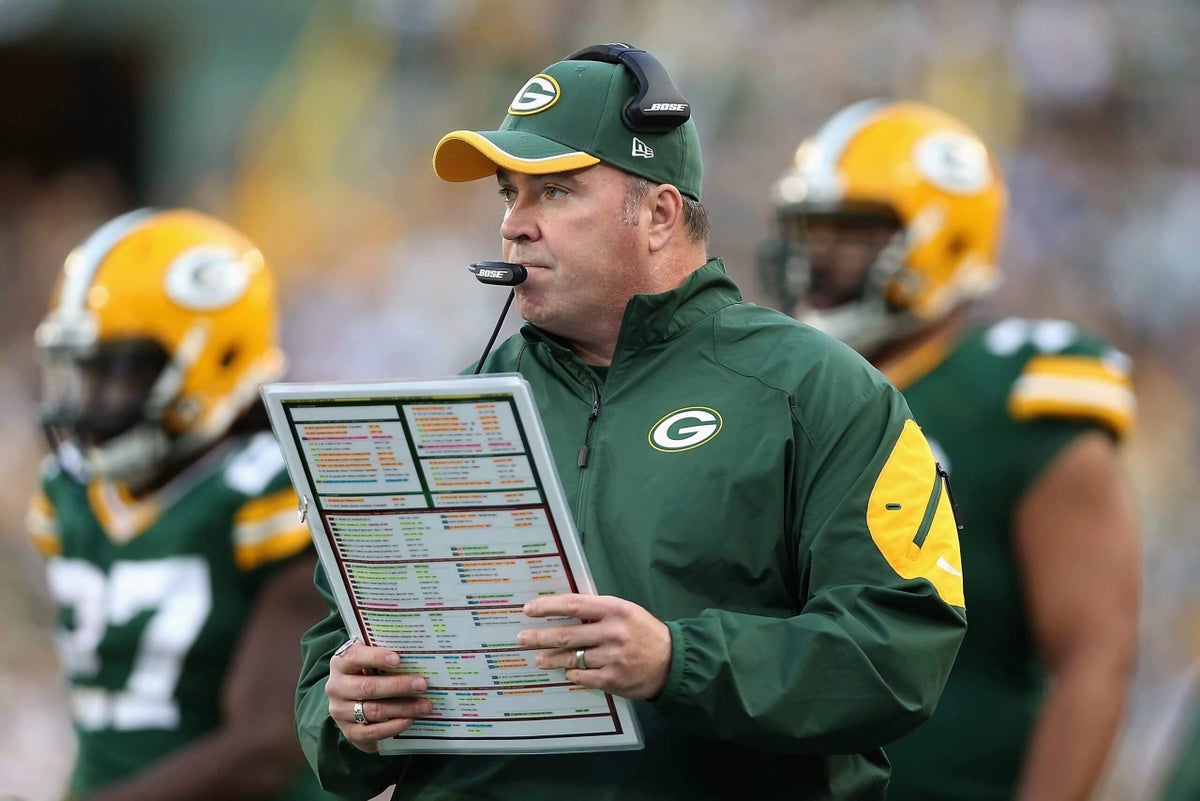
The pages of the playbook flapped in the wind with each passing car, turning the future head coach working in that Western Pennsylvania toll booth into a West Coast offensive “believer.”
It was 1989, and Mike McCarthy, just two years out of college, landed his first Division I coaching job with his hometown Pittsburgh Panthers. As a graduate assistant on the offensive side, he worked directly under offensive coordinator and quarterbacks coach Paul Hackett — a serendipitous assignment that would shape McCarthy’s philosophy for decades to come. See, from 1983 to 1985, Hackett served as the quarterbacks and wide receivers coach for the San Francisco 49ers, a key assistant and a direct disciple of Bill Walsh, the man credited with developing what’s now known as the “West Coast” offense.
Working nights in the toll booth, McCarthy studied the playbook that was predicated upon many of the same concepts that helped Hackett hoist the Lombardi Trophy alongside Joe Montana. It was there that he began to embrace the philosophy. Short, high-percentage throws. Timing and precision. Ball control. Stress the defense horizontally. Get the ball out of the QB’s hand and into the receivers’ hands to create yards after the catch.
“Paul Hackett was my mentor,” McCarthy said last week when he was introduced as the Steelers’ next head coach. “Paul taught me the quarterback position.”
When Hackett took a step in his career, McCarthy often followed. Hackett earned a promotion to become Pitt’s head coach ahead of the 1989 season. A few years later, he promoted McCarthy to receivers coach. When Hackett took a job as the Chiefs’ offensive coordinator in 1993, he brought his mentee with him (and recruited Montana to join them). Year-by-year, McCarthy climbed the ladder, becoming the QB coach of the Chiefs (1995 to 1998) and eventually holding the same role for the Packers (1999) alongside Brett Favre.
By 2000, McCarthy was ready to lead his own offense and accepted a job as the New Orleans Saints’ offensive coordinator. A decade after studying Hackett’s philosophy in the toll booth, he handed out his own playbook. (That document is now widely available online.) While NFL schematics and McCarthy’s approach have evolved, many of the staple concepts have endured, from Walsh to Hackett to McCarthy and throughout all levels of football. (Don’t worry. We’re not revealing any secrets. In fact, it’s the opposite: This piece, in part, illustrates how ideas from decades ago remain part of the modern passing game on Fridays, Saturdays and Sundays, even as they are updated and evolved.)
For 18 years as an NFL head coach, McCarthy leaned on these principles to produce offenses that finished top-10 in scoring 12 times, including top-five eight times. That resume is a significant reason the Steelers pivoted from their blueprint of young, defensive-minded assistants to hire a 62-year-old with a reputation for high-scoring offenses and elite-level quarterbacks. To get a sense of what McCarthy’s offense might look like in Pittsburgh, what better place to start than with a few of the pages from his old Saints playbook?
The 2004 Saints playbook is a 146-page document full of formations, personnel groupings, alignments, shifts, motions, run plays, pass plays, protections, audibles and more. Going through every play, detail and nugget of jargon would be impossible. But in an effort to explain McCarthy’s approach, we’ll focus on some very basic, staple concepts. This page is a good place to start, as it features two of the most common concepts within the same play.
On the right: Dragon.
On the left: Lion.
(Just worry about the Dragon and Lion parts of the play call. The rest explains the personnel grouping (Tiger), formation, pass protection and motions. We’re just focusing on the route concepts.)
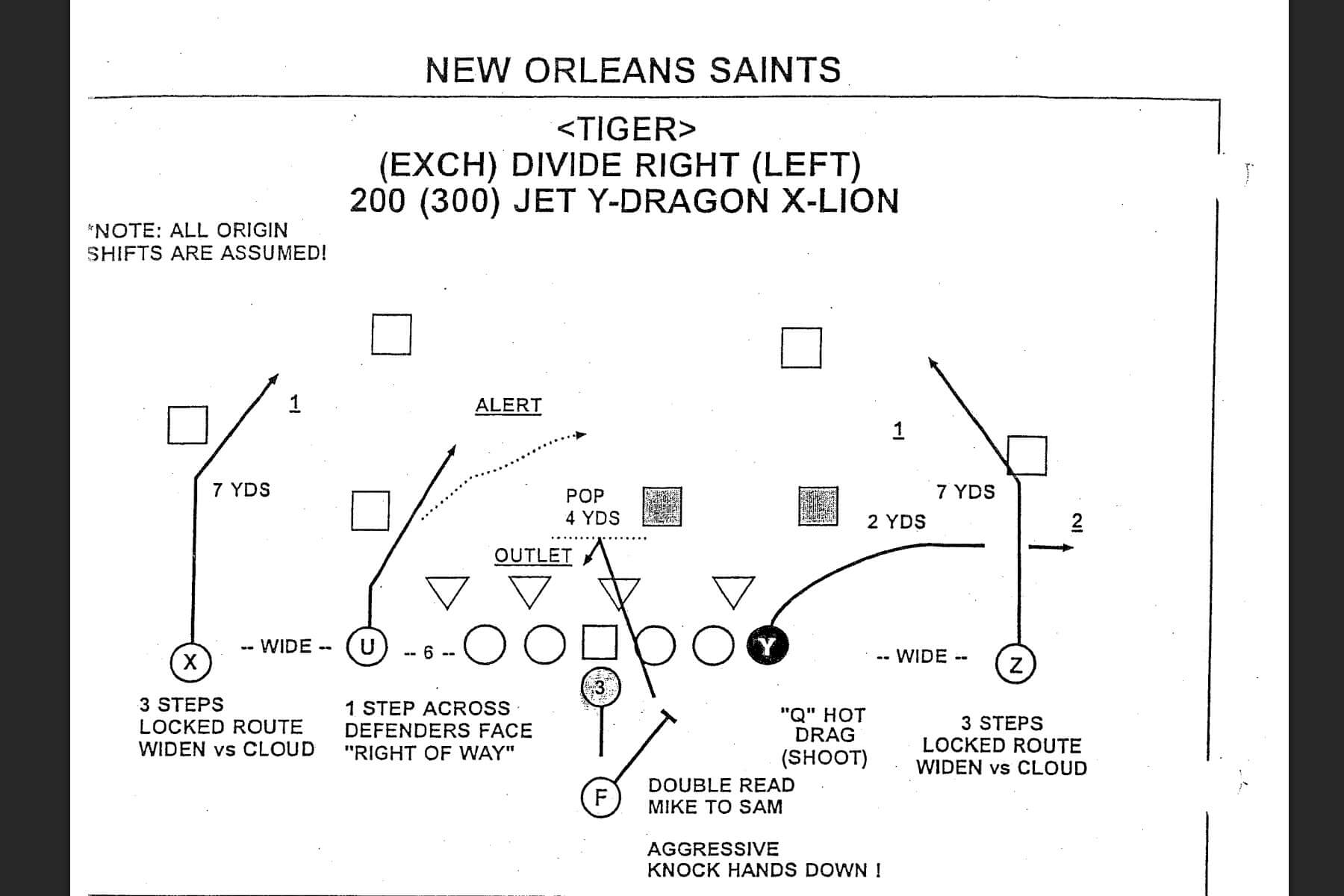
Dragon (Slant/ flat) — The outside receiver (labeled Z) runs a slant. The inside receiver, often a tight end, (labeled Y) runs a flat route. The play attacks the flat defender and is especially effective against Cover 3, a three-deep zone.
Lion (double slants) — Maybe even more basic, this is a two-receiver route combination. The inside receiver/ second tight end (labeled U) runs a one-step slant. The outside receiver (labeled X) runs a three-step slant. Typically, quarterbacks read this play from inside to outside. If U isn’t open, X usually will come open.
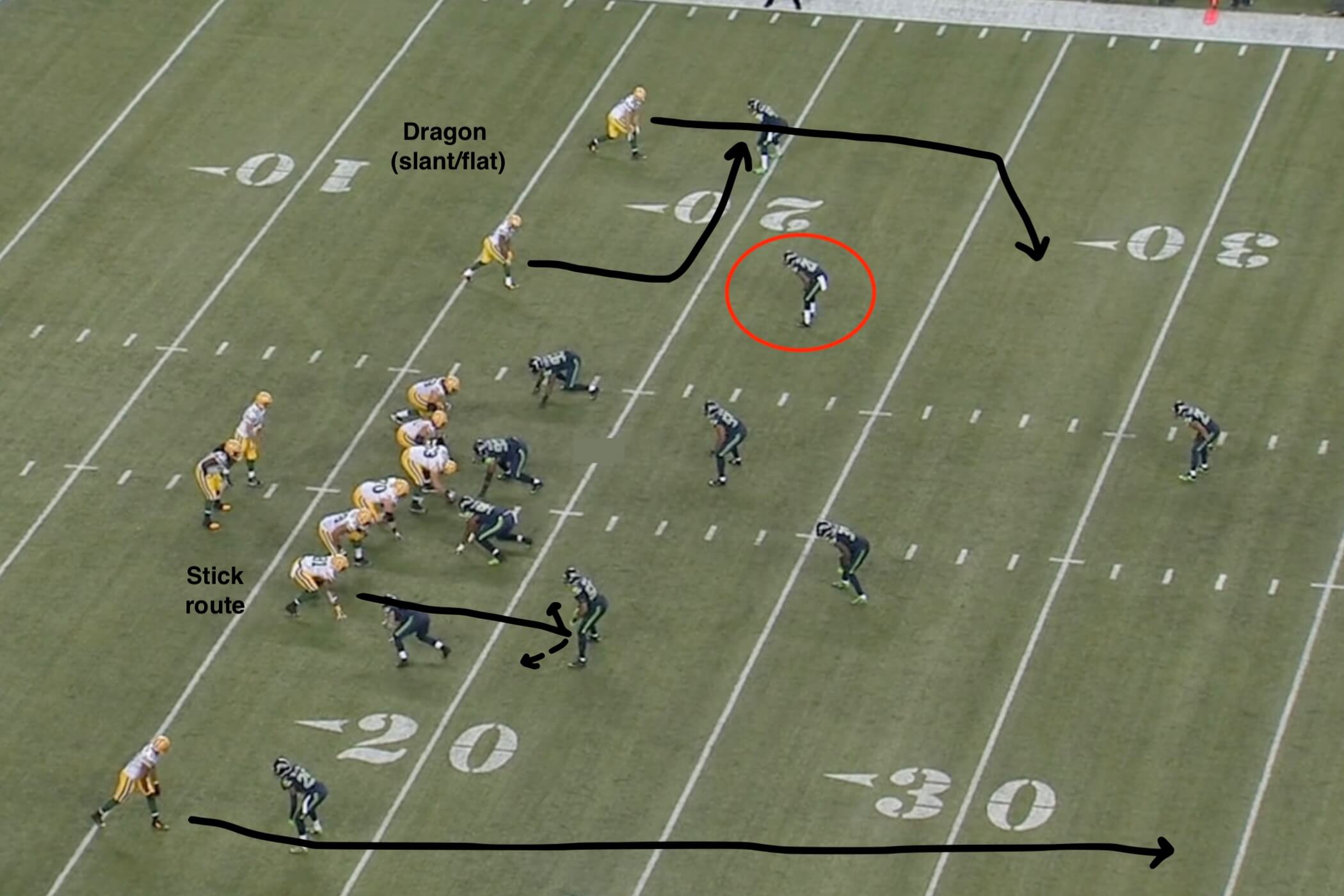
During Aaron Rodgers’ 2014 MVP season, the Dragon (slant/ flat) concept was on display often, including from the first game of the season. The Seahawks are in Cover 3. The corner aligned over the outside receiver (Jordy Nelson) is responsible for the deep third. His first responsibility is to make sure no one runs deeper than him. The nickel corner (circled in red) is the player who will be in conflict. He’s responsible for coverage in the flat.
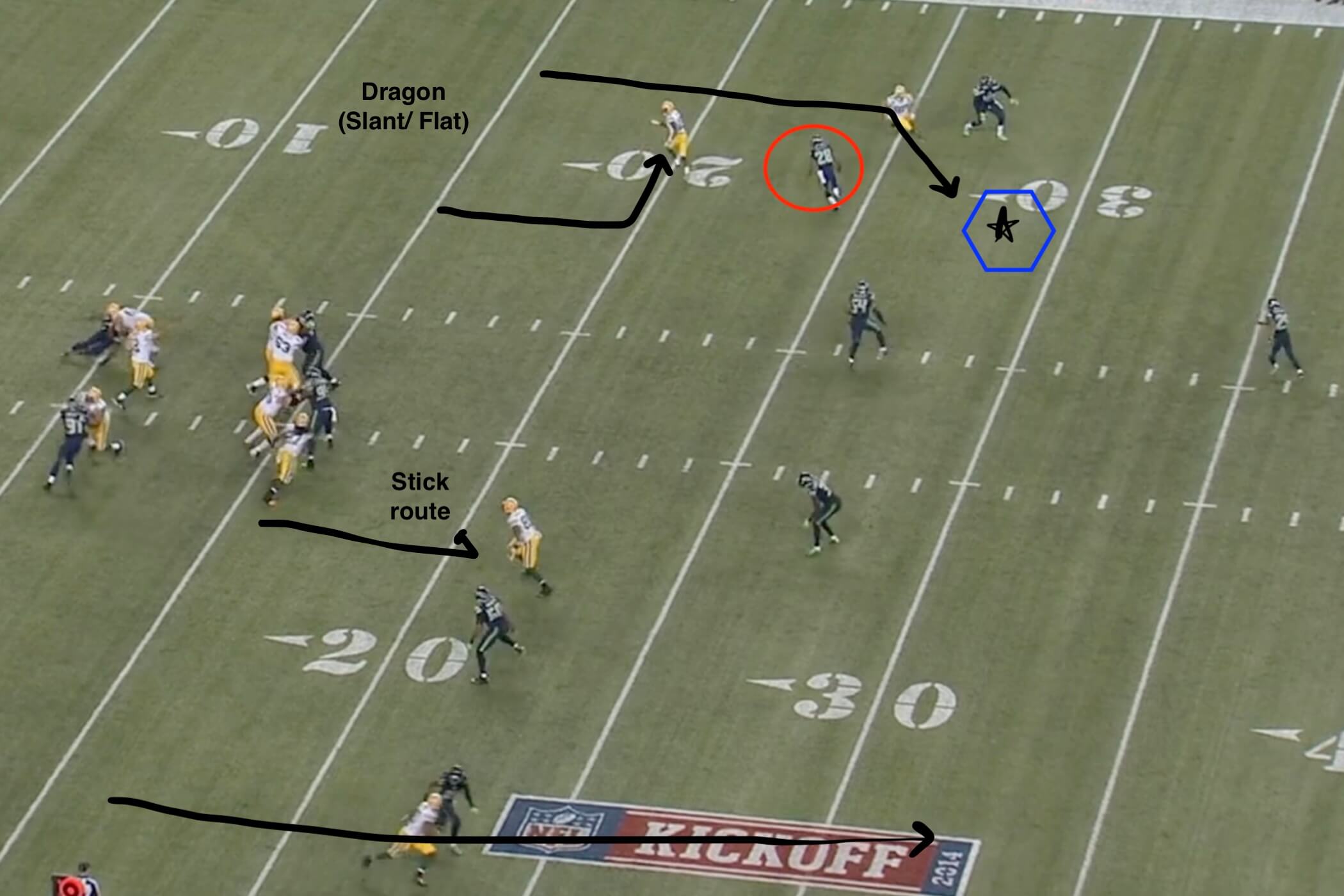
The screenshot from after the snap shows Rodgers throwing with timing and anticipation. The nickel corner (circled in red) buzzes to the flat to defend the inside receiver. Rodgers rips a strike behind that defender and in front of the corner. This frame shows just how tight that window is and how critical it is to throw this pass on time and on target.
During their 13 seasons together, McCarthy’s schematic approach and Rodgers’ skill set produced a symbiotic relationship, leading to seven Pro Bowl appearances, two MVP awards and a Super Bowl victory. Rodgers’ ability to process the game at a high level and his elite arm talent were a perfect fit for an offense that relied heavily on slants, crossers, flat routes and hitches.
Of course, they didn’t only run these routes and concepts. They also paired the aforementioned quick-game concepts with dropback passes that attack deeper downfield. Some of those concepts include Scissors (a two-man route combination with a post and a corner), double posts, Hank (mirrored curl/flat combinations on both sides, plus an over-the-ball route in the middle of the field) and many others.
Fast forward another decade. By 2023, McCarthy was in his second act as an NFL head coach with the Dallas Cowboys. With Kellen Moore calling plays, Dak Prescott threw a league-high 15 interceptions (even though he played in only 12 games) in 2022. It was time for a change. Ahead of the 2023 season, McCarthy took over play-calling responsibilities and installed a hybrid system that earned a catchy nickname: Texas Coast (or Tex Coast).
“It’s definitely got some West Coast principles,” Prescott told reporters. “But (it) has a little bit of what we’ve done in the past, just marrying them together with a lot of detail and, maybe in a sense, (creating) a system that’s not out there.”
From the West Coast tradition, McCarthy focused on the footwork, emphasizing that the depths of the receivers’ routes had to match the steps of the quarterback’s drop. The coaching staff explained to the receivers where they fell within the quarterback’s progression. If they were the first option, they had to come out of their break at a specific time. The second option? A different time and depth. Same thing if they were the third option. (You can tell why Rodgers is so meticulous about exactly how routes are run by his receivers.)
“There are always early-progressions that he can find,” then-first-year Cowboys offensive coordinator Brian Schottenheimer told The Athletic before the 2023 season. “Everything in this system, the West Coast, is all tied to the quarterback’s feet. When you see a quarterback playing really well in the West Coast offense, you’ll see his feet are decisive, he’s firm on his back foot. That’s a big part of it.”
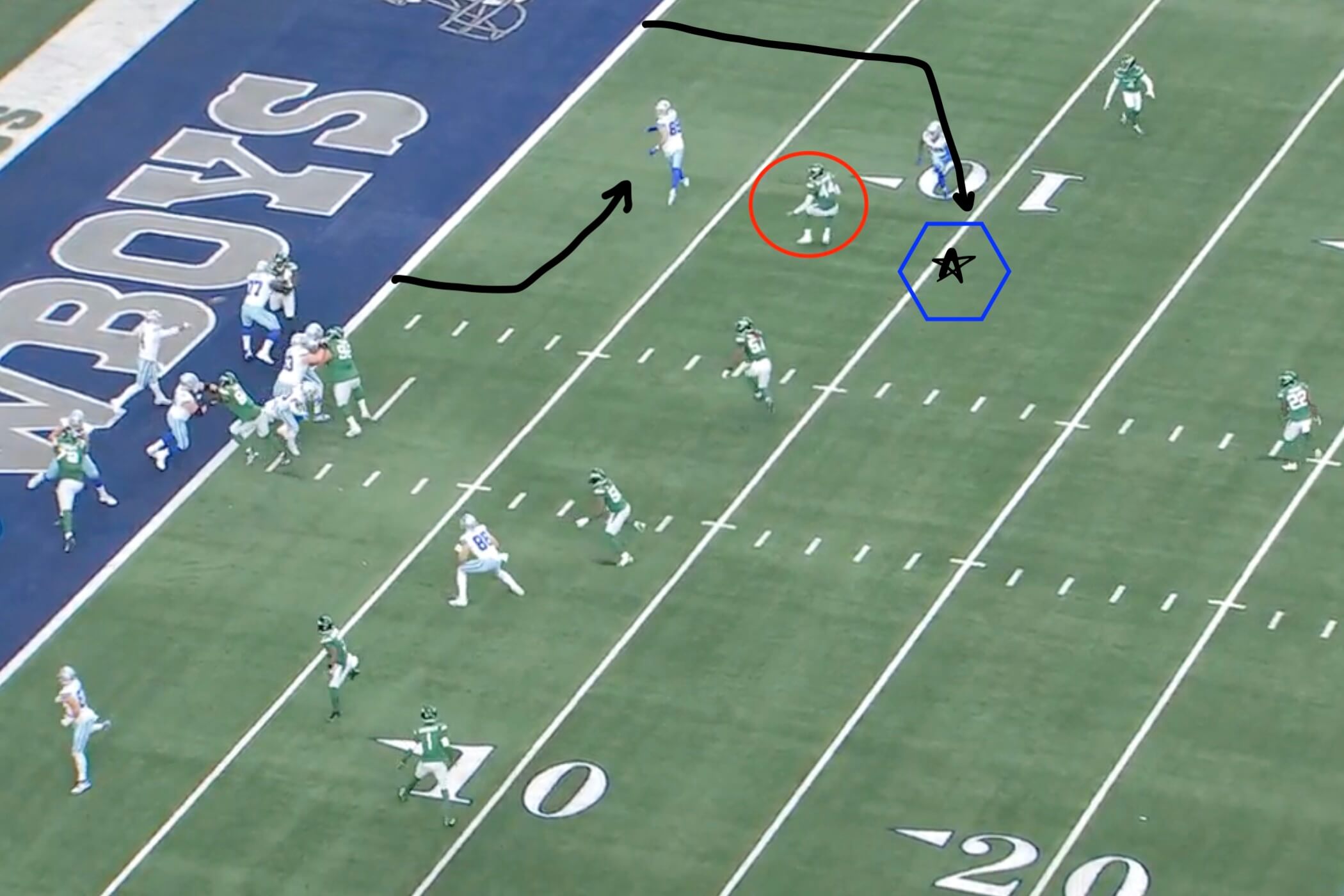
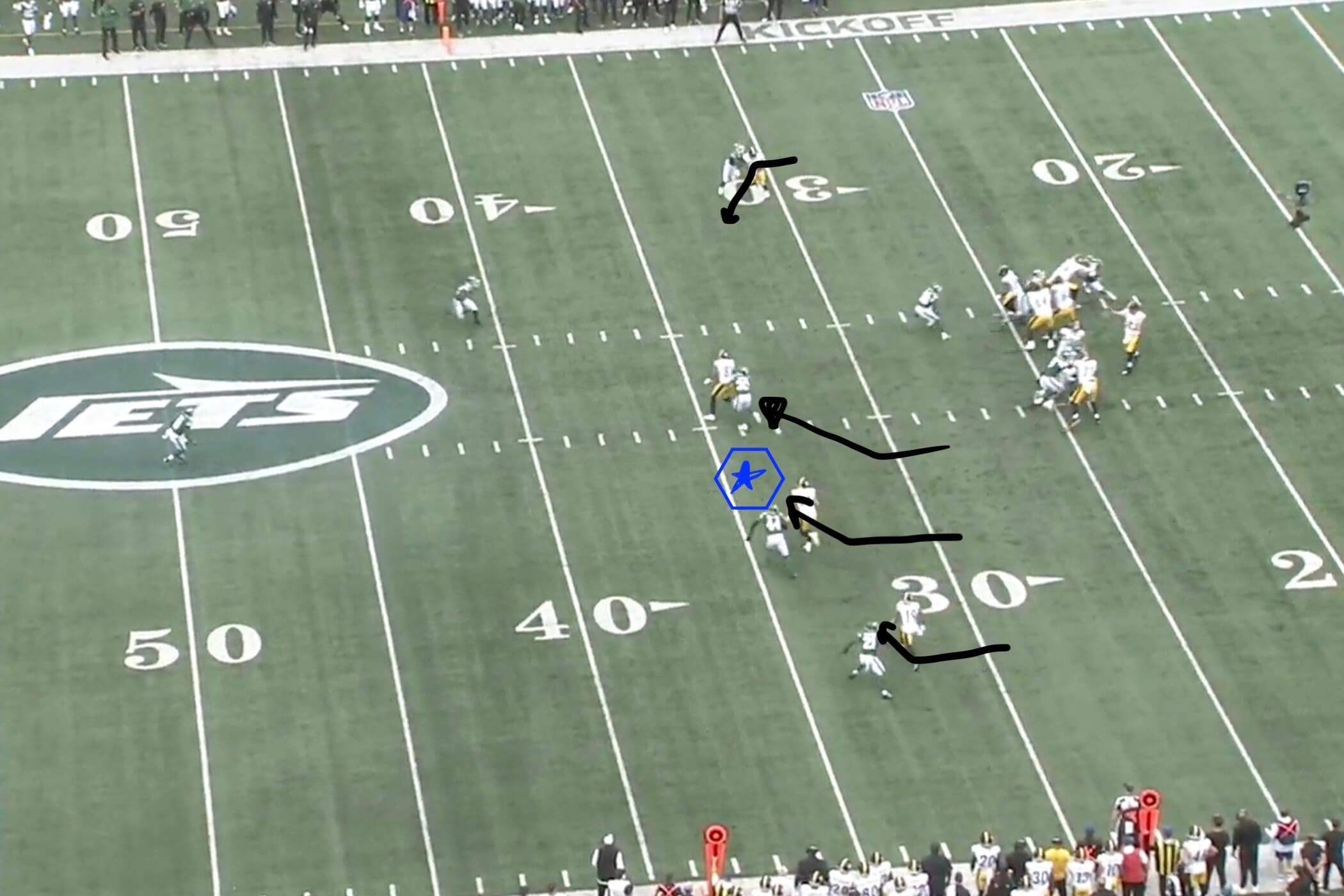
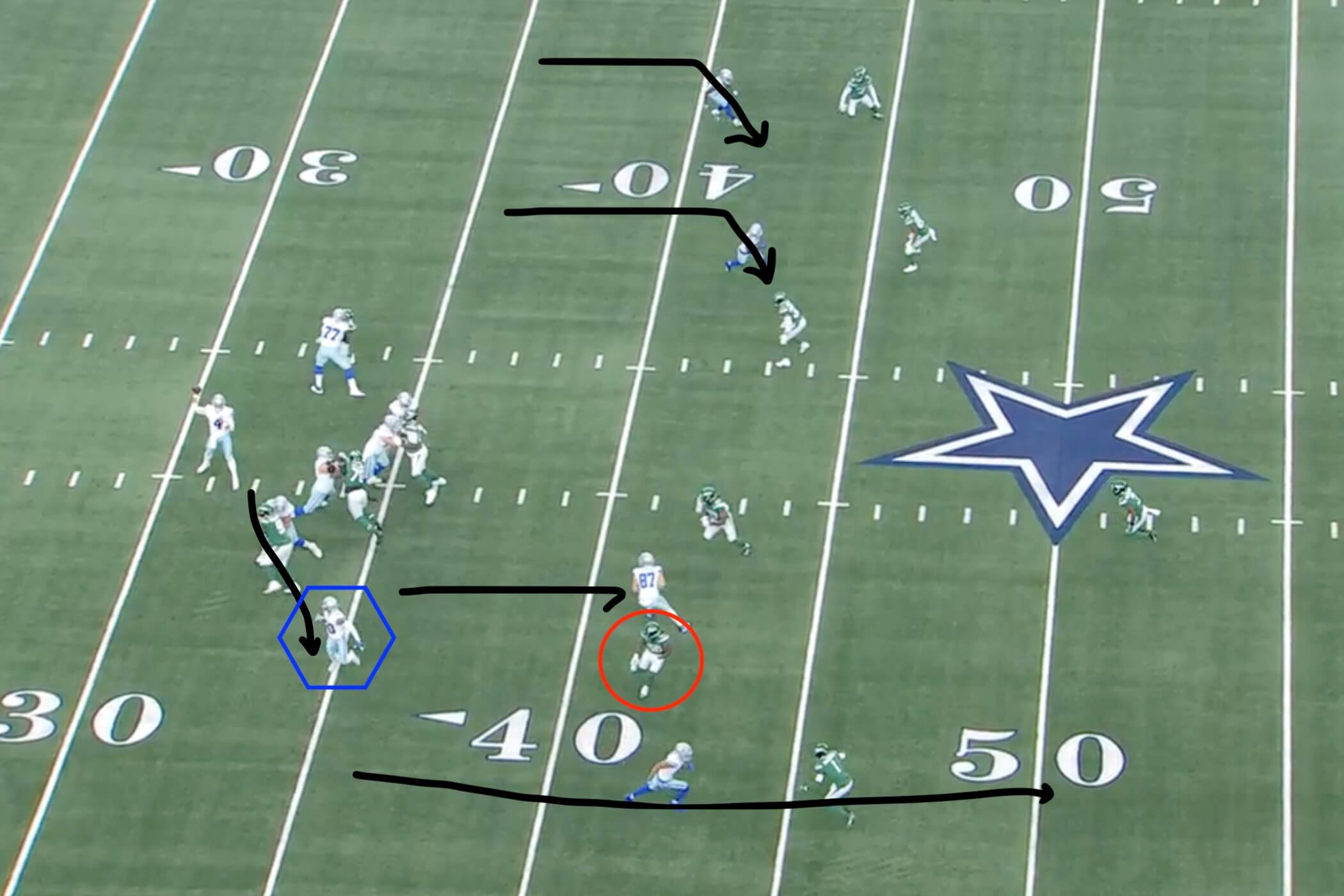
While McCarthy updated the offense in a variety of ways (which we’ll dive into in a minute), it’s not hard to find many of the classic West Coast staples. Here in Week 2, the Cowboys are backed up in the shadow of their own goal post and run the Dragon concept (slant/ flat) against a Cover 3 look from the Jets.
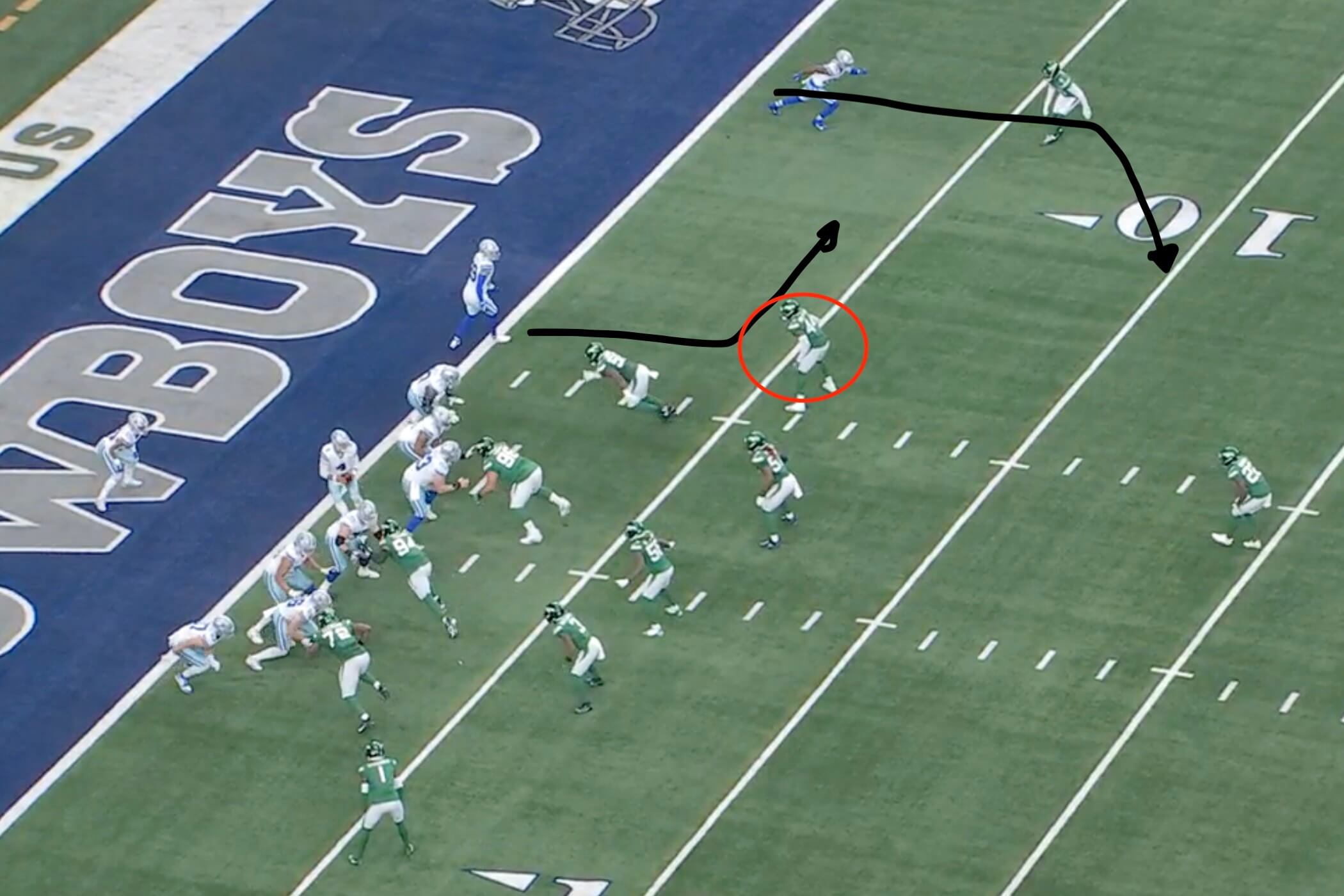
Just like Rodgers did a decade earlier, Prescott manipulates the flat defender (circled in red) and hits CeeDee Lamb in stride just behind the linebacker. This play resulted in a 30-plus-yard catch and run. Again, that’s a central component of the West Coast offense: Get the ball to receivers and let them create yards after the catch.
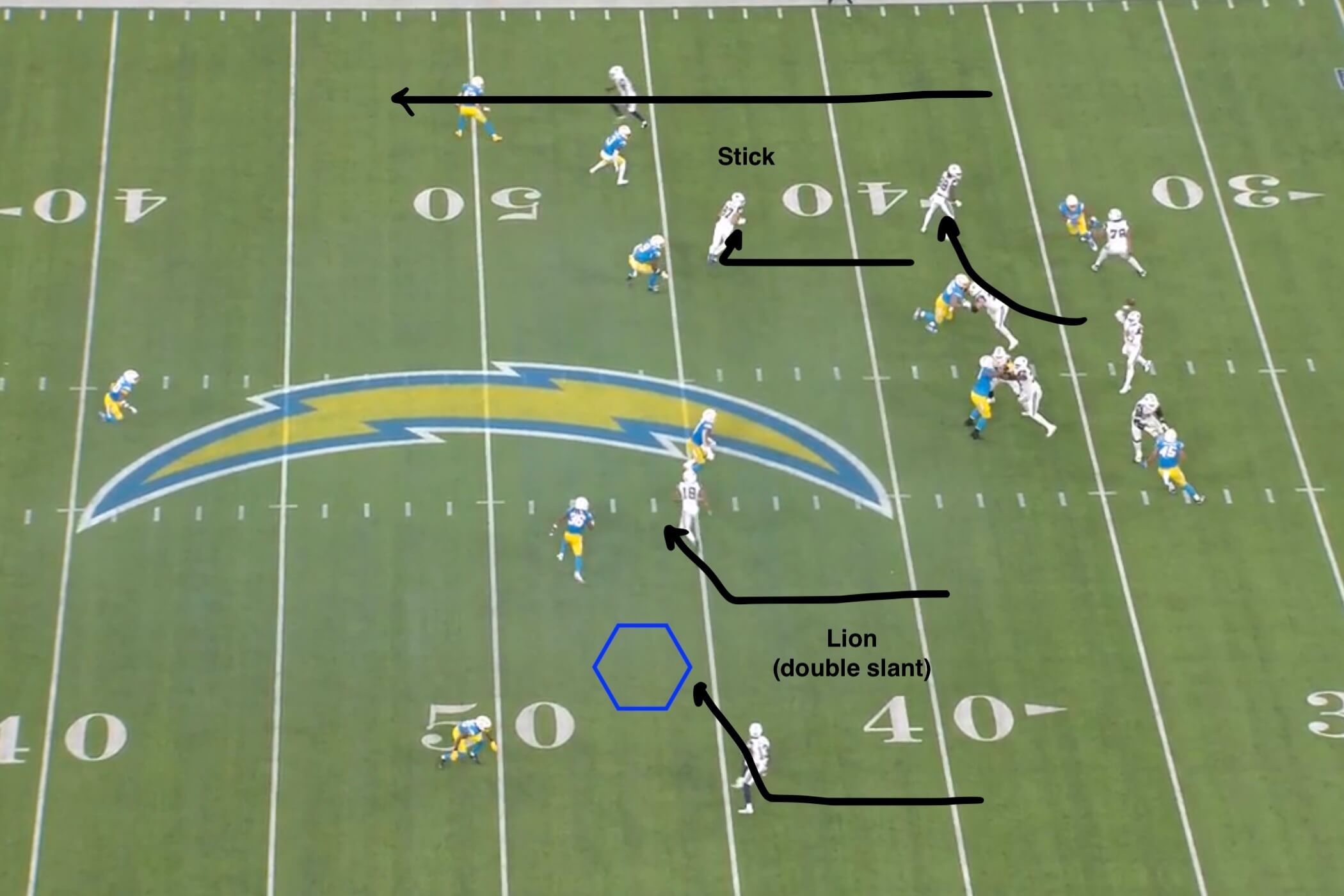
Remember the Lion concept, which features two slants (a one-step slant on the inside and a three-step slant on the outside)? On this play against the Chargers, Prescott reads the play from inside to outside. When the inside receiver brings the linebackers with him, it creates an open window for Prescott to hit Michael Gallup.
While the Cowboys had more plays and concepts than just Dragon and Lion, they leaned into many quick-game staples and routes that go with them (slants, hitches and flat routes). For example, Lamb ran the most slant routes in the league in 2023 (88) and at the third-highest rate (14.1 percent of his pass patterns), according to Pro Football Focus. It resulted in one of the best years of Prescott’s career, as he produced career highs in passer rating (105.9) and completion percentage (69.5 percent) — with 36 touchdown passes (second-most in his career), 4,516 passing yards (third-most, including 2025) and only nine interceptions. He finished second in MVP voting behind Lamar Jackson.
At the same time, McCarthy also evolved his philosophy in a variety of ways. He implemented and expanded upon some so-called “college” concepts like run-pass options, designed QB runs (including the read-option) and screens. McCarthy also added more tempo and no-huddle to the offense. That created more freedom — but also responsibility — for Prescott to make checks at the line, in a similar way to what Rodgers did in Green Bay.
Another critical element was motion. Interestingly, when McCarthy was in New Orleans, his offense was full of pre-snap shifts. But as Rodgers got more comfortable in the system, he favored a stagnant pre-snap approach that allowed him to run the show and make tweaks on the fly. In his final season in Green Bay, McCarthy utilized motion on 22.9 percent of plays in the 13 weeks before he was fired, according to NFL’s NextGen Stats. By contrast, in McCarthy’s final two seasons as a play caller in Dallas (2023 and 2024), pre-snap motion jumped to about league-average in 2023 (55.2 percent) and 2024 (58.1 percent).
We’re focusing mostly on the passing game, but McCarthy understands the value of running the ball. In fact, he often said in Dallas that he wanted the Cowboys to run it more. The new Steelers coach underscored that point shortly after he was hired.
“The offense needs to be built to make the quarterback successful, as simplistic as that is, and that starts with running the football,” McCarthy said. “You’ve got to run the football, because if you don’t run the football and you don’t tailor your protection schemes in the action-pass game to the running game, obviously it’s not going to affect the defense and have the benefits of what you’re looking for.”
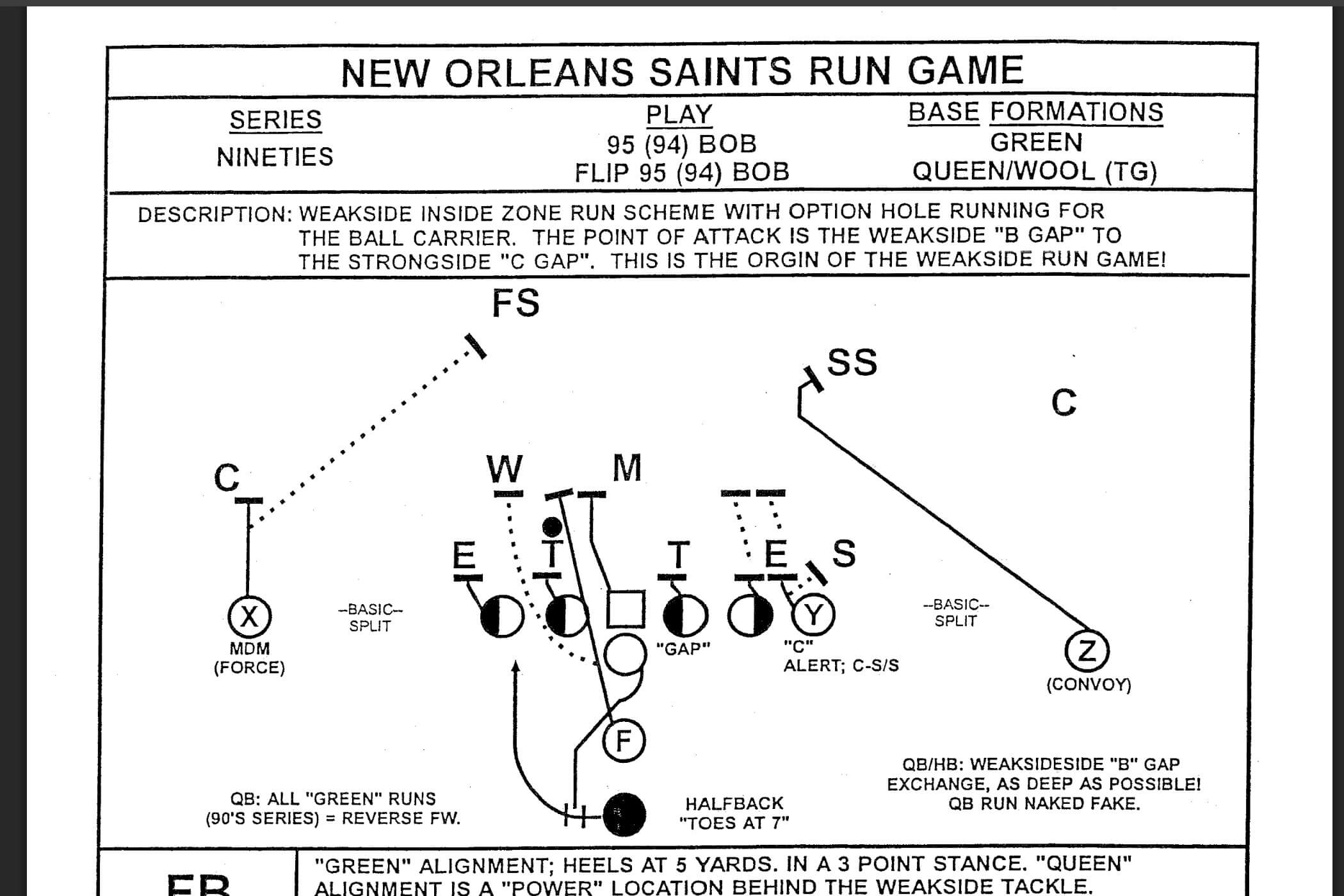
We won’t really dig into the running game in this piece. But historically, McCarthy’s offenses have used both zone and gap-scheme runs. Inside-zone weak (inside zone away from the tight end), Duo (a popular concept in which the offensive linemen double-team the interior defensive linemen, hence the name) and pin-and-pull were all common in Dallas and Green Bay. McCarthy has also often deployed a fullback. In Green Bay, John Kuhn, a three-time Pro Bowler, played 25-48 percent of snaps per year. In Dallas, McCarthy utilized fullback Hunter Luepke, an undrafted free agent out of North Dakota State.
Without digging any deeper, here’s an example of inside-zone weak from the New Orleans Saints’ playbook, just for fun.
While McCarthy took elements of Hackett’s playbook to Green Bay and Dallas, Rodgers made his own transition — first to a new head coach with the Packers, then to the New York Jets (where Hackett’s son, Nathaniel, was the offensive coordinator) and later to Pittsburgh.
While each coordinator had his own philosophy, some of the staple concepts remained the same. We won’t jump the gun and assume Rodgers will be back. However, it’s worth looking at what Rodgers did in Pittsburgh, considering McCarthy is already on record saying he “definitely” wants Rodgers back.
Last year under Arthur Smith, some of the terminology was different, but it relied on many of the same ideas: namely quick, precision passing that highlighted a smart, decisive quarterback. Rodgers got the ball out of his hand faster than any quarterback in the league last year (2.52 seconds was his average time to throw, per Tru Media) and delivered it shorter than any quarterback in the league (6.0 air yards per attempt). That formula led to a league-best 6.5 yards after the catch per reception. All of those elements are foundational pieces of the West Coast offense.
It wasn’t all Dragon and Lion, of course. But the slant route that’s an essential part of both concepts was a backbone of the passing attack. DK Metcalf ran the most slants in the league (64) and at the highest rate (13.8 percent), per Pro Football Focus. Not far behind in slant rate were Marquez Valdes-Scantling (fourth-highest rate), Roman Wilson (fifth), Scotty Miller (ninth) and Calvin Austin (11th).
That began, really, from Rodgers’ first pass attempt as a Steeler. On third-and-long in Week 1, the Steelers ran an all-slants play out of a 3×1 formation. The play is a derivative of the Lion (double slant) concept.
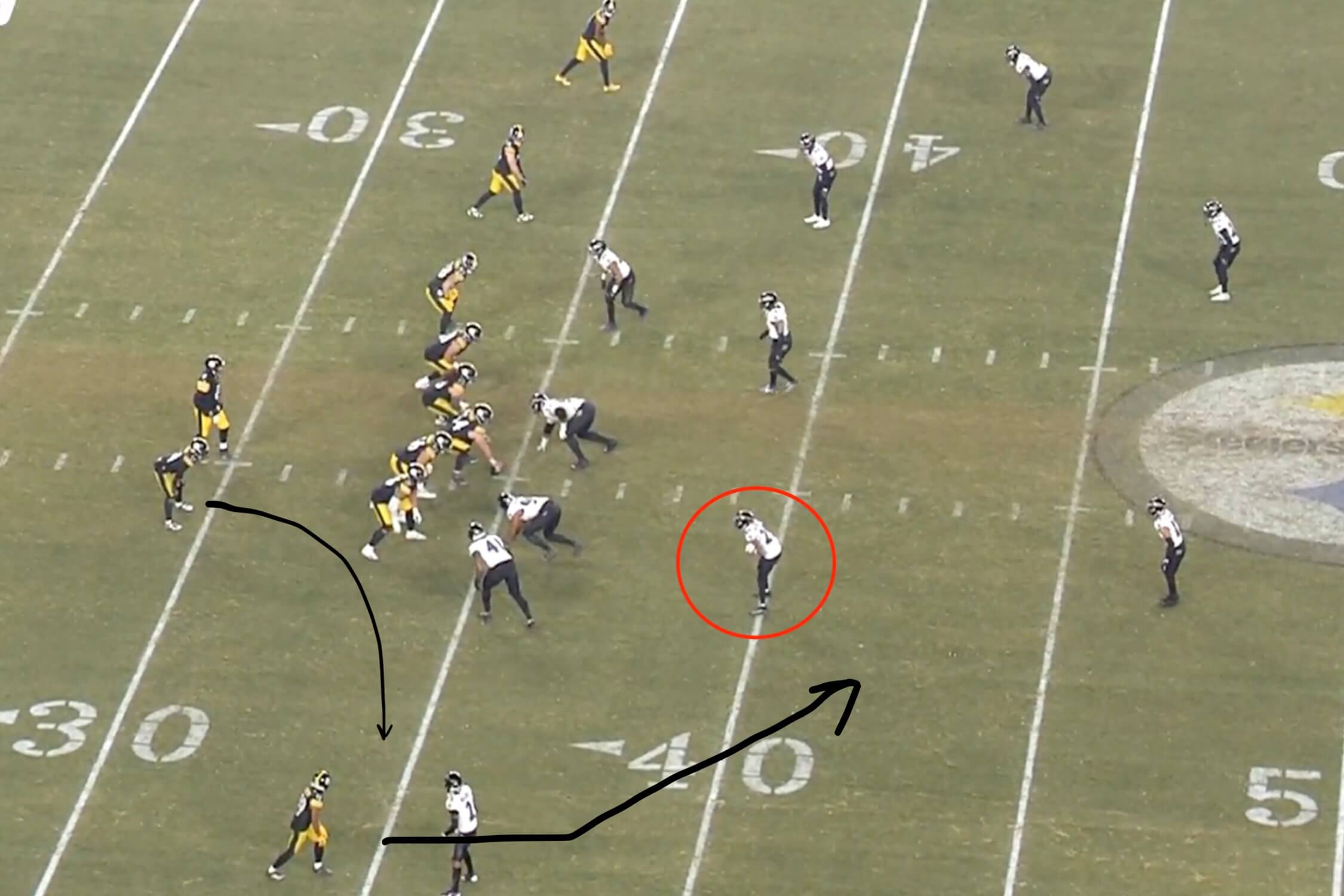
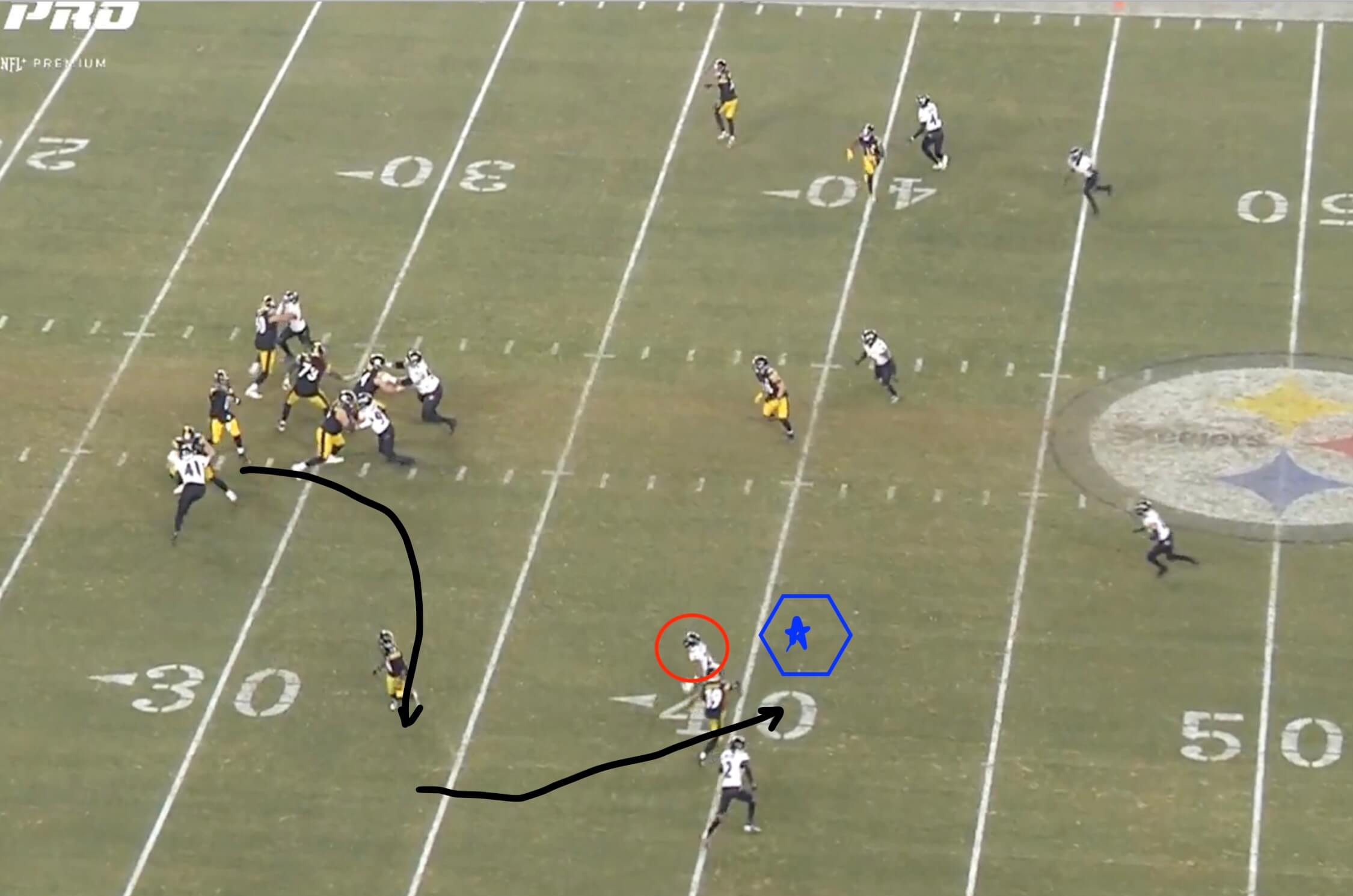
Common West Coast concepts were found throughout the season. In fact, during the final, game-winning drive in Week 18, Rodgers went back to an old staple, Dragon, to find Austin for a first down. (A few plays later, Austin caught the winning touchdown.)
This is a great play to look at for two reasons: 1) It shows that the routes can be interchangeable. It doesn’t have to be a receiver or a tight end. Running back Kenneth Gainwell is running the flat route out of the backfield, while Austin runs a slant. And 2) The ball is out of Rodgers’ hands so quickly that the open window hasn’t formed yet, showing the level of timing and anticipation it takes to execute these plays in the NFL.
In many West Coast-based systems, the running back is a critical part of the passing game. Among players at his position, Gainwell finished with the fourth-most receptions (73) and fifth-most receiving yards (486). Because he caught the ball on average 0.2 yards behind the line, Gainwell had more yards after catch (528) than total receiving yards.
“I still cannot believe what we got him for,” Rodgers said at one point in the season. “I told him a long time ago that my goal was to get him paid because I’ve been a fan of his since he was in Philly, and I thought every time he went in the game, something good happens.”
If you have been paying attention, you may be curious what “Stick” means on the opposite side of some of the plays. Let’s look at a third and final basic West Coast concept: Stick.
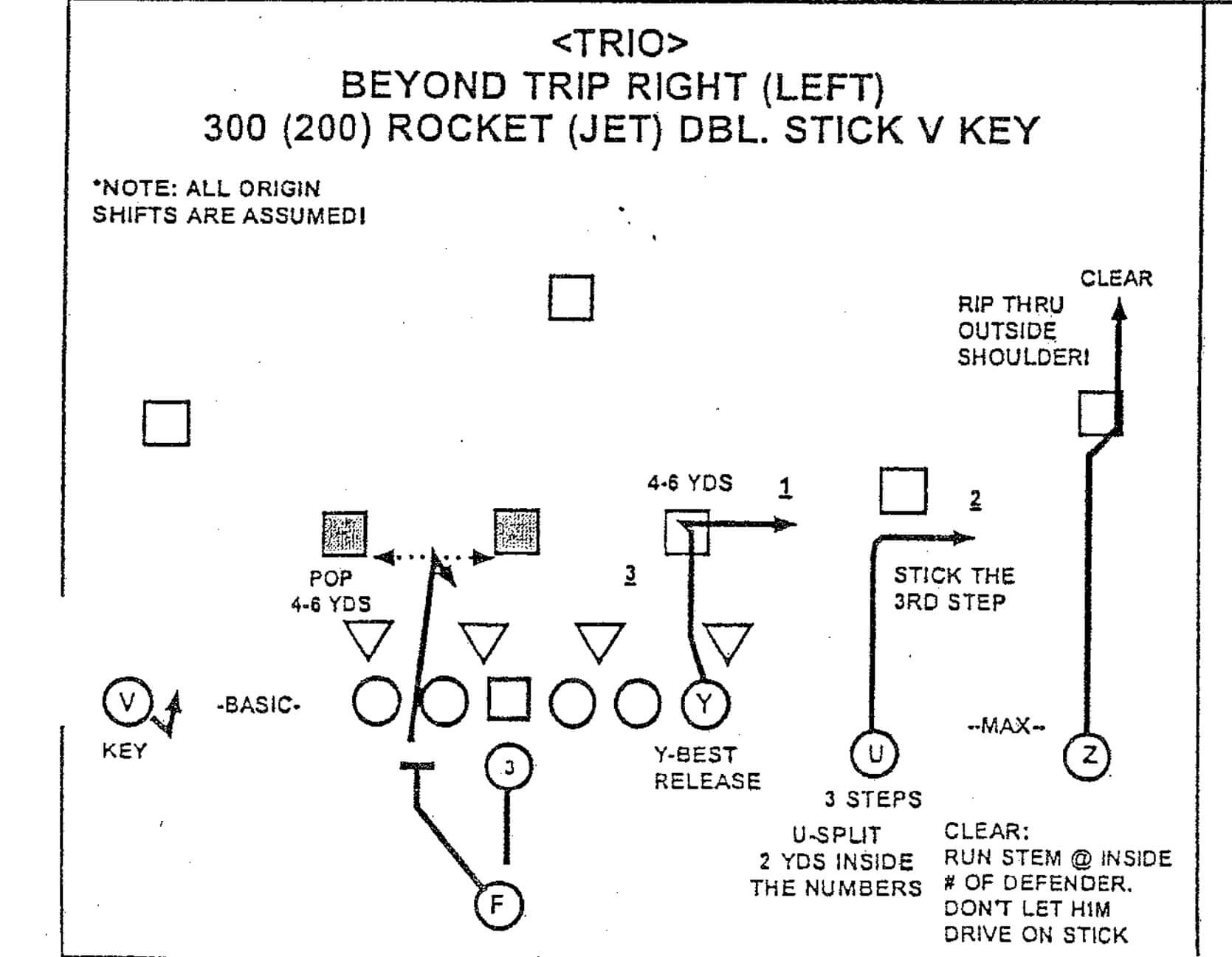
The critical part of this concept is the Stick route, which in this case is run by the tight end (labeled Y). Against man coverage, the tight end will run an out route away from defenders. Against zone, he’ll turn, sit and expect the ball to be on him quickly. To turn the route into a full concept, it’s often tethered to a go route by the outsize receiver (Z) to clear out the corner and a flat route by a second (move) tight end, slot receiver or running back (in this case, labeled U).
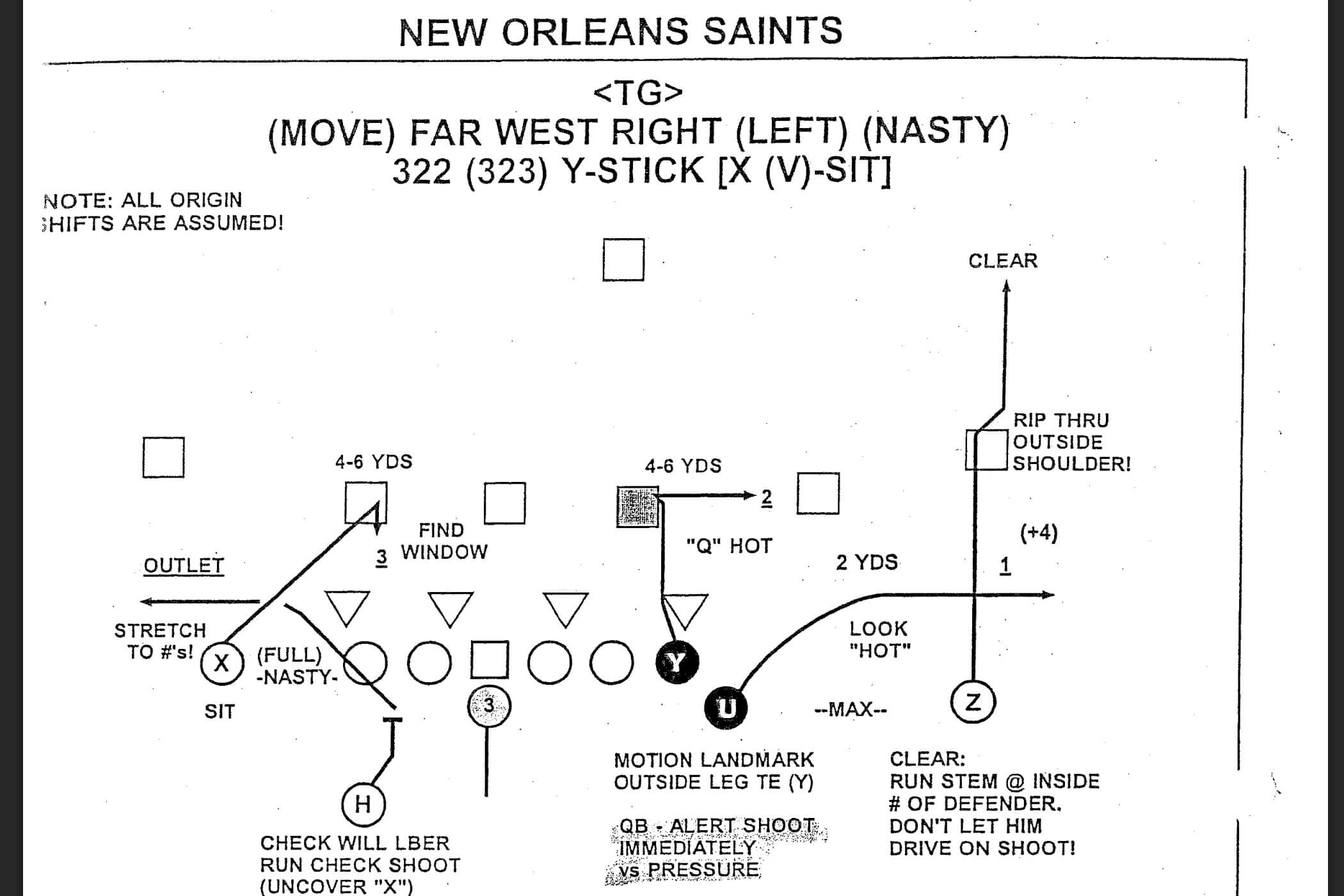
Here you can see the 2023 Dallas Cowboys running Lion (double slants) to the left and Stick (stick, flat, clearout) to the right.
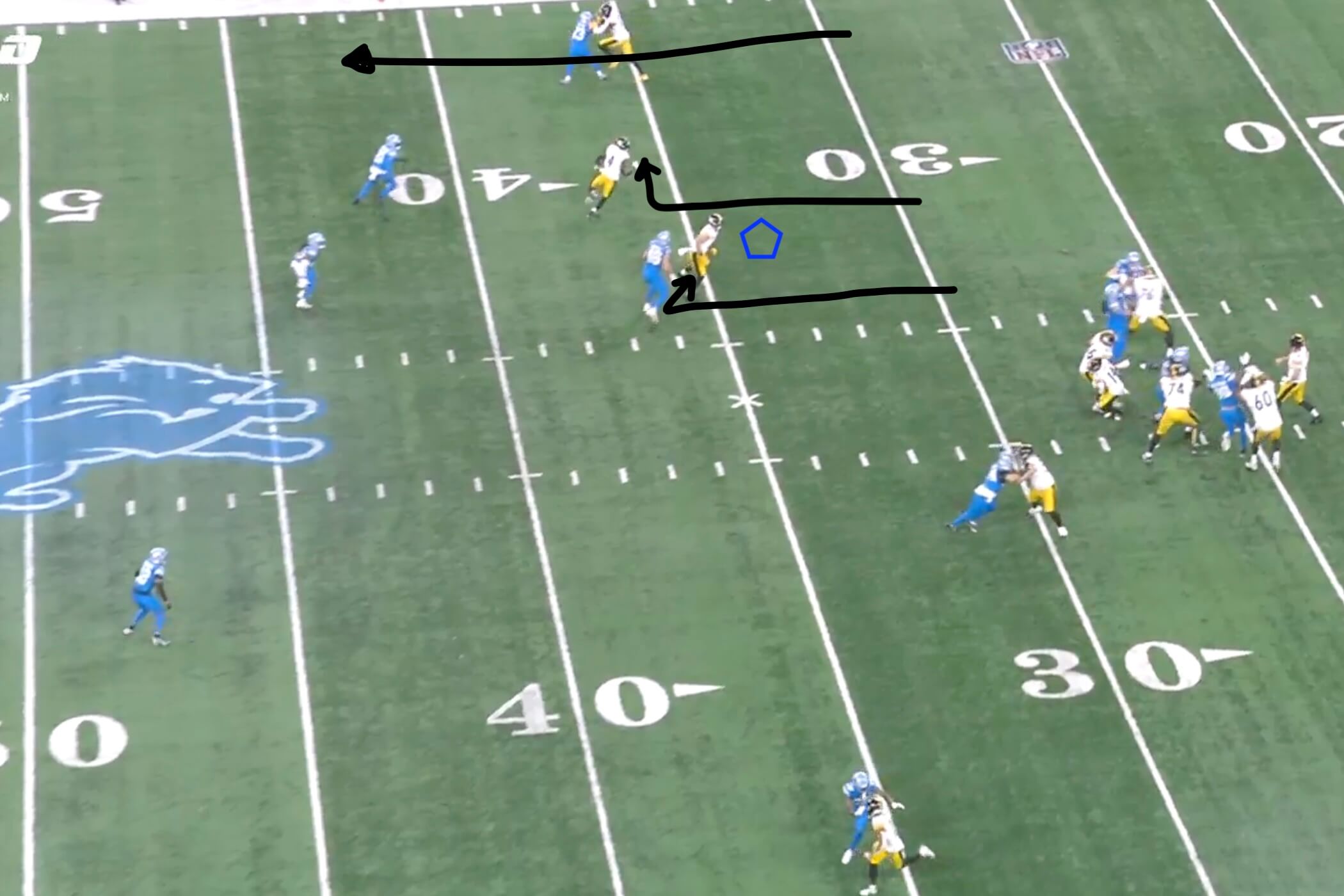
Another important point: There are nearly endless variations to each of these concepts. Sometimes the same concept is mirrored on both sides. Sometimes receivers change rules in specific concepts to have the desired effect. Sometimes similar concepts are modified slightly, like this one: Double Stick. The tight end (Y) still runs a stick with the same basic rules: run away from man and settle against zone. There’s still a clearout by the outside receiver (Z). But the difference is the eligible who lines up in the slot (U) also runs a stick, hence double stick.
Here in Week 16, you can see the Steelers running Double Stick for a completion to tight end Pat Freiermuth.
While a reunion with Rodgers could be in the cards, at some point, McCarthy will have to develop a new quarterback. During his introductory press conference, he touched on what he’s looking for.
“The way the quarterback is coached in that system, you want a more athletic player in that position that can extend plays and play to the rhythm, timing, spacing, and all the things that go into that offensive system,” McCarthy said. “But at the end of the day … I would never say, ‘We run the West Coast offense.’ If your system of football cannot take in every player that Omar (Khan) and Art (Rooney) bring to the Pittsburgh Steelers, you need to take a look at your system. So we need to make sure we can accommodate the variety of players that are available to us.”
His point: McCarthy doesn’t plan to simply reprint Walsh’s playbook, nor his own from 2004. He’s going to continue to modify, evolve and adapt based on the league and the players he’s given. Still, McCarthy’s time in New Orleans, Green Bay and Dallas (along with Rodgers’ season in Pittsburgh) shows that many of the foundational pieces the coach learned three-and-a-half decades ago remain effective parts of offenses around the league.
You can count on at least some West Coast concepts on Pittsburgh’s North Shore in 2026.