
BROOK PARK, Ohio — Brook Park and the Browns will learn by late next month whether the state is willing use money from its major new projects fund to help pay for the road network envisioned around the team’s new stadium.
The Ohio Department of Transportation’s Transportation Review Advisory Council, which evaluates road projects statewide, will discuss this year’s proposals during a Feb. 18 meeting, and then release a draft list of projects recommended for funding on March 25.
Final approval for the 2026 selections would come after a public comment period, with a vote set for April 23, ODOT spokesman Matt Bruning said.
Brook Park is seeking $70 million from ODOT for an $82 million package of road and pedestrian improvements. The remaining $12 million would be covered privately by the Browns-affiliated Haslam Sports Group.
As part of ODOT’s application process, the road plan cleared an important regional hurdle Friday, when the Northeast Ohio Areawide Coordinating Agency’s planning committee unanimously signed off after previously delaying action to seek additional traffic analysis.
NOACA staff presented updated studies showing little impact to traffic at Cleveland Hopkins International Airport and what were described as acceptable delays around the stadium site during major events. Final approval from NOACA’s full board could come as soon as March 13.
The agency must approve major road projects in the five-county region before they can advance for state funding.
The proposal includes improvements to the Interstate 71 interchange at Snow Road, changes to local roads surrounding the site and a pedestrian bridge for fans who park off-site. All of the work is intended to be completed ahead of the stadium’s anticipated 2029 opening.
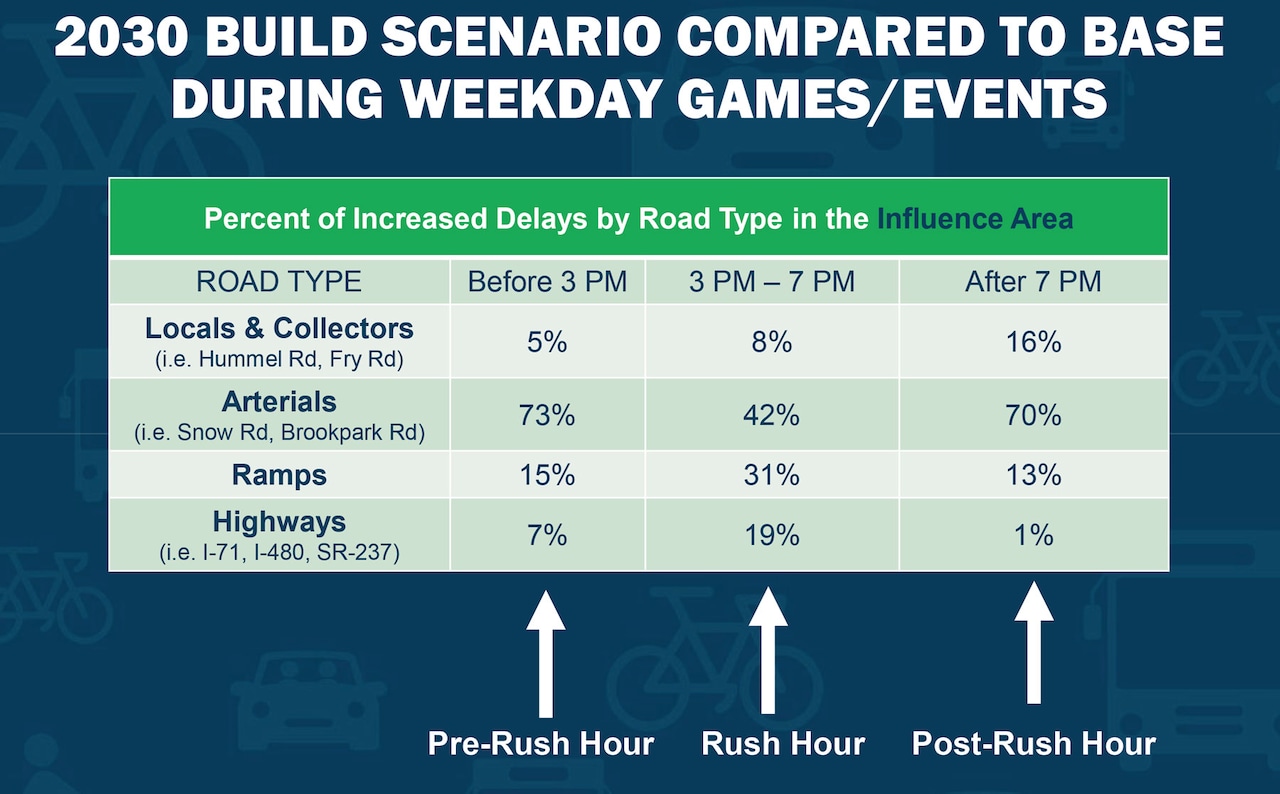
According to NOACA’s analysis, the most significant congestion is expected after games or large events, when as many as 22,000 vehicles would attempt to leave the area at roughly the same time.
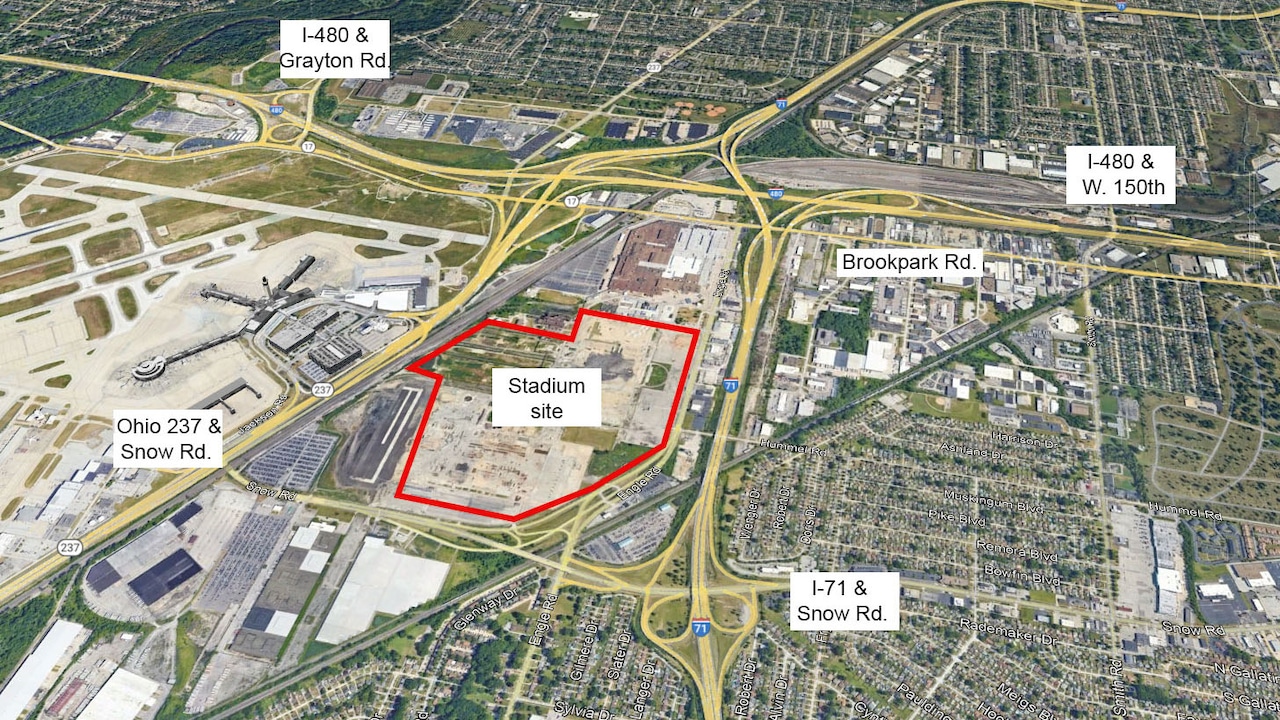 The Brook Park stadium site is immediately surrounded by railroad tracks to the west, a Ford Motor Co. plant to the north, Engle Road to the east and Snow Road to the south. This map highlights the closest highway interchanges. (Google Earth image)Rich Exner, cleveland.com
Traffic increases on Snow and Brookpark roads could reach 70% after events, compared with 16% on other local roads, 13% on highway ramps and just 1% on highways such as I-71, I-480 and Ohio 237.
At the committee’s request, additional work has begun to examine potential traffic impacts on neighboring communities and identify any changes that may be needed to avoid problems beyond Brook Park.
Approval from the planning committee had been delayed in October following concerns that more study was needed. That discussion was led by then-NOACA president and Cuyahoga County Executive Chris Ronayne. He did not attend last week’s meeting.
Specific improvements include two dedicated left-turn lanes toward the stadium for northbound drivers exiting I-71 at Snow Road. Southbound drivers would use a new bridge over Engle Road and nearby railroad tracks for direct access to the site.
A separate pedestrian bridge is tentatively planned over Engle Road to serve off-site parking in nearby commercial areas. More than 5,000 vehicles are expected to park off-site during major events, in addition to roughly 12,000 spaces planned on the property being developed by Haslam Sports Group.
Groundbreaking for the stadium is expected this spring. Earlier this month, Brook Park granted permits for temporary electrical service at the site and for approximately $65 million in excavation work.