
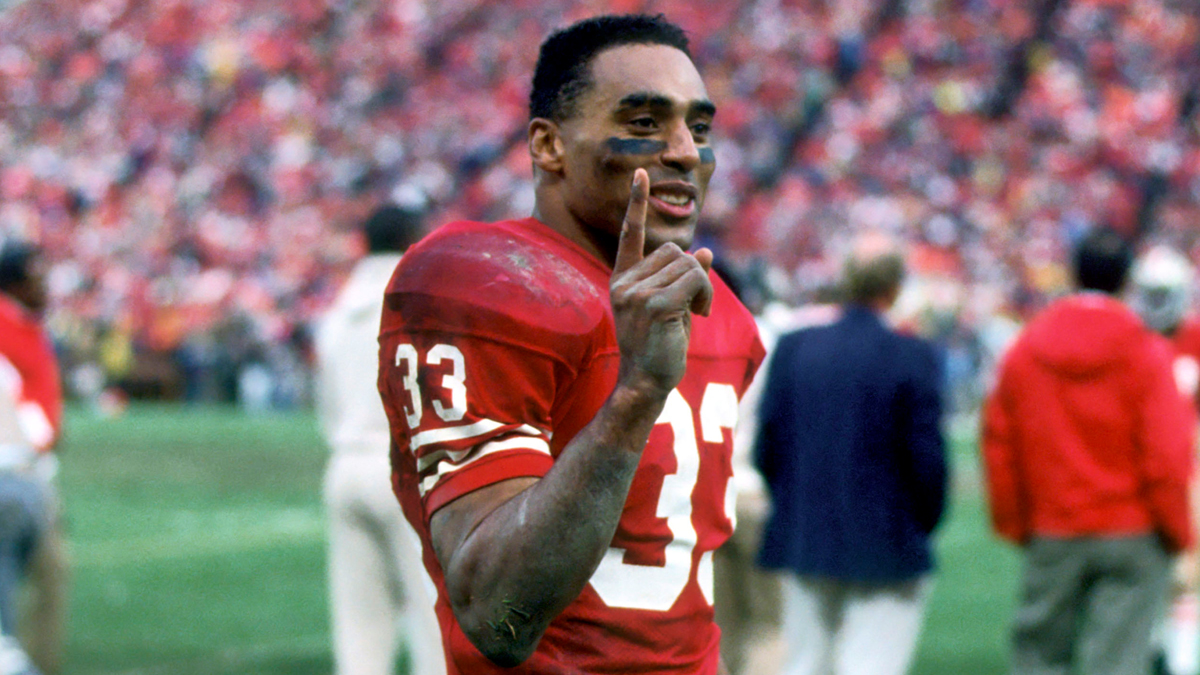
Roger Craig‘s long, agonizing wait is over.
The legendary 49ers running back, on Thursday, was announced as an inductee into the Pro Football Hall of Fame Class of 2026.
Craig distinguished himself as the most versatile running back of his era, a player who earned Pro Bowl spots at fullback and halfback. He became the first to achieve 1,000 yards rushing and 1,000 yards receiving in the same season.
Craig wore No. 33 during his career with the 49ers, and his induction into the Hall of Fame this summer will come 33 years after he played his final game in the NFL.
“It’s about time,” former teammate and fellow Hall of Famer Jerry Rice said.
Craig, 65, will go into the Hall of Fame this summer in Canton, Ohio, along with fellow Class of 2026 inductees Drew Brees, Larry Fitzgerald, Luke Kuechly and Adam Vinatieri.
While a lot of attention was given to the snubs of former New England coach Bill Belichick and Patriots owner Robert Kraft, the committee also did not elect the NFL’s No. 3 all-time leading rusher on the first ballot.
Former 49ers running back Frank Gore was a finalist in his first year of eligibility. He advanced to the top-10 in the voting process but did not receive enough votes for election as a modern-era candidate.
Gore finished his career with 16,000 yards rushing in his 16-year career, ranking behind only Emmitt Smith and Walter Payton on the all-time list.
Gore spent his first 10 seasons with the 49ers and broke Craig’s franchise record with 11,073 yards on the ground.
The announcement of the newest group of Hall of Famers was made Thursday night during the NFL Honors show at the Palace of Fine Arts in San Francisco.
And it was fitting that Craig, such a vital part of the 49ers’ dynasty of the 1980s finally received his due in the city he represented for the first eight seasons of his professional career.
“He wasn’t just a runner,” 49ers Hall of Fame quarterback Joe Montana said. “He was almost like a wide receiver, catching passes out of the backfield. And if it were today, they’d even split him out and run routes from out there. He meant everything to that offense.”
Craig was considered an NFL pioneer due to his abilities as a runner and receiver, which enabled Hall of Fame coach Bill Walsh to expand his famed West Coast Offense.
“He’s that last piece of Bill Walsh’s offense that needs vindication and a claim,” former 49ers president Carmen Policy said.
Craig developed his high-knee running style from competing in the hurdles at Central High School in Davenport, Iowa. Craig caught just 16 passes in four college seasons at Nebraska. But after the 49ers selected him in the second round of the 1983 NFL Draft, Craig worked hard to refine that part of his game.
He became the centerpiece of the most innovative offense in football.
Craig was a four-time Pro Bowl selection and three-time Super Bowl winner. He became the first player to score three touchdowns in a Super Bowl game.
He accomplished that feat in a 38-16 victory over the Miami Dolphins at Stanford Stadium in Super Bowl XIX. He scored one touchdown rushing and two receiving. The next edition of Sports Illustrated featured him high-stepping into the end zone with the tagline, “Roger Craig Hammers the Dolphins.”
Craig tells the story of when Walsh approached him at the team’s ring ceremony and told him he expected 1,000 yards from him the next season. Craig often said he was not sure whether his coach meant rushing or receiving.
So Craig left no room for confusion.
In 1985, he became the first player in league history to register 1,000 yards rushing and 1,000 yards receiving in the same season. Only Marshall Faulk and Christian McCaffrey have matched that accomplishment in the 40 seasons since Craig reached that milestone.
“I think about him as a pioneer and someone who set the standard for guys like myself to come in here and maybe not be a 245-pound back,” McCaffrey said, “but being able to make a living playing football because of the work that he put in and being able to do everything: run the ball hard between the tackles, outside the tackles, catch the ball.”
Three years following his 1,000-1,000 season, Craig was named NFL Offensive Player of the Year after rushing for 1,502 yards and nine touchdowns to go along with 76 catches for 534 yards.
He was selected to the NFL’s All-Decade Team of the 1980s. Craig becomes just the third 49ers offensive player from that era to be enshrined into the Pro Football Hall of Fame, joining Joe Montana and Jerry Rice.
Craig still ranks third all-time in Super Bowl yards from scrimmage, behind only Rice and Pittsburgh Hall of Famer Franco Harris. He is tied for fourth in Super Bowl touchdowns, behind only Rice, Emmitt Smith and Rob Gronkowski.
Craig was known among his teammates as much for what he did off the field for the organization.
He set the standard with his work ethic, and introduced “The Hill” to Rice when he was a young player. That running trail within Edgewood Park in Redwood City became a well-known staple of Rice’s training regimen.
Craig spent one year with the Raiders and two with the Minnesota Vikings. His teams reached the postseason in all 11 of his NFL seasons.
When his time with the Vikings was over, Craig started a trend in sports. He signed a one-day contract to retire as a member of the 49ers.
“That’s where all my memories were,” Craig said. “I did it for the fans. I wanted to come home to where I belong. I appreciated the support the fans gave me, and the organization allowed me to come back.”
And, now, his place in NFL history is forever secure with a bust in his likeness to be displayed permanently in the Hall of Fame gallery in Canton.
Download and follow the 49ers Talk Podcast