
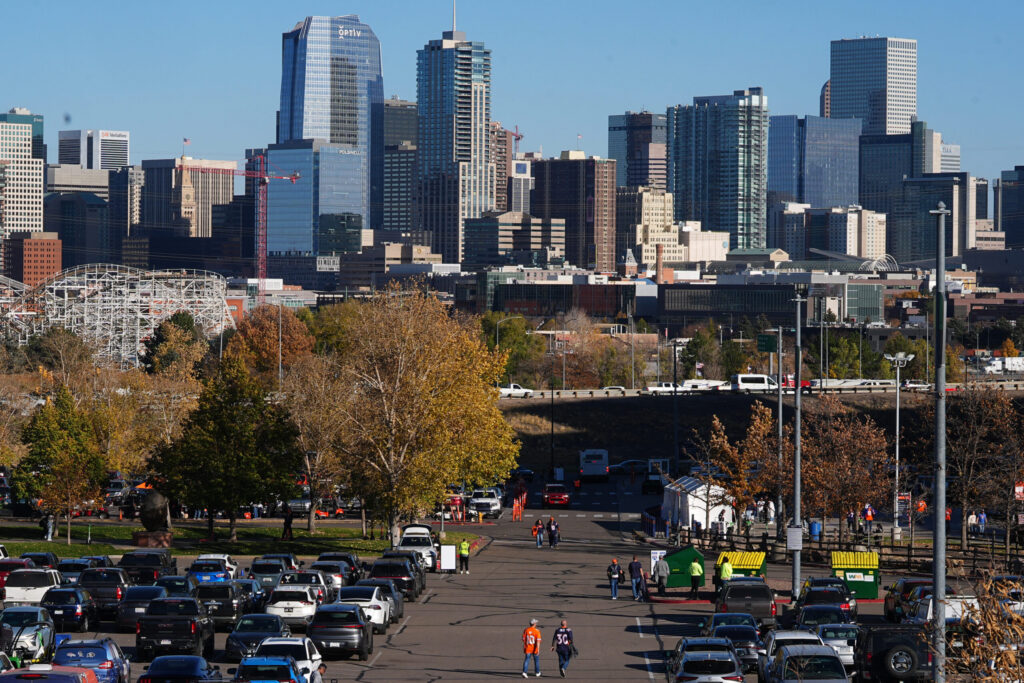
The Mile High City is preparing for a Super Bowl spotlight.
But is Denver ready to host the big game?
The Broncos expect to unveil a retractable-roof stadium in 2031 with their planned move to Burnham Yard under the Walton-Penner ownership group. Controlling owner Greg Penner said recently bringing a Super Bowl to Denver is not “driving the planning” for a sports and entertainment district on the site of a historic rail yard south of Colfax Avenue and east of Interstate 25.
Yet Penner echoed local and state officials in their ambitious football vision.
“It would give us the flexibility to host events like Super Bowls,” Penner said.
Denver is no stranger to large-scale sporting events beyond just home games for the Broncos, Nuggets, Avalanche and Rapids. The city previously hosted the NHL All-Star Game (2001), the NBA All-Star Game (2005) and the MLB All-Star Game (2021), among other major events in its history. But those still pale in comparison to a Super Bowl.
“It would be one of the bigger undertakings that this city has seen,” said Matthew Payne, executive director of the Denver Sports Commission. “There’s no doubt about it.”
The Patriots and Seahawks on Sunday will play Super Bowl LX with an expected 90,000 fans at Levi’s Stadium in Santa Clara, Calif., according to a study from the Bay Area Host Committee. The economic impact is estimated between $370 million to $630 million across San Francisco County, Santa Clara County and all other Bay Area counties. Last year, the Super Bowl averaged a record-breaking 127.7 million viewers across TV and streaming.
Now, imagine the spectacle and grandeur of a Super Bowl in Denver.
“The infrastructure for the city is already there for these big events. Now, we’ve just got to wait for these big venues to accommodate the event,” Payne said. “Our city is equipped. We’ve got the hotel capacity today to be able to do it. We’ve got more than 50 downtown hotels with more than 13,000 hotel rooms that are just downtown. You’ve got more than 58,000 hotel rooms that are just in the metro Denver area. Of course, we’ll see new hotels added to the market in the next few years.
“We’ve got a world-class airport that is easy to get to right in the middle of the country. We’ve got a rail system that brings fans from the airport to Union Station. You’ve got the free shuttle down 16th Street to move people around. You’ve got a walkable downtown and walkable entertainment districts. So, I think the city is ready today.”
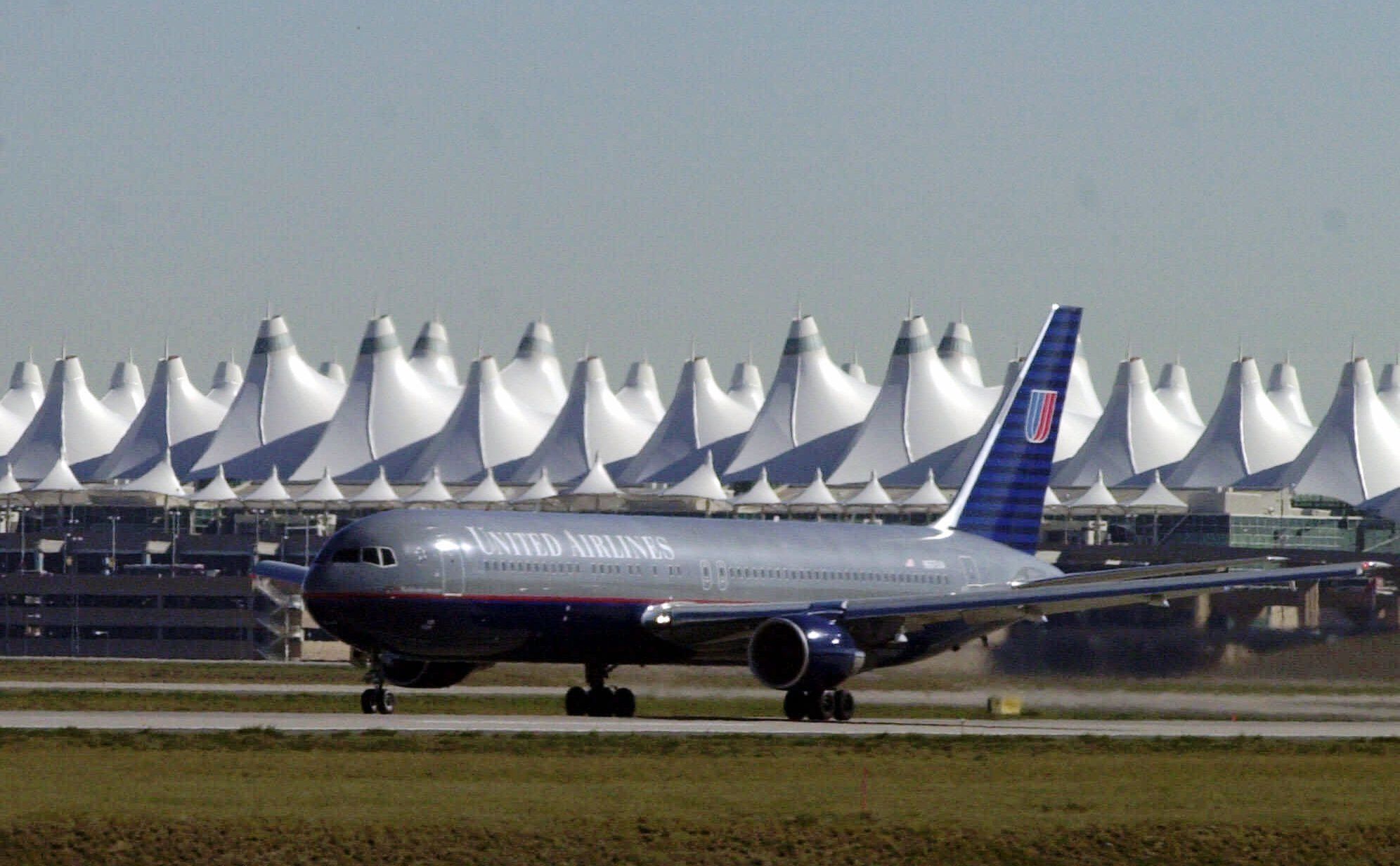 Nearly 2,000 passengers per day make the trip from Colorado Springs to Denver International Airport. (AP Photo/Ed Andrieski)
Will the NFL share a Super Bowl interest in Denver?
The Super Bowl is headed back to California (SoFi Stadium) in 2027 before Atlanta (Mercedes Benz Stadium) in 2028. The NFL also “began exclusive negotiations” with Nevada (Allegiant Stadium) for the Super Bowl in 2029, per the Las Vegas Review-Journal.
The NFL previously allowed cities to submit bids for consideration to host a Super Bowl. Finalists were chosen and all 32 team owners voted to decide the winner. That process changed around 2018, according to CNN, when the league opted to ask cities if they would like to host and “if you accept, then you negotiate the terms.”
The NFL has strict Super Bowl requirements.
“The demands are extremely high,” said Jared Bahir Browsh, the director of critical sports studies at the University of Colorado. “It’s questionable whether the public will be on board for ultimately giving the NFL that much to host a Super Bowl here.”
The Minnesota Star Tribune published a 153-page league document in 2018 which outlined “nearly 200 provisions that must be provided at no cost to the NFL” for hosting Super Bowl LII at U.S. Bank Stadium (Minneapolis).
A few highlights:
—The city must form a Super Bowl Host Committee with full-time staff and a budget ranging from “$12 million to $50 million.” The host committee is “responsible to fund and manage events” and cover the cost of “city decorations.” It is also responsible for a “payment and performance bond or letter of credit” to the NFL valued at $30 million.
—The NFL gets rent-free access to the stadium 30 days before the Super Bowl and 24 days after the game. The NFL sets ticket prices and retains 100% of ticket revenue. The city must provide the league with tax exemptions on all NFL-related revenue. The league is also given free access to local hotel space, bowling alleys and golf courses.
—The venue must seat at least 70,000 fans. The league requires a climate-controlled dome stadium if “the historical average daily temperature over a 10-year period” on the week of the Super Bowl is below 50 degrees. The host committee is responsible for inclement weather plans and the removal of ice and snow.
The Broncos are likely not alone in their desire to host a Super Bowl.
A new wave of NFL stadiums is expected to open within the next five years. That list includes Nashville (with an expected completion in 2027), Cleveland (2029), Washington (2030), Kansas City (2031), Chicago (TBD) and Denver (2031).
History suggests the NFL will not award the Super Bowl to a newly constructed stadium until its second season. That makes February 2033 the earliest date in which Broncos fans might finally expect the big game in Denver. But that’s not guaranteed.
“The market is getting much more crowded when it comes to who can host a Super Bowl,” Browsh said. “Denver has it in terms of basic needs to host an event that big. But it’s not a straightforward process. … All of these things that bring pause to some of these cities.”
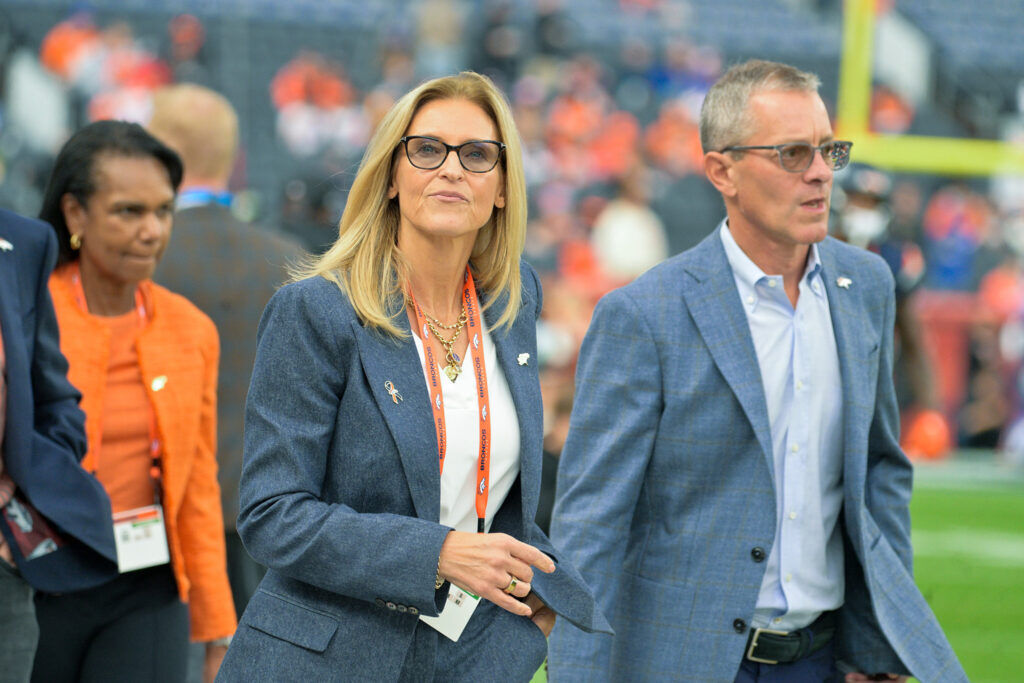 Carrie and Greg Penner, co-owners of the Denver Broncos, visit the field during the pregame against the Cincinnati Bengals on Sunday, Sept. 30, 2026. (The Gazette, Jerilee Bennett)
Broncos ownership will ultimately have the biggest role in determining if and when Denver lands a Super Bowl. The Walton-Penner group has transformed the team from conference basement dwellers into the No. 1 AFC playoff seed.
Penner and co-owner Carrie Walton Penner have a growing influence inside league circles. They serve on eight different NFL committees, including health and safety, labor, finance and compensation.
“The ownership would be the big attraction,” Browsh said. “They would be the real kind of lobbyists that would get it here. After this next round of stadiums are built in so many places, it’s going to be interesting. … I say, yes, at some point the NFL is going to step back and look at the totality and move the Super Bowl more often to different cities.
“But I don’t think it’s a given yet for Denver.”
The Broncos have more important stadium priorities in 2026 than attracting a future Super Bowl. The team is currently in the community planning stages of Burnham Yard. The feedback received at multiple open house events will shape a community-benefits agreement before construction is expected to start in late 2027.
A Super Bowl might be down the road.
“It is going to be, I would say, an unprecedented economic boost for this neighborhood and this city. We will have never seen anything like this,” Denver Mayor Mike Johnston said during a November community planning meeting. “The estimates we’ve seen are that the current Mile High Stadium does about $300 million a year. But that’s with only seven or eight non-Bronco game activations a year. One of the great benefits of a retractable roof stadium is that you can do events all year long.
“You can do winter events, you can do Final Fours, and you can do Super Bowls.”
 Broncos team president Damani Leech and Denver Mayor Mike Johnston meet with community members Wednesday at La Alma Recreation Center to begin the small area planning for a new Broncos stadium at Burnham Yard. (Kyle Fredrickson/The Denver Gazette)