

The New England Patriots failed to take advantage of a glorious opportunity to win their seventh Lombardi Trophy on Sunday night with a 29-13 loss to the Seattle Seahawks in Super Bowl 60 at Levi’s Stadium.
The Patriots were outplayed and outcoached right from the start of the game. They didn’t score a single point until the fourth quarter and had three turnovers.
This kind of loss can sting for a while and has the ability to negatively impact a team for a bit. But on the flip side, there’s the potential for this defeat to provide the Patriots with valuable lessons and experience, especially for the young players — like Drake Maye and Will Campbell — who haven’t played in a ton of high-pressure games at the college or NFL levels.
What does history say about the Patriots’ chances of getting back to the playoffs and reaching the Super Bowl again next season or in the near future?
There was a time, in the early 2000s, when losing the Super Bowl was very difficult to overcome the following season. Seven of the eight Super Bowl losers from 2000 through 2007 failed to advance to the playoffs the year after.
But over the next 17 seasons, from 2008 through 2024, 12 teams that lost the Super Bowl were able to qualify for the postseason the following year. Six of those 12 teams won 12 or more games the year after losing in the Super Bowl.
If you look at the entire history of the Super Bowl, 40 of the 59 losers reached the playoffs the following season.

Danielle Parhizkaran/The Boston Globe via Getty ImagesDanielle Parhizkaran/The Boston Globe via Getty Images
Patriots quarterback Drake Maye walks off the field after losing Super Bowl 60.
There are also some recent examples of teams losing in the Super Bowl and getting back there not long after.
The Los Angeles Rams lost to the Patriots in Super Bowl LIII but got back there in Super Bowl LVI and won three years later with the same head coach (but a different quarterback). The San Francisco 49ers lost to the Kansas City Chiefs in Super Bowl LIV and then reached Super Bowl LVIII four years later and lost with the same head coach and many of the same players (but a different quarterback). The Philadelphia Eagles lost Super Bowl LVII to the Chiefs and made it back in Super Bowl LIX two years later and won with the same head coach and quarterback. The Chiefs lost Super Bowl LV and then made it to Super Bowl LVII two years later and won with the same head coach and quarterback.
The Patriots, in particular, have actually fared pretty well historically after their Super Bowl losses, and not all of that success came with Tom Brady at quarterback.
Here’s how the Patriots performed the year after losing in the Super Bowl:
1985 New England Patriots: Lost Super Bowl XX, finished 11-5 and made playoffs in 1986
1996 New England Patriots: Lost Super Bowl XXXI, finished 10-6 and made playoffs in 1997
2007 New England Patriots: Lost Super Bowl XLII, finished 11-5 and missed playoffs in 2008
2011 New England Patriots: Lost Super Bowl XLVI, finished 12-4 and made playoffs in 2012
2017 New England Patriots: Lost Super Bowl LII, finished 11-5 and won Super Bowl LIII in 2018
The Patriots made the playoffs after four of their first five Super Bowl defeats. And in the one season they didn’t qualify for the playoffs, they still went 11-5 despite Tom Brady suffering a torn ACL in Week 1 and not playing the rest of the year.
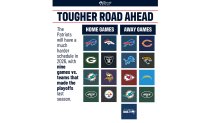
Getting back to the playoffs in 2026 could prove difficult when you look at the Patriots’ schedule. Nine of their 17 opponents made the playoffs this past season. Three of their four 2025 playoff opponents, including the Seahawks, are on the 2026 schedule.
There’s no guarantee the Patriots will be back in this position next season when the Super Bowl is played at SoFi Stadium in Los Angeles.
But they do have a franchise quarterback in Drake Maye, an excellent head coach in Mike Vrabel, a good core of young players drafted recently, and an owner who is committed to winning.
The Patriots laid a good foundation for future success in 2025, both on and off the field. Next season will be the true test of the improvements made over the last 12 months.