
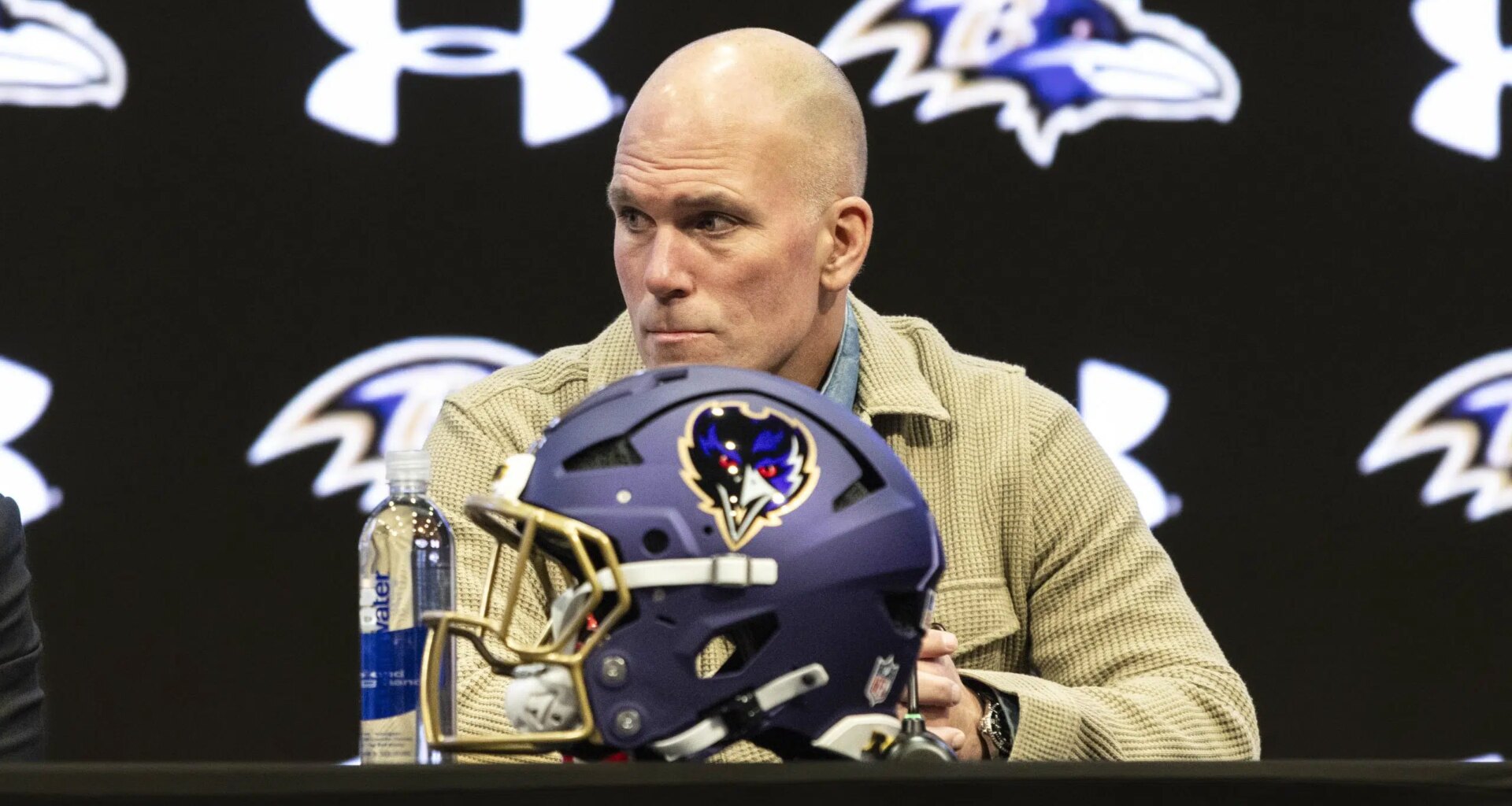
The Baltimore Ravens enter the offseason at a crossroads, and general manager Eric DeCosta stands at the center of it.
After missing the playoffs, ownership decided it was time to move on from John Harbaugh, which ultimately forced DeCosta to search for a new head coach and reset the franchise’s direction.
Expectations in Baltimore never drift far from championship level, especially with a two-time MVP like Lamar Jackson under center. When a roster holds a bunch of quality players, the objective remains to build a team that’s capable of reaching the Super Bowl.
Now, the pressure shifts directly to DeCosta to construct a roster that turns talent into postseason success.
The Head Coaching Hire Was Only the Beginning
Eric DeCosta made his biggest offseason move by hiring head coach Jesse Minter, but the work cannot stop there. Coaches shape identity, influence roster construction, and often determine whether talented teams make deep playoff runs.
However, this hire carries weight beyond one voice. Strong organizations operate with alignment from the front office through the entire coaching staff. When vision connects across every level, talented rosters maximize their potential.
Ravens’ reported new look coaching staff to date:
HC: Jesse Minter
OC: Declan Doyle
DC: Anthony Weaver
OL coach: Dwayne Ledford
Asst OL: Shawn Flaherty
DB coach: Mike Mickens
iLB Tyler Santucci (returning)
Def asst: PJ Volker
Game management: Charlie Gelman pic.twitter.com/mm1Jf46DHc
— Sarah Ellison (@sgellison) February 2, 2026
With Lamar Jackson on the roster, the margin for error is thin. This hire must establish structure, reinforce culture, and position Baltimore to compete in January and February. If the foundation is solid, DeCosta accelerates the franchise’s progress. However, if it falls short, the responsibility lies with the architect who made the decision.
Tough Financial Decisions Are Coming
Eric DeCosta faces several expensive realities across the roster. Marlon Humphrey and Roquan Smith both carry significant cap hits, yet neither consistently performed at the level their contracts demand last season. When a lot of money goes to players producing below that standard, roster flexibility quickly disappears.
An unfiltered Marlon Humphrey gave an honest self-assessment of his 2025-26 campaign:
“My standard of play this year was not how I wanted. I’ve never been a guy to give up explosive plays like that. … The preparation I put in, the time I put in, the numbers I put in … I ran… pic.twitter.com/SrfdZT7Yb4
— Bobby Trosset (@bobbybaltim0re) January 5, 2026
On the other hand, cap management becomes even more critical with Lamar Jackson’s contract timeline looming. A restructure may create short-term relief, but Baltimore must eventually prepare for another massive extension before his deal expires after the 2027 season.
Franchise quarterbacks reset markets, and smart front offices plan years ahead rather than react when leverage shifts.
Meanwhile, Tyler Linderbaum represents the type of cornerstone Baltimore cannot afford to lose. Letting an elite center walk would create a hole the Ravens can’t afford.
Isaiah Likely enters free agency as well, and his trajectory suggests he deserves strong consideration as part of the offense’s future.
Every dollar that’s committed to underperforming deals limits the ability to retain ascending talent or pursue difference-makers in free agency. If the Ravens want to remain contenders, DeCosta and the rest of the front office must approach this offense with discipline and a willingness to make uncomfortable decisions.
Pick No. 14 Must Deliver
The Ravens should prioritize immediate impact with the 14th pick. Rookie contracts help stabilize the salary cap while allowing contenders to stay aggressive elsewhere on the roster.
Furthermore, impact starters on affordable deals extend championship windows. When those picks hit, front offices gain flexibility to retain core talent. When they miss, roster holes grow quickly, and depth disappears.
Baltimore already operates with a limited margin for error. Therefore, this selection must address a clear weakness and instantly elevate the roster.
Roster Balance Must Be Restored
Championship teams rarely overload resources into a few positions. Instead, they build complete rosters that survive injuries and sustain production across a long season.
Right now, Baltimore shows signs of imbalance. Money concentrates in certain areas, while other units don’t have a ton of explosion and depth. At times, Baltimore’s lack of offensive depth forced its stars to shoulder an unsustainable workload.
Meanwhile, the trenches still decide games in January. Teams that control the line of scrimmage travel deeper into the postseason. Star power helps, but roster structure wins championships. If the Ravens want to reach the Super Bowl, Eric DeCosta must reallocate resources and strengthen the team’s foundation.
Eric DeCosta’s Defining Offseason
Eric DeCosta has built playoff teams before, and his track record deserves respect. However, the NFL rewards urgency, not comfort. Windows close quickly, especially when expectations remain tied to a franchise quarterback.
This offseason now demands precision. Every contract, every draft pick, and roster decision must push Baltimore forward rather than maintain the status quo. Standing still in the AFC often means falling behind.
This is no longer about chasing potential. It is about delivering results. How DeCosta responds will shape the Baltimore Ravens for years to come.