
“If you’re going to Earth, you might want a guide. I do have a bit of experience in that arena.”
“If you consider failure experience.”
This exchange from the opening scene of “Avengers: Infinity War” feels like an accurate portrayal of the New York Jets’ coaching-staff overhaul in 2026.
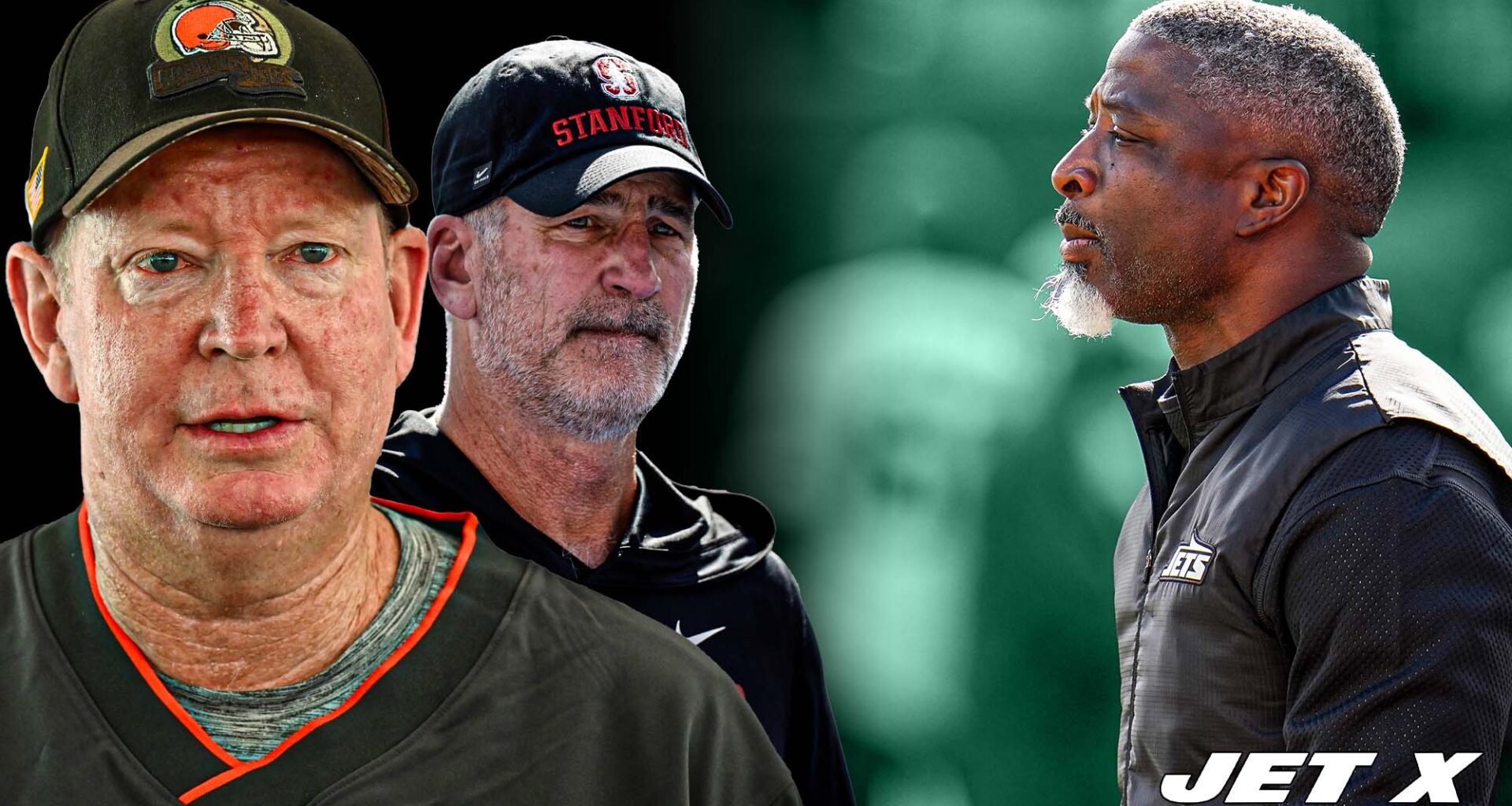
The Jets’ recent hire of quarterbacks coach Bill Musgrave hammers the point home.
And Jets fans should be concerned.
Bill Musgrave’s recent resume is questionable at best
On Tuesday, the Jets announced multiple hires to fill out the remainder of their offensive coaching staff. The most notable of those was Musgrave, the quarterbacks coach.
The Jets had moved on from their previous quarterbacks coach, Charles London, who was Glenn’s initial hire for the role when he was brought on as head coach in 2025. London was one of many offensive coaches released by Glenn after a 3-14 campaign.
In fairness to Glenn, moving on from London was the correct decision. London is a former running back with a limited track record of experience as a quarterbacks coach, with little success in those seasons. It is questionable why Glenn chose London in the first place, but at least he cut his losses.
Musgrave, though, is not the type of coach Glenn should have targeted to replace London. Glenn’s selection of Musgrave highlights a consistent theme in his offensive hires in 2026: prioritizing “experience” despite no positive results in recent history to show for it.
It is easy to take one glance at Musgrave’s resume and extol the hire thanks to his extensive experience. The 58-year-old has been an offensive coordinator for six NFL teams since 1998, while he has also been a quarterbacks coach at multiple stops.
Oakland Raiders (1997): Quarterbacks coach
Philadelphia Eagles (1998): Offensive assistant & interim offensive coordinator
Carolina Panthers (1999–2000): Offensive coordinator & quarterbacks coach
Virginia (2001–2002): Offensive coordinator, quarterbacks coach, & tight ends coach
Jacksonville Jaguars (2003): Offensive coordinator
Jacksonville Jaguars (2004): Offensive coordinator & quarterbacks coach
Washington Redskins (2005): Quarterbacks coach
Atlanta Falcons (2006–2009): Quarterbacks coach
Atlanta Falcons (2010): Assistant head coach & quarterbacks coach
Minnesota Vikings (2011–2013): Offensive coordinator
Philadelphia Eagles (2014): Quarterbacks coach
Oakland Raiders (2015–2016): Offensive coordinator
Denver Broncos (2017): Quarterbacks coach & interim offensive coordinator
Denver Broncos (2018): Offensive coordinator
California (2020–2022): Offensive coordinator & quarterbacks coach
Cleveland Browns (2023–2024): Senior offensive assistant
Cleveland Browns (2025): Quarterbacks coach
Musgrave is also a former NFL quarterback himself. At the very least, his first-hand experience at the position makes him a better choice than London.
The problem is that Musgrave’s long list of coaching “experience” is littered with failures, particularly at his most recent jobs.
Each of Musgrave’s last three stops as an NFL quarterbacks coach ended with him losing the role after one season, and for good reason, based on the results he oversaw.
In 2025, Musgrave coached a Cleveland Browns quarterback room that combined for one of the ugliest passing seasons in NFL history across three different starters. The Browns’ -34.3% pass offense DVOA ranked last in the league and stands as the ninth-worst single-season mark in NFL history (since 1978). All three Cleveland quarterbacks failed to complete 60% of their passes.
Musgrave’s previous stop as an NFL quarterbacks coach came with the Denver Broncos in 2017. The 26-year-old Trevor Siemian was coming off a solid first year as a starter, posting an 84.6 passer rating, 6.2 net yards per attempt, 18 touchdowns, and 10 interceptions. Under Musgrave in 2017, Siemian regressed, recording a 73.3 passer rating, 5.4 net yards per attempt, 12 touchdowns, and 14 interceptions.
Before that, Musgrave coached the Eagles’ quarterbacks in 2014. Nick Foles was coming off an extremely promising 2013 season, racking up a 119.2 passer rating along with 7.9 net yards per attempt, 27 touchdowns, and two interceptions. Under Musgrave in 2014, the third-year Foles took a major step back, free-falling to an 81.4 passer rating, 6.5 net yards per attempt, 13 touchdowns, and 10 interceptions.
Musgrave also worked as the California Golden Bears’ offensive coordinator and quarterbacks coach from 2020-22, his most recent stop before he joined the Browns’ staff in 2023 as a senior offensive assistant. This was another rough run for Musgrave.
Across Musgrave’s three seasons as Cal’s OC, the Golden Bears ranked 111th, 96th, and 96th in points per game among 130 FBS teams. In terms of passer rating, Cal ranked 97th, 84th, and 71st in passer rating (NCAA version). Given that this is Musgrave’s most recent stop as an offensive play-caller, it does not send the most promising message about how tuned in he is with the modern game.
Even Musgrave’s most recent run as an NFL OC was underwhelming. As the Broncos’ OC from 2017-18, Denver ranked 32nd and 15th in offensive DVOA, along with 27th and 24th in points per game.
The last successful stop on Musgrave’s resume came back in 2015-16 as the Oakland Raiders’ OC. Inheriting a young Derek Carr after his tough 2014 rookie season, Musgrave led Carr to back-to-back Pro Bowl appearances, with Carr taking significant steps forward each season. Those are still two of the best years of Carr’s 11-year NFL career.
You can also give Musgrave credit for his work as Matt Ryan’s quarterbacks coach in Atlanta from 2008-09. Musgrave helped the third overall pick of the 2008 draft throw 38 touchdowns, 25 interceptions, and 6.7 net yards per attempt over his first two seasons in the league, leading the Falcons to a 20-10 record.
Musgrave’s successes with Carr and Ryan, though, were quite a while ago at this point. It has been a decade since his success in Oakland.
The most recent stops on Musgrave’s resume are littered with significantly more negatives than positives. It sure sounds a lot like the offensive coordinator he will be working under, Frank Reich.
Glenn may be misguided to prioritize “experience”
The 64-year-old Reich carries similar concerns to New York. He spent the last two seasons out of the NFL, following a back-to-back stretch of being fired mid-season. His schematic tendencies during this span were outdated in many ways, ranging from a lack of pre-snap motion to a lack of play action.
The 2020s have not treated Reich or Musgrave kindly. Their reputations are based on success dating back a long way.
The NFL is a “What have you done for me lately?” league. Trends shift quickly. What worked last year may not work the following year.
Each season, the Super Bowl wraps up, and articles are written ad nauseam about what the other 31 teams must copy from the championship winner to emulate their success. Well, once every team copies that formula, it becomes outdated, and a new formula will arise, designed to thwart the previous one.
It has been multiple cycles since either Reich or Musgrave showed that they are in tune with the modern NFL. With Reich well into his sixties and Musgrave getting close, they aren’t exactly young coaches with room to grow.
Beyond blind faith, what reason is there to believe that Reich and Musgrave are the types of offensive minds who know how to get the most out of a quarterback and a passing game in the 2026 iteration of the NFL?
No tangible evidence exists.
In fairness to both coaches, it is always difficult to gauge a coach’s true performance in an NFL season. Talent and coaching work hand-in-hand to determine the final results, and, ultimately, the coaches will be on the hook for the results, even if the players’ execution is primarily at fault (it can go the other way, too, with coaches earning credit for elite execution by the player; hello, Adam Gase).
Musgrave might have done the greatest quarterback coaching job known to man in 2025, only to be hung out to dry by three stooges at quarterback. Reich did not get any favors at his recent stops either, coaching a rookie Bryce Young with the 2023 Panthers and a washed-up Matt Ryan with the 2022 Colts.
At the end of the day, though, the coach’s job is to facilitate positive results. We can let them off the hook for one failure. But when the failures stockpile over a span of years, it’s a trend, and trends should not be ignored.
Aaron Glenn ignored them.
When Glenn strangely decided to demote Tanner Engstrand and revamp his entire offensive staff, the goal should have been to raise the ceiling as high as possible. This ship is already sinking; Glenn feels it, or he would not have panicked and made so many changes.
So, why did he choose to settle for aging retreads with no semblance of recent success? How does that help Glenn’s chances of leading a successful season in 2026?
I can see the logic. Glenn believes that a pair of incredibly experienced coaches offers a higher floor (i.e., a higher chance of producing at least competent results) than unproven coaches like the 43-year-old Engstrand.
But is that really the case when their recent results are so poor?
The Jets already cannot go any lower than the foundation that Glenn set in his debut season. He is on the verge of being fired if the Jets start the 2026 season poorly.
With nothing to lose, the right move for Glenn was arguably to throw caution to the wind and swing for the fences. Sticking with Engstrand would have sufficed, given that he’s a young coordinator who oversaw a poor offense in his first season but displayed real potential beneath the results. Still, after dumping Engstrand, Glenn could (and probably should) have doubled down on this concept.
The Jets interviewed two younger, unheralded candidates for their OC role: Cowboys tight ends coach Lunda Wells (43) and Bills quarterbacks coach Ronald Curry (46). Why not give one of these coaches a shot and gamble that they might be the next wunderkind in the offensive coaching world? Sure, it might blow up in Glenn’s face, but it can’t get worse than things already were.
Yet, the Jets seemingly did not even give Wells and Curry a shot. The role was always going to come down to the three “experienced offensive minds”: Reich, Greg Roman, and Darrell Bevell—three coaches whose recent experience shows a floor just as low as whatever Glenn could have projected with Engstrand, Wells, or Curry.
At the very least, after going with Reich, why not bring a younger coach in to work with the quarterbacks? Complementing Reich with Musgrave as the quarterbacks coach only affirms the fact that Glenn is desperately settling for so-called “safe” options instead of trying to be innovative and get ahead of the NFL curve.
You can give Glenn some credit for taking a shot on 31-year-old Seth Ryan, formerly the Lions’ assistant tight ends coach, as the pass game coordinator. But that only raises another question: Why hire a pass game coordinator from the Lions’ coaching tree when you just had an offensive coordinator who worked on the same staff with greater responsibility?
It is difficult to understand what Glenn’s plan is, or whether there is a plan at all. Feeling the pressure to win immediately, he has hitched his wagon to coaches who have done no winning whatsoever in at least five years.
I get it. Glenn wanted coaches who have “been there” before.
But what value does this logic carry when the most recent iterations of “being there” were abject failures?
By choosing to play it safe with hires who are actually very much not safe, Glenn may have squandered the final chance to salvage his tenure in New York.