
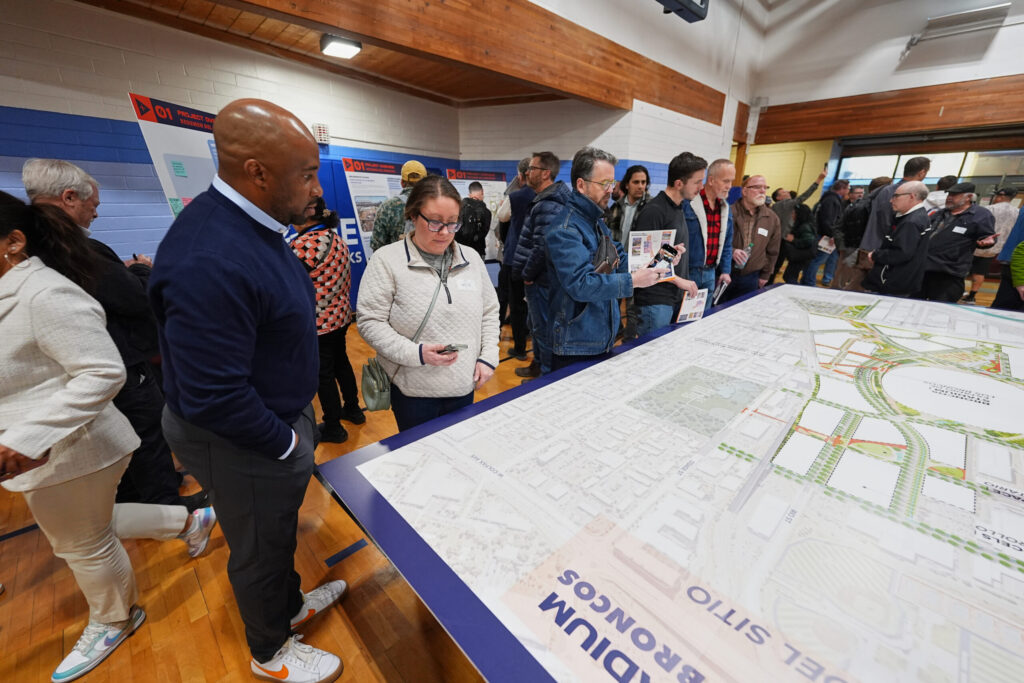
Hundreds gathered Thursday night to listen and view the Broncos’ initial concepts for developing Burnham Yard into a sports, entertainment and community district.
It marked the team’s second community open house, partnering with city and local officials, to answer questions and receive feedback about the proposed new stadium plan located south of Colfax Avenue and east of Interstate 25.
The Broncos are still in the stadium design process and have not selected an architect, Broncos team president Damani Leech said.
There is no timeline for when renderings would be made public, but the team said it is progressing toward its grand vision for a mixed-use community spanning about 150 acres that would serve as more than just the home of Broncos football.
“We want it to be a great place for fans on gameday, but also a great place every day for this community that surrounds it — but also everybody in the city of Denver,” Leech said. “I want friends and family to come into Denver and ask: ‘Where should I go?’ Then everybody to say: ‘You should go to Burnham Yard.’
“That is what I want.”
A few highlights from the hourlong presentation at the La Alma Recreation Center:
• The Broncos envision Burnham Yard split into five different districts or neighborhoods: north neighborhood, stadium district, entertainment district, stadium south and south neighborhood. The stadium will be located on the west edge of the site, and furthest from the La Alma-Lincoln Park neighborhoods to the east. Construction is expected to begin in 2027 or 2028. The stadium is planned to open in 2031.
• Upgrades to the 10th and Osage light rail station are expected to encourage travel to and from the stadium via transit. But the team expects to control about 7,000 parking spots. Infrastructure improvements include a pedestrian and vehicle underpass below the light rail at 13th Avenue, plus additional underpasses and routes for walking and biking. The design is intended to minimize impact on nearby neighborhoods.
• About 15 of the roughly 150 acres are designated for open space between interconnected promenades, plazas, attractions, playgrounds and an event lawn. The Broncos plan to honor the site’s history as a rail yard by preserving a locomotive shop in the designs. Building heights along the eastern edge of the site will be moderated to preserve sight lines to existing neighborhoods.
“All the feedback that we get when people ask a question, we are required to provide an answer to it and submit it to the city. That’s the required (process),” Leech said. “Then, you look for themes … and integrate that into the overall plan.”
The presentation included live polling with attendees weighing in on questions, such as this: “Which options would you most like to see integrated into the mixed-use development?
The answer — “casual dining restaurants” — led with 127 votes.
The Broncos remain in the listening stages of developing a community benefits agreement that will help serve as the groundwork for Burnham Yard’s design and construction, the team said. There were a wide range of community issues presented during a Q&A portion of the event on Thursday with different project leaders.
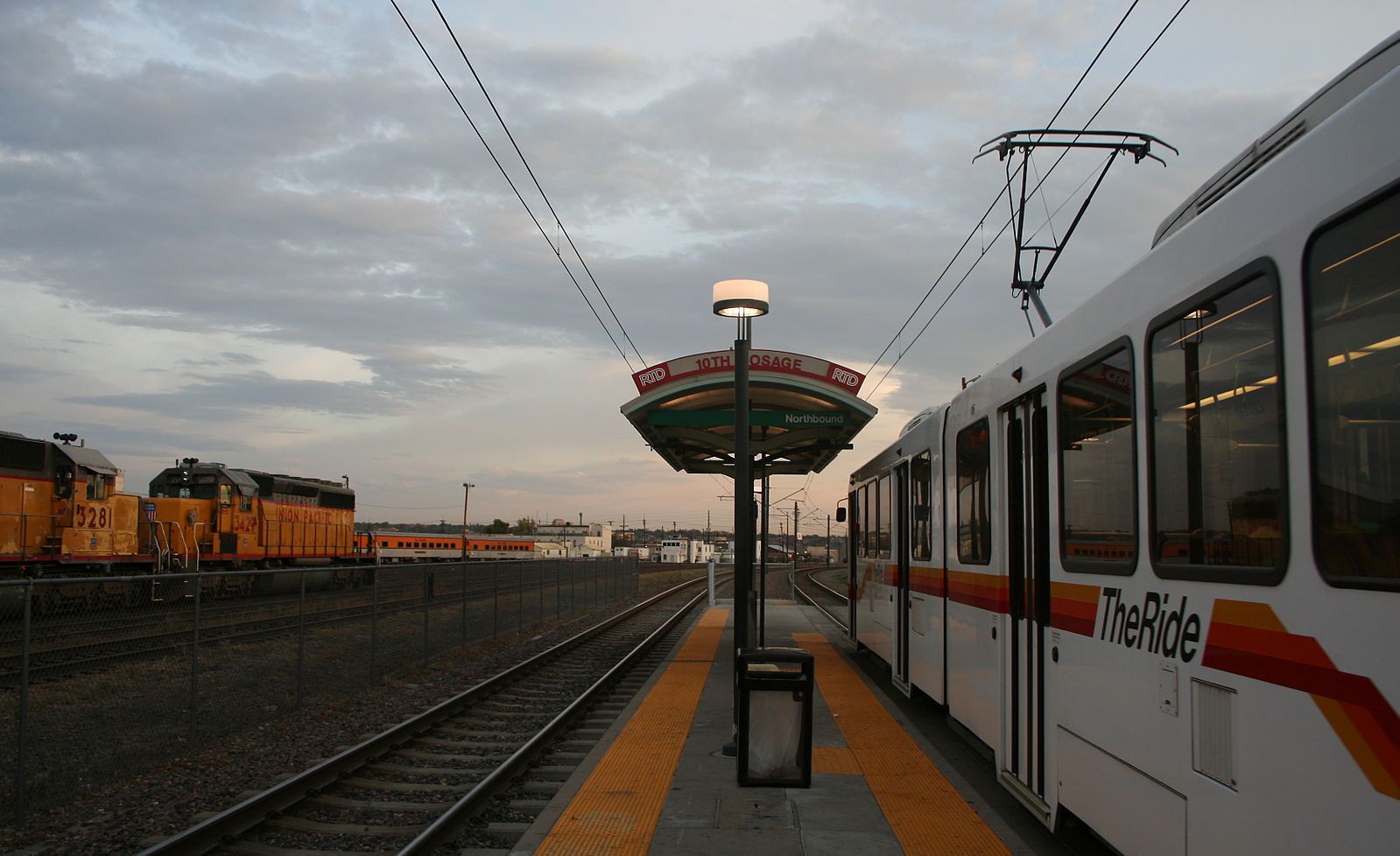 Burnham Rail Yard is on the left, seen from the RTD light rail stop at West 10th Avenue and Osage Street in Denver.
Bill Sedillos, 72, a retired limousine driver living in Denver whose long list of celebrity clients included former Broncos owner Pat Bowlen, told The Denver Gazette that Bowlen tipped him the money needed to purchase two commemorative bricks outside the team’s current stadium at the Counties Gateway Plaza on the west side of Empower Field.
Sedillos wondered what would happen to his bricks with inscriptions reading: #1 DEDICATED BRONCO FANS BILL & LENA and DENVER’S #1 LIMO DRIVER 1979-2002.
“They should either put them at the new stadium or give them back to the people,” Sedillos told The Denver Gazette. “I want to know if they’re going to carry on this legacy.”
Members of another group, the Osage Lofts Registered Neighborhood Organization, passed out flyers and buttons advocating for the light rail to be moved underground at four locations on the development site.
“We’re not anti-stadium or anti-development,” said Dennis Molitor, who owns rental properties in nearby neighborhoods to Burnham Yard. “But we’re (against) them destroying our neighborhood with noise pollution and the safety of people crossing at those intersections when the light rail is going to be running many more times than it does now.”
The Broncos expect to complete their community benefits agreement at Burnham Yard sometime in early 2027. The team set up a website at www.newstadium.denverbroncos.com with more information.