
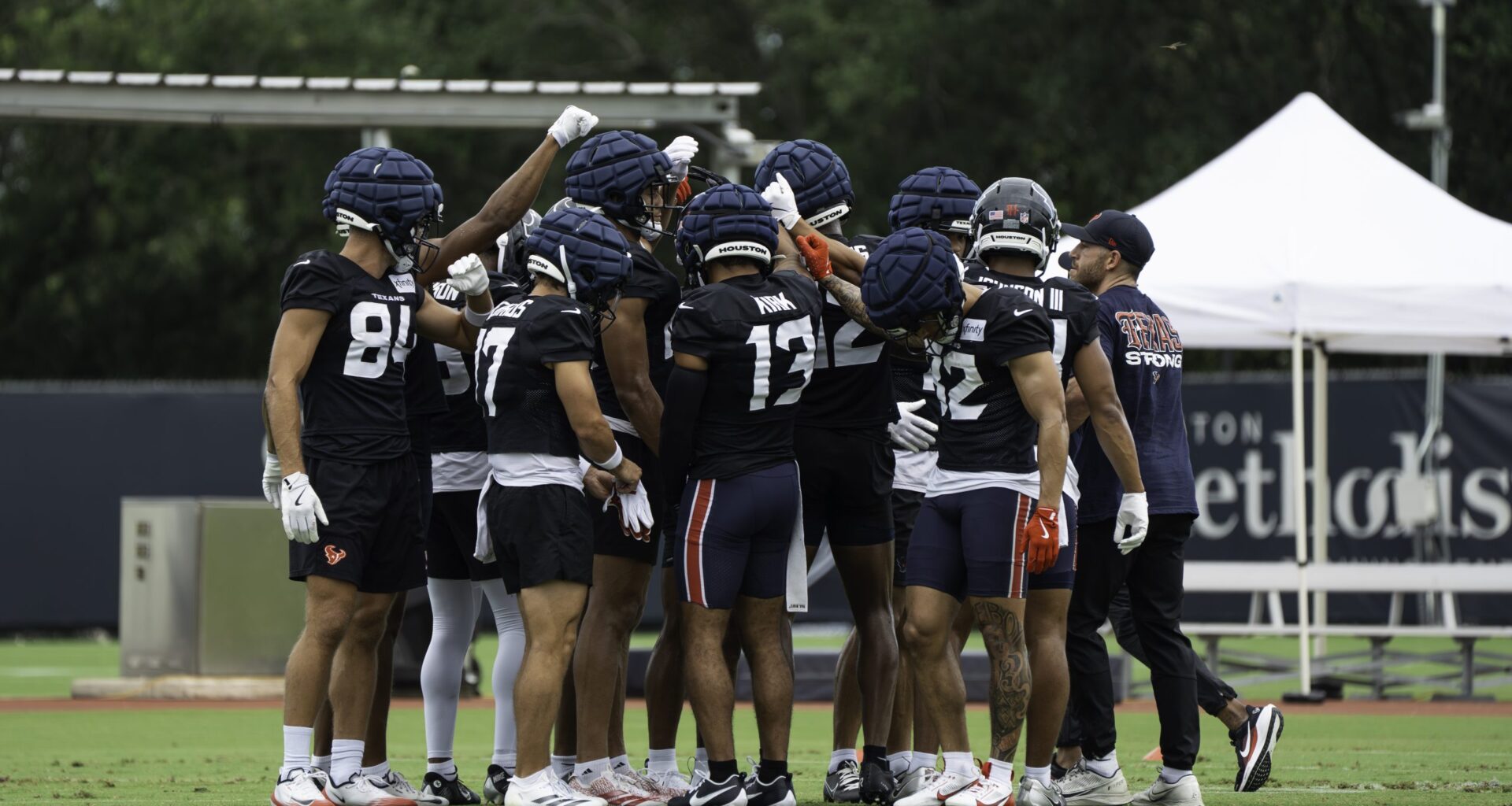
Since the time the Houston Texans first began playing football, back in 2002, the entire franchise’s operations, from both a business and football standpoint, have centered around two facilities across the street from each other on Kirby Drive — the Houston Methodist Training center, where the team practices, and NRG (nee Reliant) Stadium, where the team plays games and houses all of its business operations.
Over time, this setup has become less and less optimal, with the Texans sharing NRG Stadium with the Houston Livestock Show and Rodeo, and having any other big event in the stadium infringe on the ease of doing day to day business. For years, the Texans have dreamt of a headquarters facility separate from NRG Stadium, where they could house business operations and the team’s practice facility.
On Thursday afternoon, the team announced a major step in making that dream a reality, with the Texans, Harris County and Howard Hughes entering a public-private partnership for an 83 acre site in the Bridgeland area of town, near Cypress, called the “Toro District.” The site would be the location for not only the Texans’ headquarters and practice facility (about 22 of the 83 acres), but also retail, hotel, entertainment, and medical outlets.
In the team’s press release, Texans CEO Cal McNair said:
“Today is a historic day for the Houston Texans, our fans, and the Greater Houston area as we partner with Howard Hughes and Harris County on a world-class sports and entertainment destination, including our new headquarters and training facility,” said Cal McNair, Chair and Chief Executive Officer of the Houston Texans.
“Our organization continues to grow and this aligns with our goals of bringing a championship to Houston, enhancing community services and making sports more accessible. This project reinforces our long-term commitment to Harris County and our focus on driving growth and opportunity for the community. It will set the new standard for the global sports and entertainment industry and it’s the most significant evolution for our organization since our inception.”
County commissioners discussed the outline of the plan in a closed door session on Thursday, ultimately voting 5-0 to move forward. The cost of the project is unclear, as is how much of the load each entity is shouldering, although the county’s portion is expected to be funded through a tax increment reinvestment zone (TIRZ, for short) where the Bridgeland area would have specific dollars earmarked for this project.
Currently, the Texans are one of three teams in the NFL whose business and headquarters operations are housed in the team’s stadium. The other two are Carolina and Cincinnati. In the modern NFL, having facilities like the one the Texans are planning is crucial for efficiency and financial reasons, but also to recruit free agents. There is definitely a vanity aspect to campuses like these.
The Texans had been approached by several different entities across multiple counties to discuss housing the team’s new headquarters, but in the end staying in Harris County was important to the team. Through the years, the Texans have invested heavily in the Harris County community through various business and charitable endeavors, and that was difficult to walk away from.
The Texans, Harris County and Howard Hughes are hoping the project will drive more than $34 billion in economic impact to the northwest Harris County area, create roughly 17,000 jobs, and create numerous youth programming, high school internship, and community event opportunities. The facility in the NFL that most Houstonians might be able to relate to would be the Star in Frisco, TX, where the cowboys house their headquarters operations.
The Texans hope to break ground later this year, with a target of a 2029 opening.
This article appears in Private: Jan 1 – Dec 31, 2026.
Related